Artwork
Άγιος Φανούριος
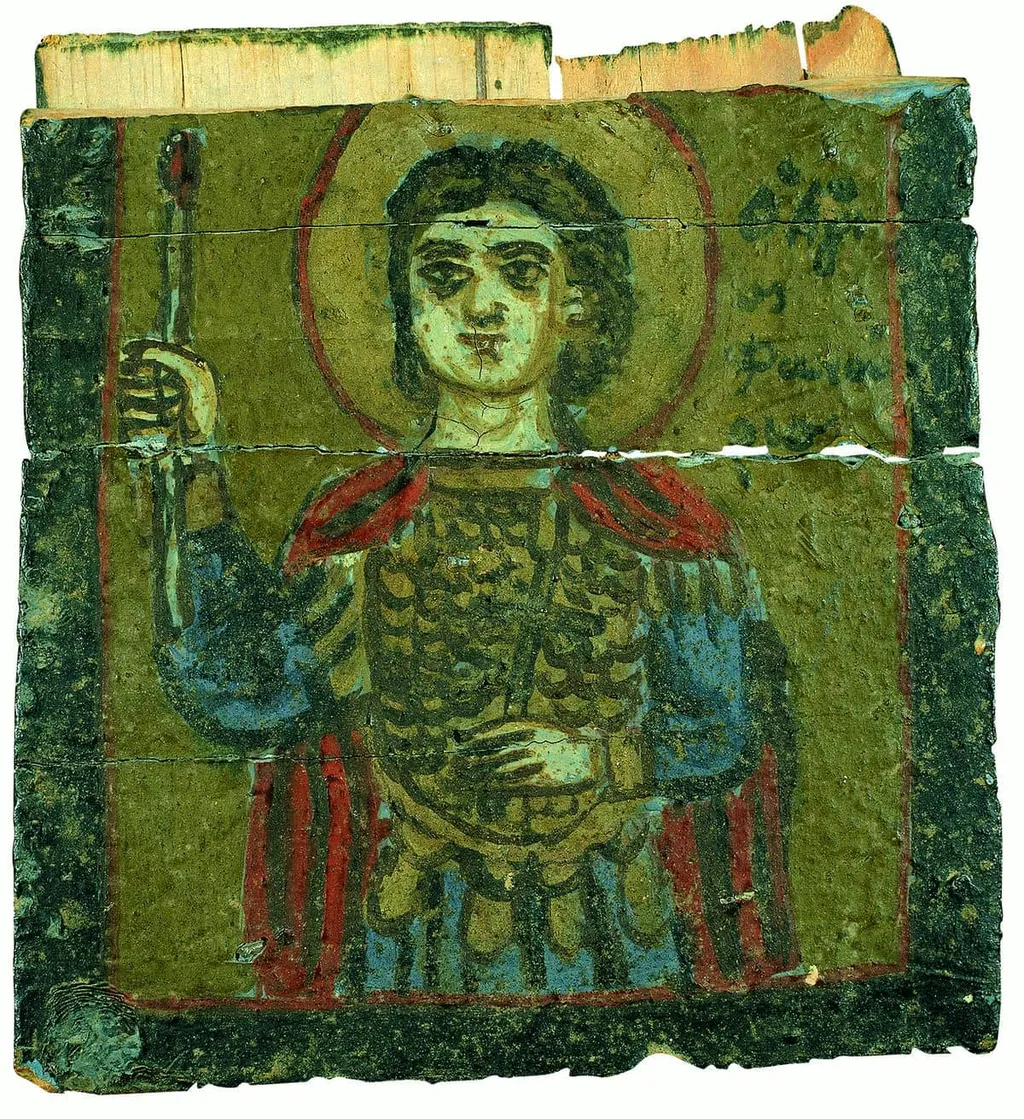
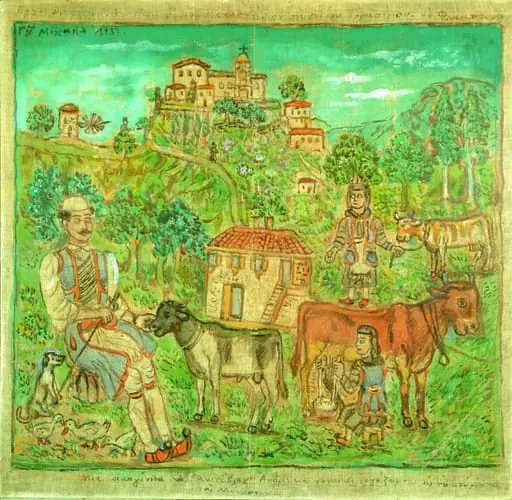
Άγιος Φανούριος is a print by Theofilos (Hadjimichail). It dates from 1912 and is held in the collection of the Metropolitan Organisation of Museums of Visual Arts of Thessaloniki – MOMus.
About this work
Overview
The result is an image that feels both sacred and grounded in popular culture.
Theofilos Hadjimichail, a self-taught Greek painter, created this depiction of Saint Fanourios using a distinctive folk style that diverged from academic conventions. His approach emphasized emotional immediacy and visual directness, drawing from everyday visual sources like postcards and religious prints rather than formal training. The result is an image that feels both sacred and grounded in popular culture.
Subject & Meaning
Saint Fanourios is portrayed as a solitary, luminous figure, holding a lit lamp—a symbol of revelation and the search for lost things. His solemn expression and elevated stance suggest spiritual authority, while the absence of narrative context focuses attention on his role as an intercessor. The image reflects devotional practices in Greek folk Christianity, where saints serve as accessible intermediaries between the divine and the faithful.
Technique & Style
Theofilos rejected traditional perspective and modeling, rendering the saint’s robes in flat, unshaded planes of intense color. Bold outlines define form, and the background is minimal, enhancing the figure’s presence. This stylistic choice, rooted in Byzantine icon traditions and popular prints, prioritizes symbolic clarity over naturalism, creating a visual rhythm that feels both ancient and vibrantly alive.
History & Provenance
Theofilos produced this work in the early 20th century, during a period of renewed interest in Greek identity and folk expression. He sourced imagery from widely available materials—lithographs, photographs, and religious icons—transforming them into personal visions. This piece likely originated as a devotional object, possibly commissioned or circulated within local communities rather than institutional settings.
Context
In rural and urban Greece of the time, religious imagery was often produced outside church-sanctioned workshops. Artists like Theofilos blended Byzantine conventions with modern visual culture, responding to a public hungry for familiar, emotionally resonant sacred figures. His work emerged alongside broader movements that valued vernacular art as an expression of national character.
Legacy
Theofilos’ paintings, including this depiction of Saint Fanourios, are now held in ethnographic and folk art collections as key examples of modern Greek popular religiosity. His unorthodox techniques and synthesis of sacred and secular imagery have influenced later generations of artists seeking to reclaim non-academic visual traditions in Greek culture.
Artist & collection
Artist
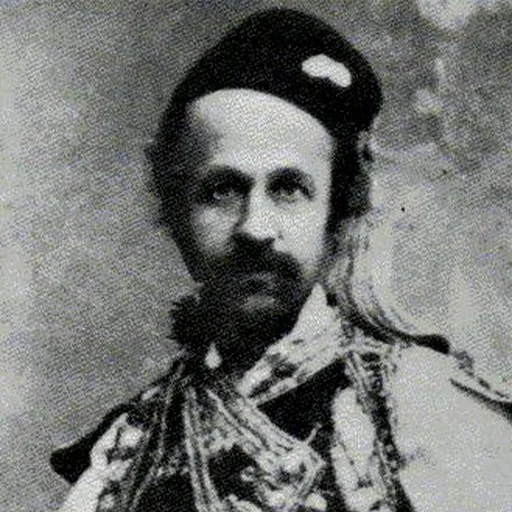
Theophilus is a male given name with a range of alternative spellings. Its origin is the Greek word Θεόφιλος from θεός and φιλία can be translated as "Love of God" or "Friend of God", i.e., it is a theophoric name,…
Museum
Metropolitan Organisation of Museums of Visual Arts of Thessaloniki – MOMus
Continue through works from the same source collection.
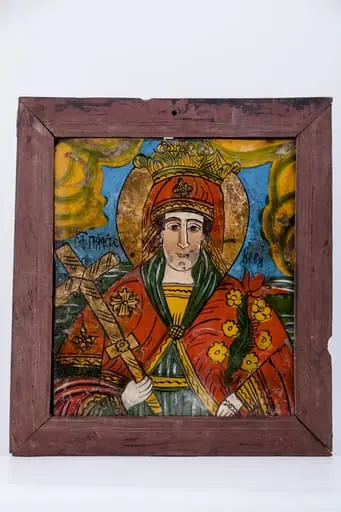 Sfânta Mare Cuvioasă Parascheva de la Iași are crucea în mâna dreaptă și ramură înflorită, cu 6 flori galbene și una roșie în vârf în mâna stângă. Este îmbrăcată în veșmânt roșu vermillon, cu interiorul căptușit cu verde și galben. Peste maforionul roșu, sfânta cuvioasă are aureolă. Fondul icoanei este cerul albastru regal, cu o arcadă de lumină galbenă, în registrul superior și bronziu, în jurul chipului și aureolei Sfintei Paraschiva și o alternanță de câmpuri verzi, dispuse paralel, în registrul mediu și inferior. Este o icoană cu aer cald, tomnatic, de octombrie 14, Praznicul Sfintei Cuvioase Parascheva. Inscripția din româno-chirilică se traduce Sf Paraschiva. Cromatica este armonioasă: roșu vermillon, albastru regal, verde văratic și forest, brun-cafeniu, negru, galben chihlimbar, ocru, bronziu, gri, negru, alb. Icoana este din Țara Oltului.
 Iisus Hristos Împărat
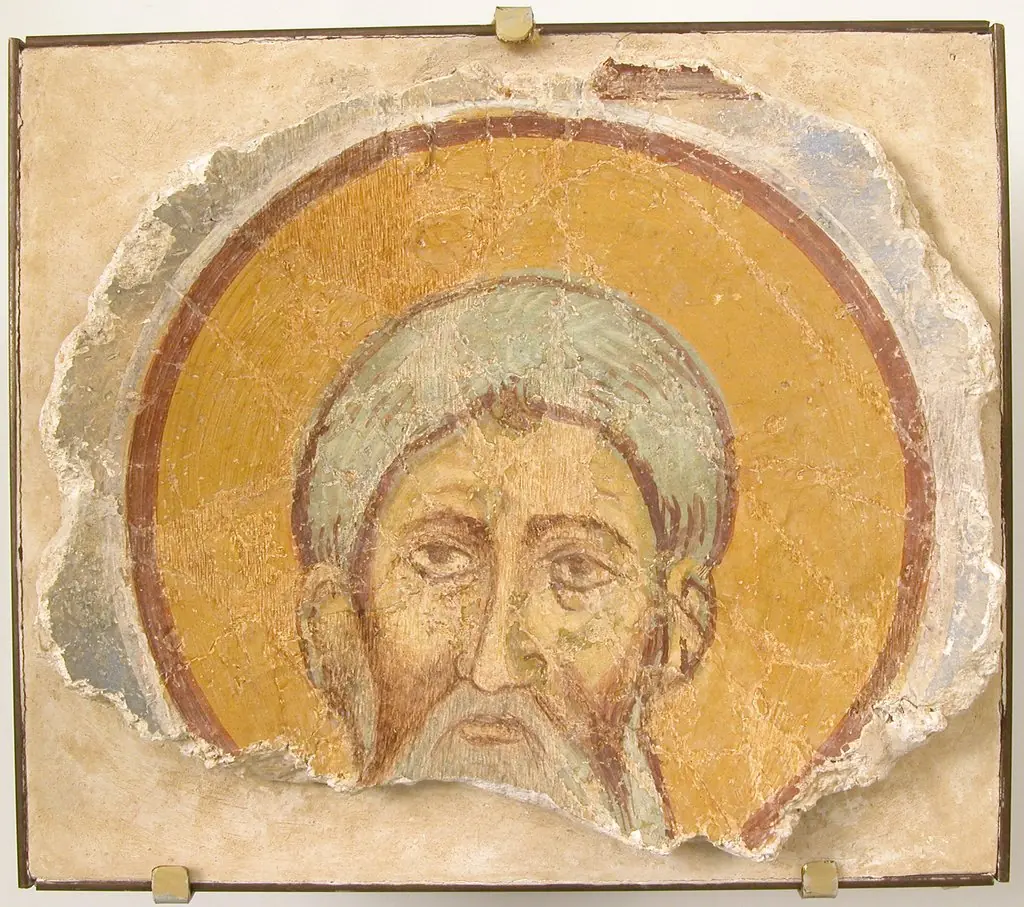 Wall Painting of a Male Saint
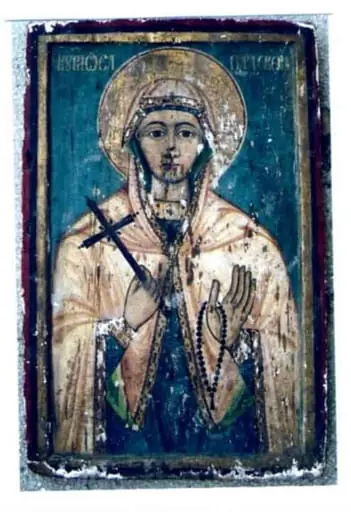 Sfânta Cuvioasă Paraschiva
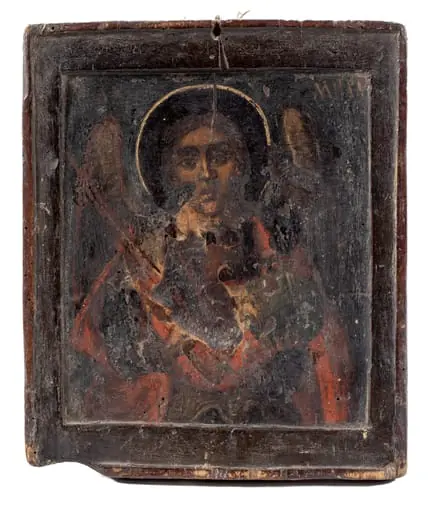 Arhanghelul Mihail
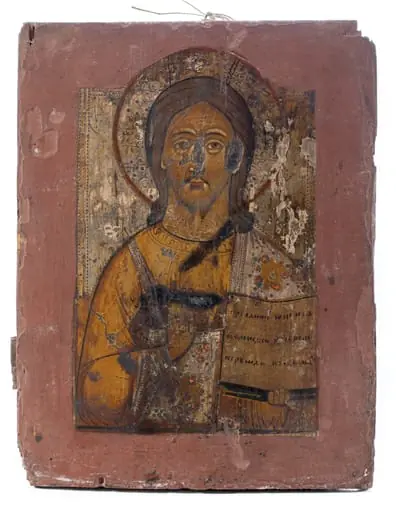 Christ binecuvântând
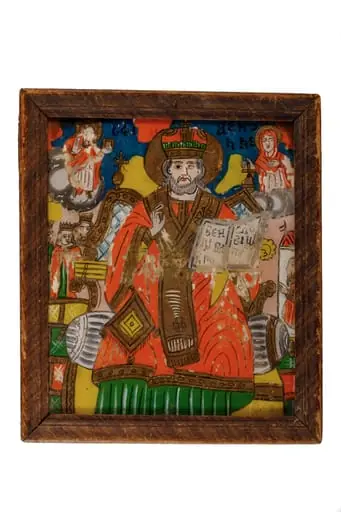 Icoană pictată pe sticlă reprezentând pe Sf. Nicolae. Sfântul este prezentat pe tron, față, bărbat tânăr, plete, barbă scurtă, cu dreapta binecuvântând, iar în stânga ține Evanghelia. Sus este încadrat de Iisus și Maria care îi oferă Evanghelia și omoforul. Stânga, la nivelul brațului, trei personaje în picioare și în dreapta o clădire și o mână (?) întinsă. Omoforul auriu cu cruci se evidențiază pe haina roșie cu linii ce marchează anatomia corpului. Icoana este înrămată.
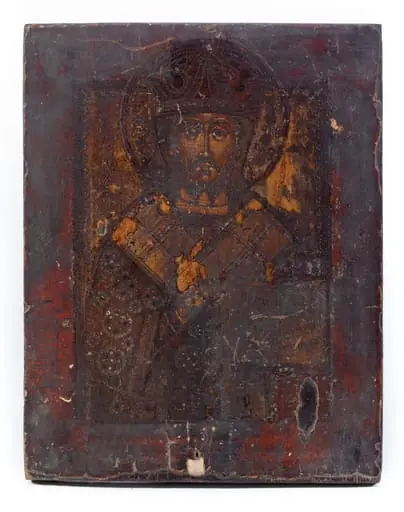 Sfântul Nicolae
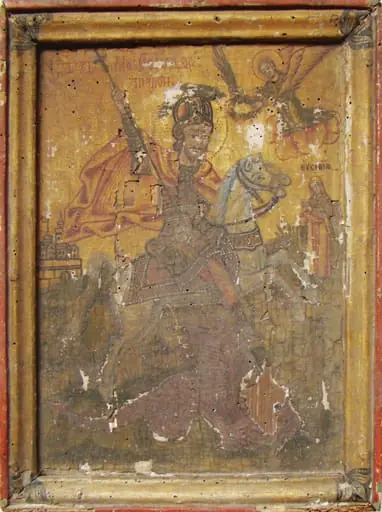 Sf. Teodor Tiron