Artwork
Kaksi alastonta poikaa
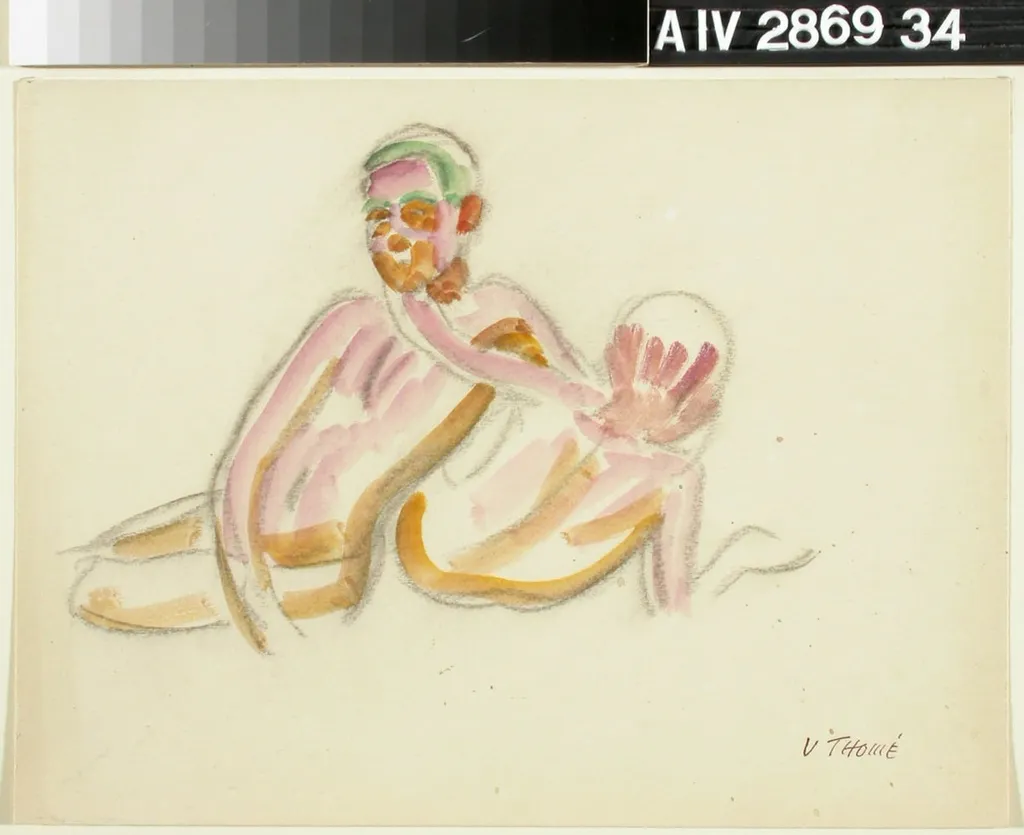
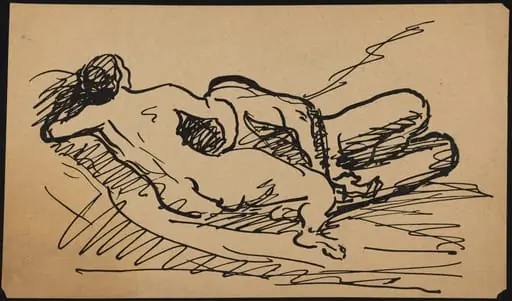
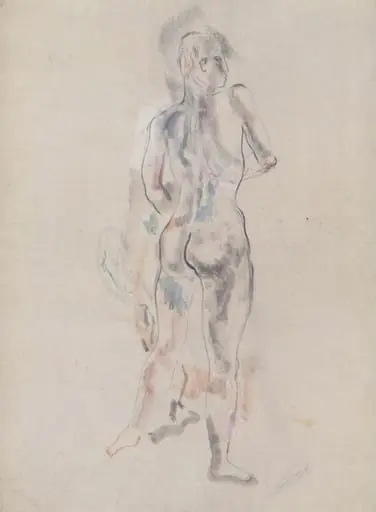
Kaksi alastonta poikaa is an unspecified work on paper by Verner Thomé. It is held in the collection of the Finnish National Gallery. This watercolor sketch depicts two male figures in close proximity, rendered with loose, rapid brushwork.
About this work
Overview
This watercolor sketch depicts two male figures in close proximity, rendered with loose, rapid brushwork. The artist employed a minimal palette and simplified forms to convey intimacy rather than detail. The medium’s fluidity supports an immediate, spontaneous quality, typical of preparatory studies or personal observations. The composition focuses on posture and proximity rather than narrative.
Subject & Meaning
The two figures—one clothed, one nude—suggest a relationship marked by closeness and contrast. The draped figure’s hand resting on the naked one implies tenderness or guardianship. The absence of context or setting directs attention to the physical and emotional connection between them. The nudity is not theatrical but quiet, integrated into the scene as a natural presence.
Technique & Style
The artist used watercolor’s transparency to build soft, layered tones in the garment, while the nude figure’s skin appears as flat, unmodulated washes.
The artist used watercolor’s transparency to build soft, layered tones in the garment, while the nude figure’s skin appears as flat, unmodulated washes. Quick, sketchy lines define contours without refinement, emphasizing movement over precision. The clothing’s folds are suggested with fluid strokes, whereas the body is rendered with geometric simplicity, highlighting the contrast between texture and form.
History & Provenance
The work’s origin is undocumented in public records, and no known exhibition or collection history accompanies it. It appears to be a private study, possibly from an artist’s sketchbook, rather than a finished piece intended for display. Its survival suggests it held personal significance, though its creator and date remain unidentified.
Context
In early 20th-century European art, watercolor was often used for informal studies, especially in depicting the human form. Artists favored its immediacy for capturing gestures and relationships without the formality of oil. This sketch aligns with a broader trend of intimate, non-narrative figure studies that prioritized emotional resonance over idealized representation.
Legacy
Though not widely known or reproduced, the sketch exemplifies how watercolor could convey human connection through restraint. Its unpolished quality reflects a shift away from academic precision toward personal expression. It remains a quiet testament to the artist’s attention to subtle physical relationships, valued in private collections but rarely exhibited.
Artist & collection
Artist
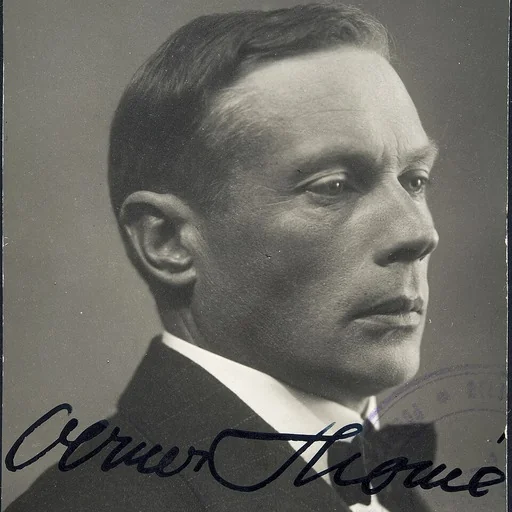
Verner Thomé (4 July 1878 – 1 June 1953) was a Finnish Post-Impressionist graphic artist. He was influenced by Vitalism a German-Scandinavian movement that incorporated Nietzsche's philosophy.