Artwork
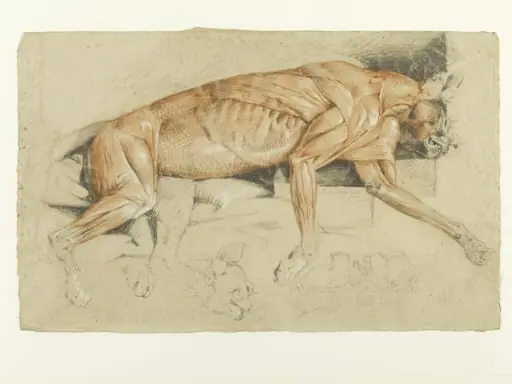
Ecorche drawing of a greyhound supported by planks
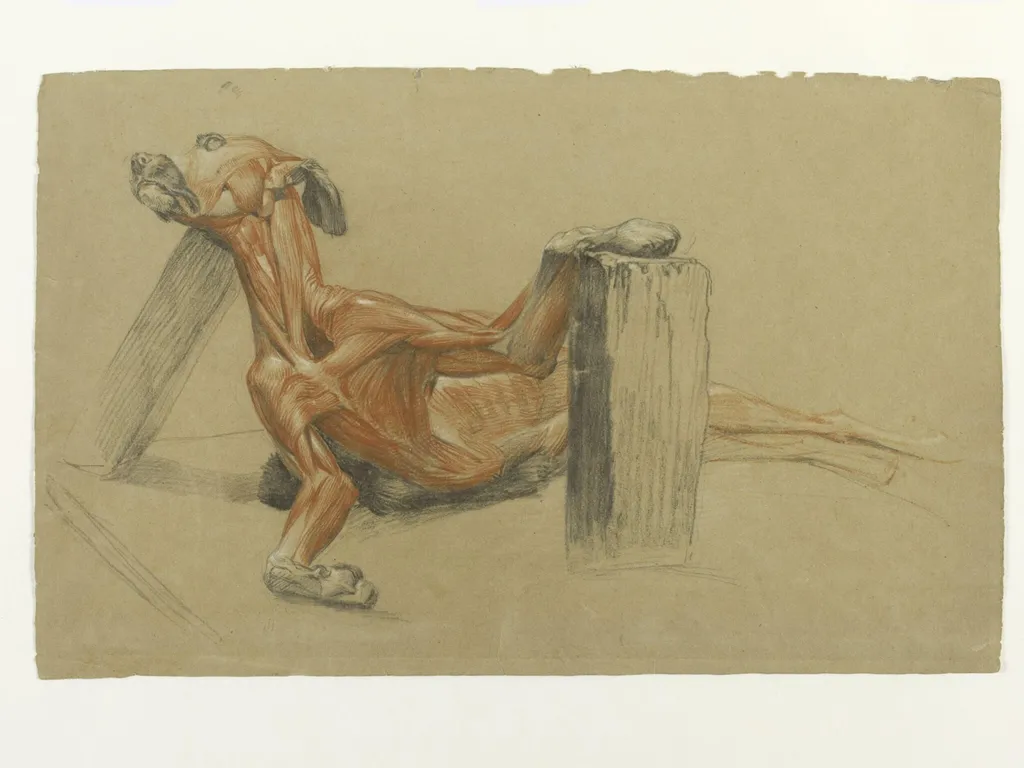
Ecorche drawing of a greyhound supported by planks is a drawing by the Romanticist artist Edwin Landseer. It dates from 1819 and is held in the collection of the Victoria and Albert Museum.
About this work
Overview
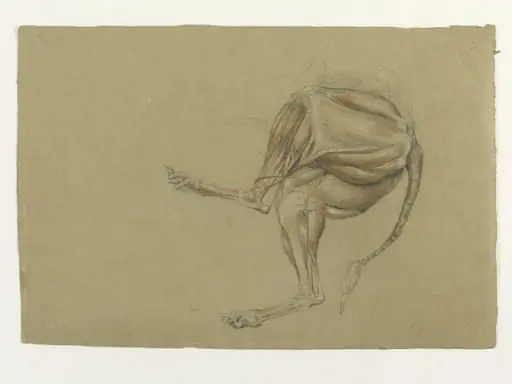
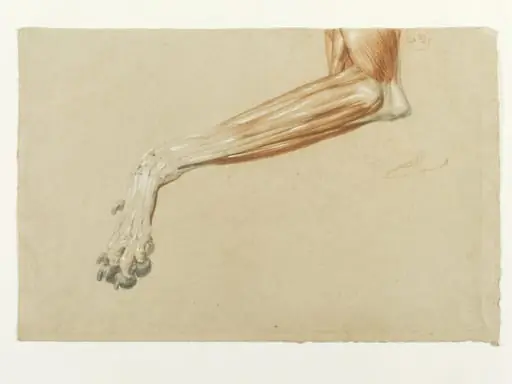
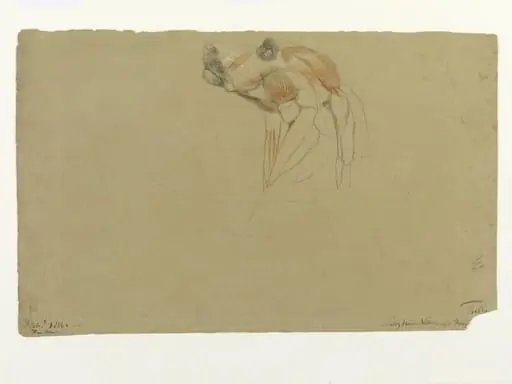
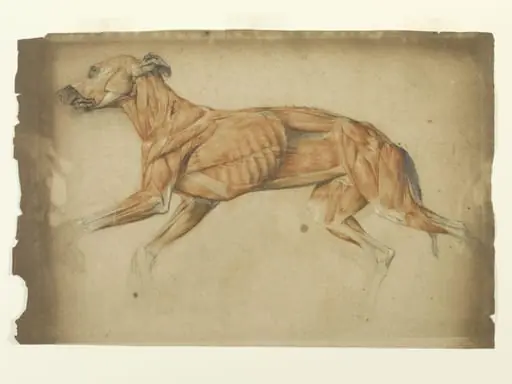
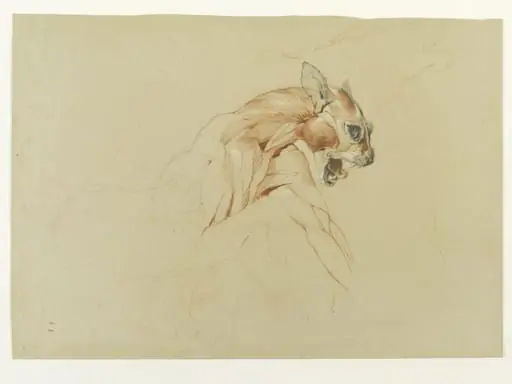
This drawing depicts an écorché greyhound supported by planks, created by Edwin Landseer during his teenage years (1817-1821) as part of a series of eight anatomical studies of dogs and cats.
Subject & Meaning
The subject, a skinned greyhound, reflects Landseer's focus on understanding animal anatomy through direct observation of écorché specimens, foundational to his artistic career.
Technique & Style
The drawing demonstrates Landseer's meticulous observational skills and early mastery of anatomical representation, influenced by his formal studies and possibly by Benjamin Robert Haydon's principles.
History & Provenance
Created between 1817 and 1821, this work is part of a group of eight in the V&A collection, highlighting Landseer's dedicated anatomical studies from a young age.
Context
Informing this piece were Landseer's classes with surgeon Sir Charles Bell in Soho, London, and his sketches of exotic animals at Polito's Menagerie, alongside Haydon's guidance.
Artist & collection

Artist
Sir Edwin Henry Landseer was an English painter and sculptor, well known for his paintings of animals – particularly horses, dogs, and stags. His best-known work is the lion sculptures at the base of Nelson's Column in Trafalgar Square.