Artwork
A Selection of Twenty of the Most Picturesque Views in Paris: On the Banks of the Marne below the Bridge at Charenton
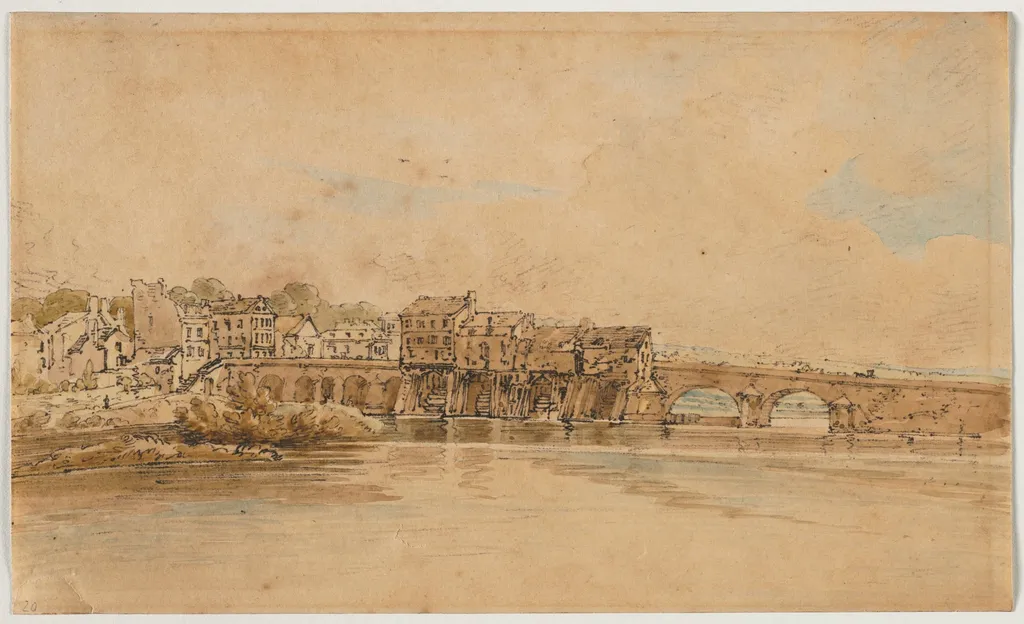
A Selection of Twenty of the Most Picturesque Views in Paris: On the Banks of the Marne below the Bridge at Charenton is a print by the Romanticist artist Girtin. It dates from 1802 and is held in the collection of the Cleveland Museum of Art.
About this work
Overview
It captures a tranquil stretch of the Marne River near the Charenton bridge, reflecting Girtin’s interest in everyday landscapes rather than grand monuments.
Created in 1802, this watercolour is one of twenty views of Paris produced by Thomas Girtin during his final year. It captures a tranquil stretch of the Marne River near the Charenton bridge, reflecting Girtin’s interest in everyday landscapes rather than grand monuments. The work was made shortly before his death and remains part of a cohesive series documenting the French capital from a British observer’s perspective.
Subject & Meaning
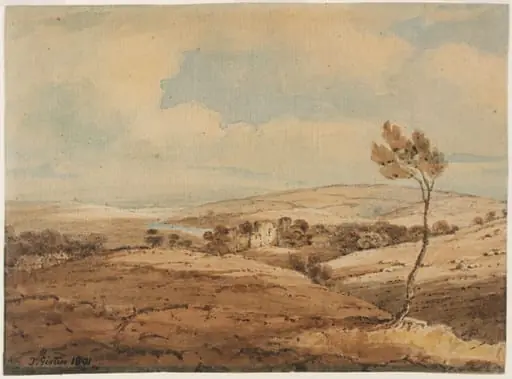
The scene presents a quiet, unidealized riverside: modest dwellings with smoke rising from chimneys, a stone bridge, and a larger structure with arched openings along the opposite bank. There is no human activity, emphasizing stillness and solitude. The composition avoids drama, instead inviting contemplation of ordinary life and the subtle interplay of architecture and nature along the river’s edge.
Technique & Style
Girtin employed loose, fluid brushwork and diluted washes to suggest form and atmosphere with minimal detail. The sky is lightly tinted, the water rendered with soft gradients, and architectural elements indicated through swift, economical lines. The paper’s aged surface, with faint stains and smudges, enhances the sketch-like quality, reinforcing the immediacy of observation over polished finish.
History & Provenance
The work was produced during Girtin’s brief visit to Paris in 1802, a period when he was refining his watercolour technique outside England. After his death later that year, the series passed through private collections before entering the Cleveland Museum of Art’s holdings. Its survival as part of a complete set is rare, offering insight into Girtin’s late artistic priorities.
Context
Girtin’s Paris views emerged during a time when British artists increasingly traveled abroad to study continental landscapes. Unlike grand historical or romanticized scenes, these works focused on modest, unadorned locales — a shift that aligned with emerging Romantic sensibilities valuing quiet observation over idealization. His approach influenced contemporaries, including Turner, in redefining watercolour as a serious medium.
Legacy
Girtin’s watercolours, including this one, helped establish watercolour as a legitimate medium for artistic expression beyond preparatory sketches. His emphasis on atmosphere, spontaneity, and everyday subject matter paved the way for later British landscape traditions. Though little known to the public today, his technical innovations remain foundational to the evolution of 19th-century watercolour painting.
Artist & collection
Artist
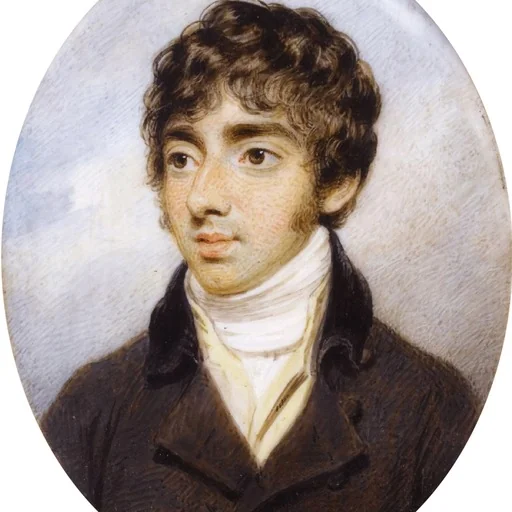
Thomas Girtin (18 February 1775 – 9 November 1802) was an English watercolourist and etcher. A friend and rival of J. M. W. Turner, Girtin played a key role in establishing watercolour as a reputable art form.

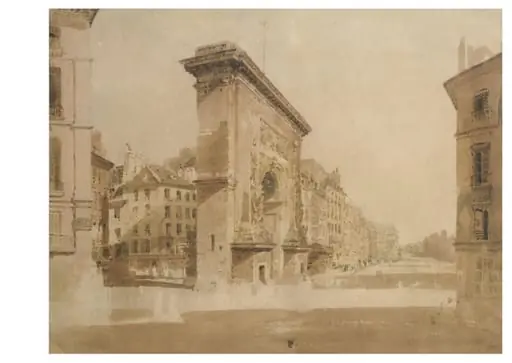
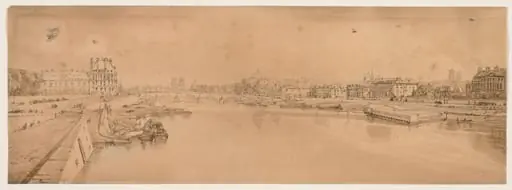 A Selection of Twenty of the Most Picturesque Views in Paris: View of the Tuilleries and Bridge and taken from Pont de la Concorde
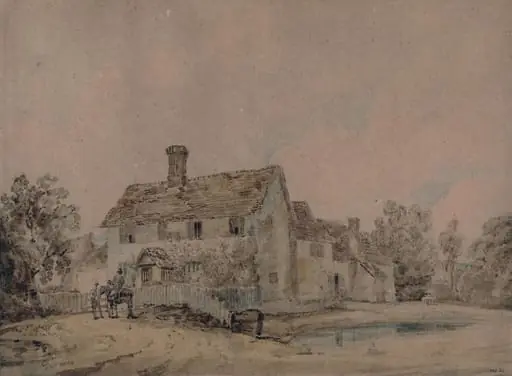
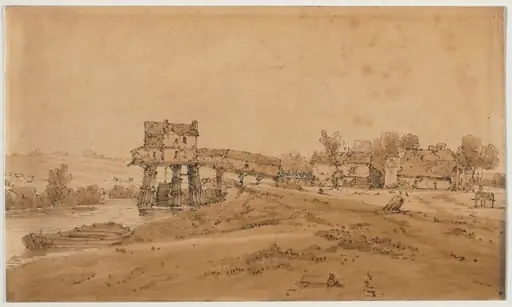 A Selection of Twenty of the Most Picturesque Views in Paris: The Watermill above the Bridge at Charenton
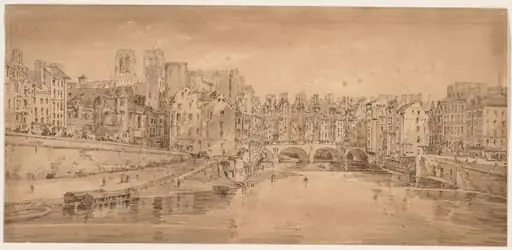 A Selection of Twenty of the Most Picturesque Views in Paris: View of Pont St. Michel, taken from Pont Neuf
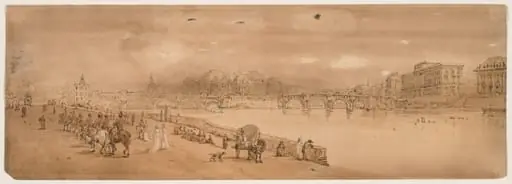 A Selection of Twenty of the Most Picturesque Views in Paris: View of Pont Neuf, and the Mint
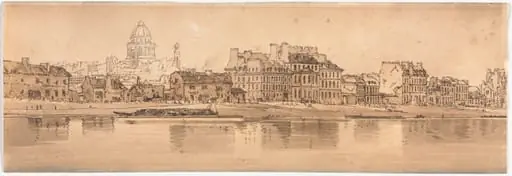 A Selection of Twenty of the Most Picturesque Views in Paris: View of the Pantheon taken from the Arsenal
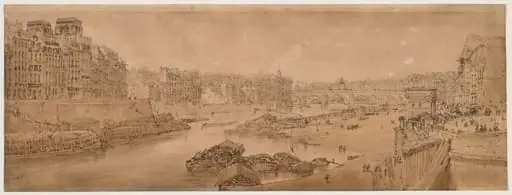 A Selection of Twenty of the Most Picturesque Views in Paris: View of the City with the Louvre taken from the Pont Marie
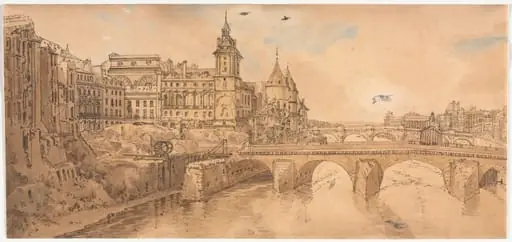 A Selection of Twenty of the Most Picturesque Views in Paris: View of Pont au Change, the City Theatre, Pont Neuf, Conciergerie Prison, and taken from Pont Notre Dame
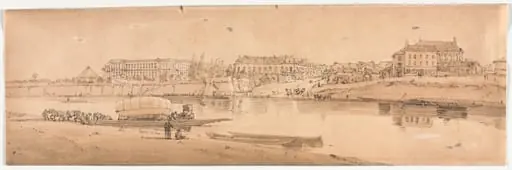 A Selection of Twenty of the Most Picturesque Views in Paris: View of the Palace and Village of Choisi on the Banks of the Seine