Artwork
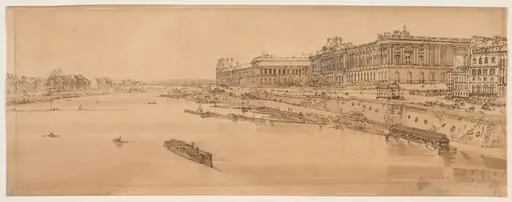
A Selection of Twenty of the Most Picturesque Views in Paris: View of Pont Neuf, and the Mint
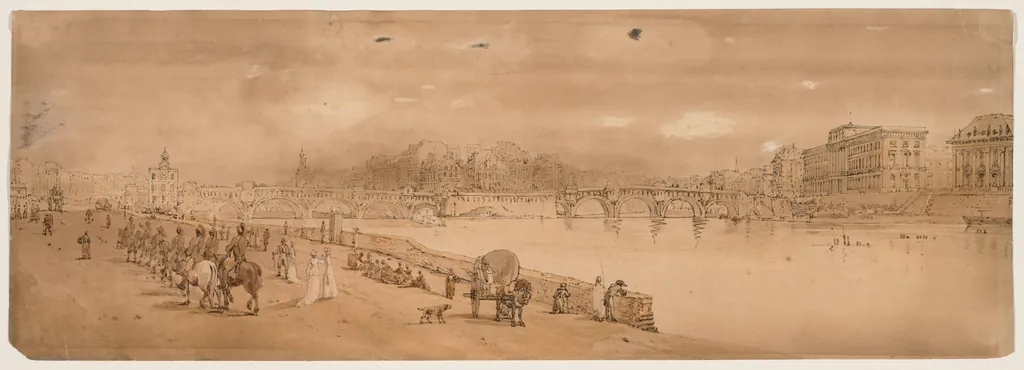
A Selection of Twenty of the Most Picturesque Views in Paris: View of Pont Neuf, and the Mint is a print by the Romanticist artist Girtin. It dates from 1802 and is held in the collection of the Cleveland Museum of Art.
About this work
Overview
Created near the end of his short life, the work reflects his commitment to urban topography and the expressive potential of watercolour.
Thomas Girtin’s 1802 watercolour, part of a series titled A Selection of Twenty of the Most Picturesque Views in Paris, captures the Pont Neuf and the adjacent Royal Mint. Created near the end of his short life, the work reflects his commitment to urban topography and the expressive potential of watercolour. Unlike grand historical scenes, Girtin focused on ordinary cityscapes, treating them with quiet precision and atmospheric depth.
Subject & Meaning
The view centers on the Pont Neuf, Paris’s oldest standing bridge, flanked by the Mint’s austere architecture. Girtin avoids idealization, presenting the scene as a lived-in urban space—crowded with figures, weathered stone, and functional buildings. The composition suggests an interest in the rhythm of daily life, not spectacle, aligning with emerging Romantic sensibilities that valued authenticity over ornament.
Technique & Style
Girtin employed translucent watercolour washes to model form through subtle gradations of tone, emphasizing the interplay of light and shadow across facades and water. His brushwork is deliberate yet fluid, avoiding hard outlines in favor of soft edges that dissolve into atmosphere. This approach, influenced by Dutch landscape traditions, elevated watercolour beyond sketching into a medium capable of nuanced realism.
History & Provenance
The print series was produced in 1802, just months before Girtin’s death at age 27. It was among his final projects, commissioned to document Parisian landmarks for a British audience. Though few complete sets survive, individual sheets were circulated among collectors and artists, contributing to the growing appreciation of topographical watercolours in England.
Context
At the turn of the 19th century, British artists increasingly turned to continental subjects following the Peace of Amiens. Girtin’s Paris series emerged amid this cultural exchange, offering a restrained, observational alternative to the dramatic landscapes of his contemporaries. His focus on architecture and urban texture reflected a broader interest in documenting the modern city as a subject worthy of artistic attention.
Legacy
Girtin’s Paris views helped establish watercolour as a legitimate medium for serious artistic expression. His atmospheric handling of light and structure influenced later artists, including J.M.W. Turner. Though little known to the public today, his work laid foundational techniques for the 19th-century British watercolour school, shifting its status from amateur pastime to professional discipline.
Artist & collection
Artist
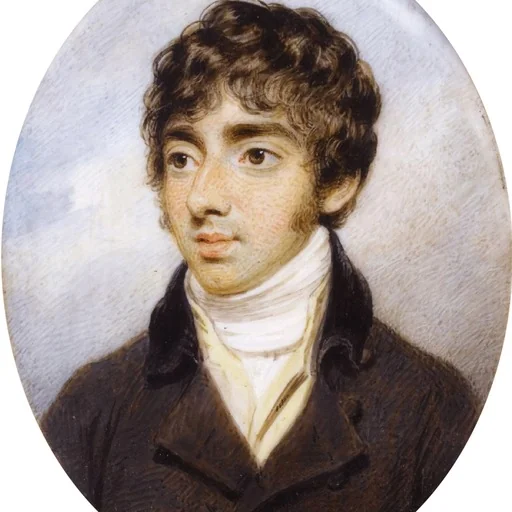
Thomas Girtin (18 February 1775 – 9 November 1802) was an English watercolourist and etcher. A friend and rival of J. M. W. Turner, Girtin played a key role in establishing watercolour as a reputable art form.

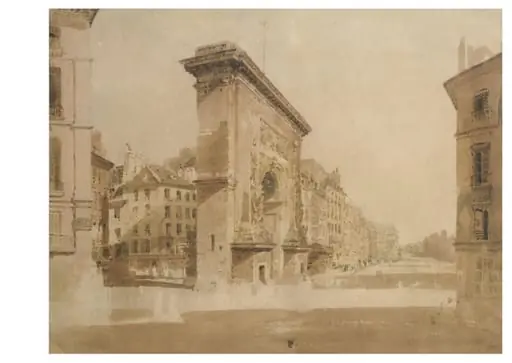
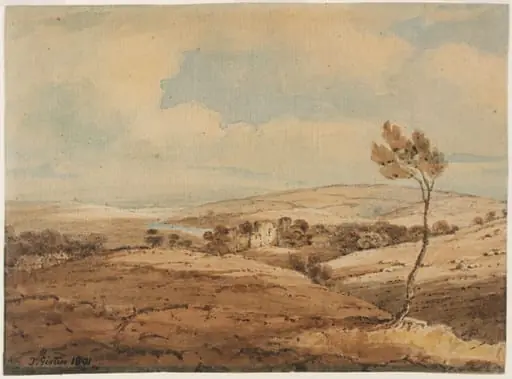
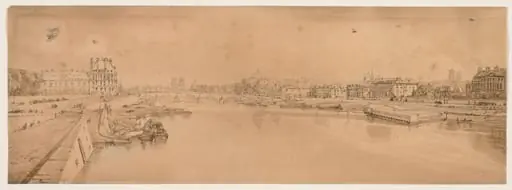
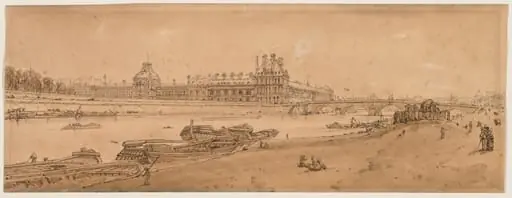 A Selection of Twenty of the Most Picturesque Views in Paris
 A Selection of Twenty of the Most Picturesque Views in Paris: View of the Tuilleries and Bridge and taken from Pont de la Concorde
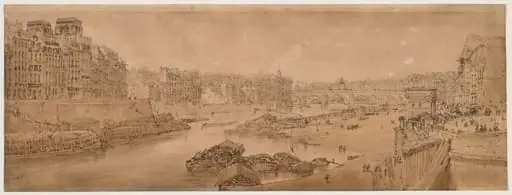 A Selection of Twenty of the Most Picturesque Views in Paris: View of the City with the Louvre taken from the Pont Marie
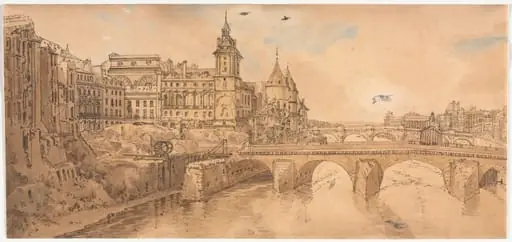 A Selection of Twenty of the Most Picturesque Views in Paris: View of Pont au Change, the City Theatre, Pont Neuf, Conciergerie Prison, and taken from Pont Notre Dame
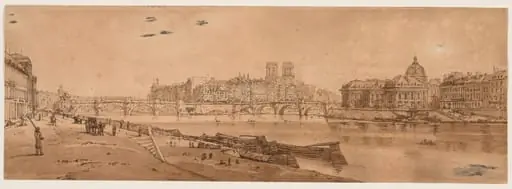 A Selection of Twenty of the Most Picturesque Views in Paris: View of Pont Neuf, part of the Louvre, Notre Dame, and the College of Four Nations
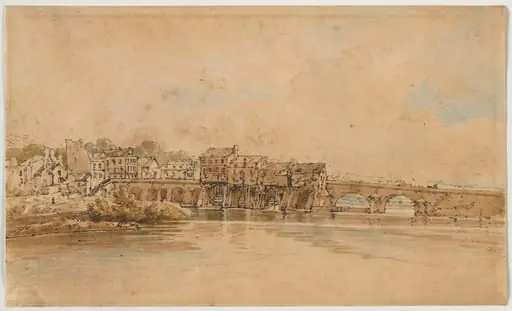 A Selection of Twenty of the Most Picturesque Views in Paris: On the Banks of the Marne below the Bridge at Charenton
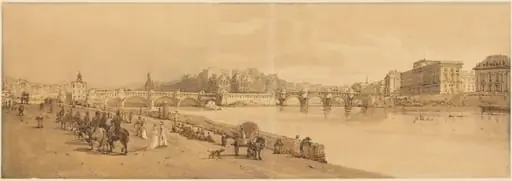 A View of the Pont Neuf, the Mint, etc.: pl.8
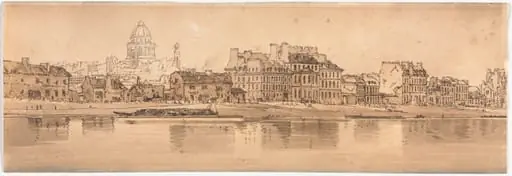 A Selection of Twenty of the Most Picturesque Views in Paris: View of the Pantheon taken from the Arsenal
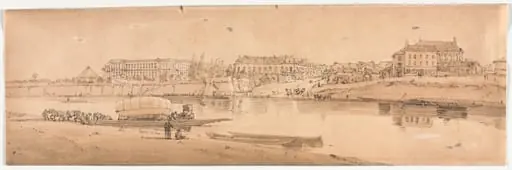 A Selection of Twenty of the Most Picturesque Views in Paris: View of the Palace and Village of Choisi on the Banks of the Seine
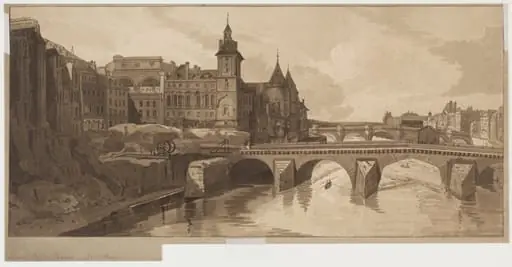 Selection of Twenty of the Most Picturesque Views in Paris:View of Pont au Change
 A Selection of Twenty of the Most Picturesque Views in Paris: View of the Louvre and Bridge of the Tuilleries taken from Pont Neuf