Artwork
A Selection of Twenty of the Most Picturesque Views in Paris: View of the Louvre and Bridge of the Tuilleries taken from Pont Neuf
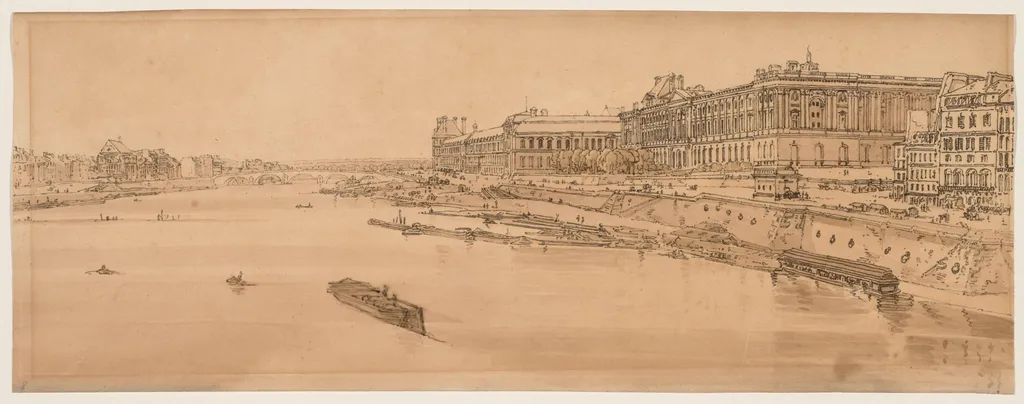
A Selection of Twenty of the Most Picturesque Views in Paris: View of the Louvre and Bridge of the Tuilleries taken from Pont Neuf is a print by the Romanticist artist Girtin. It dates from 1802 and is held in the collection of the Cleveland Museum of Art.
About this work
Overview
Created in 1802, this watercolour is one of twenty views in a series by Thomas Girtin documenting Parisian landmarks.
Created in 1802, this watercolour is one of twenty views in a series by Thomas Girtin documenting Parisian landmarks. Executed shortly before his death, the work presents a panoramic perspective from the Pont Neuf, framing the Louvre and the Bridge of the Tuileries along the Seine. Girtin’s approach emphasizes spatial depth and architectural rhythm over fine detail, capturing the city’s scale through subtle tonal shifts and restrained linework.
Subject & Meaning
The scene centers on two of Paris’s most prominent structures—the Louvre Palace and the Tuileries Bridge—positioned as enduring symbols of civic and royal authority. The composition, viewed from the Pont Neuf, frames these buildings within a quiet, everyday urban landscape. Figures and boats are minimally rendered, suggesting human activity without narrative focus, reinforcing the city’s presence as a structured, lived-in environment rather than a stage for drama.
Technique & Style
Girtin employed transparent watercolour washes to build layered tones, using light washes to suggest architectural mass and shadow without heavy outlines. The soft, diffused edges and muted palette reflect his mastery of atmospheric perspective. Details are implied rather than defined—windows, columns, and figures are suggested with economical strokes—creating a sense of immediacy while preserving the dignity of the architecture.
History & Provenance
The print series was produced in the final year of Girtin’s life, during a period when he was refining his watercolour technique and expanding his subject matter beyond English landscapes. Though intended for a British audience, the views were based on sketches made during his 1801 travels in France. The series was published posthumously, cementing his reputation as a pioneer in elevating watercolour to a serious artistic medium.
Context
Made during the Napoleonic era, the work reflects a moment when Paris was being reshaped by urban planning and political symbolism. While British artists often idealized the countryside, Girtin turned his attention to the modern city, documenting its architecture with observational precision. His approach diverged from romanticized depictions, offering instead a calm, unembellished record of urban structure and spatial order.
Legacy
Girtin’s Paris views contributed to the broader acceptance of watercolour as a medium capable of serious topographical and architectural representation. His restrained style influenced later artists, including J.M.W. Turner, who adopted similar methods of tonal gradation and atmospheric depth. Though little known today outside specialist circles, these works remain key examples of early 19th-century urban observation in British art.
Artist & collection
Artist
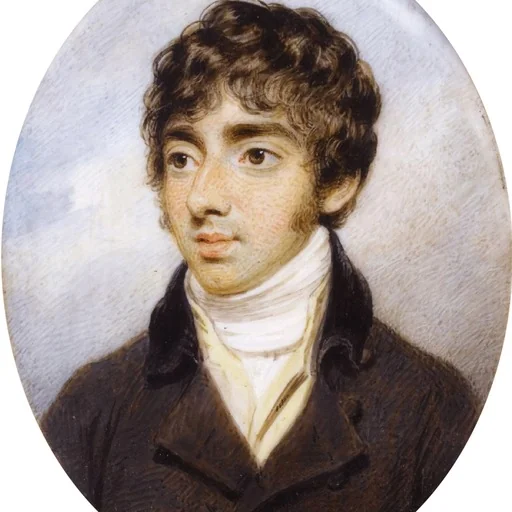
Thomas Girtin (18 February 1775 – 9 November 1802) was an English watercolourist and etcher. A friend and rival of J. M. W. Turner, Girtin played a key role in establishing watercolour as a reputable art form.

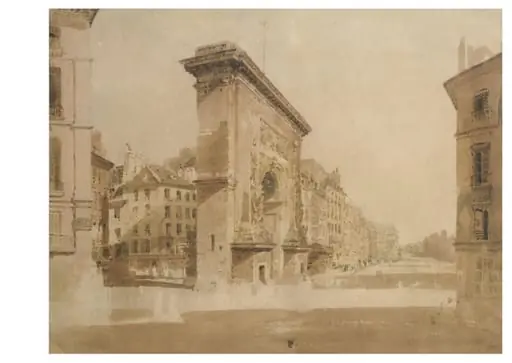
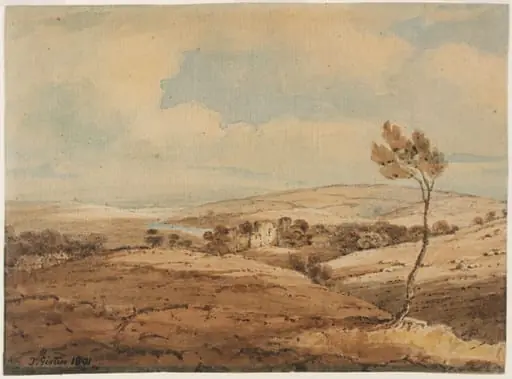
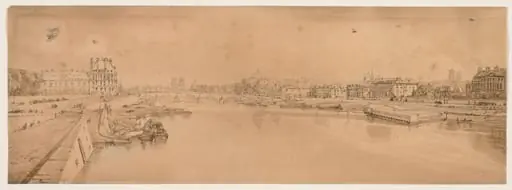 A Selection of Twenty of the Most Picturesque Views in Paris: View of the Tuilleries and Bridge and taken from Pont de la Concorde
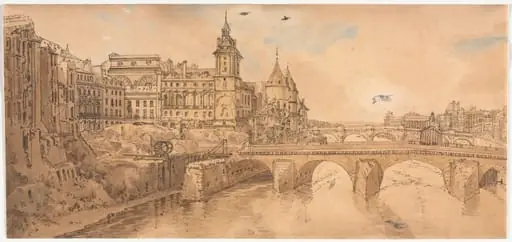 A Selection of Twenty of the Most Picturesque Views in Paris: View of Pont au Change, the City Theatre, Pont Neuf, Conciergerie Prison, and taken from Pont Notre Dame
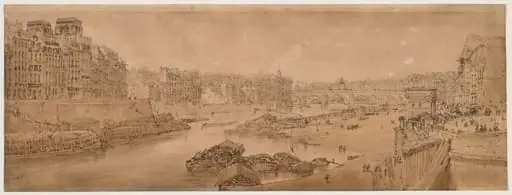 A Selection of Twenty of the Most Picturesque Views in Paris: View of the City with the Louvre taken from the Pont Marie
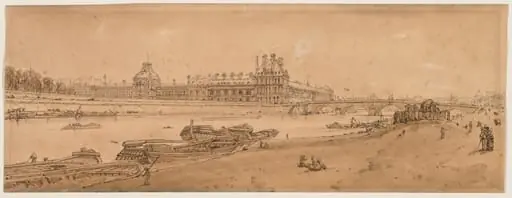 A Selection of Twenty of the Most Picturesque Views in Paris
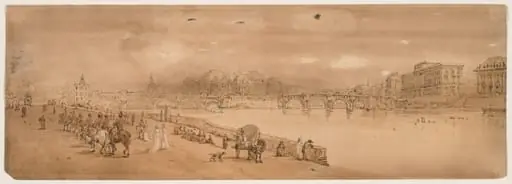 A Selection of Twenty of the Most Picturesque Views in Paris: View of Pont Neuf, and the Mint
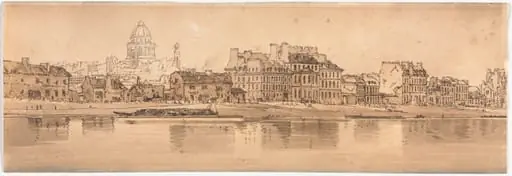 A Selection of Twenty of the Most Picturesque Views in Paris: View of the Pantheon taken from the Arsenal
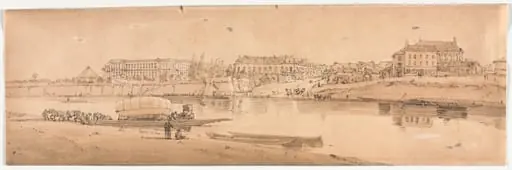 A Selection of Twenty of the Most Picturesque Views in Paris: View of the Palace and Village of Choisi on the Banks of the Seine
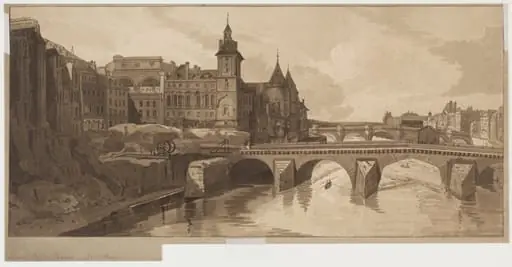 Selection of Twenty of the Most Picturesque Views in Paris:View of Pont au Change
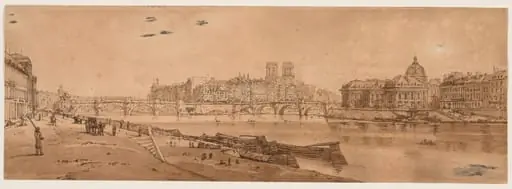 A Selection of Twenty of the Most Picturesque Views in Paris: View of Pont Neuf, part of the Louvre, Notre Dame, and the College of Four Nations
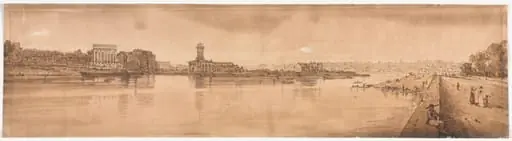 A Selection of Twenty of the Most Picturesque Views in Paris: View of the Village of Chaillot, taken from Pont de la Concorde
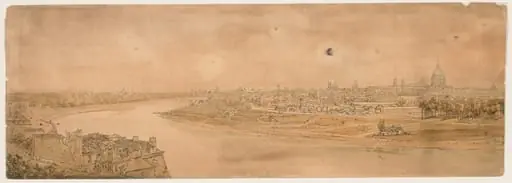 A Selection of Twenty of the Most Picturesque Views in Paris: A General View of Paris, taken from Chaillot