Artwork
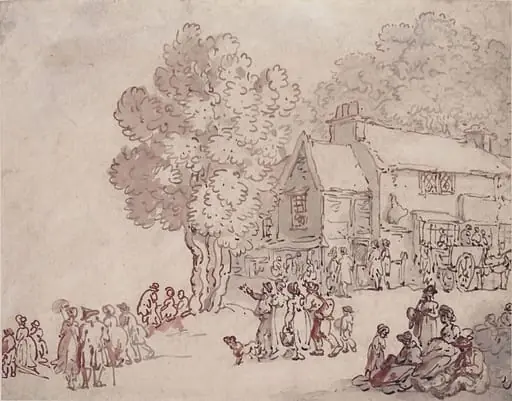
Village Fair, with mountebanks
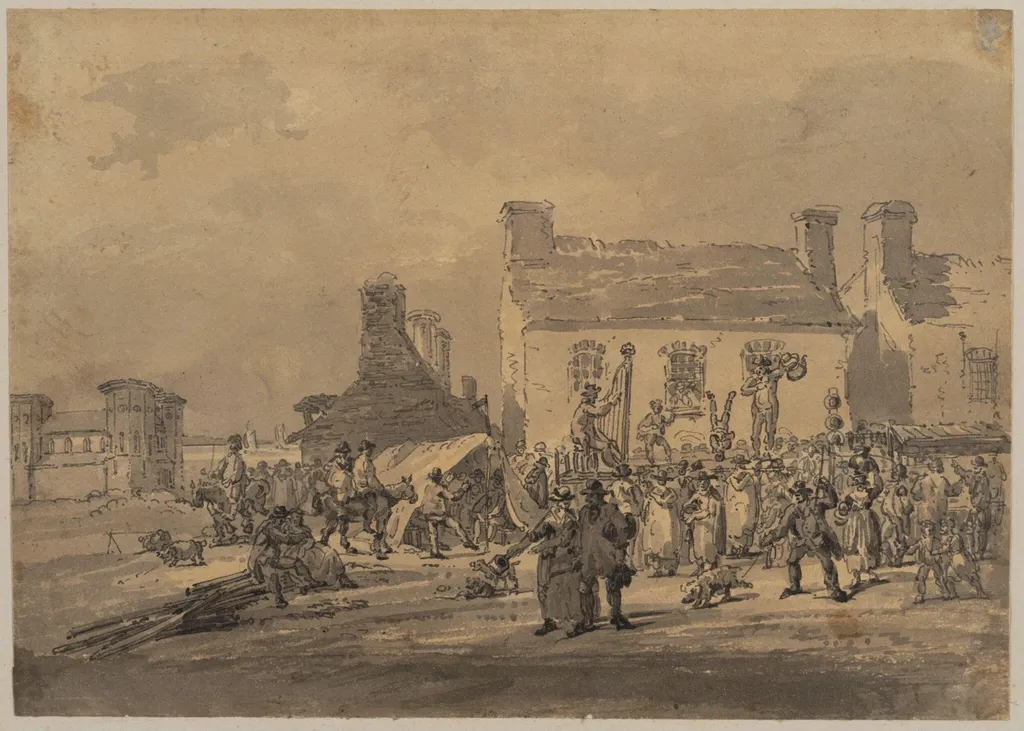
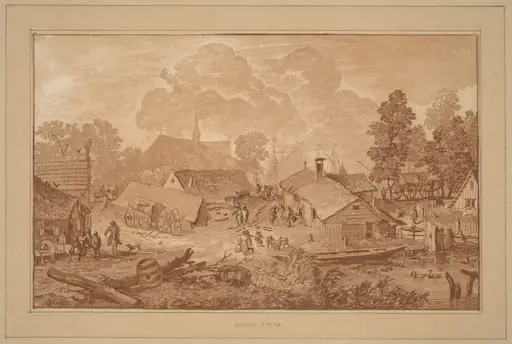
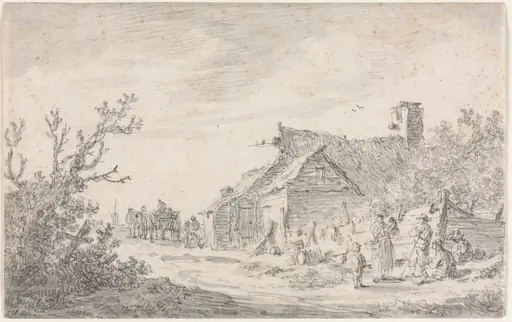
Village Fair, with mountebanks is a drawing by the Romanticist artist Girtin. It dates from 1798 and is held in the collection of the Victoria and Albert Museum.
About this work
Overview
Thomas Girtin’s *Village Fair, with mountebanks*, dated around 1798, is a pen-and-ink drawing that captures a bustling rural gathering.
Thomas Girtin’s *Village Fair, with mountebanks*, dated around 1798, is a pen-and-ink drawing that captures a bustling rural gathering. Executed in monochrome, the work demonstrates Girtin’s mastery of line and tonal contrast to convey motion and crowd dynamics. As a key figure in British watercolour drawing, he helped shift perceptions of the medium from sketching tool to serious artistic expression during a period of rapid artistic change.
Subject & Meaning
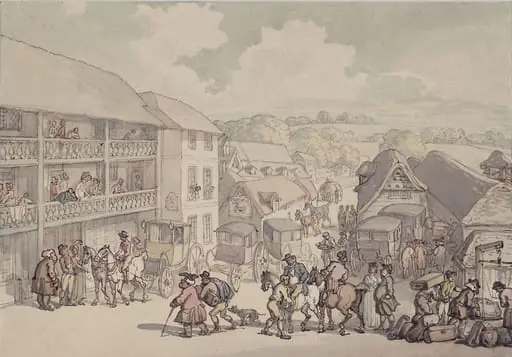
The scene depicts a village fair centered on a makeshift stage where performers draw a curious audience. Figures cluster in varied poses—some seated, others standing or moving—while a dog darts through the foreground, adding spontaneity. The composition suggests everyday entertainment in provincial England, reflecting Girtin’s interest in ordinary life rather than idealized landscapes or historical narratives.
Technique & Style
Girtin employed rapid, expressive pen strokes and subtle washes to model form and suggest depth. The absence of color heightens the focus on structure and movement, with dense hatching in the crowd contrasting with looser lines in the background architecture. His handling of light and shadow creates a sense of atmospheric space, characteristic of his approach to urban and rural scenes alike.
History & Provenance
The drawing entered the Victoria and Albert Museum’s collection as part of its broader effort to preserve British graphic arts. It dates from the final years of Girtin’s short career, produced during a period of intense creative exchange with contemporaries like J. M. W. Turner. Its survival offers insight into the working methods of a draftsman whose influence extended beyond his lifetime.
Context
In late 18th-century Britain, watercolour drawing was gaining recognition as a legitimate art form, particularly for topographical and genre subjects. Girtin’s work emerged amid growing public interest in rural festivals and popular entertainments, reflecting broader cultural shifts toward documenting everyday experience. His drawings contributed to a visual language that valued immediacy and observation over classical idealism.
Legacy
Though Girtin died at 27, his technical innovations in watercolour and ink drawing influenced a generation of artists, including Turner. *Village Fair* exemplifies his ability to infuse spontaneous scenes with structural rigor. The drawing remains a touchstone in the history of British graphic art, illustrating how modest media could convey complex social observation.
Artist & collection
Artist
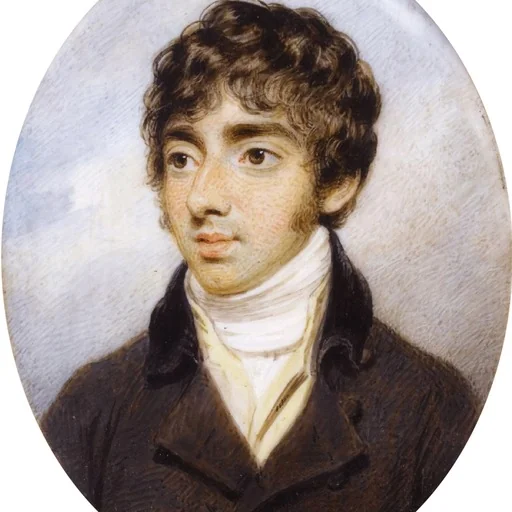
Thomas Girtin (18 February 1775 – 9 November 1802) was an English watercolourist and etcher. A friend and rival of J. M. W. Turner, Girtin played a key role in establishing watercolour as a reputable art form.