Artwork
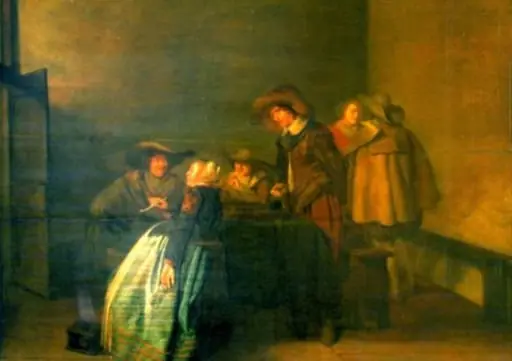
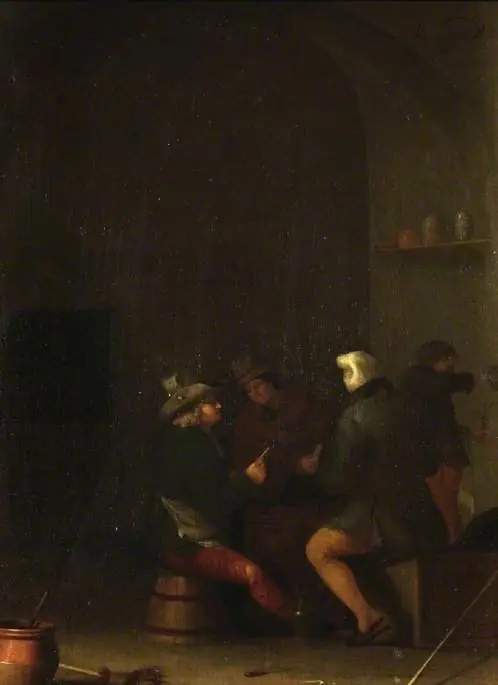
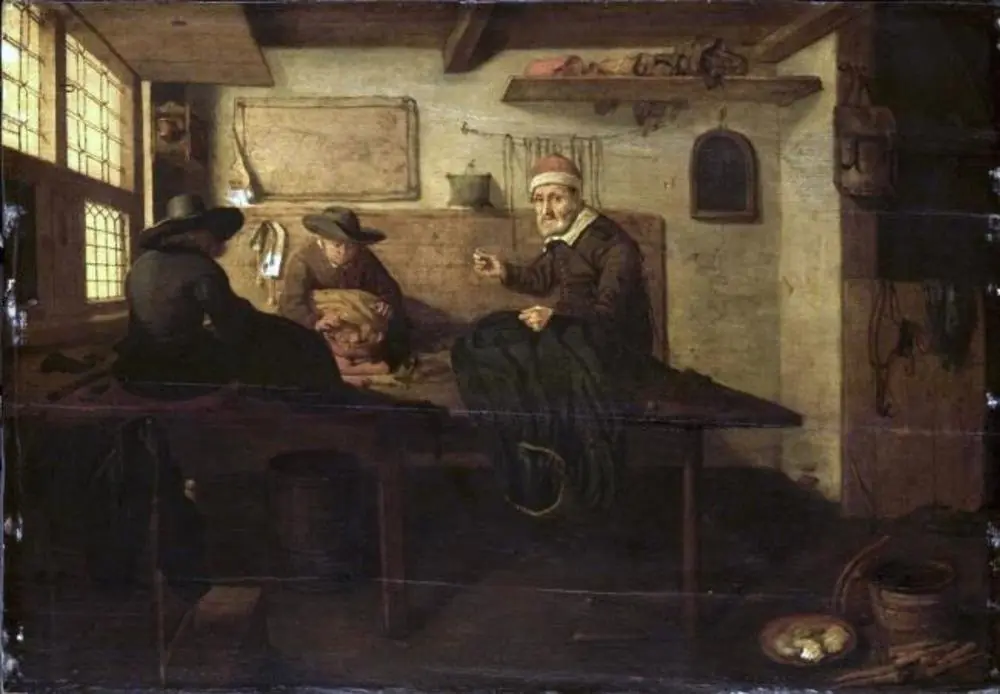
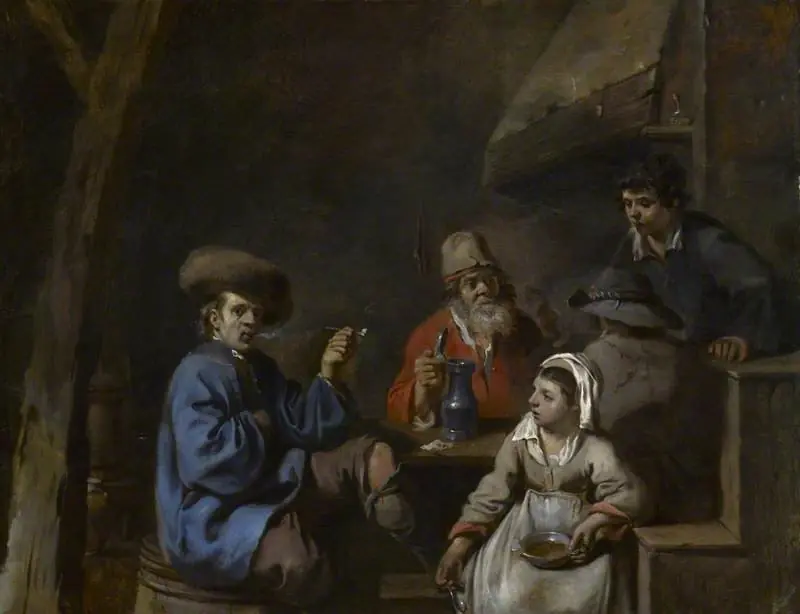
Interior of an Italian coffee-house
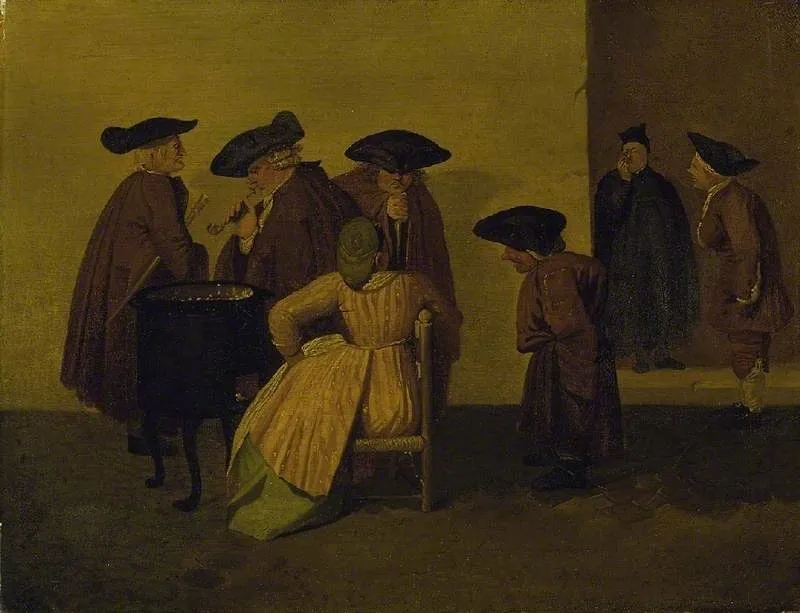
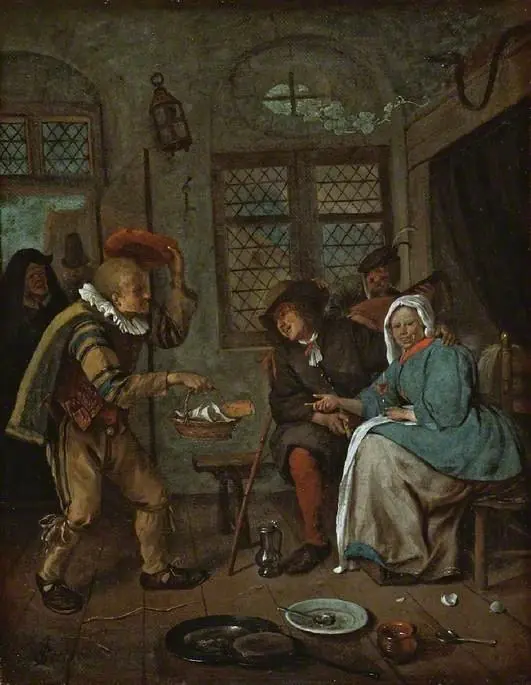
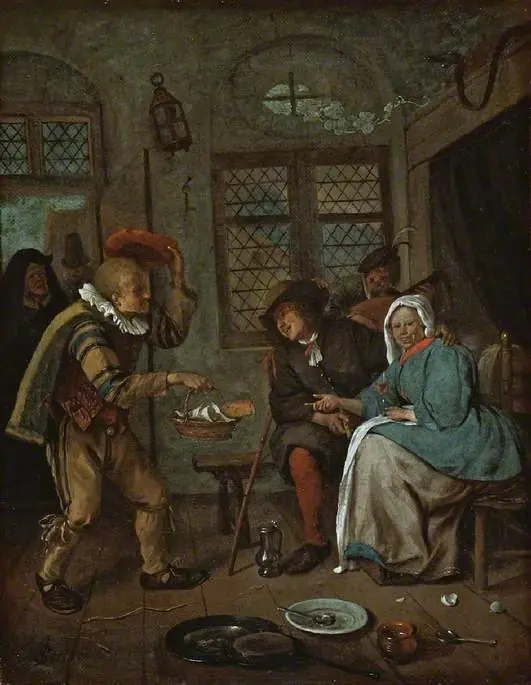
Interior of an Italian coffee-house is an oil painting by the Rococo painting artist Thomas Patch. It dates from 1751 and is held in the collection of the Fitzwilliam Museum.
About this work
The painting is done in a realistic style, with attention to detail in the clothing and furnishings.
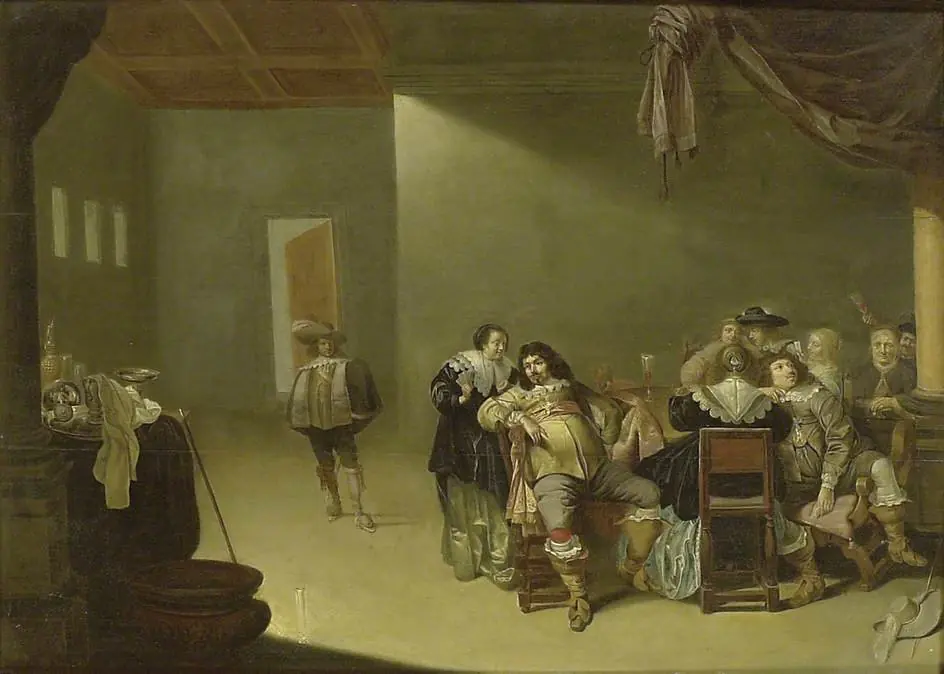
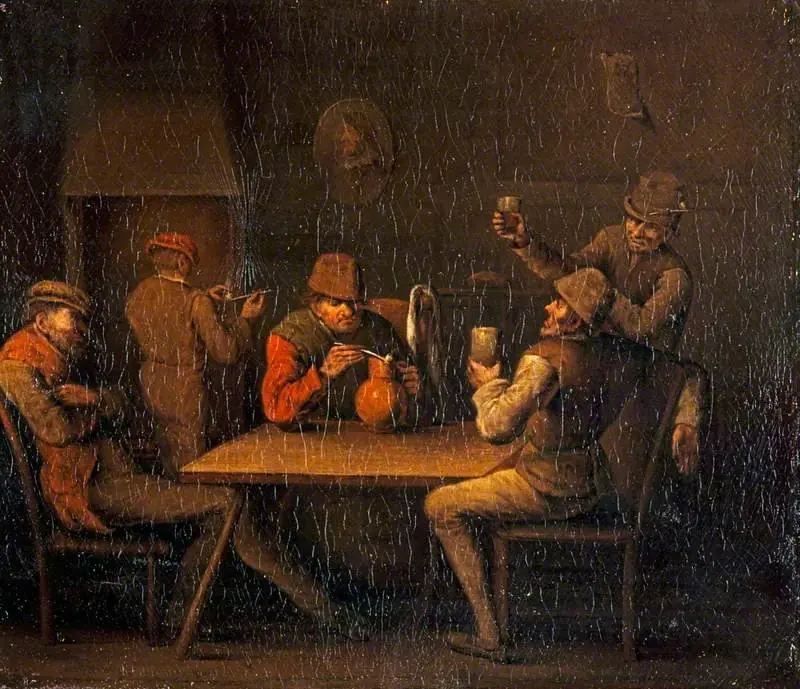
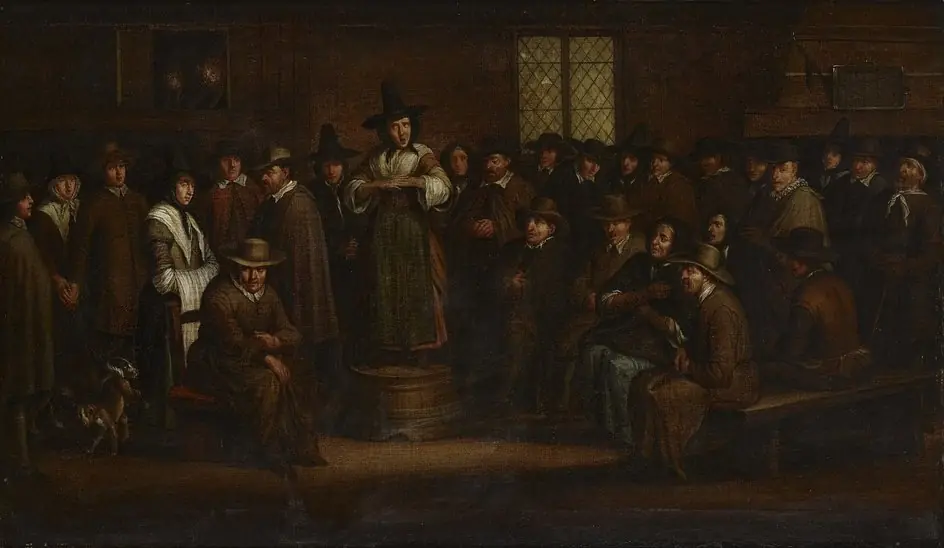
This painting shows a group of people gathered in a room, possibly a coffee-house. They are all wearing 18th-century clothing, including tricorn hats and long coats. Some of them are standing, while others are seated at a table.
The scene is lively, with people chatting and laughing. One man is holding a cup, and another is pouring liquid from a jug. The atmosphere is warm and inviting, with a sense of camaraderie among the group.
The painting is done in a realistic style, with attention to detail in the clothing and furnishings. It's a charming depiction of everyday life in the 18th century. You might also like to explore more works by artist Thomas Patch.
Overview
Thomas Patch’s 1751 canvas portrays a bustling interior that appears to be an Italian coffee‑house. A group of men and women, dressed in typical mid‑eighteenth‑century attire with tricorn hats and long coats, occupy the space, some seated at a table, others standing. The scene conveys a convivial atmosphere, with figures engaged in conversation, one holding a cup and another pouring from a jug, suggesting a moment of everyday social interaction.
Subject & Meaning
The work captures a slice of urban life, emphasizing the role of coffee‑houses as hubs of conversation and leisure in 18th‑century Italy. By focusing on ordinary patrons rather than aristocratic figures, Patch highlights the communal aspect of public spaces, where clothing, gestures, and shared drink signal a collective experience of hospitality and camaraderie.
Technique & Style
Executed in oil on canvas, the painting employs a realistic approach with careful rendering of fabrics, textures, and interior furnishings. Patch’s brushwork reflects the Rococo’s lightness, using soft lighting and subtle color modulation to create depth while maintaining a decorative clarity that draws the viewer’s eye across the lively gathering.
History & Provenance
Created during Patch’s productive period in Florence, the canvas forms part of his series of local genre scenes. After remaining in private hands, it entered the collection of the Fitzwilliam Museum, where it is currently conserved and displayed as an example of the artist’s contribution to mid‑century European genre painting.
Context
Patch, an English expatriate active in the Florentine art scene, was known for both topographical views of cities such as Florence and Tivoli and for caricature prints aimed at Anglo‑Florentine audiences and Grand Tour travelers. This painting aligns with his broader interest in documenting everyday Italian life for a market that prized both visual charm and cultural insight.
Artist & collection
Artist
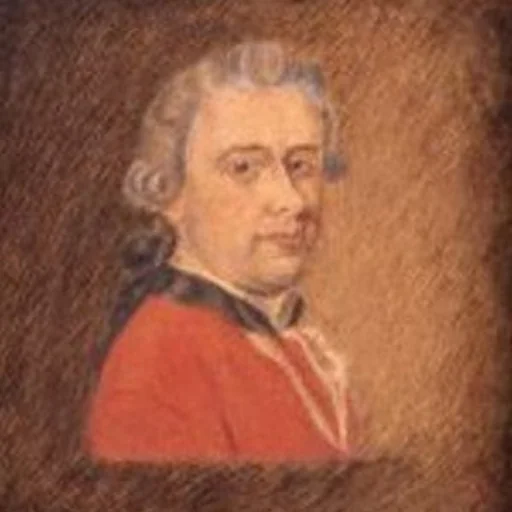
Thomas Patch (13 March 1725 – 30 April 1782) was an English painter, printmaker, physiognomist and historian.