Artwork
The Country House
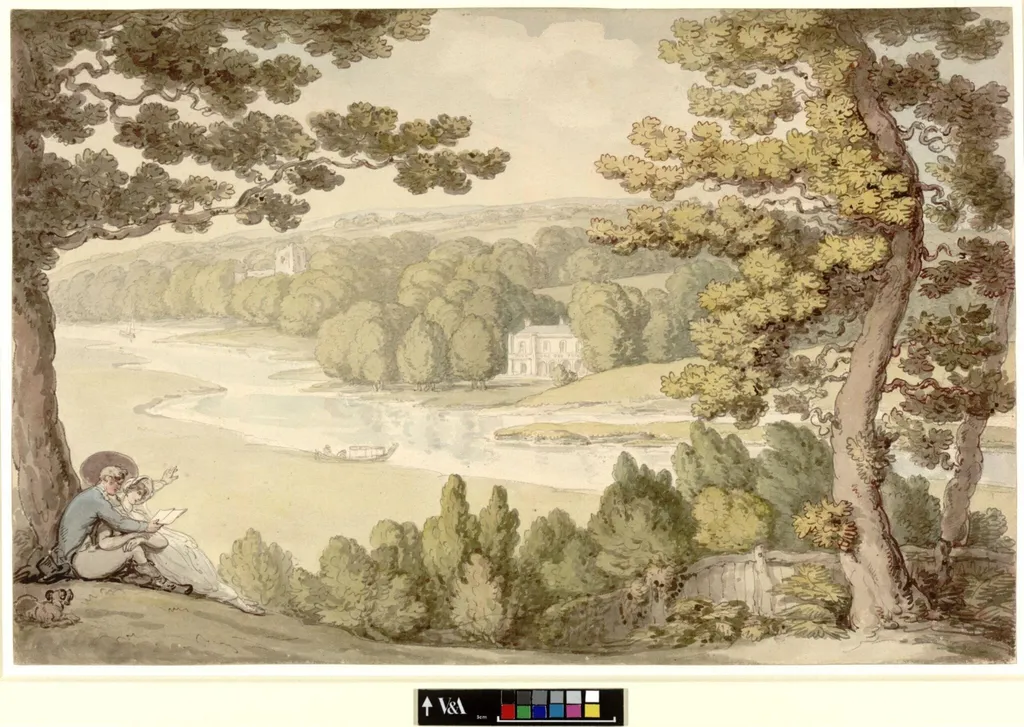
The Country House is a watercolor work on paper by the Romanticist artist Thomas Rowlandson. It dates from 1800 and is held in the collection of the Victoria and Albert Museum. This watercolour depicts a quiet moment in the English countryside, where a man and woman rest on a gentle rise, gazing across a valley.
About this work
You see a couple resting on a hill, overlooking a valley with a winding river and a country house.
The woman's neoclassical dress and the man's hairstyle suggest this scene is from around 1800. This gives us a glimpse into English country life back then.
To learn more about the art of creating depth and contrast like this, look up the technique of chiaroscuro.
Overview
This watercolour depicts a quiet moment in the English countryside, where a man and woman rest on a gentle rise, gazing across a valley. A winding river threads through the landscape, leading the eye to a modest country house nestled among trees. The scene captures a moment of stillness, framed by the natural topography and architectural simplicity typical of early 19th-century rural England.
Subject & Meaning
The figures, paused in repose, suggest a contemplative engagement with the land. Their attire—the woman’s flowing neoclassical gown and the man’s plaited hair—anchors the scene in the early 1800s, reflecting contemporary fashion and ideals of refined leisure. The composition invites quiet observation rather than narrative, emphasizing harmony between human presence and the natural environment.
Technique & Style
The artist employs delicate washes of watercolour to suggest atmospheric depth and subtle tonal shifts. Soft gradients define the rolling hills and distant house, while finer lines outline trees and architectural details. The lack of harsh contrast avoids dramatic effect, instead favoring a muted, observational realism that aligns with topographical traditions of the period.
History & Provenance
Attributed to Thomas Rowlandson, this work is part of a broader body of watercolours documenting English rural life during the late Georgian era. Though exact provenance details are limited, its stylistic consistency with his known sketches from the turn of the century supports dating it to circa 1800. It likely originated as a private study, not a commissioned piece.
Context
In the early 1800s, watercolour was increasingly used for personal and topographical records, especially among the middle and upper classes. Scenes like this reflected a growing cultural interest in the English landscape as a site of tranquility and national identity, distinct from urban or continental influences.
Legacy
This work contributes to a genre of British watercolours that documented everyday rural life with quiet precision. While not widely exhibited in its time, it exemplifies the shift toward intimate, observational art that influenced later landscape traditions. Its value lies in its unembellished record of a moment, place, and social moment.
Artist & collection
Artist
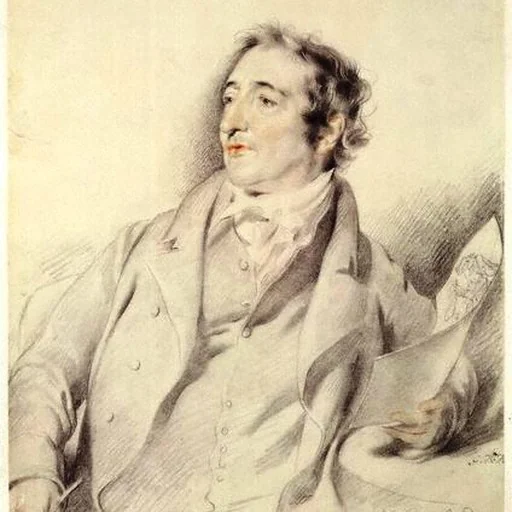
Thomas Rowlandson (; 13 July 1757 – 21 April 1827) was an English artist and caricaturist of the Georgian Era, noted for his political satire and social observation.

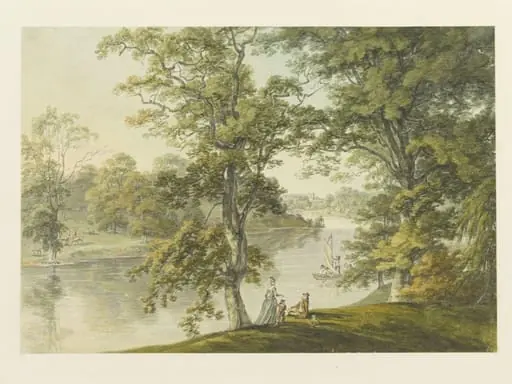 Wynnstay Park, Derbyshire
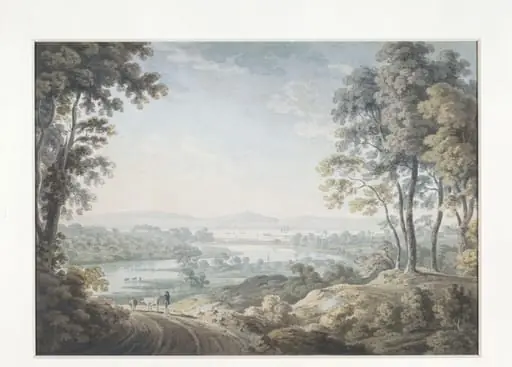 Lymington River, with the Isle of Wight in the distance
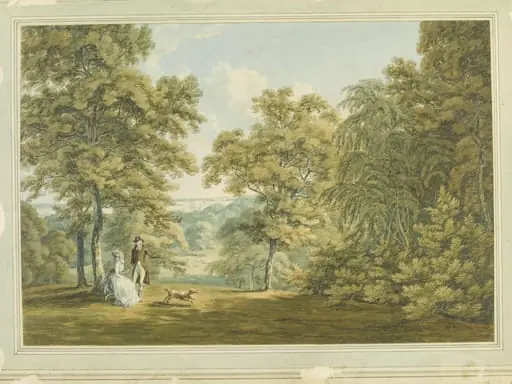 Greenwich Park
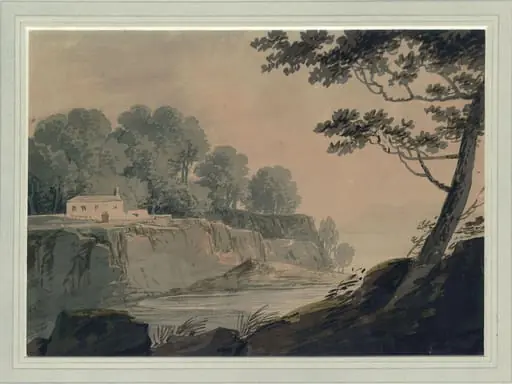 River scene with cottage and trees
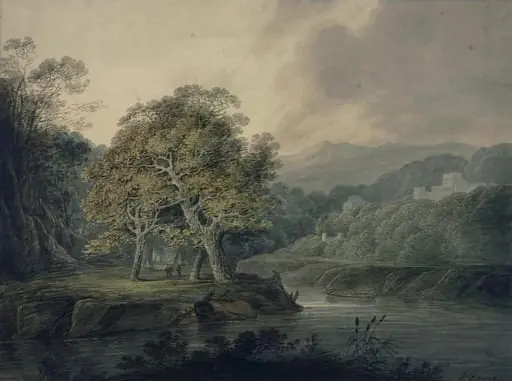 Landscape with river and mountains
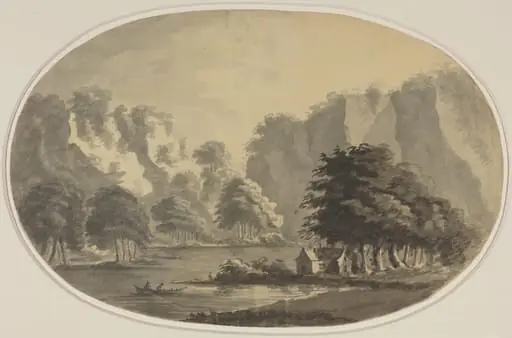 View of Ullswater
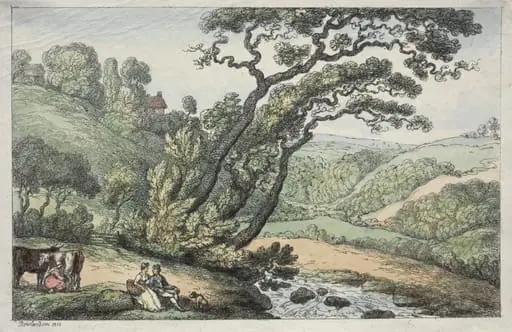 A Cornish View
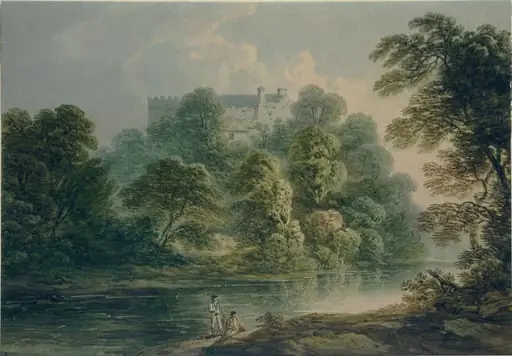 Castle on the Liffey, Ireland
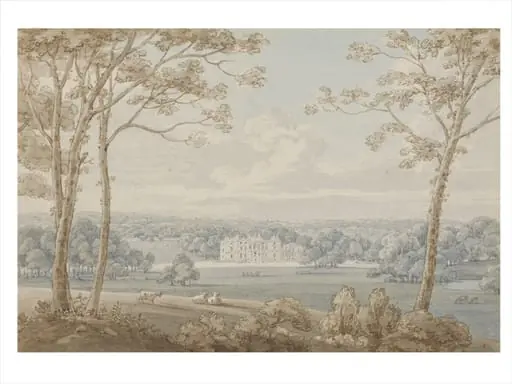 Sandbeck Park, Yorkshire
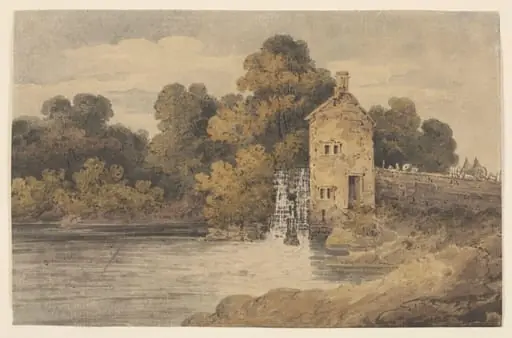 Untitled
 Landscape with cottage
 Landscape with a house and countryfolk