Artwork
The Yankee Pedlar
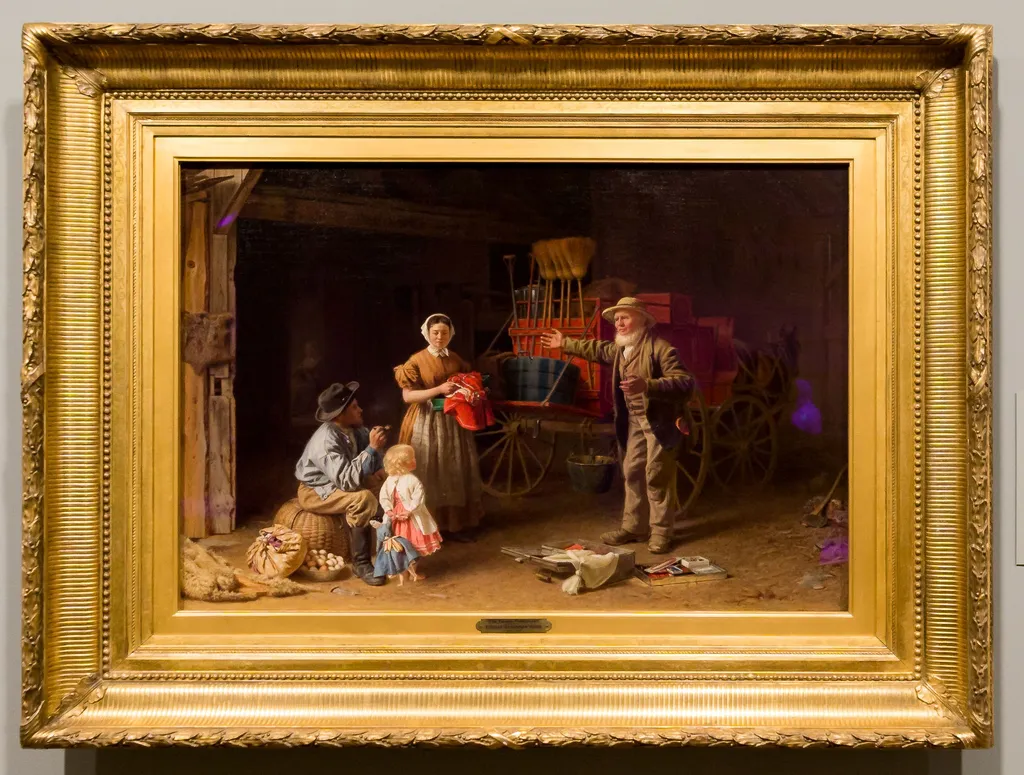
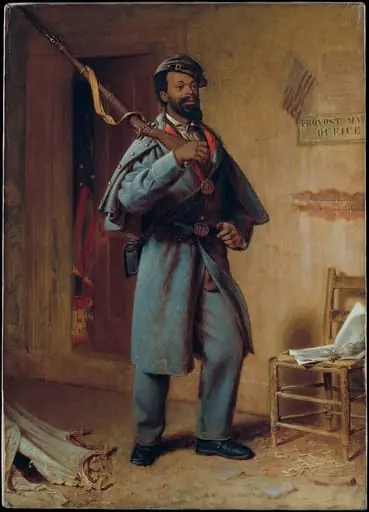
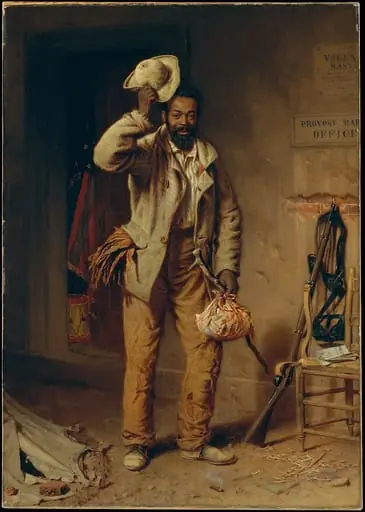
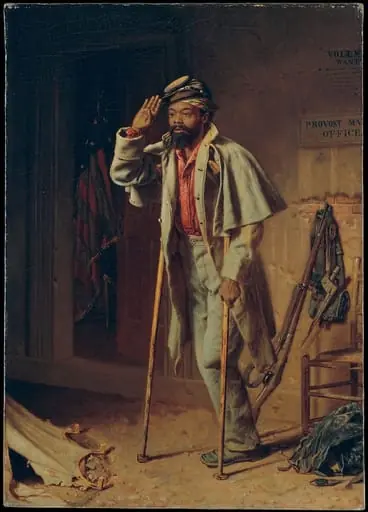
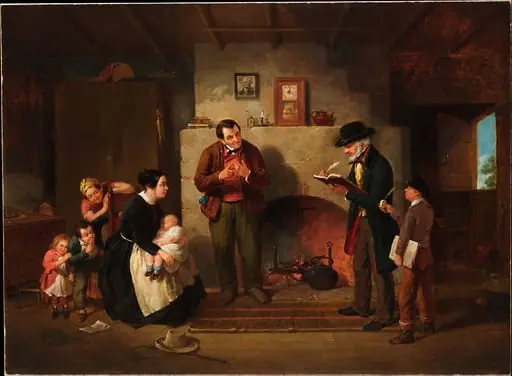
The Yankee Pedlar is an oil painting by the American Impressionist artist Thomas Waterman Wood. It dates from 1872 and is held in the collection of the Art Institute of Chicago.
About this work
Overview
The Yankee Pedlar is an 1872 oil painting by Thomas Waterman Wood, part of the collection at the Art Institute of Chicago. It captures a moment of everyday interaction between a peddler and a family.
Subject & Meaning
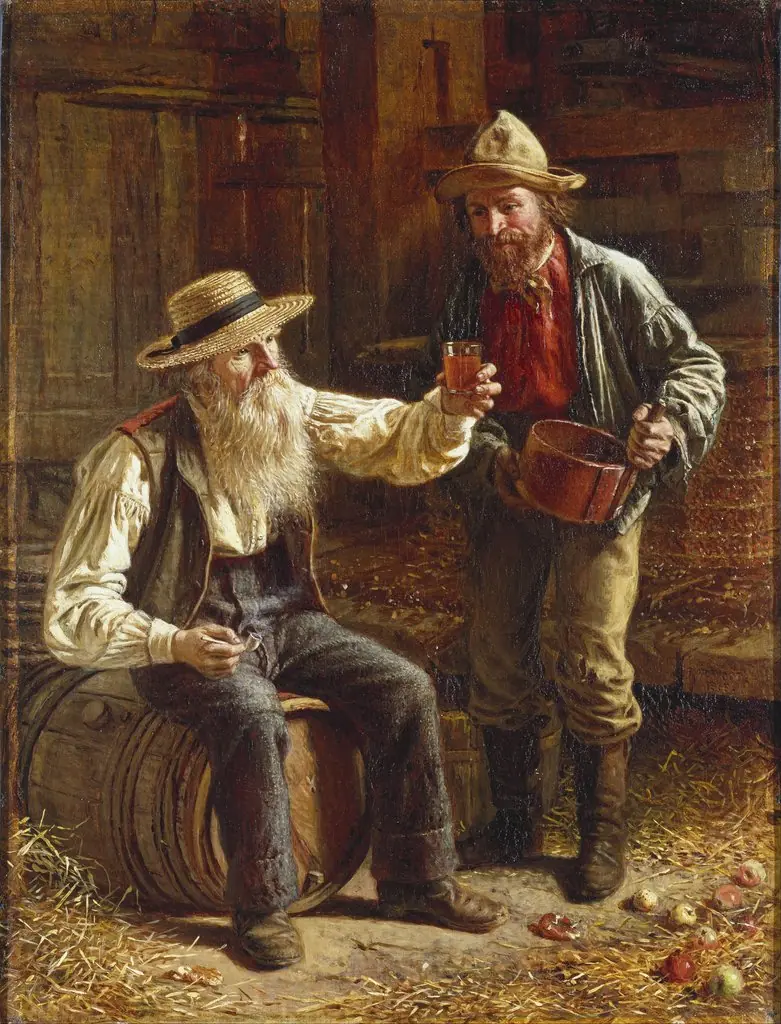
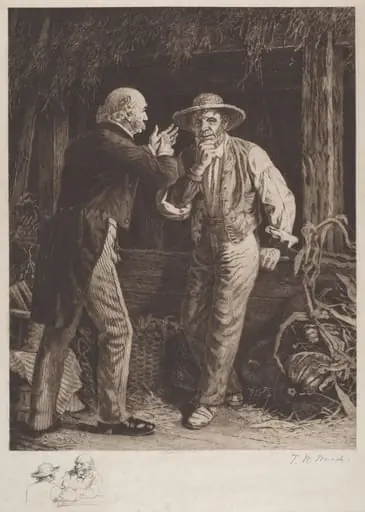
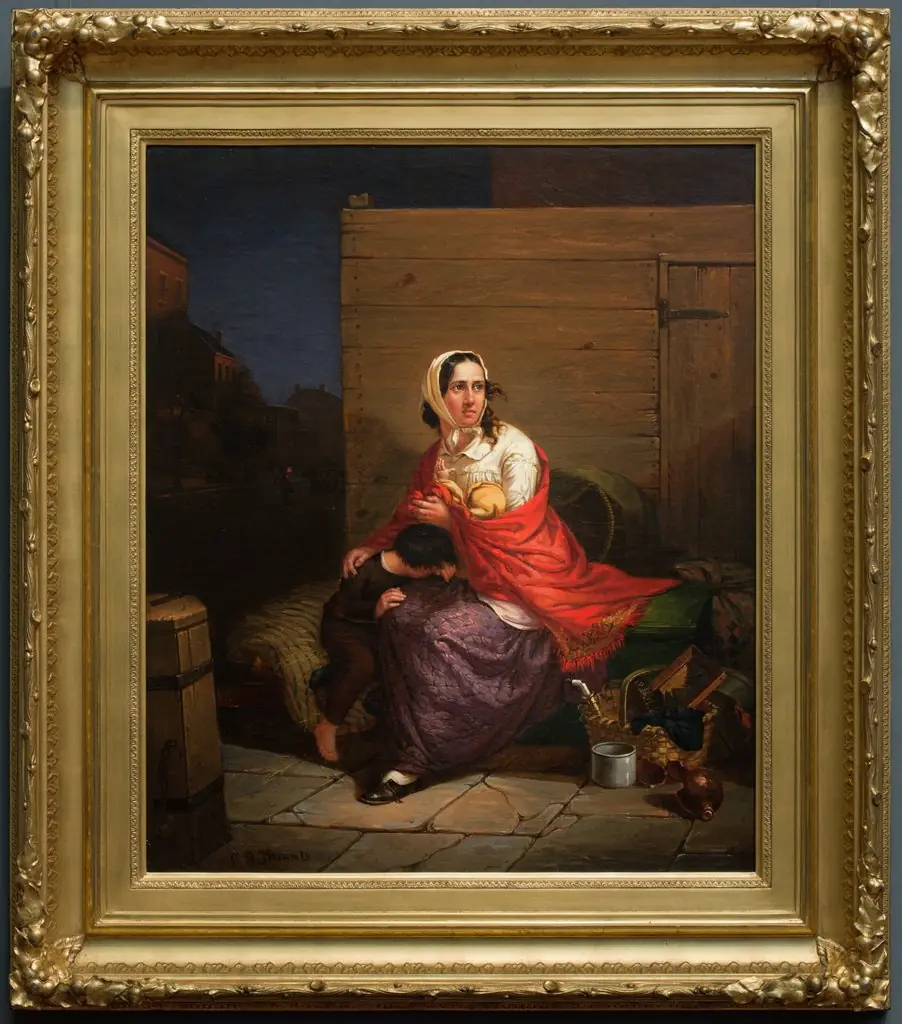
The painting depicts a peddler in a tan suit standing beside a red wagon, engaging with a woman, a seated man in a blue shirt, and a child in a white shirt and blue skirt. The scene conveys a mundane transaction, highlighting the peddler's attempt to sell goods to the family, set against a backdrop of domestic routine.
Technique & Style
Wood employs chiaroscuro to create depth and dimensionality, guiding the viewer's focus towards the central figures. The color palette contrasts the vibrant red of the wagon and garment with more subdued tones, enhancing the visual appeal.
History & Provenance
Created in 1872, the painting is now held in the collection of the Art Institute of Chicago, though specific details of its acquisition or earlier ownership are not provided here.
Context
The work reflects late 19th-century American life, portraying the common practice of peddling goods in rural or suburban settings. It captures a snapshot of everyday commerce and family interaction.
Legacy
While specific influences or direct artistic legacies of 'The Yankee Pedlar' are not detailed here, it contributes to the broader representation of American daily life in art of its time.
Artist & collection

Artist
Thomas Waterman Wood (1823–1903) was an American artist, born in Montpelier.