Artwork
Cathedral, Santiago, Spain, Portico de la Gloria, Sculpture on the North wall
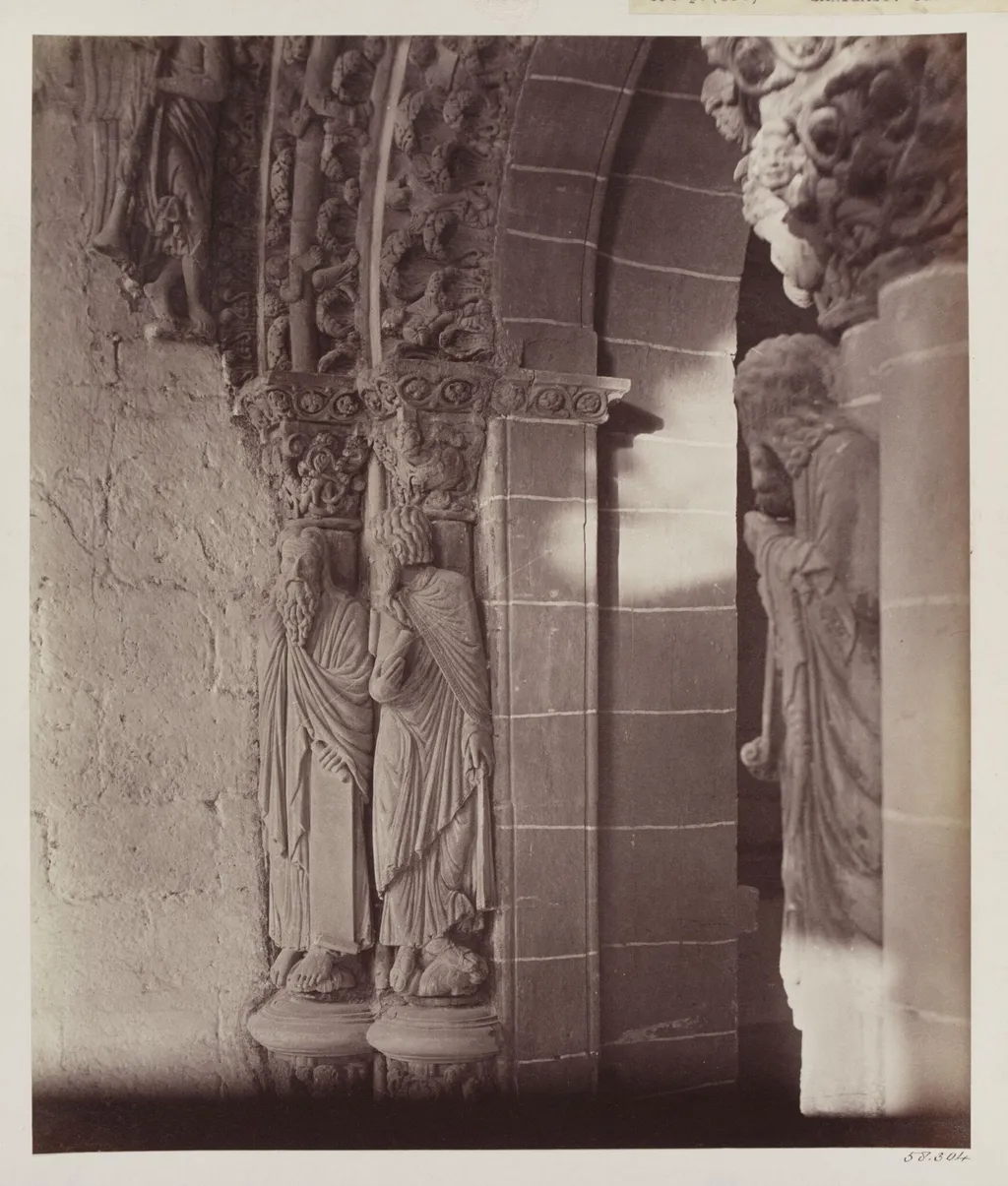
Cathedral, Santiago, Spain, Portico de la Gloria, Sculpture on the North wall is a photographic photography by the Impressionist artist Charles Thurston Thompson. It dates from 1867 and is held in the collection of the Victoria and Albert Museum.
About this work
Overview
It was part of a broader expedition to document significant European art and architecture.
This photograph of the Portico de la Gloria at Santiago de Compostela was taken in 1867 by Charles Thurston Thompson, the Victoria and Albert Museum’s first official photographer. It was part of a broader expedition to document significant European art and architecture. The image was produced not for display alone but as a tool for study, reproduction, and dissemination among artists and educators, reflecting the museum’s mission to support artistic education through visual records.
Subject & Meaning
The photograph captures the north wall of the Portico de la Gloria, a Romanesque sculptural ensemble at the cathedral’s western entrance. Though the image records architectural detail rather than the sculpture’s religious symbolism, its framing emphasizes the complexity of medieval carving—figures, arches, and ornamentation arranged to convey theological narratives. The photograph preserves the structure’s condition in the mid-19th century, before later restorations altered its appearance.
Technique & Style
Thurston Thompson employed large-format plate photography, using wet collodion processes common in the 1860s. The resulting images exhibit sharp detail and tonal range, suited for architectural documentation. His compositions are carefully balanced, avoiding dramatic angles to prioritize clarity and fidelity. The absence of human figures or contextual elements focuses attention solely on the architectural surface, aligning with the scientific aims of the project.
History & Provenance
The photograph was taken during Thompson’s official campaign in Spain and Portugal, funded by the Science and Art Department. After his death in 1868, a selection of his Santiago images was compiled into a bound volume by the Arundel Society under government sanction. These volumes were distributed to art schools and sold publicly. The V&A holds both bound copies and loose plates, some not included in the published editions, revealing the breadth of his documentation.
Context
In the mid-19th century, photography emerged as a vital medium for preserving and studying art, especially as industrialization threatened historic structures. The V&A, then the Museum of Manufactures, used photographs to bridge gaps between original works and students who could not travel. Thompson’s work aligned with broader European efforts to systematize visual knowledge, supporting academic training and public access to cultural heritage.
Legacy
Thurston Thompson’s photographs of Santiago’s Portico de la Gloria helped establish photographic documentation as essential to art historical practice. Their circulation through museums, schools, and commercial channels expanded access to medieval art beyond elite circles. The survival of multiple formats—bound albums and loose plates—demonstrates the evolving ways institutions managed and shared visual archives, influencing later museum photography practices.
Artist & collection
Artist

 Exterior view of the south front entrance of the South Kensington Museum (the 'Brompton Boilers')
 Roundel, St. Mark, by della Robbia, Palace of Necessidades
 Scupture exhibits, Paris Universal Exhibition 1855
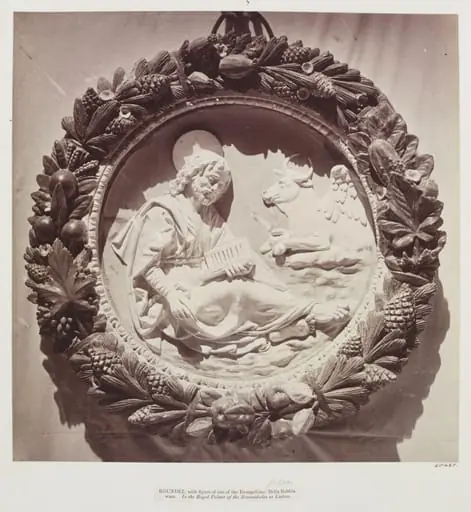 Roundel, St. Luke, by della Robbia, Palace of Necessidades
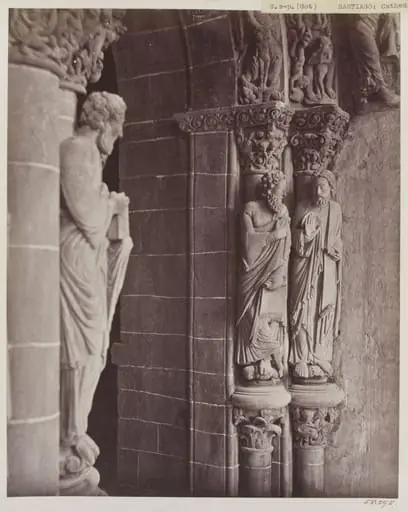 Cathedral, Santiago, Spain, Portico de la Gloria, Sculpture on South wall
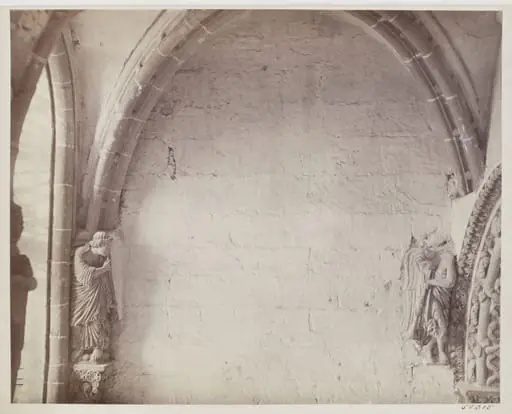 Cathedral, Santiago, Spain, Portico de la Gloria, Sculpture on North wall
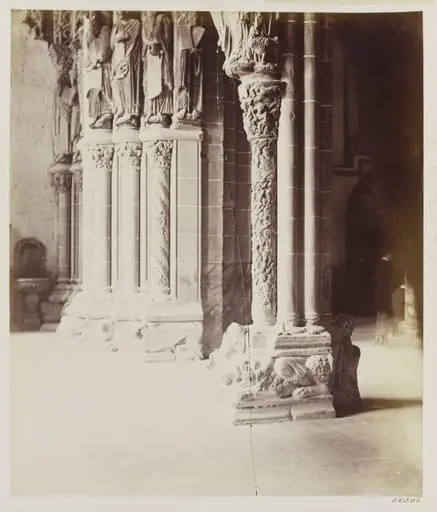 Cathedral, Santiago, Spain, Portico de la Gloria, detail of base of piers
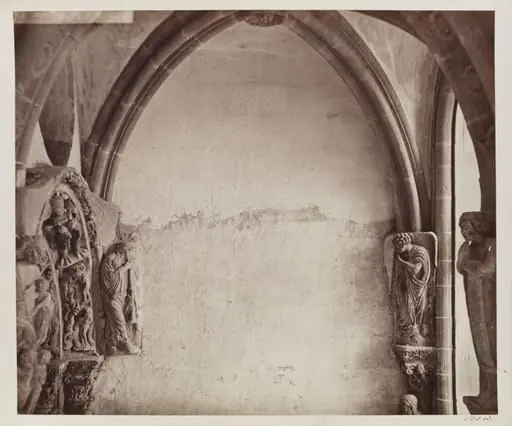 Cathedral, Santiago, Spain, Portico de la Gloria, Sculpture on the South wall
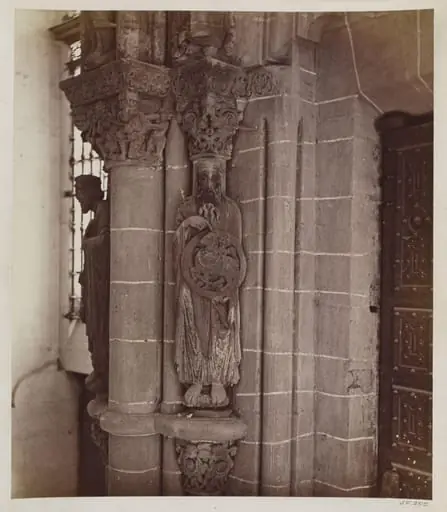 Cathedral, Santiago, Spain, Portico de la Gloria, Sculpture on pier
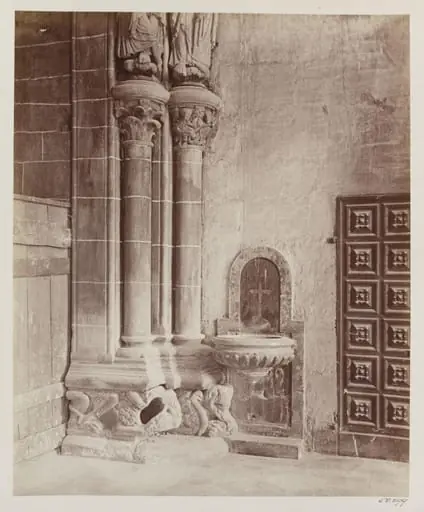 Cathedral, Santiago, Spain, Portico de la Gloria, detail of column at South wall
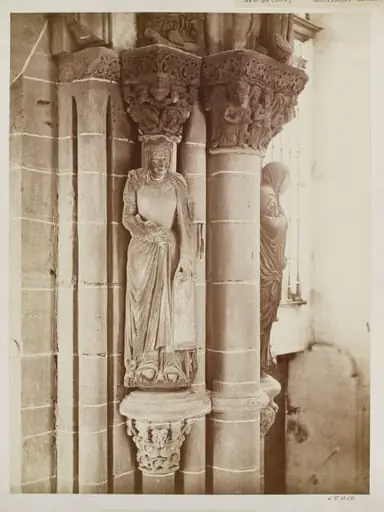 Cathedral, Santiago, Spain, Portico de la Gloria, Sculpture on responding pier
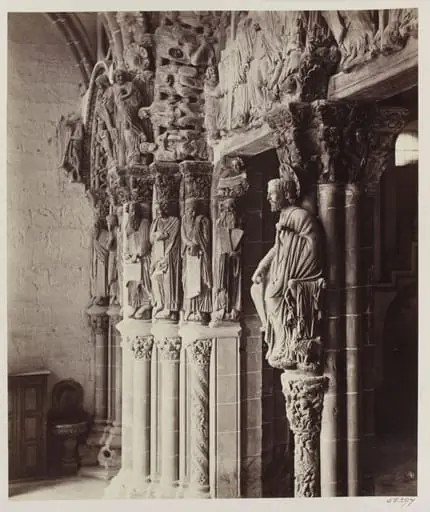 Cathedral, Santiago, Spain, Portico de la Gloria, details of Doorway (No.3)
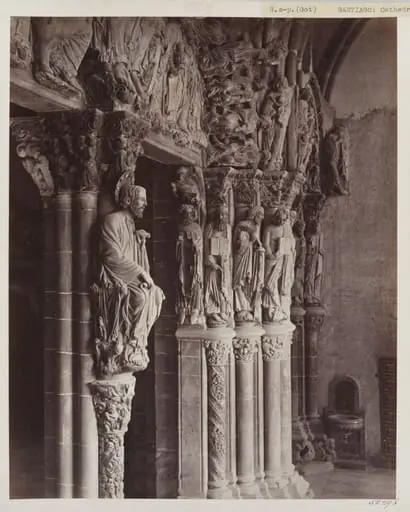 Cathedral, Santiago, Spain, Portico de la Gloria, details of Doorway (No.2)
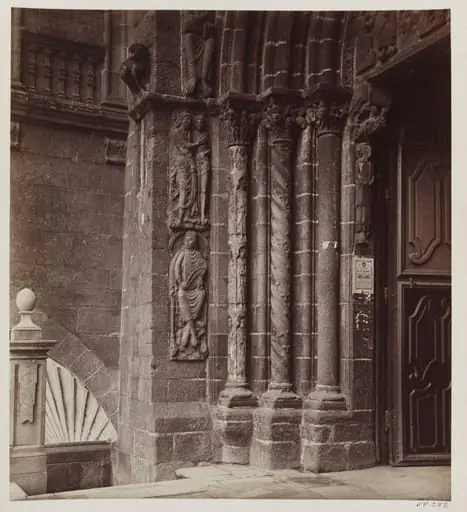 Cathedral, Santiago, Spain, detail of sculpture, doorway of South transept
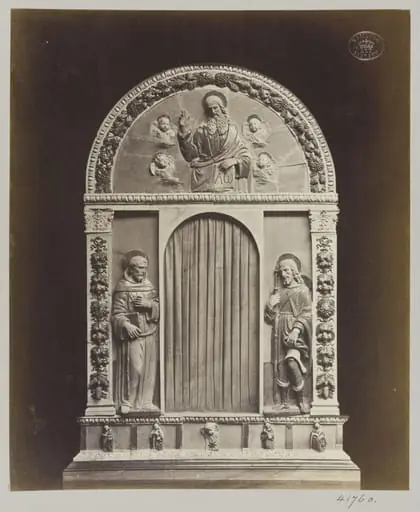 Enamelled earthenware altar piece of Christ and Saint Francis and St. Rock