Artwork
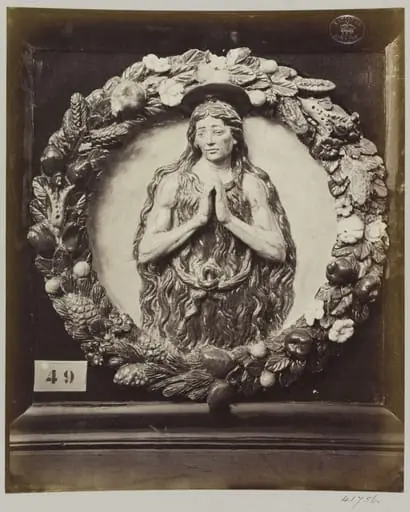
Enamelled earthenware altar piece of Christ and Saint Francis and St. Rock
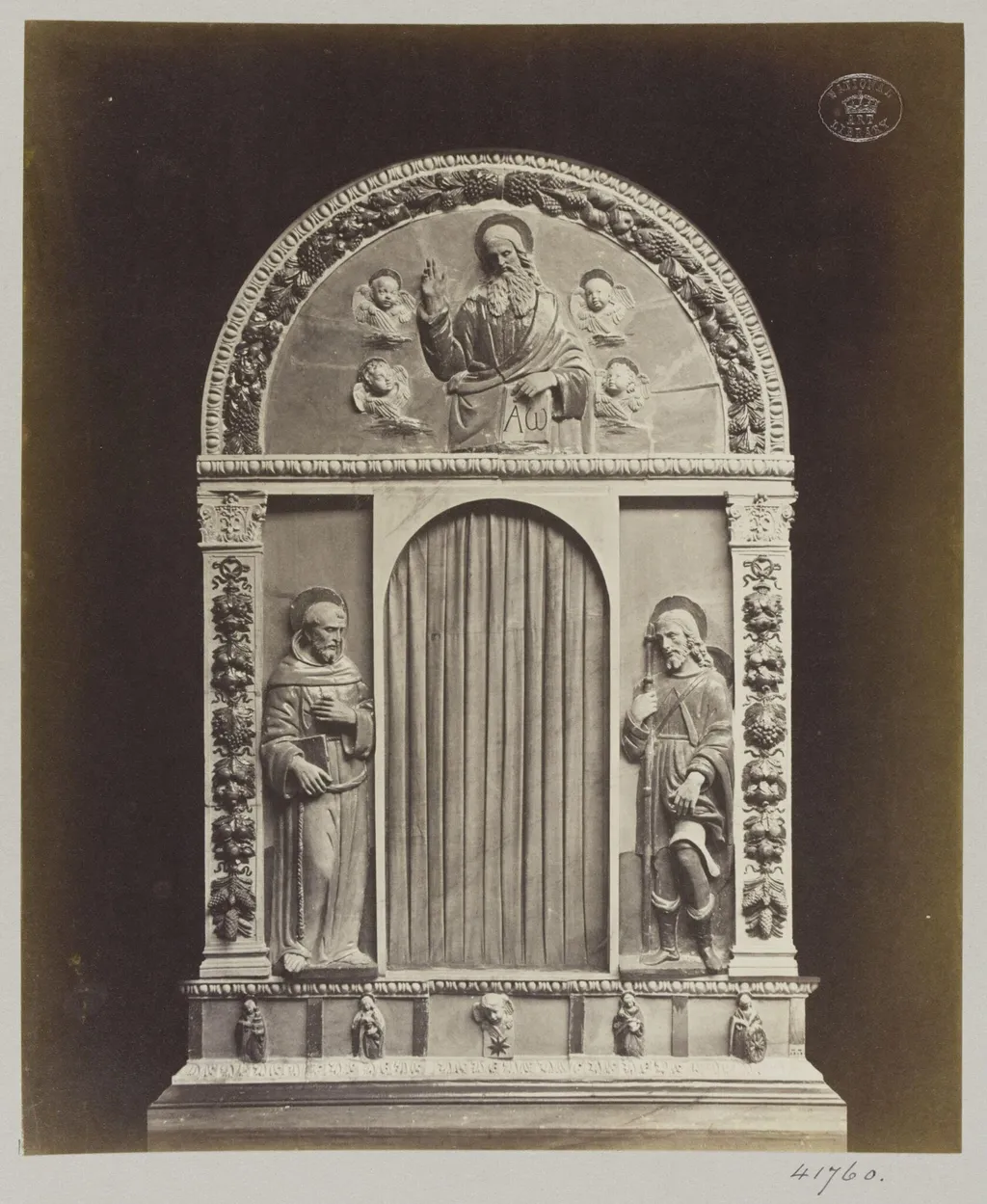
Enamelled earthenware altar piece of Christ and Saint Francis and St. Rock is a photographic photography by the Impressionist artist Louise Laffon. It dates from 1864 and is held in the collection of the Victoria and Albert Museum.
About this work
This is a photo from 1863-64 by Louise Laffon. It shows Christ, Saint Francis, and St. Rock on an enamel earthenware altar piece. It’s a photograph, not a painting.
This was made when the Victoria and Albert Museum began collecting photos in the 1850s. The museum used them to help artists and students study subjects up close.
Look up the Victoria and Albert Museum next.
Overview
Louise Laffon’s 1863‑64 photograph records an enamelled earthenware altar panel depicting Christ alongside Saint Francis and Saint Roch. The image, a black‑and‑white glass‑plate print, captures the intricate surface decoration of the devotional object, offering a close visual reference to a work that would otherwise be accessible only in person.
Subject & Meaning
The altar piece unites three figures central to Catholic devotion: the crucified Christ, the patron saint of animals and the poor, Saint Francis, and Saint Roch, invoked against plague. Their juxtaposition reflects the Counter‑Reformation emphasis on intercessory saints and the liturgical function of the altar as a focal point for prayer and healing.
Technique & Style
Laffon employed the wet‑collodion process, which allowed for fine detail and tonal range, essential for rendering the glossy enamel surface and the delicate modeling of the figures. The composition is centered, with balanced placement of the saints flanking Christ, emphasizing symmetry typical of 17th‑century altar designs.
History & Provenance
The photograph entered the Victoria and Albert Museum’s collection shortly after the institution began acquiring photographic material in the 1850s. In 1864 the museum purchased 500 prints from Laffon’s series of objects from the Campana Collection, acquiring them through the dealer E. Cappe. The image has remained in the museum’s photographic archive, serving as a reference for scholars.
Context
Laffon was among the early women active in French photography and the third female member of the Société Française de la Photographie. Her work for the V&A illustrates how the museum leveraged photography to supplement traditional reproductions, providing artists, students, and curators with accurate visual documentation of foreign artworks.
Legacy
The print exemplifies the museum’s 19th‑century strategy of using photography as an educational tool, a practice that broadened access to distant collections. Laffon’s contribution highlights the often‑overlooked role of women photographers in shaping museum documentation and the visual study of art objects.
Artist & collection
Artist
Louise Laffon (1828–1885), was a French photographer and painter. She was one of the first female professional photographers in France. She had a studio in Paris between 1859 and 1876.

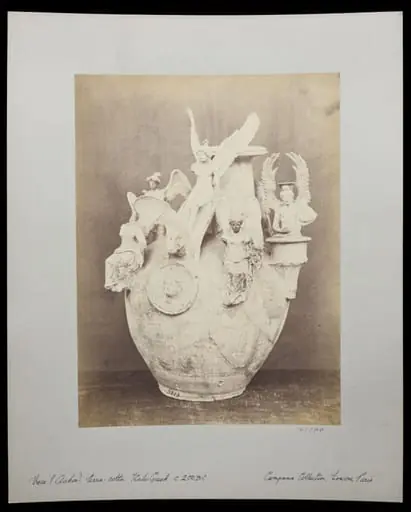 Perfume Burner in terra cotta
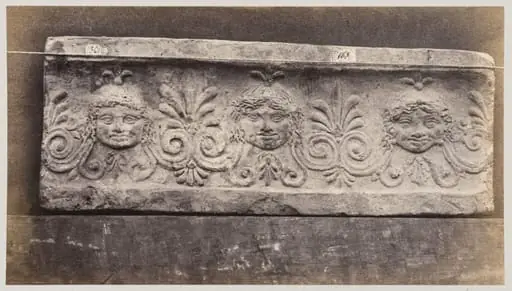 Three masques of gorgons in terra cotta
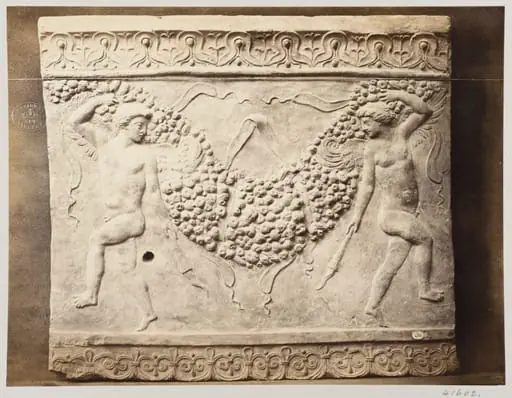 Bas-relief of portion of frieze of dancing figures with torches bearing festoon of fruit in terra cotta
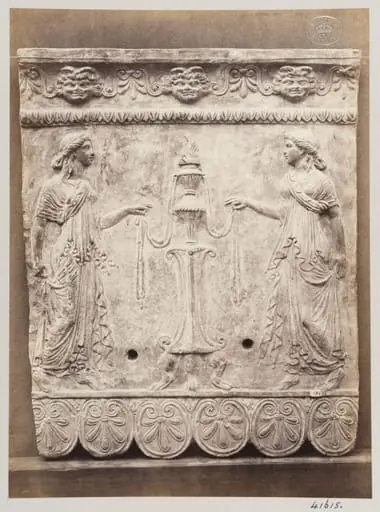 Bas-relief portion of a frieze of two draped females and an altar in terra cotta
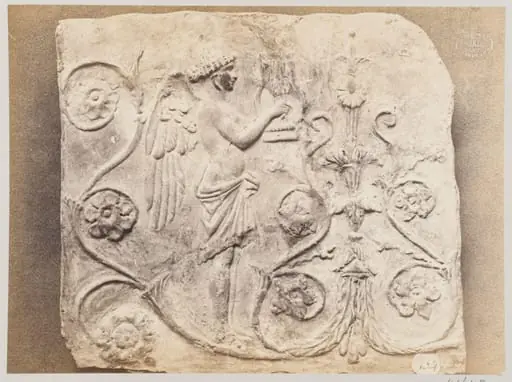 Bas-relief of a geni and a lyre in terra cotta
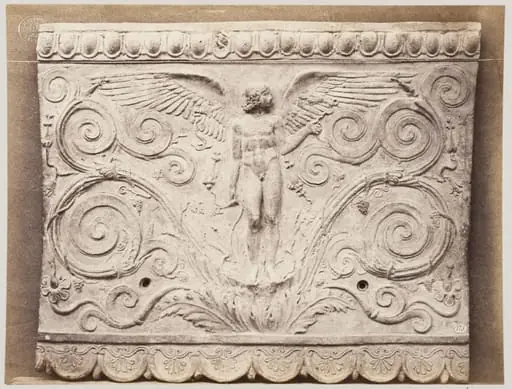 Bas-relief of a portion of frieze of Eros with scrollwork in terra cotta
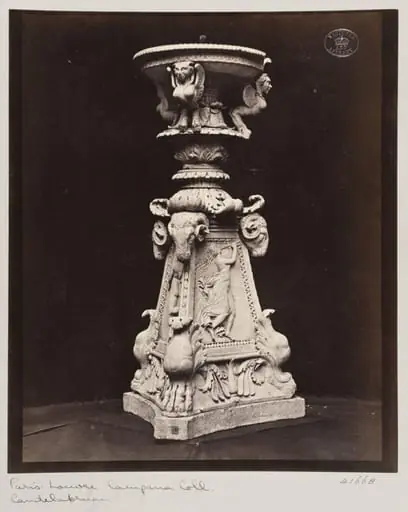 Marble sculptured fountain
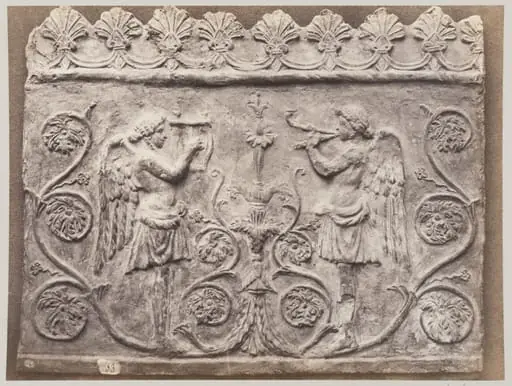 Bas-relief portion of frieze of Genii with double flutes and lyre
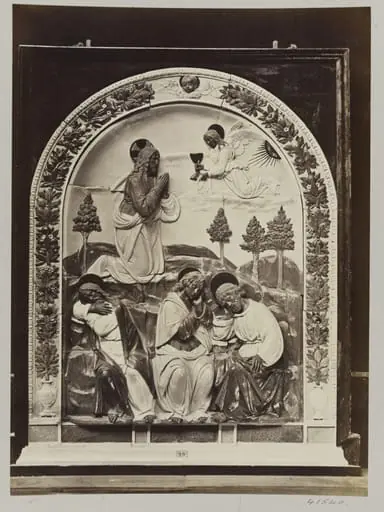 Altar piece depicting Christ in the Garden of Olives in enamelled earthenware
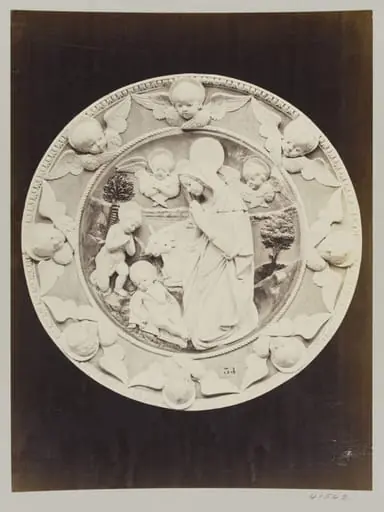 Circular bas-relief depicting the Nativity in enamelled earthenware
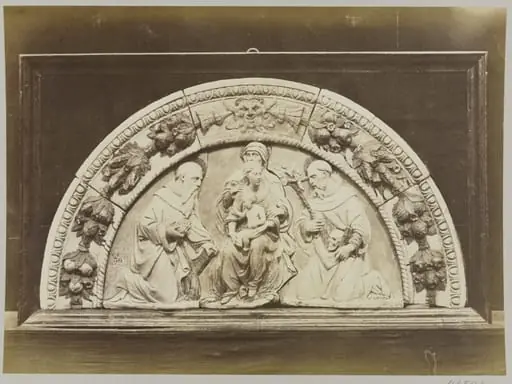 Top of an altar piece depicting the Holy Family in enamelled terra cotta
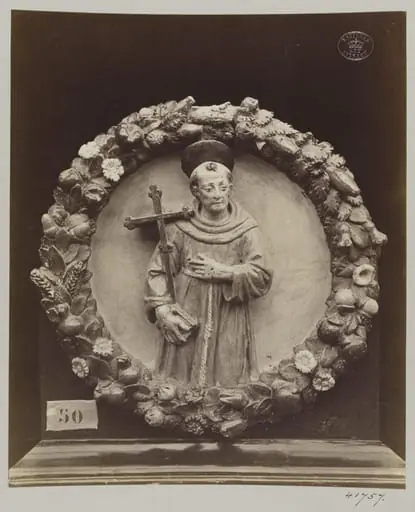 Enamelled bas-relief earthenware medallion of Saint Francis
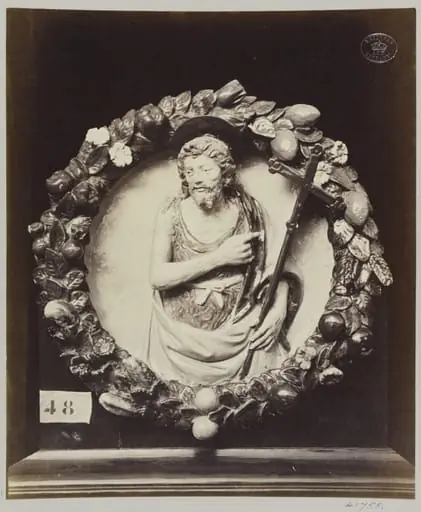 Enamelled earthenware bas-relief medallion of Saint John the Baptist
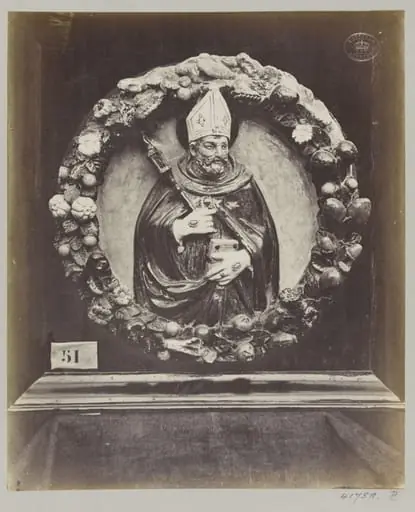 Enamelled earthenware bas-relief medallion of Saint Augustin
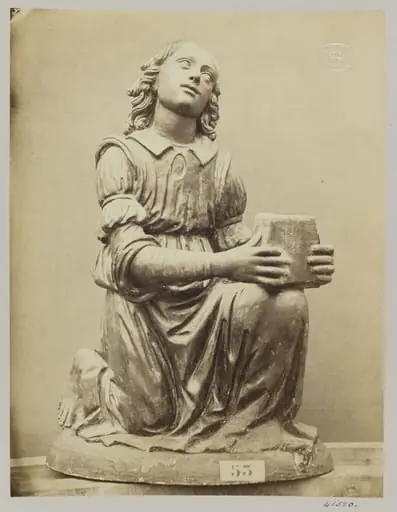 Figure of an angel on her knees in red terra cotta
 Enamelled earthenware bas-relief medallion of Saint Onofrio