Artwork
Francis Bacon
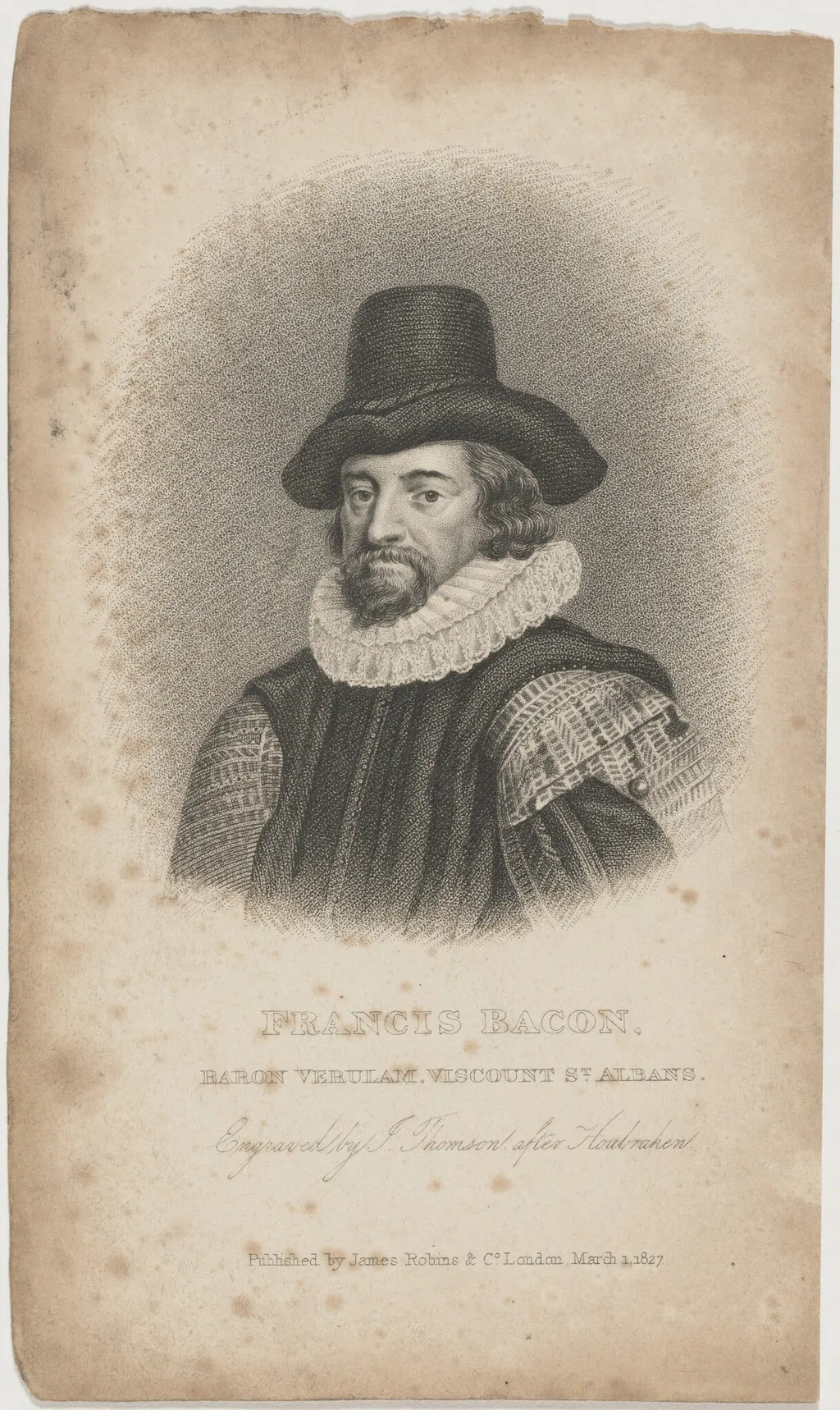
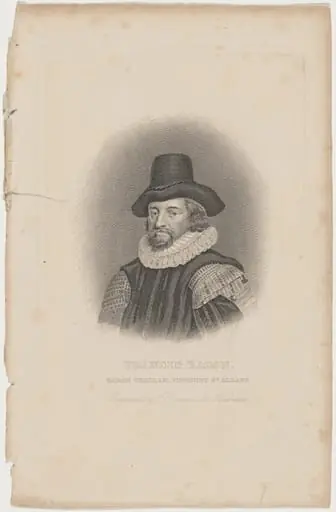
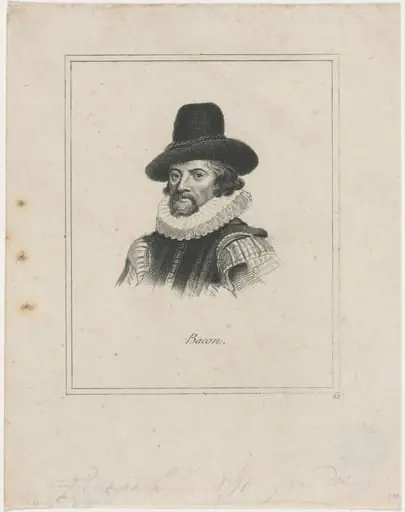
Francis Bacon is an ink print by the Romanticist artist James Thomson. It dates from 1820 and is held in the collection of the National Gallery of Art.
About this work
Overview
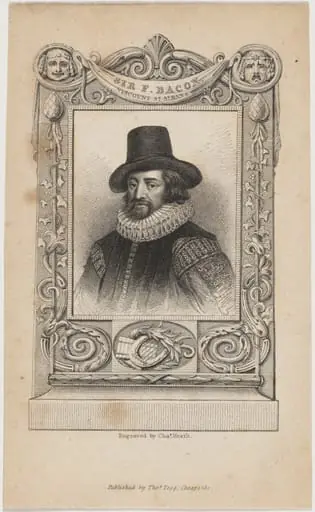
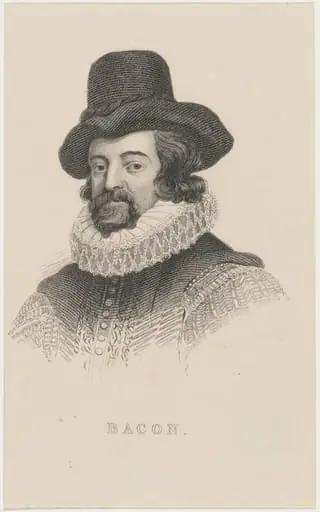
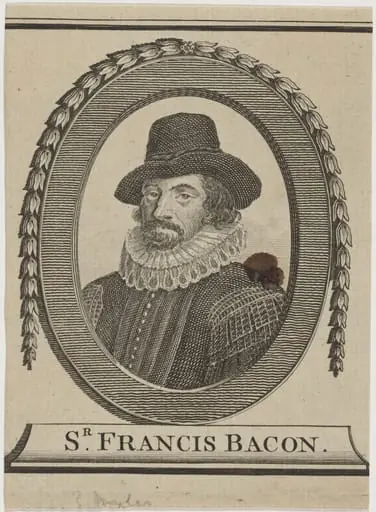
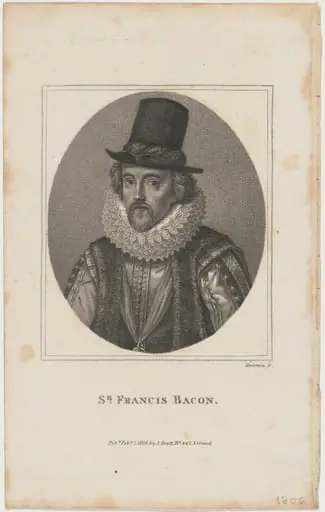
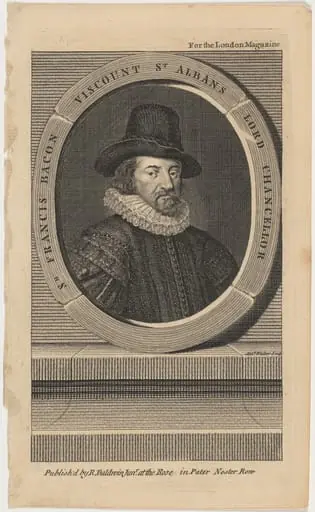
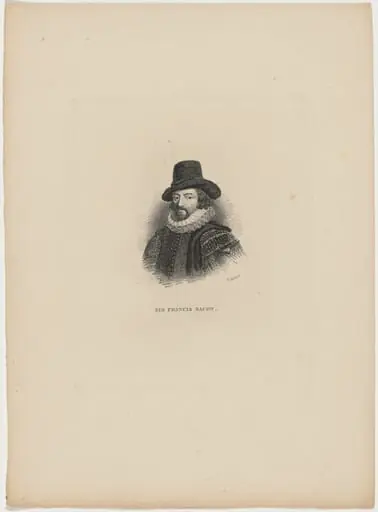
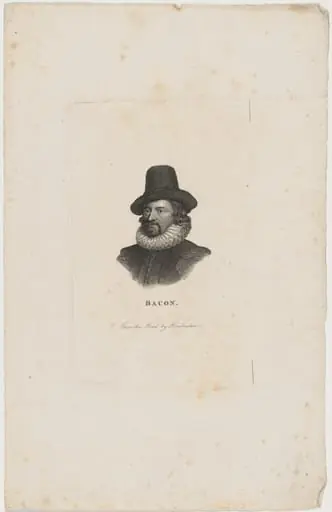
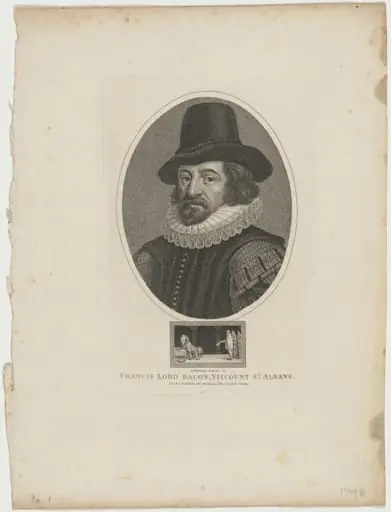
An 1820 engraving by James Thomson depicts Francis Bacon, the English philosopher and statesman. Rendered in monochrome, the portrait emphasizes tone and texture over fine detail. The image is printed on aged paper with a faint yellow tint, suggesting its age and the materials used in early 19th-century printmaking. The composition is restrained, focusing on the subject’s face and upper torso.
Subject & Meaning
His stern expression, thick beard, and formal attire reflect the conventional iconography of learned men of the early modern era.
The portrait represents Francis Bacon, identified by inscriptions noting his titles, including Baron Verulam. His stern expression, thick beard, and formal attire reflect the conventional iconography of learned men of the early modern era. The image does not aim for biographical accuracy but instead evokes an aura of intellectual authority, aligning with 19th-century reverence for historical thinkers.
Technique & Style
Executed in engraving, the work uses incised lines on a metal plate to create tonal gradations. The artist favors broad, expressive strokes over intricate detail, particularly in the hat and ruff, which are suggested rather than meticulously rendered. The black-and-white contrast and textured background enhance the somber mood, characteristic of portraiture intended for reproduction and dissemination.
History & Provenance
Created in 1820, the engraving likely served as a frontispiece or illustration in a published collection of Bacon’s writings or biographical works. Its production coincided with a revival of interest in early modern philosophy. The aged paper and modest presentation suggest it was part of a scholarly or educational print run, rather than a luxury item.
Context
In the early 1800s, engraved portraits of historical figures were common in books and periodicals, serving both educational and commemorative purposes. Thomson’s depiction aligns with a broader trend of visualizing intellectual heritage, where accuracy was secondary to symbolic representation. The style reflects the transition from Baroque portraiture to more simplified, print-friendly forms.
Legacy
This engraving contributes to the visual tradition of Francis Bacon’s iconography, reinforcing his public image as a sage of early modern thought. Though not artistically innovative, it played a role in shaping how later generations perceived him. Its endurance in archives reflects the value placed on printed portraiture as a medium for historical memory.
Artist & collection