Artwork
Francis Bacon
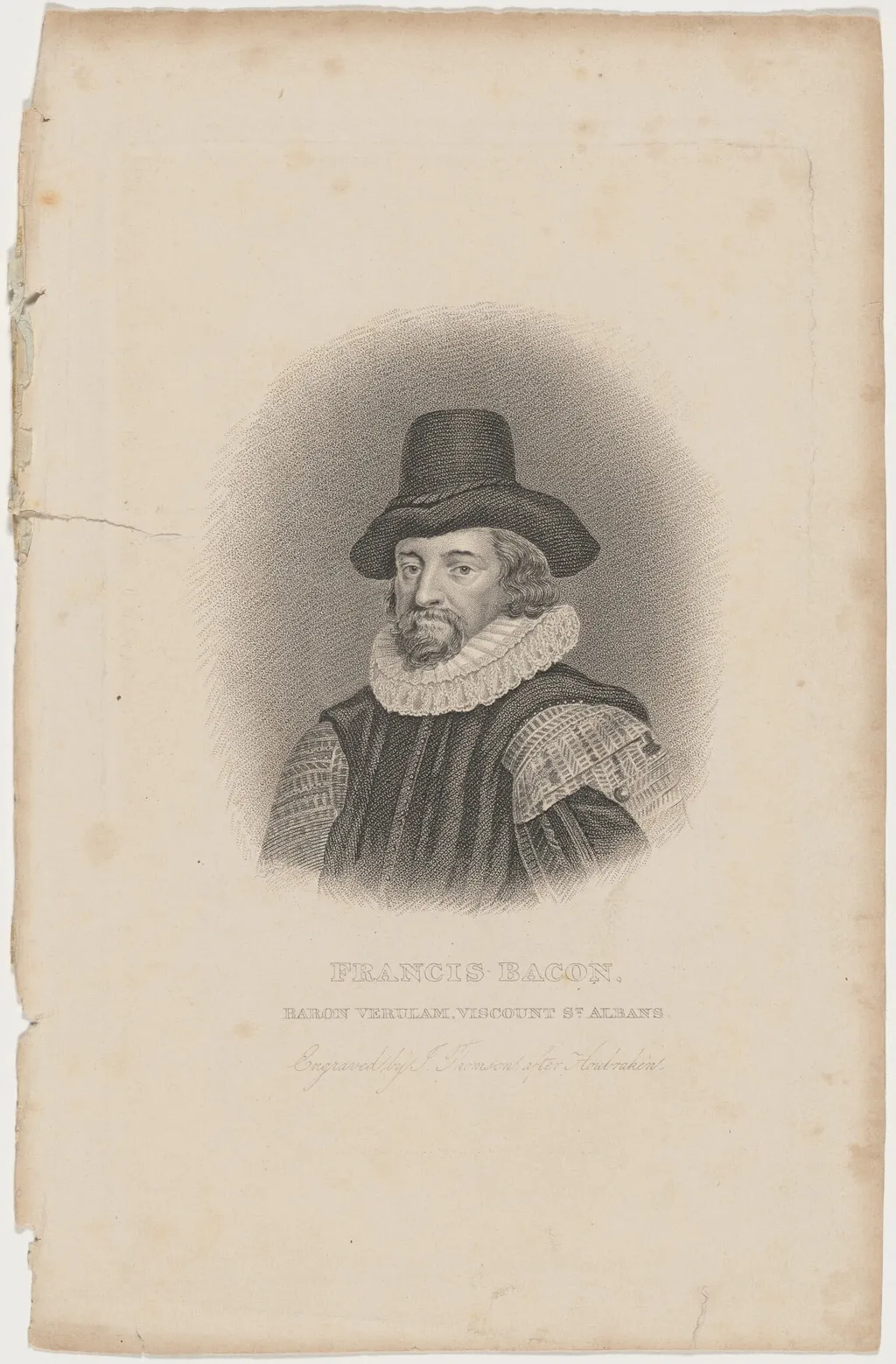
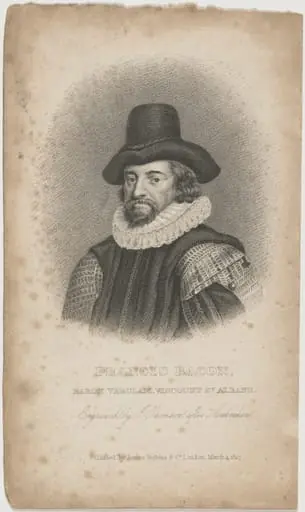
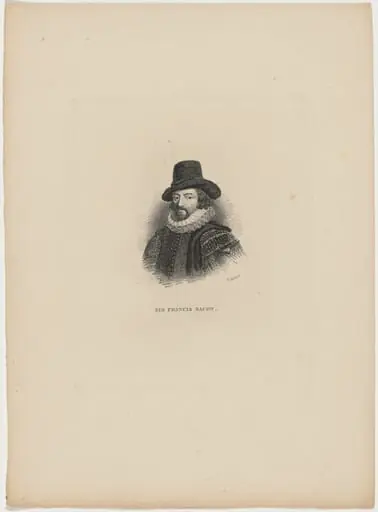
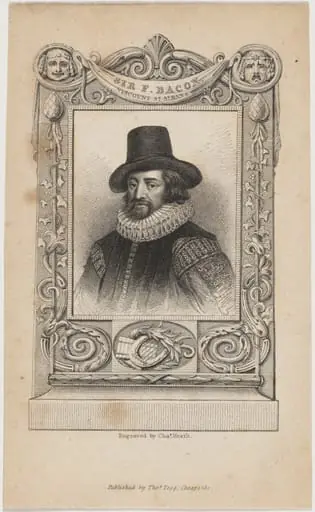
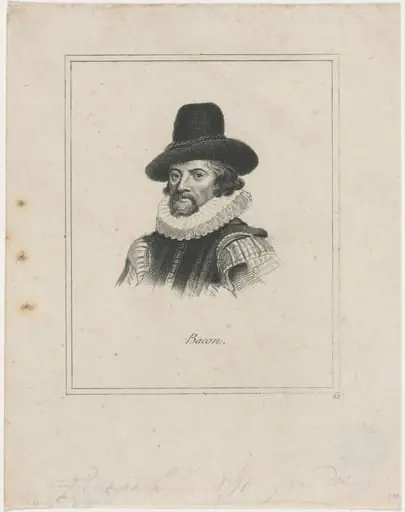
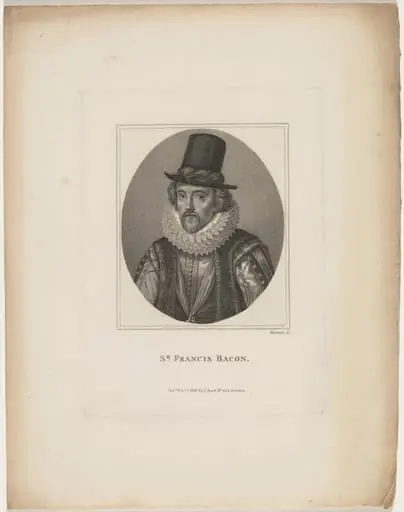
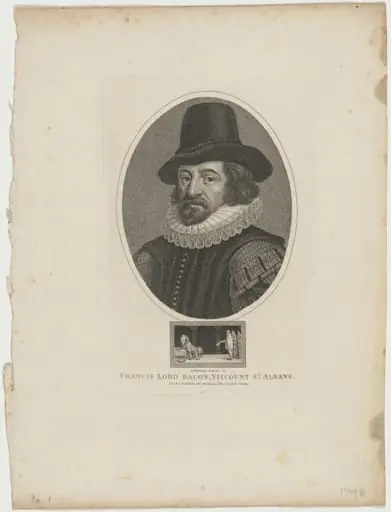
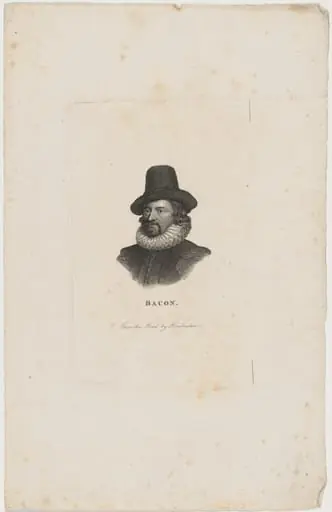
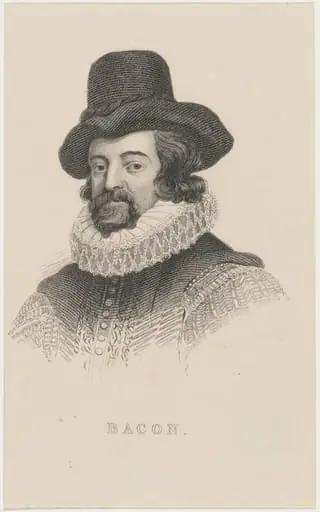
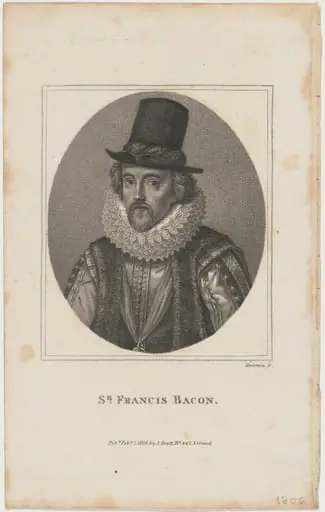
Francis Bacon is an ink print by the Romanticist artist James Thomson. It dates from 1820 and is held in the collection of the National Gallery of Art.
About this work
Overview
Unlike a painted portrait, the image was produced by incising lines into a metal plate, which was then inked and pressed onto paper.
This black-and-white print, created in 1820 by James Thomson, is an engraving depicting the philosopher Francis Bacon. Unlike a painted portrait, the image was produced by incising lines into a metal plate, which was then inked and pressed onto paper. The composition is minimal, with no decorative elements beyond the figure and a plain background, emphasizing the subject’s presence through precise linear detail.
Subject & Meaning
The portrait represents Francis Bacon, the 16th-century English philosopher and statesman known for advancing empirical methods in science. Though rendered in the 19th century, the depiction draws on traditional iconography—ruffled collar, wide-brimmed hat, ornate jacket—to evoke his historical stature. The image serves as a visual reference, anchoring his legacy in the cultural memory of the Enlightenment era.
Technique & Style
Thomson employed the engraving technique, using fine burins to carve delicate lines into a copper plate. The resulting print features soft, shadow-like contours rather than harsh outlines, suggesting depth through gradations of tone. The absence of tone or wash highlights the precision of the incised lines, characteristic of reproductive prints meant to disseminate likenesses widely before photography.
History & Provenance
Created in 1820, this engraving likely emerged from a period of renewed interest in historical figures of science and philosophy. It was probably produced for educational or literary publications, common uses for engravings at the time. No specific early ownership records are known, but its format suggests it was intended for broad circulation rather than private collection.
Context
In the early 19th century, engravings were the primary means of reproducing portraits for books, journals, and public display. Thomson’s work reflects this tradition, aligning with efforts to visually document national intellectual heritage. The stylized clothing, though historically inaccurate to Bacon’s lifetime, conforms to 18th- and early 19th-century conventions for depicting past luminaries.
Legacy
As a reproductive print, this engraving contributed to the visual representation of Francis Bacon in 19th-century educational materials. Though not artistically innovative, it played a role in sustaining his public image through accessible media. Today, it remains a historical artifact of how pre-photographic society preserved and transmitted the likenesses of influential figures.
Artist & collection