Artwork
Design for the lower wall of the Great Hall at Moor Park, Hertfordshire
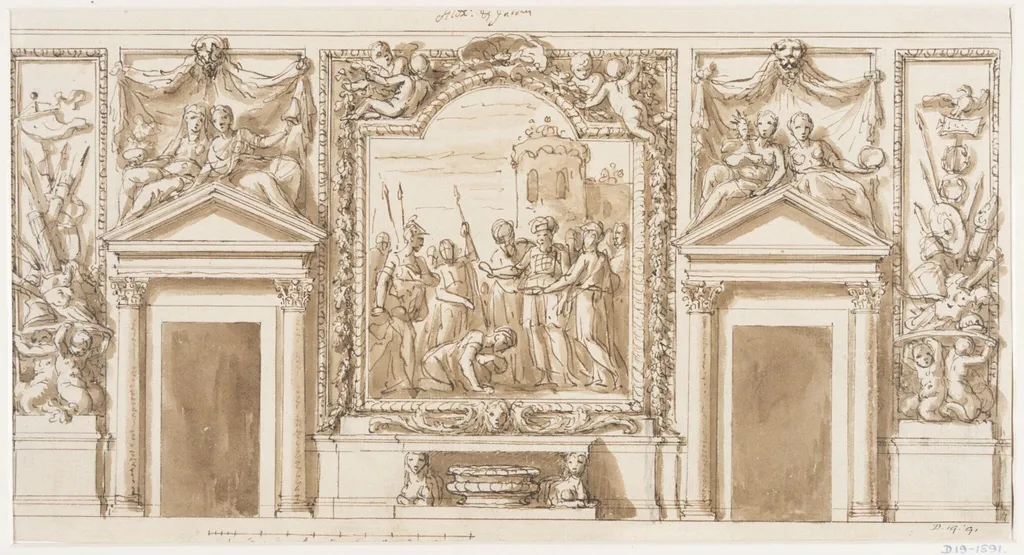
Design for the lower wall of the Great Hall at Moor Park, Hertfordshire is a drawing by the Baroque artist James Thornhill. It dates from 1725 and is held in the collection of the Victoria and Albert Museum. This ink drawing, created around 1725, was a preparatory design for the lower wall decoration of the Great Hall at Moor Park, Hertfordshire.
About this work
The plan centers on Alexander the Great kneeling before a high priest, flanked by doorways and smaller panels with putti and trophies.
Thornhill drew this design for the walls of Moor Park’s Great Hall around 1725. It’s a Baroque drawing done in ink, showing how the lower walls would look. The plan centers on Alexander the Great kneeling before a high priest, flanked by doorways and smaller panels with putti and trophies.
The owner at the time, Benjamin Haskins Styles, commissioned this work right after he bought the house.
Look up the Victoria and Albert Museum next.
Overview
This ink drawing, created around 1725, was a preparatory design for the lower wall decoration of the Great Hall at Moor Park, Hertfordshire. Commissioned by Benjamin Haskins Styles shortly after his purchase of the estate, it outlines a grand decorative scheme intended to unify architectural elements with narrative imagery. The work reflects the Baroque taste for theatrical composition and classical allusion, executed in precise pen and ink with wash for tonal depth.
Subject & Meaning
The central scene portrays Alexander the Great kneeling before Jaddus, the High Priest of Jerusalem, referencing a legendary moment of respect between conqueror and religious authority. Flanking this are two side panels featuring putti supporting military trophies, reinforcing themes of triumph and civic virtue. The composition subtly aligns the patron’s status with ancient ideals of enlightened leadership and moral restraint.
Technique & Style
Executed in fine ink with subtle washes, the drawing demonstrates Thornhill’s mastery of linear clarity and spatial organization. Architectural elements—doorways with triangular pediments and reclining figures—are rendered with architectural precision, while the figures are modeled with flowing contours typical of Baroque draftsmanship. The design balances decorative rhythm with narrative focus, serving both aesthetic and programmatic functions.
History & Provenance
Commissioned by Benjamin Haskins Styles after acquiring Moor Park in the early 1720s, the drawing was part of a broader renovation to assert his social standing through artistic patronage. Though the wall scheme was never fully realized in paint, the drawing survives as a key record of Thornhill’s decorative planning. It is now held in the Victoria and Albert Museum’s collection of British architectural drawings.
Context
In early 18th-century England, country houses like Moor Park became venues for displaying cultural sophistication through classical themes. Thornhill, already known for his work at Greenwich and Blenheim, was a leading figure in translating grand historical narratives into domestic interiors. This design reflects the era’s fascination with antiquity as a moral and political framework for elite identity.
Legacy
Though the painted scheme at Moor Park was abandoned, the drawing remains a significant example of Thornhill’s preparatory process and the ambitions of Georgian patrons. It illustrates how architectural decoration was conceived as a cohesive visual language, blending narrative, symbolism, and structure. The drawing continues to inform scholarship on British interior design and the reception of classical antiquity in private spaces.
Artist & collection
Artist
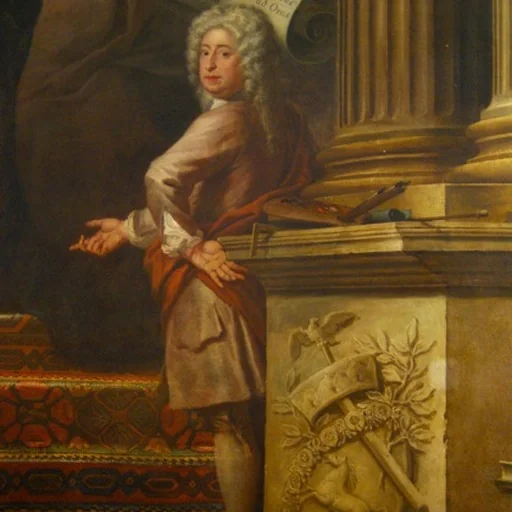
Sir James Thornhill was an English painter of historical subjects working in the Italian baroque tradition.

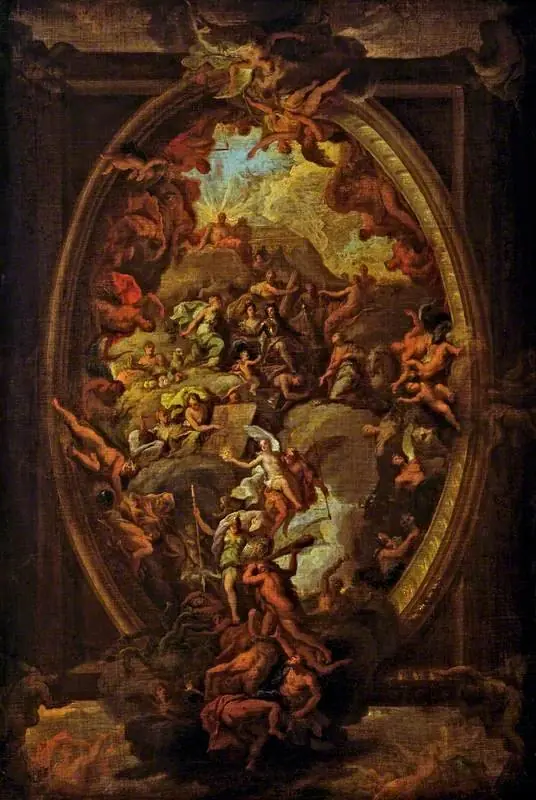 William and Mary Presenting the Cap of Liberty to Europe (sketch for the painted ceiling of the Great Hall, Greenwich Hospital)
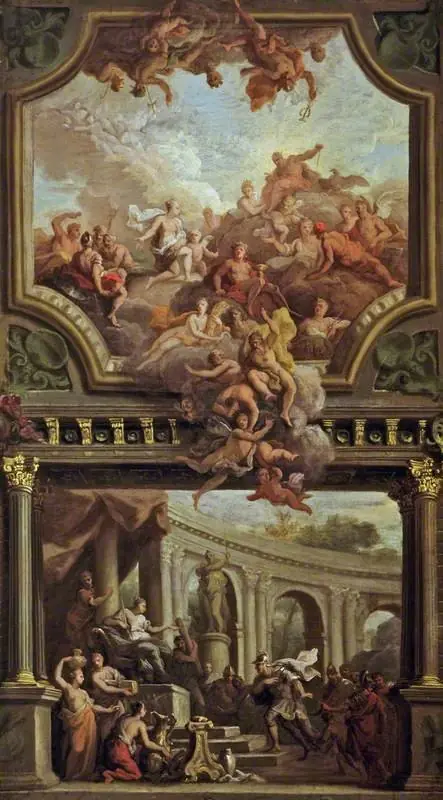 Aeneas before Dido, and Venus Supplicating Jupiter (sketch for a wall and ceiling decoration)
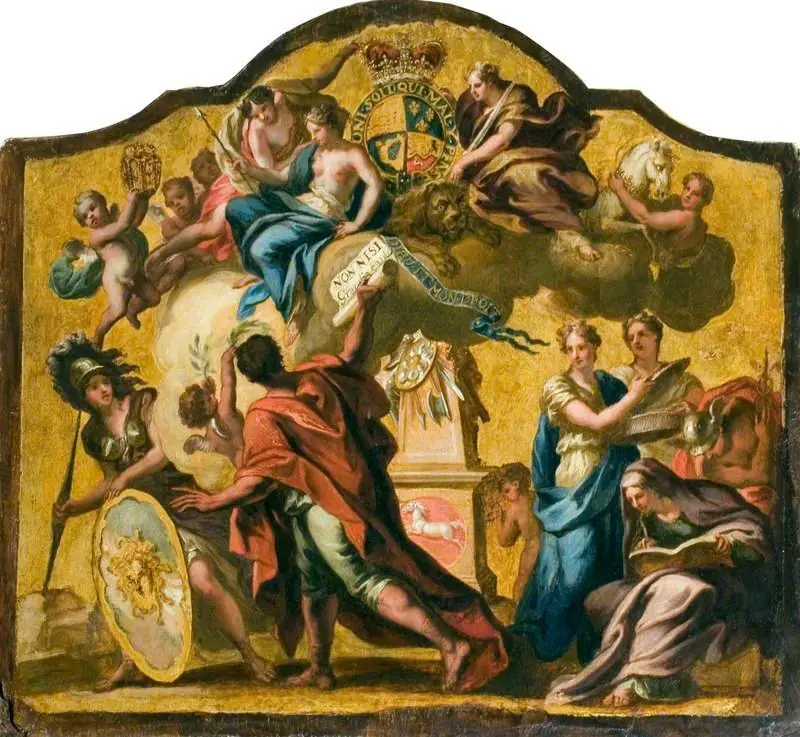 Allegorical Figures: Clemency, Prudence and Justice with Pallas, Heroic Poetry, Liberty, Discretion, History and Mercury (from the Royal State Coach for George I)
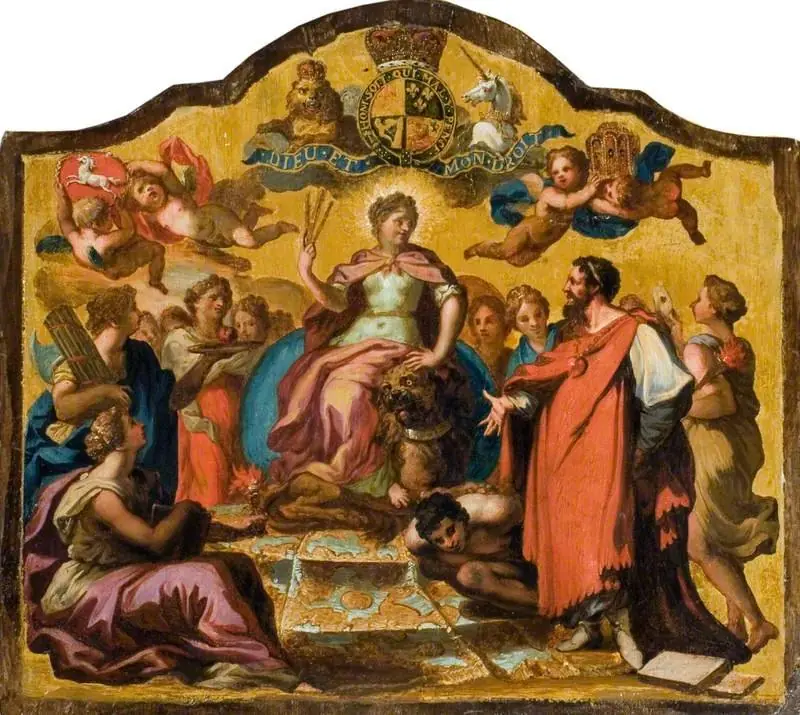 Allegorical Figures: Britannia Enthroned, Surrounded by Concord, Learning and Religion Overcoming Vice (from the Royal State Coach for George I)
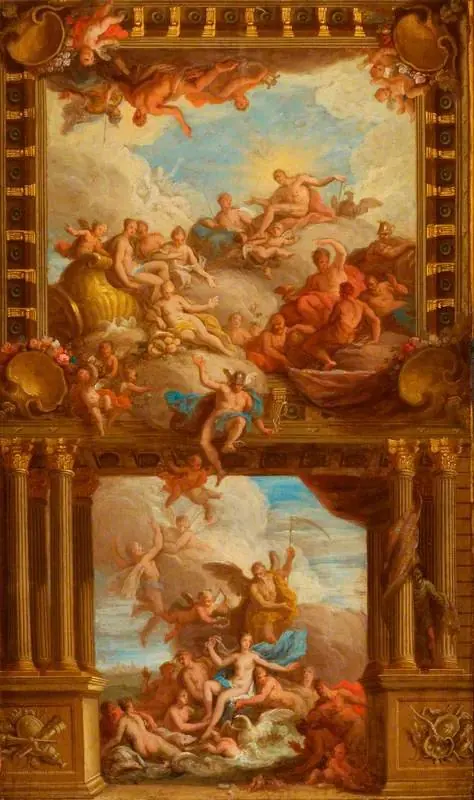 The Birth of Venus, and the Gods of Olympus (sketch for a wall and ceiling decoration)
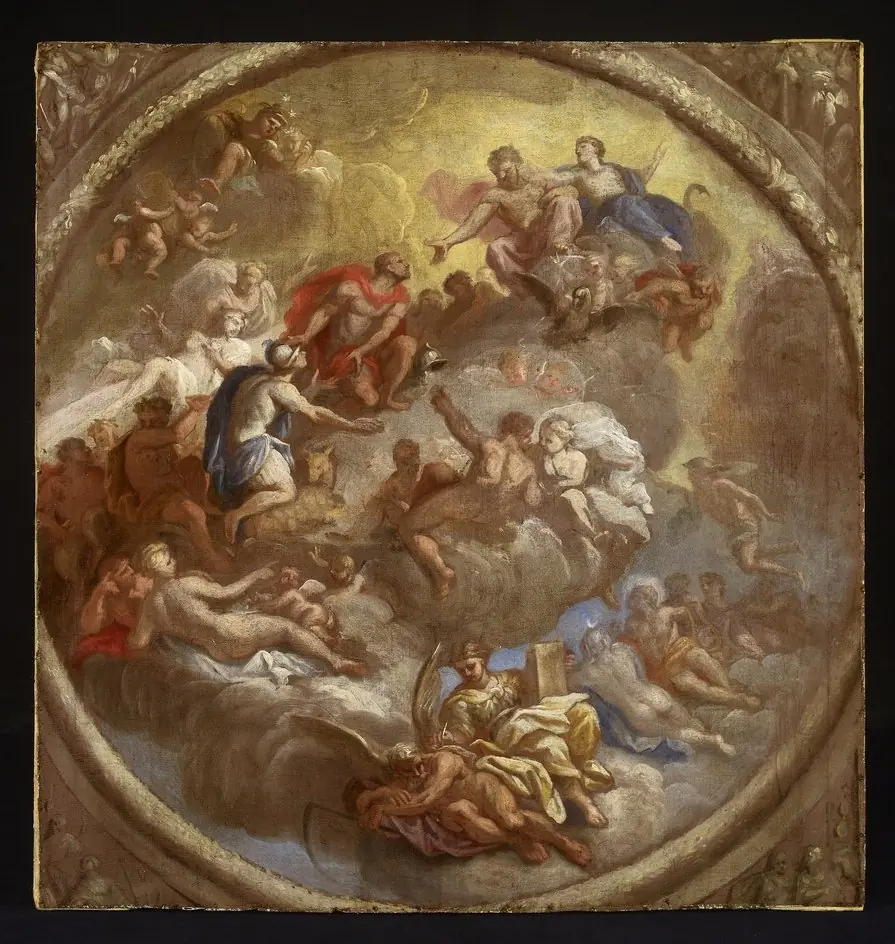 Sketch for a Ceiling Design
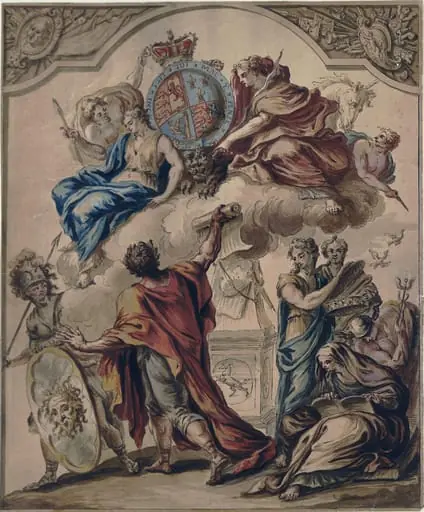 Allegorical design with figures: Clemency, Prudence and Justice with Pallas, Heroic Poetry, Liberty, Discretion, History and Mercury (preliminary design for a panel from Royal State Coach for George I)
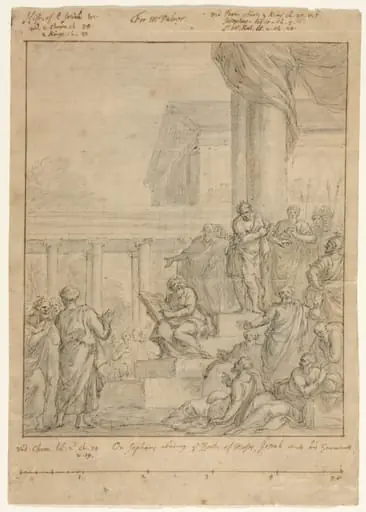 Study for King Josiah Rending his Garments
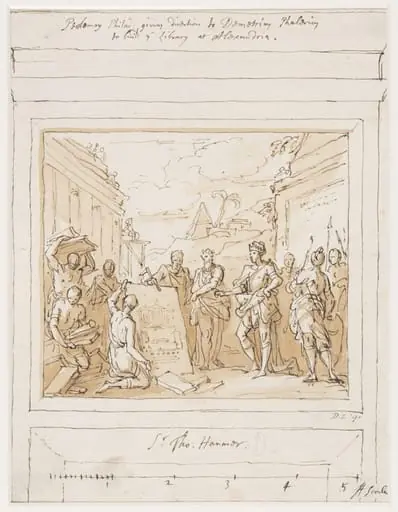 Design for a painting within an architectural setting depicting Ptolemy I commissioning the Library at Alexandria
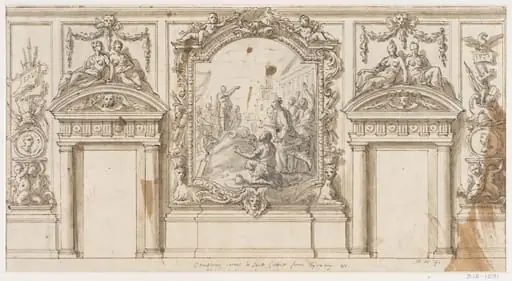 Early project design for the lower wall of the Great Hall at Moor Park, Hertfordshire
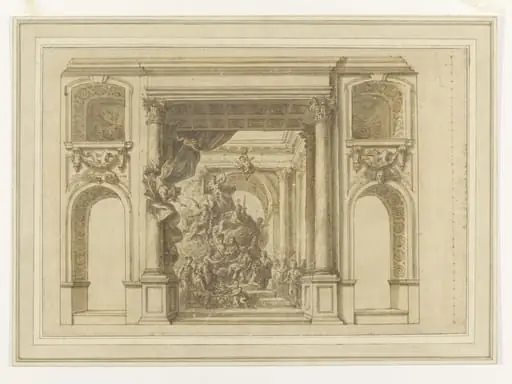 Design for the west wall of the Upper Hall at Greenwich
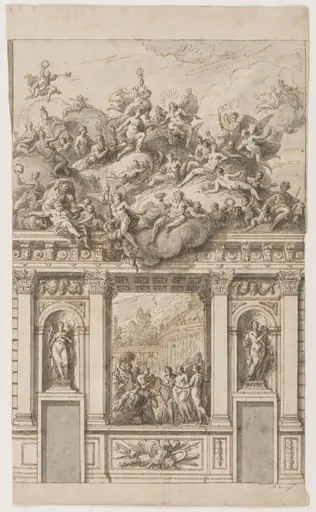 Design for a wall and ceiling painting, possibly for Chatsworth, Derbyshire
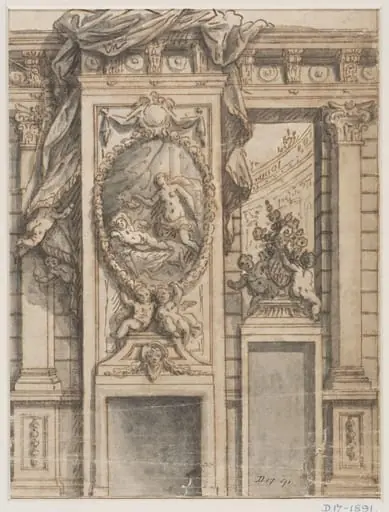 Design for wall decoration, possibly at Chatsworth, Derbyshire
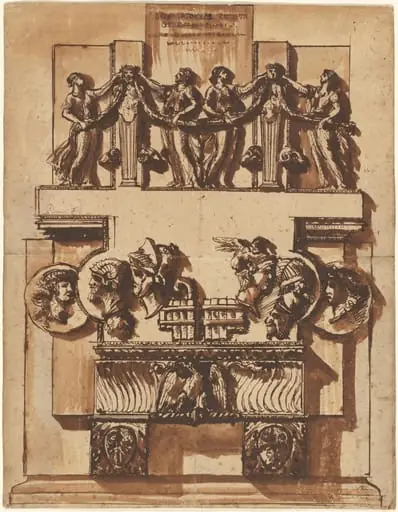 Fantasy of a Magnificent Wall Monument