Artwork
Untitled
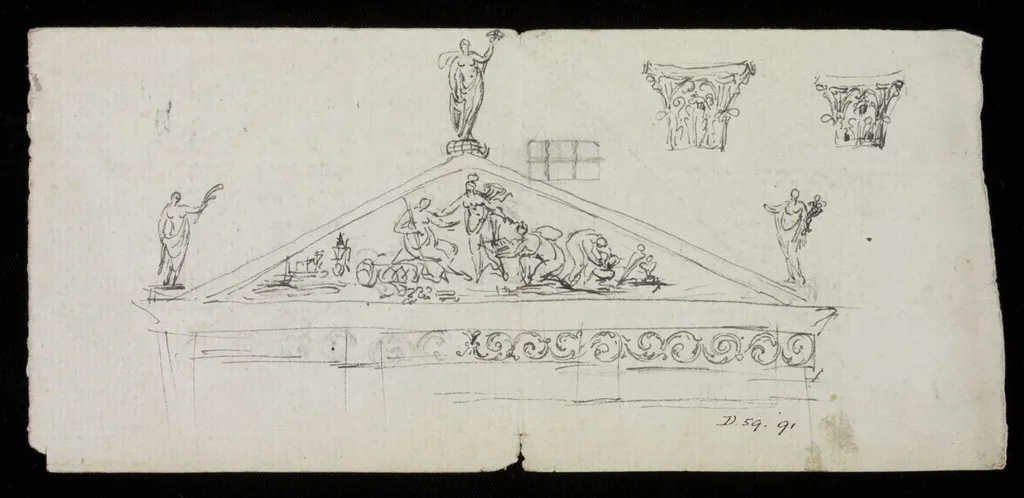
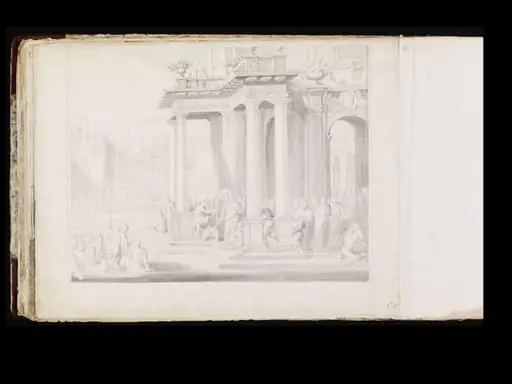
Untitled is a drawing by the Baroque artist James, Sir Thornhill. It dates from 1695 and is held in the collection of the Victoria and Albert Museum. A pen-and-ink drawing from 1695 by James Thornhill, this work is a preparatory study for architectural ornamentation.
About this work
Overview
It presents a triangular pediment with sculptural elements arranged in classical composition, accompanied by detailed renderings of adjacent capitals.
A pen-and-ink drawing from 1695 by James Thornhill, this work is a preparatory study for architectural ornamentation. It presents a triangular pediment with sculptural elements arranged in classical composition, accompanied by detailed renderings of adjacent capitals. The lines are fluid and economical, suggesting movement and spatial depth without heavy shading. The drawing functions as a working document, capturing design ideas rather than presenting a polished final image.
Subject & Meaning
The pediment features a central standing figure holding an object aloft, flanked by three dynamic figures: one kneeling, another with raised arms, and a third reaching downward. Two additional figures flank the sides—one gesturing, the other holding a scroll. These forms suggest a mythological or allegorical narrative, typical of Baroque-era architectural decoration. The arrangement implies a symbolic hierarchy, with the central figure elevated both physically and thematically.
Technique & Style
Thornhill employs fine, rapid pen strokes to define form and suggest volume. Light cross-hatching and varying line weight create subtle shadows and texture, particularly in drapery and architectural details. The absence of heavy ink or washes indicates a focus on structure and proportion over finish. The sketch’s spontaneity reveals an artist working through compositional ideas, prioritizing clarity and adaptability over decorative completion.
History & Provenance
Created in 1695, the drawing likely served as a design proposal for a British building project during Thornhill’s early career. It predates his major public commissions, such as the Painted Hall at Greenwich, and reflects his training in architectural draftsmanship. The work remained in private hands until its acquisition by a public collection, where it now functions as evidence of the preparatory processes behind 17th-century British monumental decoration.
Context
In late 17th-century England, architectural ornamentation drew heavily from classical antiquity, particularly Roman and Renaissance models. Thornhill’s sketch aligns with the period’s revival of pedimented facades and sculptural programs in civic and aristocratic buildings. As a designer transitioning from painter to architect, this drawing illustrates the interdisciplinary nature of artistic practice before the professionalization of architecture as a distinct field.
Legacy
This drawing contributes to the understanding of how British architects translated classical ideals into physical form during the Baroque era. Though not widely exhibited, it remains a key example of the working methods of Thornhill and his contemporaries. Its preservation offers insight into the iterative nature of design before construction, highlighting the role of sketches as vital tools in the evolution of architectural decoration.
Artist & collection


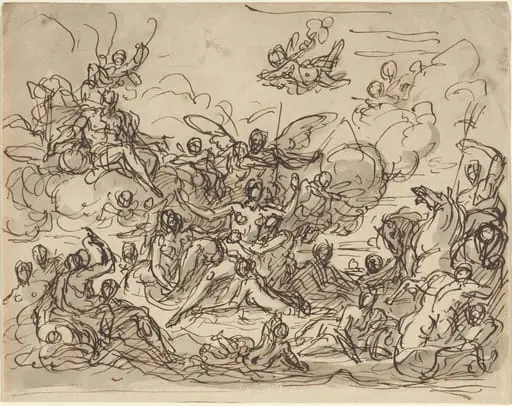 Birth of Venus
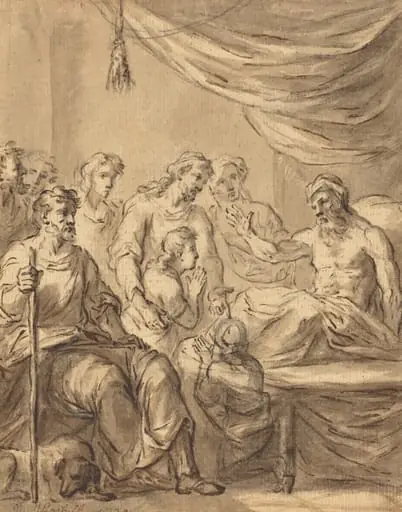 Jacob Allowing Benjamin to Go to Egypt with His Brothers
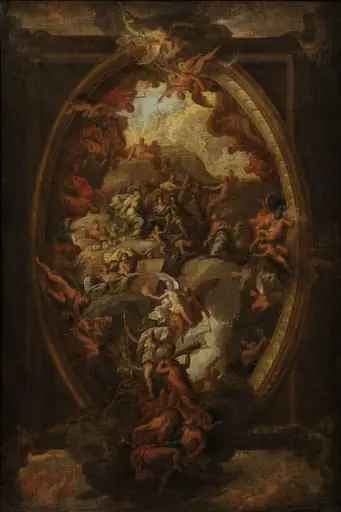 William and Mary Presenting the Cap of Liberty to Europe (sketch for the painted ceiling of the Great Hall, Greenwich Hospital)
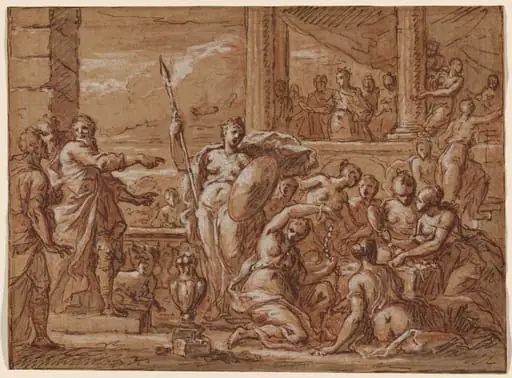 The Discovery of Achilles among the Daughters of Lycomedes
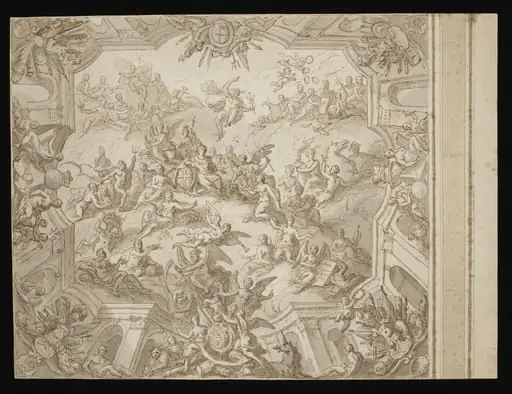 Preliminary design for the ceiling of the Upper Hall at Greenwich
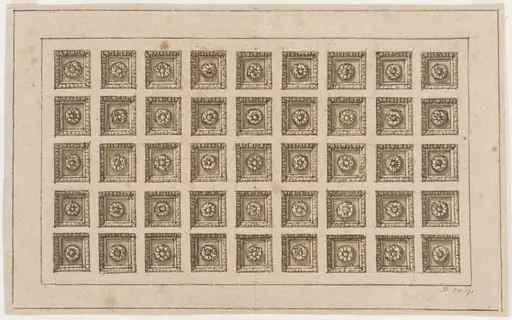 Design for a coffered ceiling
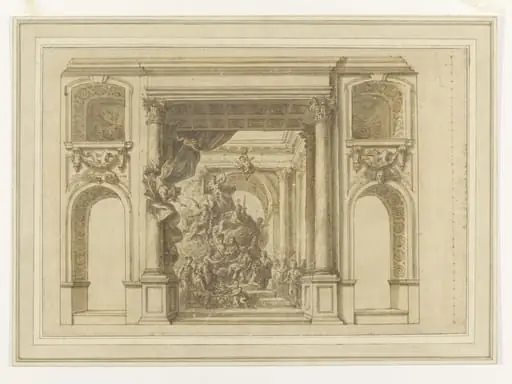 Design for the west wall of the Upper Hall at Greenwich
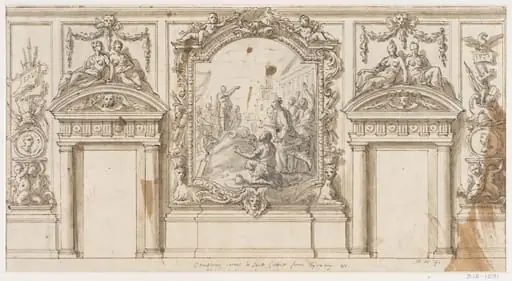 Early project design for the lower wall of the Great Hall at Moor Park, Hertfordshire
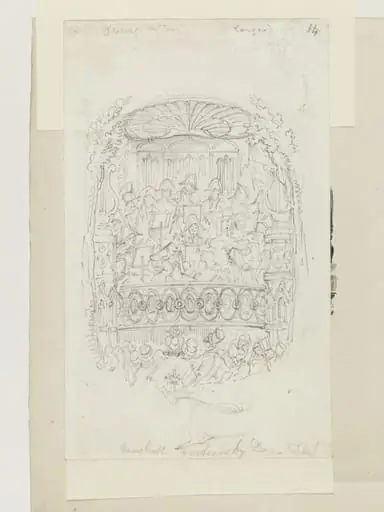 Vauxhall Gardens by Day
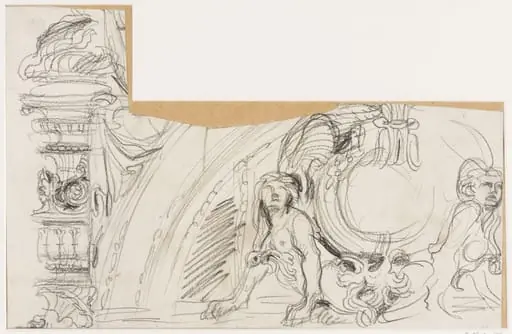 Studies for Dorchester House
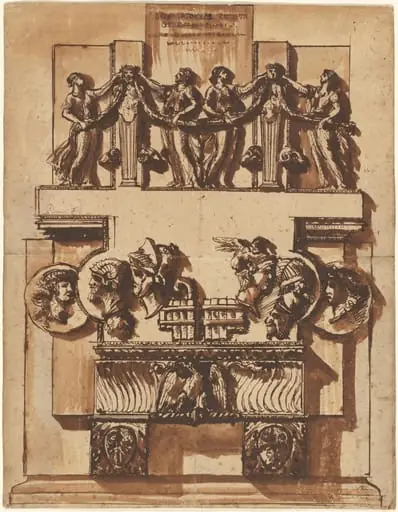 Fantasy of a Magnificent Wall Monument
 Untitled
 Monumental Stairway
 A Decorative Sculpture with a Woman Seen from Behind
 The gateway to the convent of Santa Clara, Macau
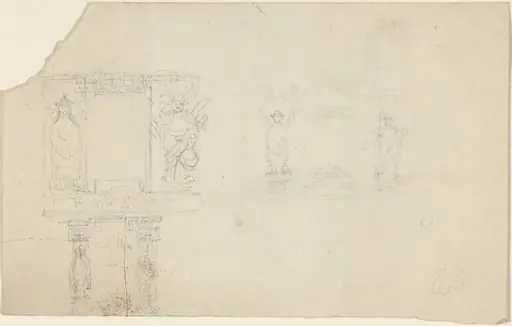 Structure with Figures in Asian Dress (Illustration for “The Casket”?)
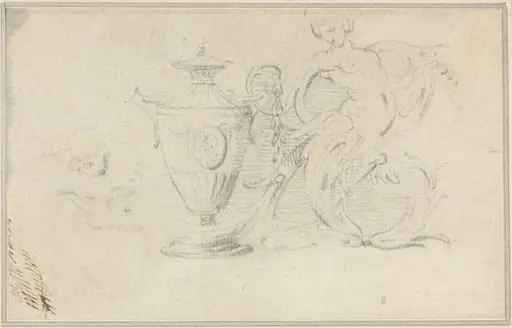 Designs for Decorative Vases
![The Ripetta in Rome [verso], by Augustin Pajou](https://artifactworldgallery.com/img/augustin-pajou--the-ripetta-in-rome-verso--4bc04e9c9476a91b-w320.webp) The Ripetta in Rome [verso]
The Ripetta in Rome [verso]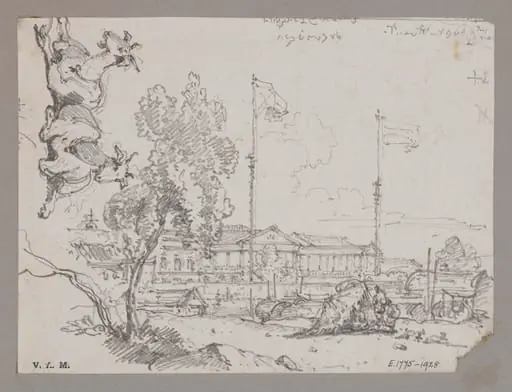 The East India Company's Factory, Canton
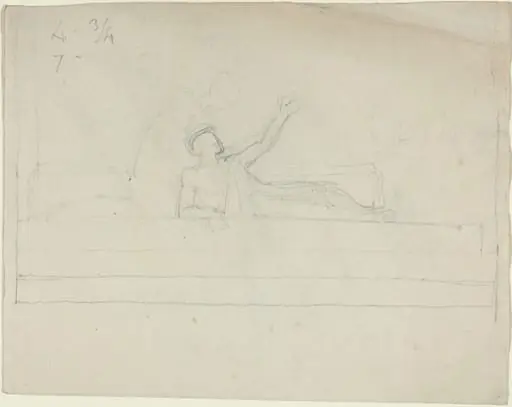 Two Greek Classical Figures