Artwork
Birth of Venus
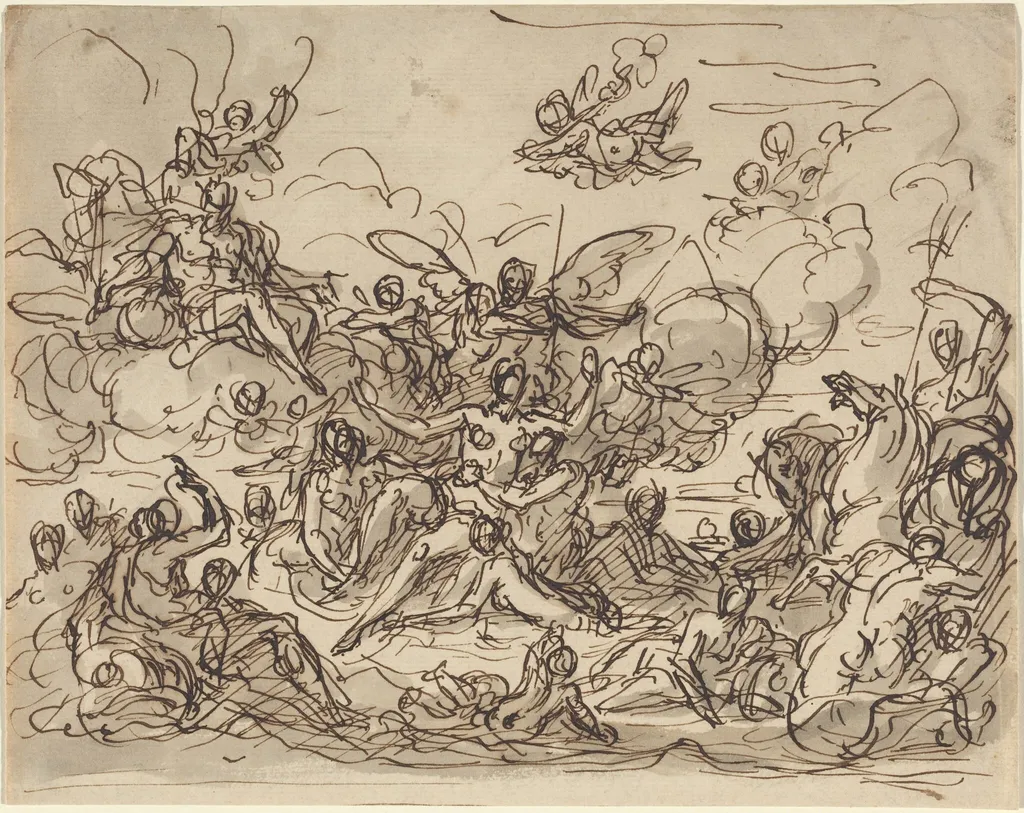
Birth of Venus is an ink drawing by the Baroque artist James, Sir Thornhill. It dates from 1710 and is held in the collection of the National Gallery of Art. A pen and brown ink drawing with gray wash on laid paper, attributed to Sir James Thornhill, dates to around 1710.
About this work
Overview
A pen and brown ink drawing with gray wash on laid paper, attributed to Sir James Thornhill, dates to around 1710. It depicts the mythological scene of Venus emerging from the sea, rendered in a linear, tonal style typical of preparatory studies for larger compositions. The work is not a finished painting but a detailed drawing, likely made as a design for a mural or ceiling scheme.
Subject & Meaning
The drawing illustrates the birth of Venus from the sea, a classical myth in which the goddess of love rises from oceanic foam. This moment, symbolizing beauty and divine origin, was a favored theme in Renaissance and Baroque art. Thornhill’s version emphasizes grace and serenity, aligning with contemporary ideals of classical antiquity revived in early 18th-century British decorative art.
Technique & Style
Executed in pen and brown ink with subtle gray wash, the drawing employs delicate linework to define form and movement. The wash adds soft modeling to the figures and drapery, suggesting volume without heavy shading. The composition is restrained and orderly, reflecting Thornhill’s training in academic draftsmanship and his focus on clarity over dramatic intensity.
History & Provenance
The drawing is held in a public collection, though its early ownership history is not fully documented. It likely originated as a study for a decorative project in a British aristocratic residence, possibly linked to Thornhill’s commissions for grand interiors. Its survival as a standalone work suggests it was valued for its artistic merit beyond its original functional role.
Context
Created during the early 18th century, the drawing reflects Britain’s growing interest in classical mythology as a subject for public and private decoration. Thornhill, later knighted for his work on the dome of St. Paul’s Cathedral, was part of a generation of artists adapting Italian Baroque traditions to English tastes, blending narrative clarity with architectural harmony.
Legacy
As a surviving example of Thornhill’s preparatory work, the drawing offers insight into the creative process behind large-scale decorative schemes of the period. It contributes to the understanding of how mythological themes were translated from small-scale studies to monumental wall and ceiling paintings in Georgian Britain.
Artist & collection


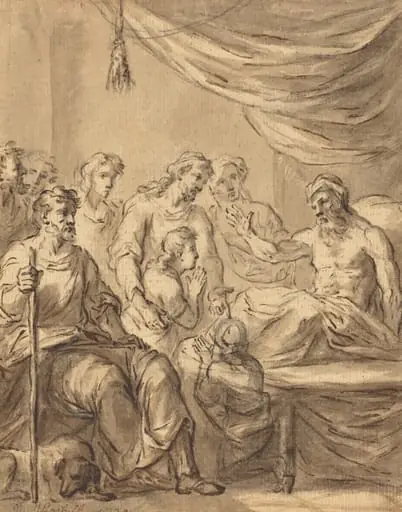 Jacob Allowing Benjamin to Go to Egypt with His Brothers
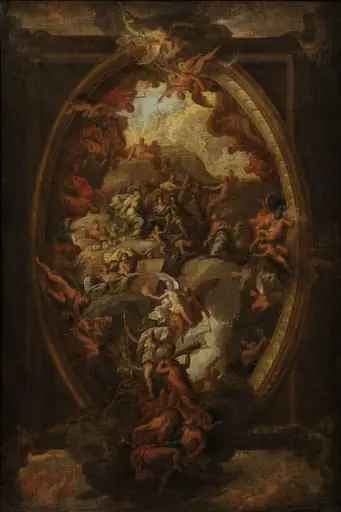 William and Mary Presenting the Cap of Liberty to Europe (sketch for the painted ceiling of the Great Hall, Greenwich Hospital)
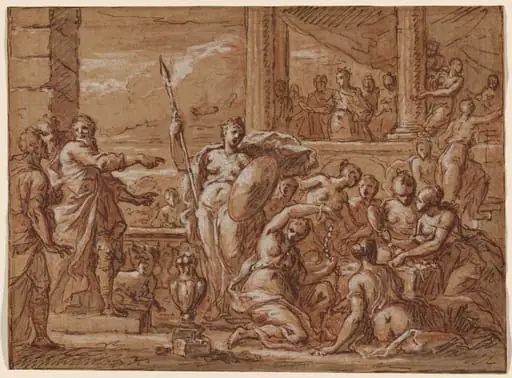 The Discovery of Achilles among the Daughters of Lycomedes
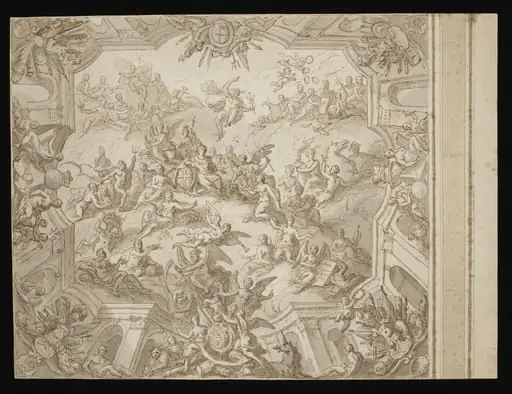 Preliminary design for the ceiling of the Upper Hall at Greenwich
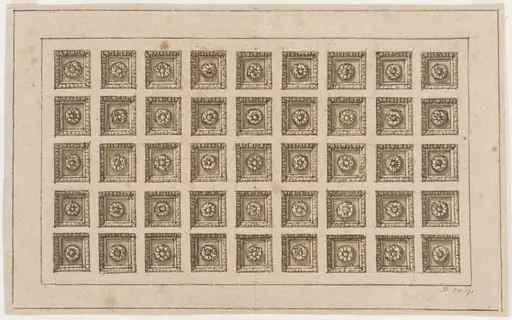 Design for a coffered ceiling
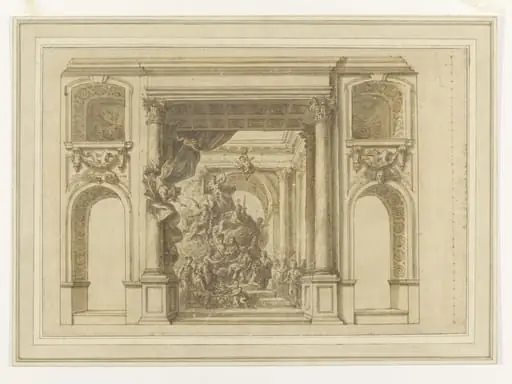 Design for the west wall of the Upper Hall at Greenwich
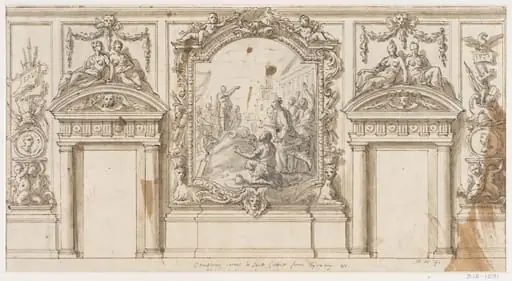 Early project design for the lower wall of the Great Hall at Moor Park, Hertfordshire
 Untitled
 The Marriage of Bacchus and Ariadne
 The Last Judgment
 The Triumph of Neptune
![Biblical Scene [verso], by Sebastiano Ricci](https://artifactworldgallery.com/img/sebastiano-ricci--biblical-scene-verso--d33f1e2abb3d29f7-w320.webp) Biblical Scene [verso]
Biblical Scene [verso]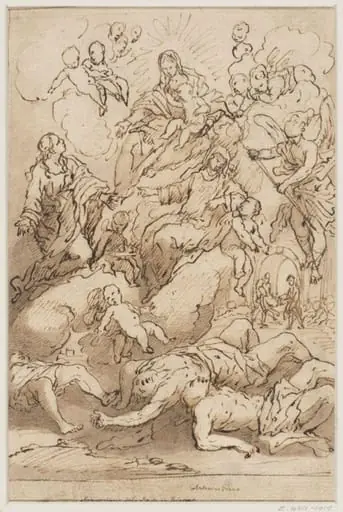 Anniversary of the Plague at Palermo
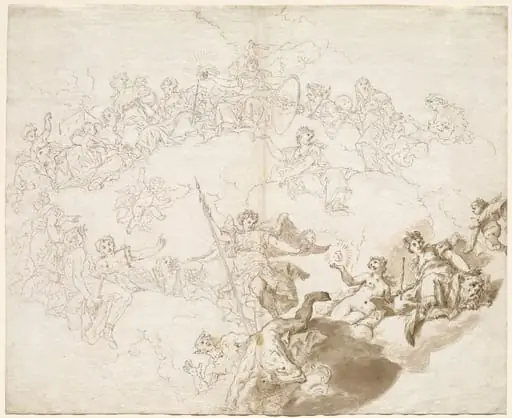 The Triumph of Virtue and Divine Wisdom
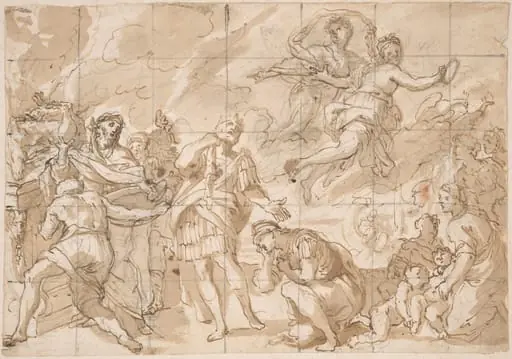 The Sacrifice of Iphigenia
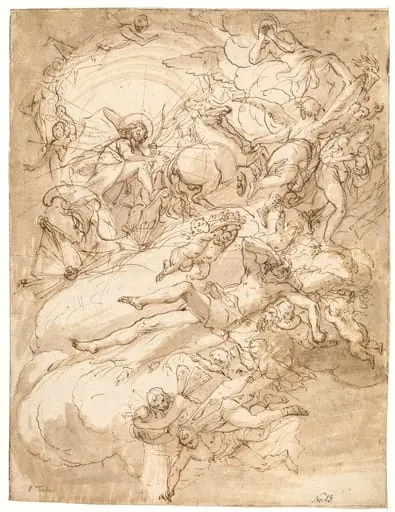 Apollo in his chariot, design for a ceiling painting
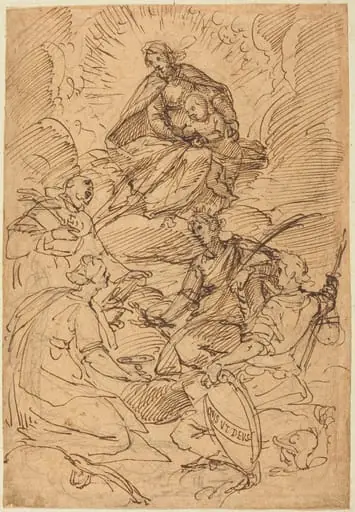 The Madonna and Child in Glory Adored by Saints
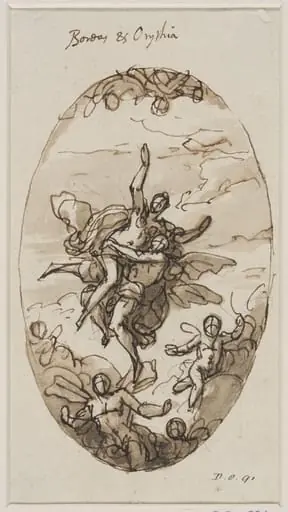 Study for an oval painting
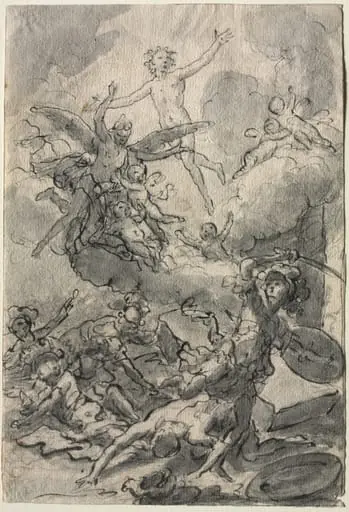 The Resurrection
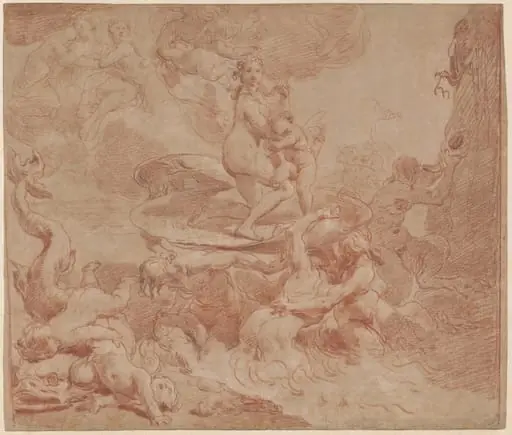 The Birth of Venus