Artwork
Jacob Allowing Benjamin to Go to Egypt with His Brothers
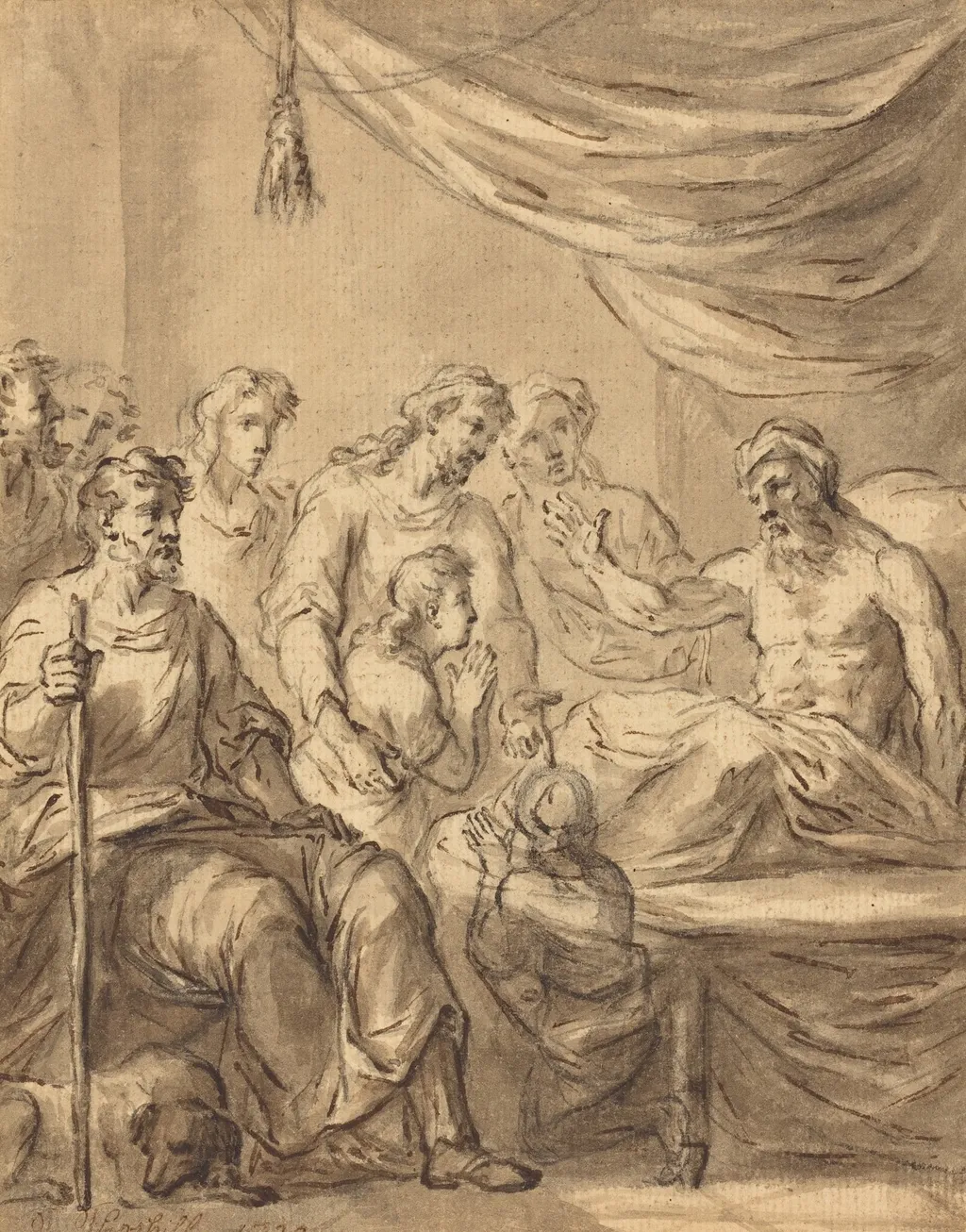
Jacob Allowing Benjamin to Go to Egypt with His Brothers is an ink drawing by the Baroque artist James, Sir Thornhill. It dates from 1722 and is held in the collection of the National Gallery of Art.
About this work
Overview
The drawing titled Jacob Allowing Benjamin to Go to Egypt with His Brothers was executed by Sir James Thornhill in 1722. Rendered on laid paper, the work combines pen work in brown and gray inks, a gray‑brown wash, and black chalk, producing a monochrome composition that functions as a preparatory study rather than a finished piece.
Subject & Meaning
The scene depicts the biblical moment when Jacob consents to send his youngest son, Benjamin, to Egypt accompanied by his brothers.
The scene depicts the biblical moment when Jacob consents to send his youngest son, Benjamin, to Egypt accompanied by his brothers. Figures are arranged beneath a loosely rendered, undulating ceiling; a kneeling man, likely Jacob, holds a staff, while the other brothers sit or crouch, their expressions ranging from concern to resolve. A child stands centrally, reaching toward the seated group, emphasizing the familial tension of the narrative.
Technique & Style
Thornhill employs fine, layered pen strokes to model form and suggest shadows, while cross‑hatching builds tonal depth. The use of gray‑brown wash over black chalk adds atmospheric shading without obscuring the underlying drawing. The overall effect is sketchy and provisional, characteristic of an artist’s study for a larger composition.
History & Provenance
Created in the early eighteenth century, the drawing belongs to Thornhill’s oeuvre of religious and historical subjects. Its provenance traces to private collections before entering a museum holding, where it is catalogued as a preparatory work linked to Thornhill’s larger narrative paintings.
Context
Thornhill, a prominent English painter of the Baroque period, was known for large decorative cycles in churches and civic buildings. This drawing reflects his practice of producing detailed studies to plan complex groupings and architectural settings for his monumental works.
Legacy
Although not a finished composition, the drawing offers insight into Thornhill’s compositional process and his handling of biblical themes. It serves as a valuable reference for scholars examining the development of narrative planning in early eighteenth‑century British art.
Artist & collection


 Birth of Venus
 William and Mary Presenting the Cap of Liberty to Europe (sketch for the painted ceiling of the Great Hall, Greenwich Hospital)
 The Discovery of Achilles among the Daughters of Lycomedes
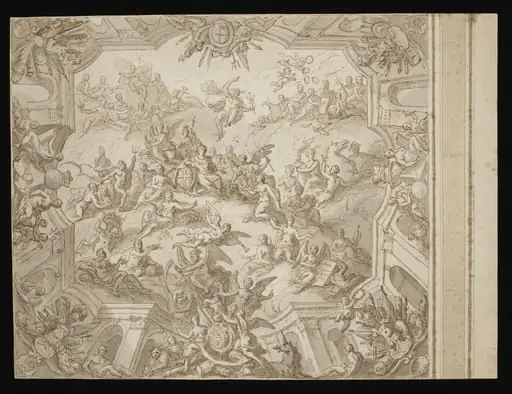 Preliminary design for the ceiling of the Upper Hall at Greenwich
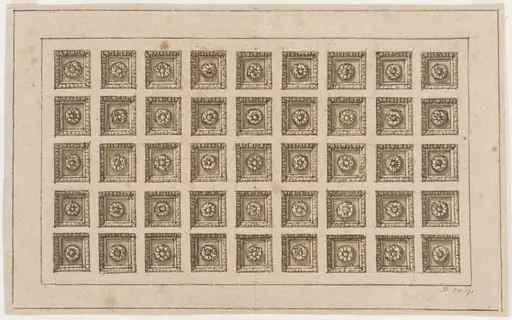 Design for a coffered ceiling
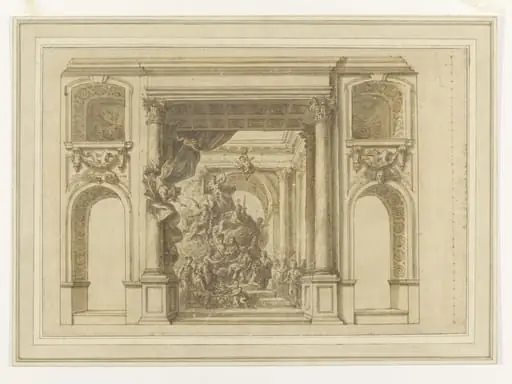 Design for the west wall of the Upper Hall at Greenwich
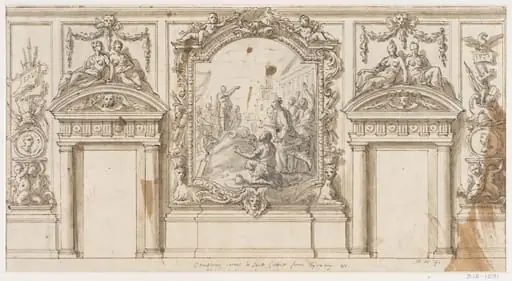 Early project design for the lower wall of the Great Hall at Moor Park, Hertfordshire
 Untitled
![Jacob and Rebecca before Isaac [recto], by French 18th Century](https://artifactworldgallery.com/img/french-18th-century--jacob-and-rebecca-before-isaac-recto--5393ee8d0dceb48c-w320.webp) Jacob and Rebecca before Isaac [recto]
Jacob and Rebecca before Isaac [recto] The Entombment
 The Death of Hector on the Ramparts of Troy (recto) / Tancred and Erminia (verso)
 Christ among the Doctors
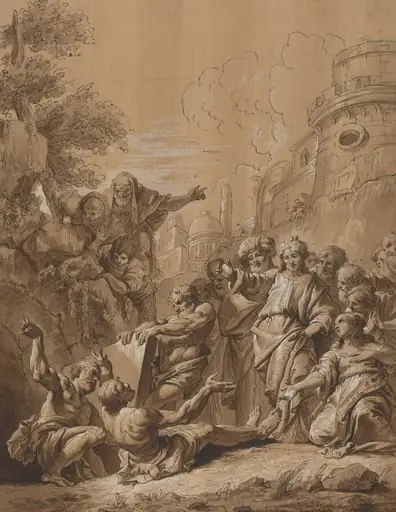 The Raising of Lazarus
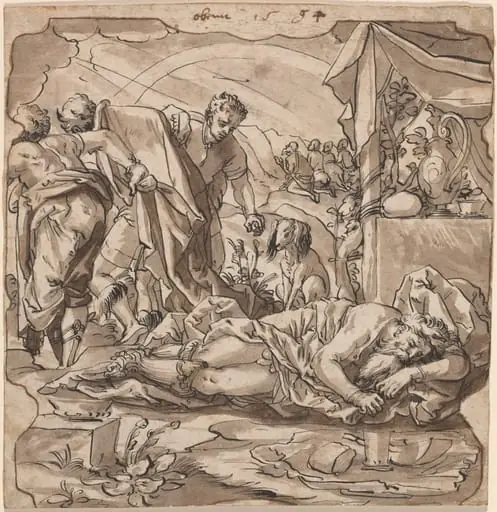 The Drunkenness of Noah
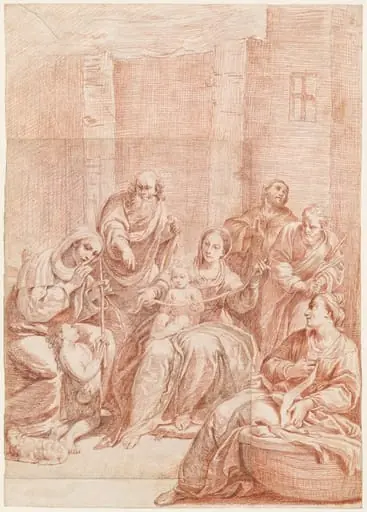 The Holy Family
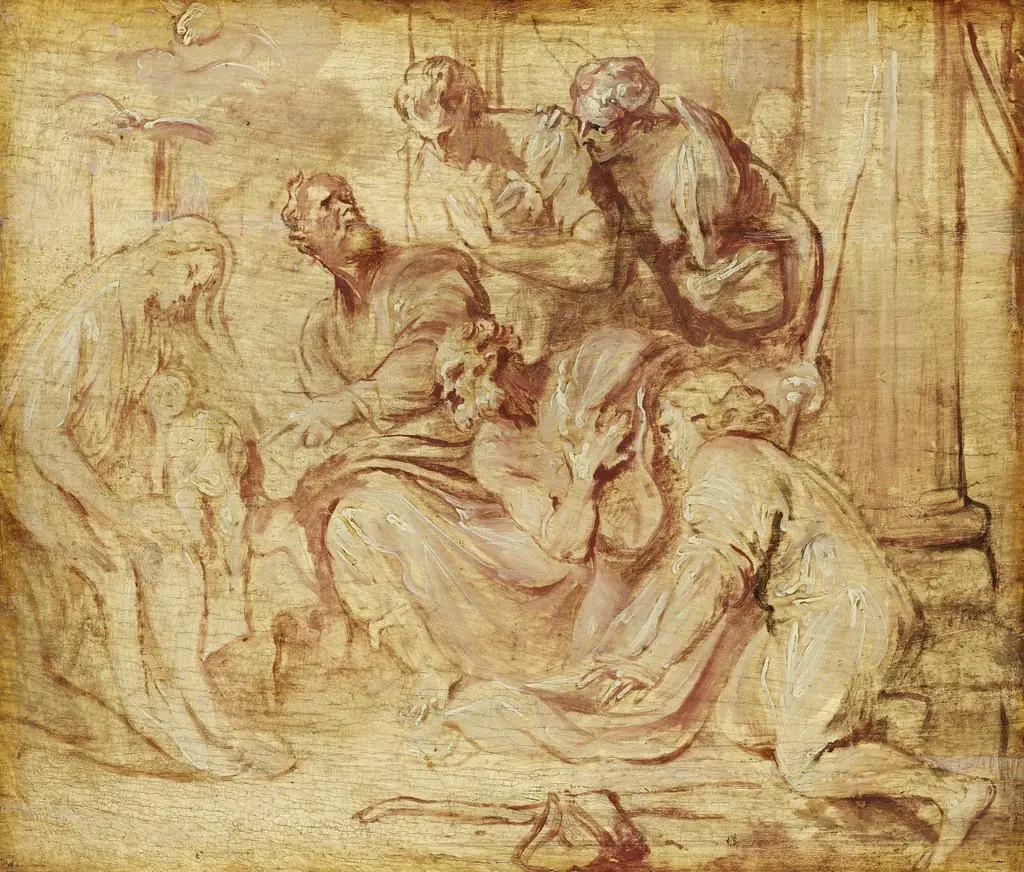 Adoration of the Shepherds (study)
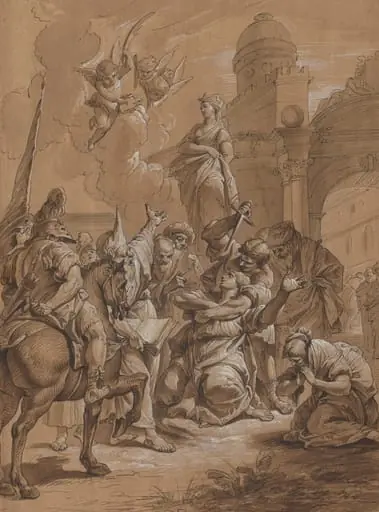 Martyrdom of a Female Saint
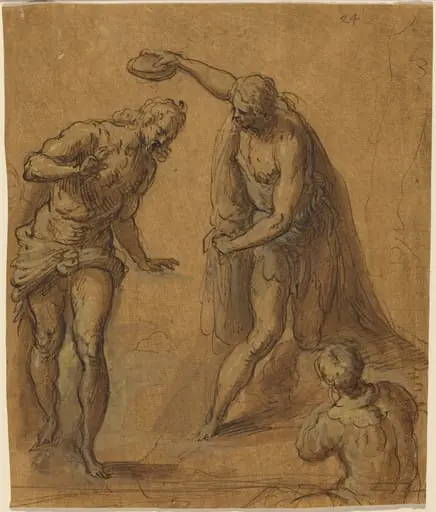 Sketch for a Baptism of Christ
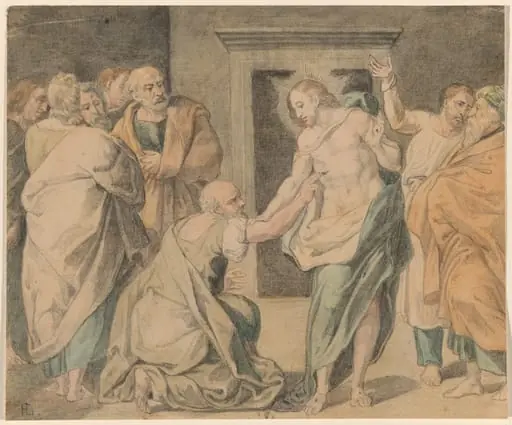 Christ with Doubting Thomas and the Apostles
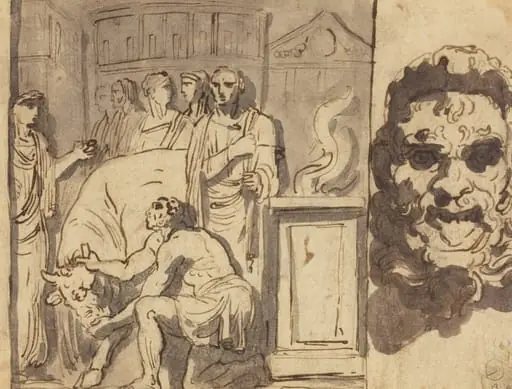 Ancient Sacrifice and Head of a Satyr