Artwork
The Discovery of Achilles among the Daughters of Lycomedes
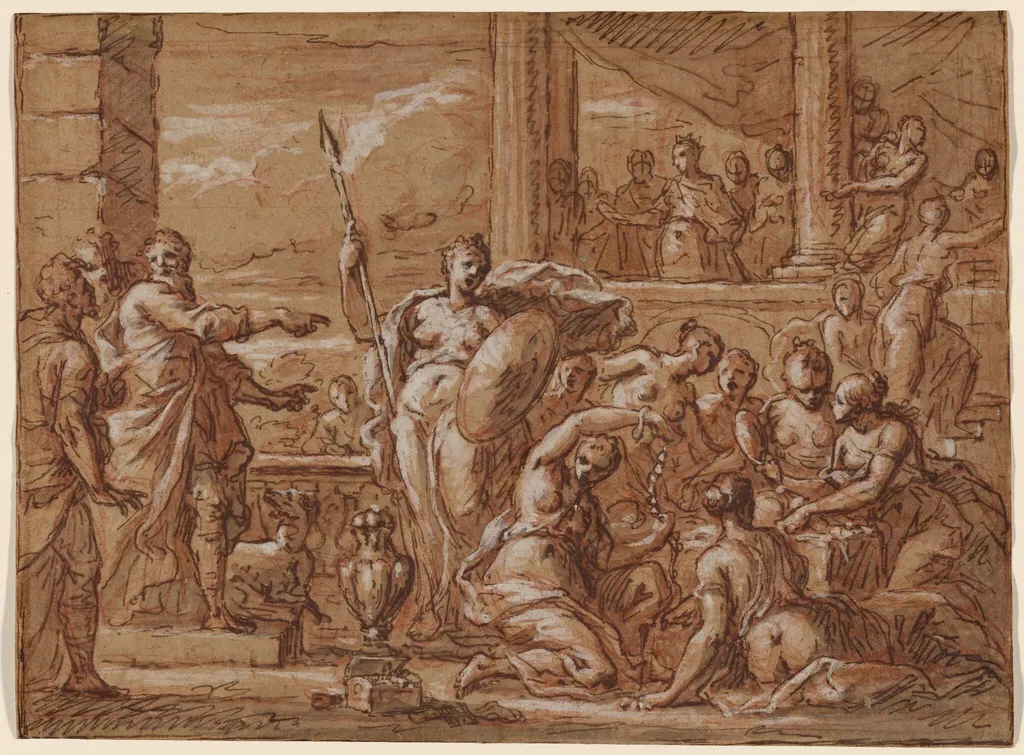
The Discovery of Achilles among the Daughters of Lycomedes is a gouache drawing by the Baroque artist James, Sir Thornhill. It dates from 1710 and is held in the collection of the National Gallery of Art.
About this work
Overview
It is held in the collection of the National Gallery of Art in Washington, D.
This drawing, created around 1710 by Sir James Thornhill, depicts a moment from Greek myth in pen and brown ink, enhanced with brushwork, brown wash, and white gouache over red chalk. Executed on laid paper, it functions as a preparatory study rather than a final work, capturing a dynamic composition with energetic linework and layered tonal effects. It is held in the collection of the National Gallery of Art in Washington, D.C.
Subject & Meaning
The scene illustrates the moment when Achilles, disguised among the daughters of King Lycomedes on the island of Skyros, is revealed by Odysseus. A warrior in partial armor stands amid frightened women, his spear pointing toward hidden weapons. The tension arises from the disruption of deception—his masculinity and martial identity clash with the domestic setting, underscoring themes of identity, fate, and coercion.
Technique & Style
Thornhill employed rapid, expressive strokes in red chalk to define forms, then layered brown ink and wash for depth and shadow. White gouache highlights accentuate musculature and fabric folds, creating contrast against the warm paper. The loose handling of some areas, juxtaposed with precise details in faces and weapons, suggests a working sketch, prioritizing movement and emotional immediacy over finish.
History & Provenance
The drawing is attributed to Thornhill’s early career, likely made during his preparation for large-scale decorative commissions. It entered the National Gallery of Art’s collection through the Chester Dale bequest in 1963. Its survival as a standalone study reflects its value as evidence of the artist’s process, though it was never intended for public display in its current form.
Context
Created during the early 18th century, the work aligns with Baroque traditions of dramatic narrative and theatrical gesture, common in European history painting. Thornhill, influenced by Italian and Flemish masters, adapted these conventions for English decorative cycles. This drawing exemplifies how classical myths were reinterpreted through heightened emotion and physical dynamism in the period.
Legacy
As a surviving study from Thornhill’s preparatory phase, it offers insight into the development of British academic art before the rise of the Royal Academy. Its emphasis on expressive line and emotional intensity influenced later generations of illustrators and muralists, preserving a link between Renaissance compositional methods and 18th-century British practice.
Artist & collection


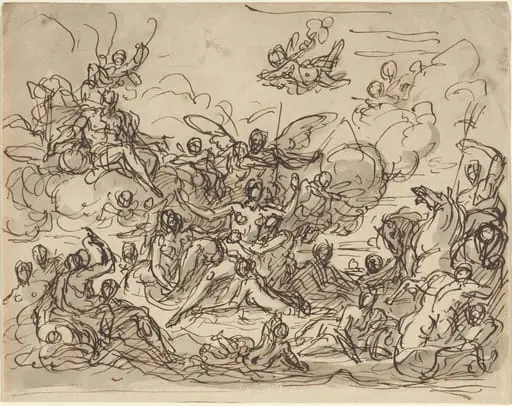 Birth of Venus
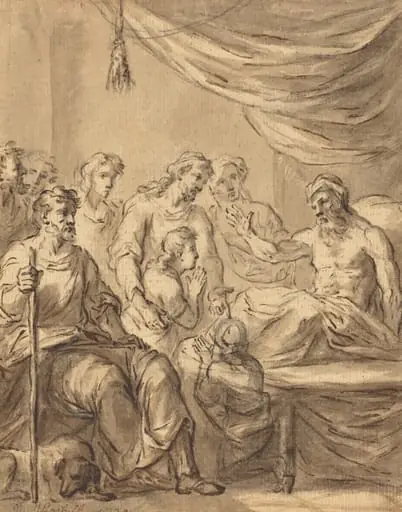 Jacob Allowing Benjamin to Go to Egypt with His Brothers
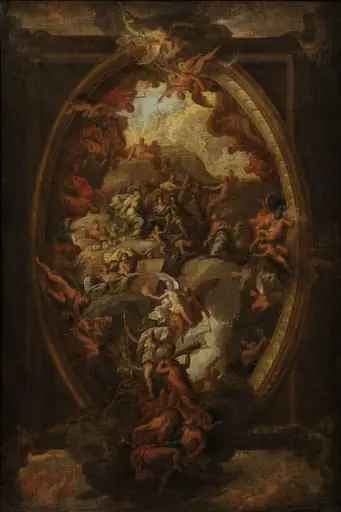 William and Mary Presenting the Cap of Liberty to Europe (sketch for the painted ceiling of the Great Hall, Greenwich Hospital)
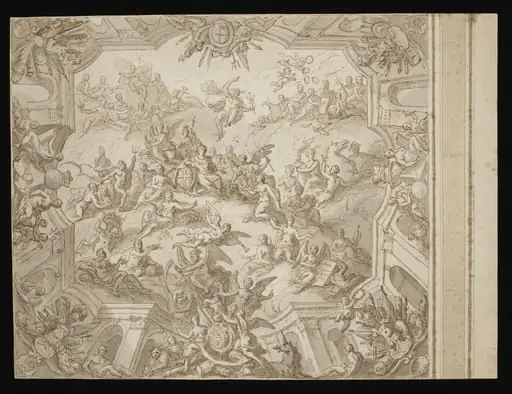 Preliminary design for the ceiling of the Upper Hall at Greenwich
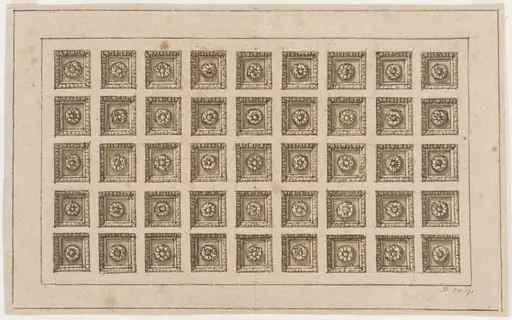 Design for a coffered ceiling
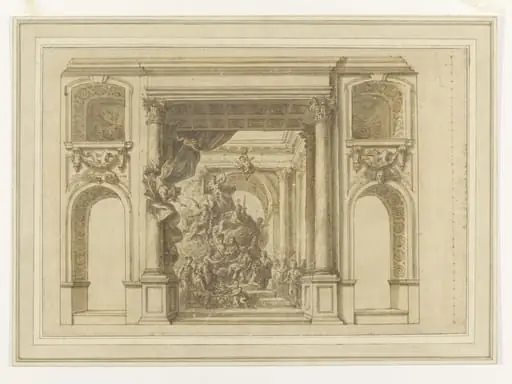 Design for the west wall of the Upper Hall at Greenwich
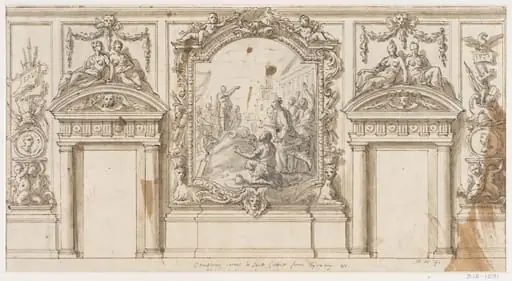 Early project design for the lower wall of the Great Hall at Moor Park, Hertfordshire
 Untitled
 The Purification of Aeneas
 Martyrdom of Saint Lawrence
 Bacchanal
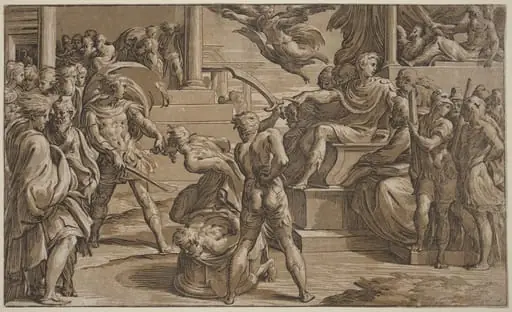 The Martyrdom of Saints Peter and Paul
 Quoi donc, les vrais Chrétiens auraient tant de vertu
 The Sacrifice of Iphigenia
 The Meeting of Jacob and Rachel
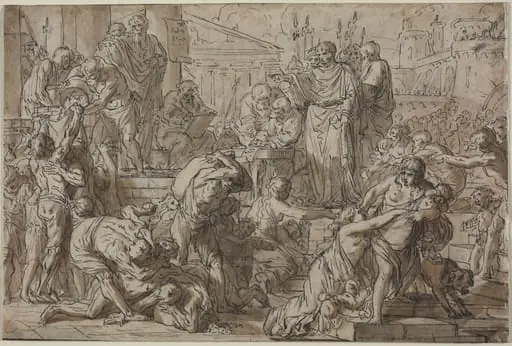 Roman Subject
![The Martyrdom of Saints Peter and Paul [recto], by Antonio da Trento](https://artifactworldgallery.com/img/antonio-da-trento--the-martyrdom-of-saints-peter-and-paul-recto--a51e90060085a207-w320.webp) The Martyrdom of Saints Peter and Paul [recto]
The Martyrdom of Saints Peter and Paul [recto]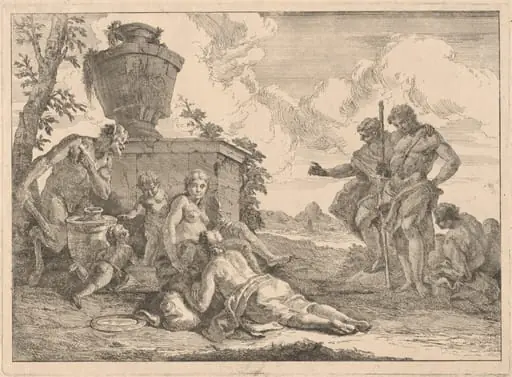 A Satyr with a Staff and Seven Other Figures
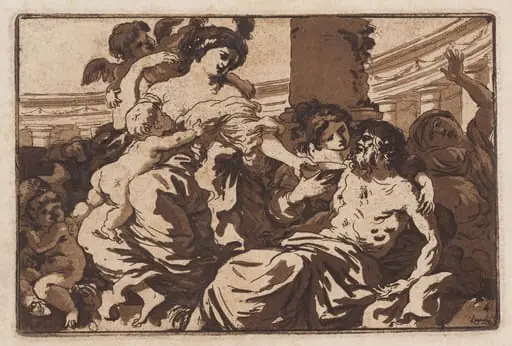 Anacreon
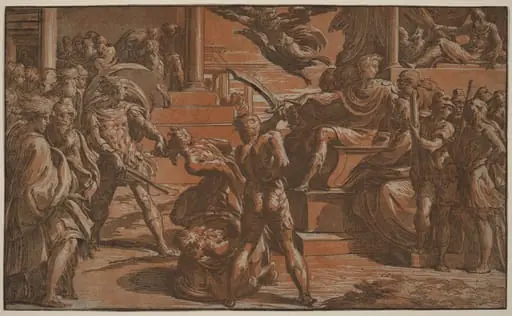 The Martyrdom of Two Saints