Artwork
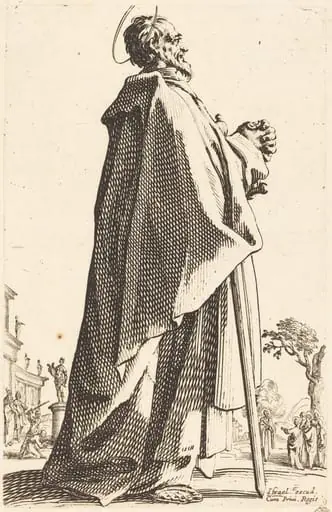
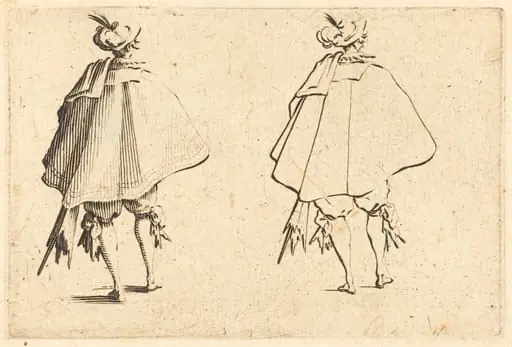
Standing Man Viewed from Behind
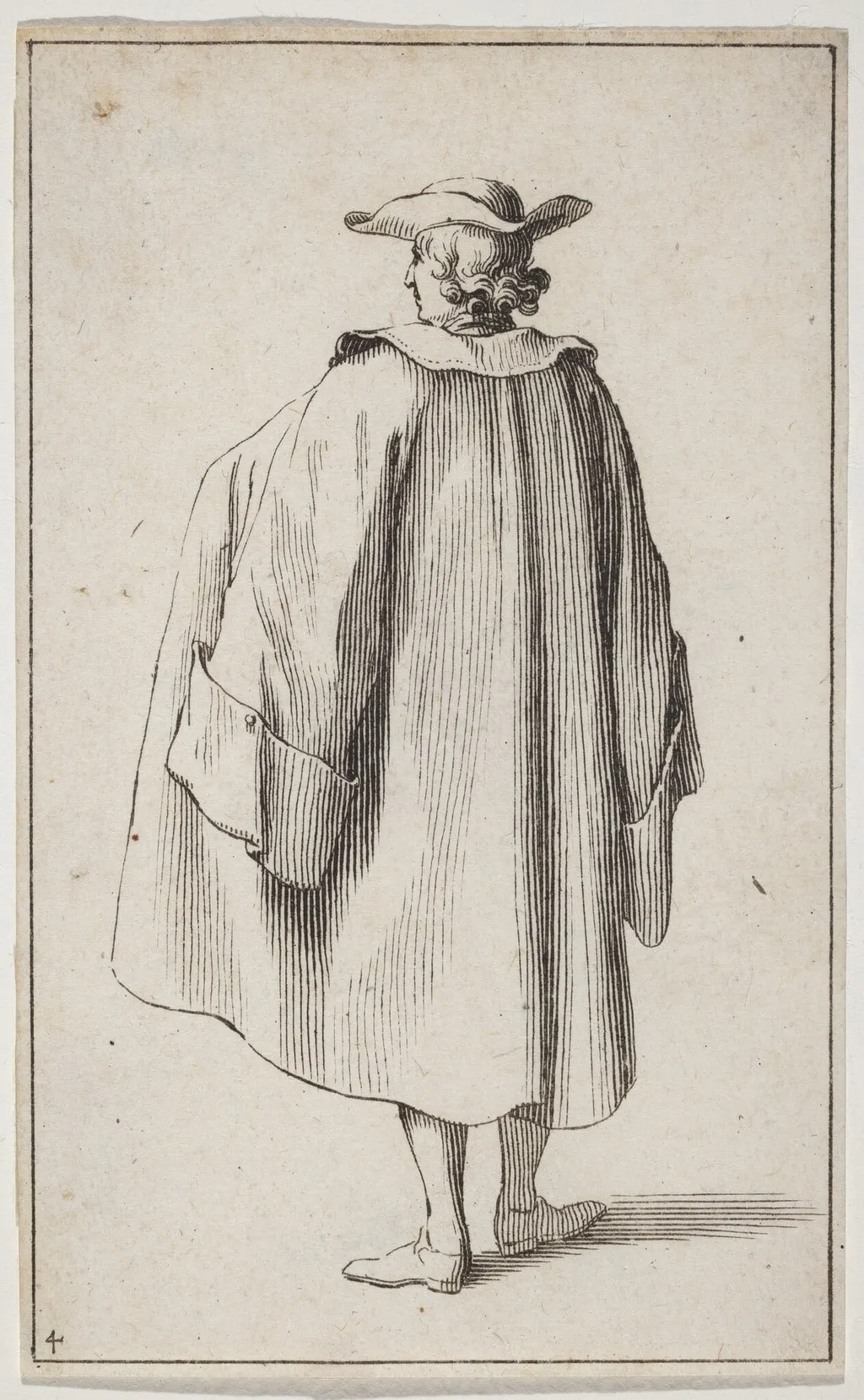
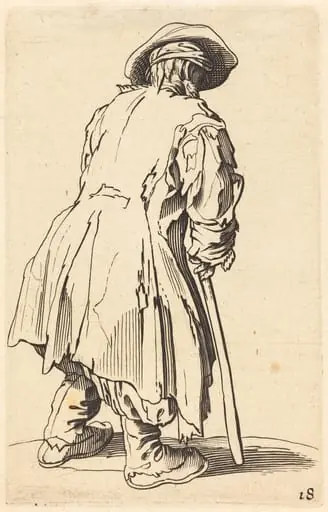
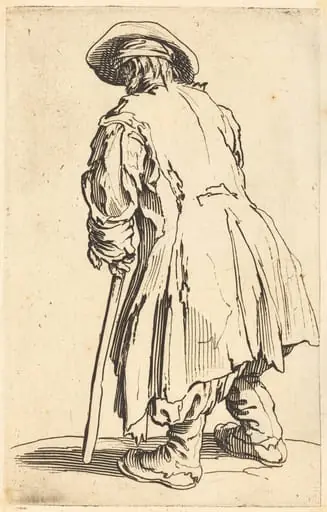
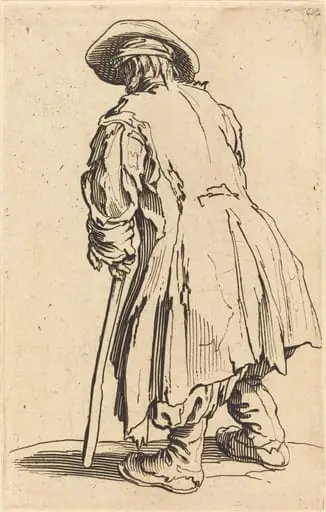
Standing Man Viewed from Behind is an ink print by the Baroque artist Sébastien Le Clerc I. It dates from 1685 and is held in the collection of the National Gallery of Art.
About this work
Overview
Created in 1685 by Sébastien Le Clerc I, this etching depicts a solitary male figure viewed from behind. Rendered in monochrome on laid paper, the work exemplifies the precision and tonal subtlety characteristic of late 17th-century printmaking. The composition focuses entirely on the figure’s posture and attire, eliminating background or context to emphasize form and texture.
Subject & Meaning
The figure, dressed in a long, loose coat with deep pockets and a broad collar, wears a flat-brimmed hat adorned with a small feather.
The figure, dressed in a long, loose coat with deep pockets and a broad collar, wears a flat-brimmed hat adorned with a small feather. His stance is still and unadorned, suggesting a quiet, everyday presence rather than a narrative moment. The lack of facial features or contextual clues invites contemplation of anonymity and the dignity of ordinary attire in a period when dress signaled social role.
Technique & Style
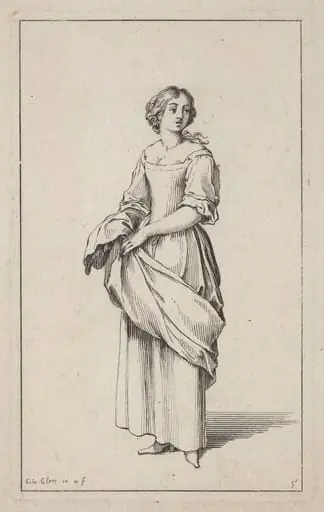
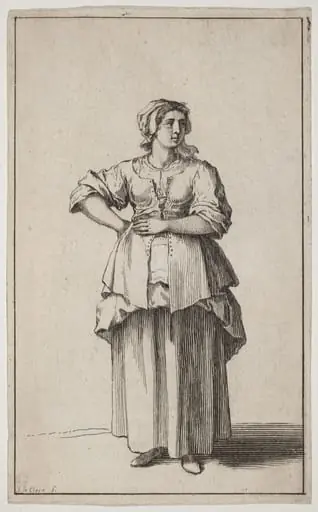
Le Clerc employed fine, controlled lines to simulate the texture of fabric, using cross-hatching and varied stroke density to suggest the weight and folds of the coat. The etching technique allowed for delicate gradations of tone, capturing the tactile quality of wool or felt without color. This method was standard among French printmakers of the era, prioritizing clarity and detail over expressive brushwork.
History & Provenance
The print was produced during Le Clerc’s tenure as a royal engraver under Louis XIV, when demand for detailed illustrations in scientific and artistic publications was high. Though likely made as a standalone study, it may have served as a reference for costume or figure drawing. Its survival in multiple institutional collections indicates its early recognition as a model of technical skill.
Context
In late 17th-century France, etchings like this were used to document dress, posture, and gesture for academic and artisanal purposes. Unlike theatrical or allegorical subjects, this figure reflects a growing interest in observational realism. Similar studies appeared in treatises on anatomy and fashion, serving as visual references for artists and tailors alike.
Legacy
Le Clerc’s etching contributed to a broader tradition of figure studies in print, influencing later artists who valued precise rendering over dramatic expression. Its quiet focus on costume and silhouette prefigured 18th-century interest in social detail. Though not widely exhibited today, it remains a representative example of the period’s disciplined approach to visual documentation.
Artist & collection