Artwork
Christ Leading Peter, James, and John to the High Mountain for the Transfiguration
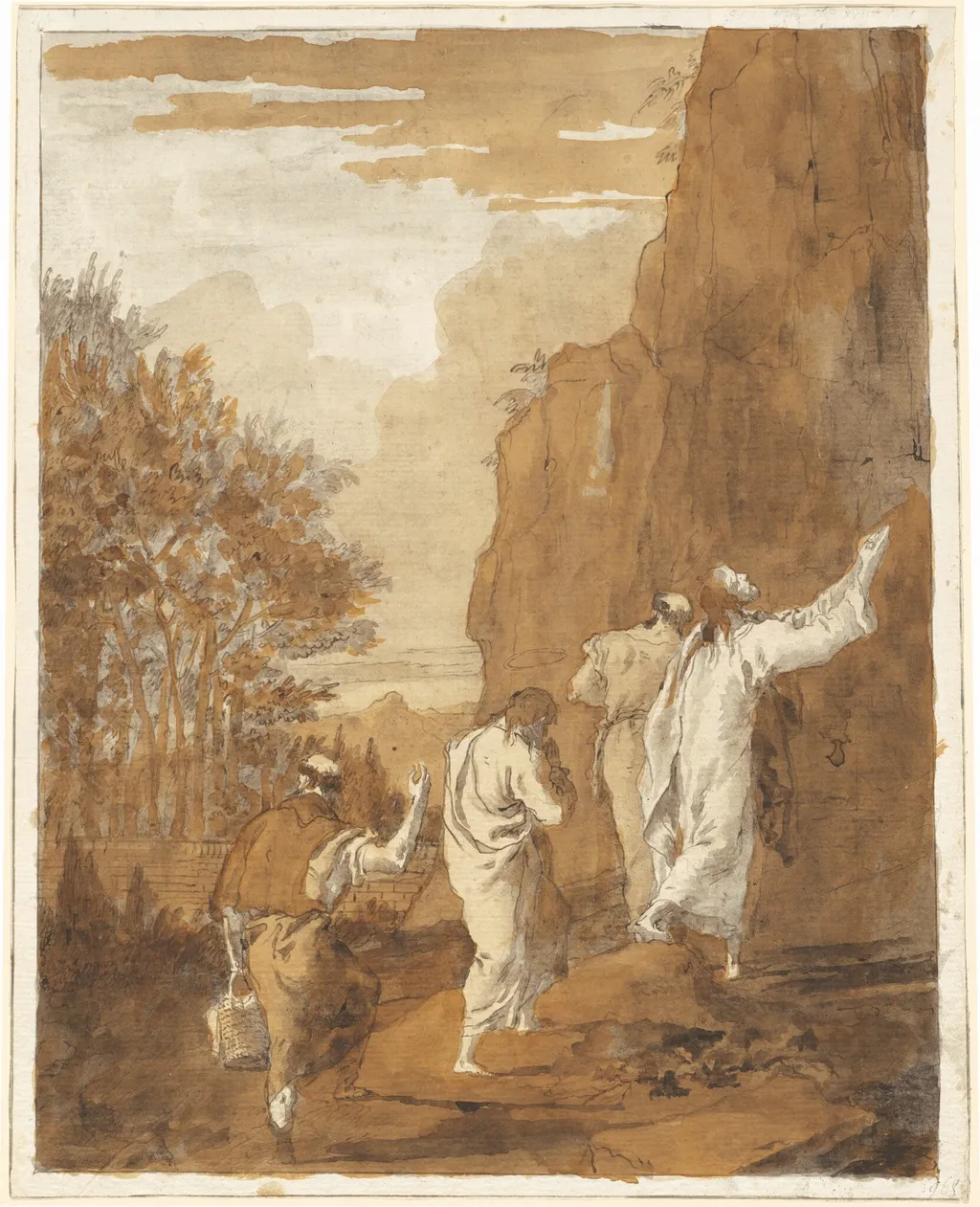
Christ Leading Peter, James, and John to the High Mountain for the Transfiguration is an ink drawing by the Romanticist artist Giovanni Domenico Tiepolo. It dates from 1790 and is held in the collection of the National Gallery of Art.
About this work
Overview
It stands as a study in movement and spiritual tension, rendered with the spontaneity of a quick observation.
Created in 1790, this drawing by Giovanni Domenico Tiepolo captures a moment from the Gospel narrative in which Christ leads Peter, James, and John toward a mountain where he will be transfigured. Executed in pen and ink with layered washes of gray, brown, and golden tones over black chalk, the work reflects the artist’s mature style—economical yet evocative, prioritizing atmosphere over detail. It stands as a study in movement and spiritual tension, rendered with the spontaneity of a quick observation.
Subject & Meaning
The scene portrays Christ, identified by his simple robe and lowered gaze, guiding three disciples up a rugged slope. One apostle raises his arms in reaction to an unseen divine presence, suggesting the imminent revelation. The presence of a stationary horse and a fallen tree anchors the figures in a natural, earthly setting, contrasting with the celestial event about to unfold. The composition emphasizes quiet anticipation rather than dramatic spectacle, focusing on human response to the sacred.
Technique & Style
Tiepolo employed thin, fluid pen lines and translucent washes to suggest form and light without heavy definition. The gray and brown tones blend softly, creating a hazy, atmospheric quality that enhances the sense of early morning or twilight. The sketchy, rapid strokes convey motion and impermanence, characteristic of his late work, where expressive draftsmanship replaced ornate detail. The use of black chalk underdrawing adds subtle depth to the figures and terrain.
History & Provenance
This drawing originates from Tiepolo’s final years, produced after his return to Venice from Spain and during a period of introspective artistic output. It was likely made as a preparatory study, possibly for a larger composition that was never executed. Its survival offers insight into the artist’s working methods during a time when he increasingly favored intimate, experimental drawings over grand commissions.
Context
In the late 18th century, Tiepolo turned away from the theatricality of his earlier career, embracing quieter, more personal interpretations of religious subjects. This shift aligned with broader cultural changes in Venice, where Enlightenment ideals encouraged emotional restraint and naturalism. The drawing reflects a move toward psychological nuance and understated spirituality, distancing itself from the Baroque grandeur of his father’s style.
Legacy
The work exemplifies Tiepolo’s late-period mastery of expressive line and tonal modulation, influencing later artists interested in the emotional potential of sketch-like forms. Though not widely exhibited during his lifetime, such drawings gained recognition in the 19th century as vital records of artistic process. Today, they are valued for their immediacy and the quiet humanity they bring to biblical narratives.
Artist & collection
Artist
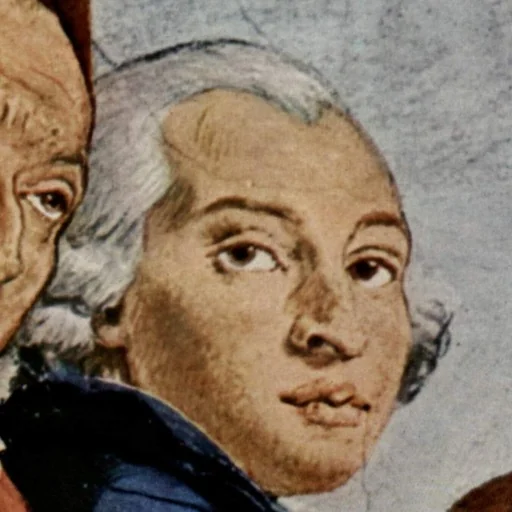
Giovanni Domenico Tiepolo (August 30, 1727 – March 3, 1804) was an Italian painter and printmaker in etching. He was the son of artist Giovanni Battista Tiepolo and elder brother of Lorenzo Baldissera Tiepolo.

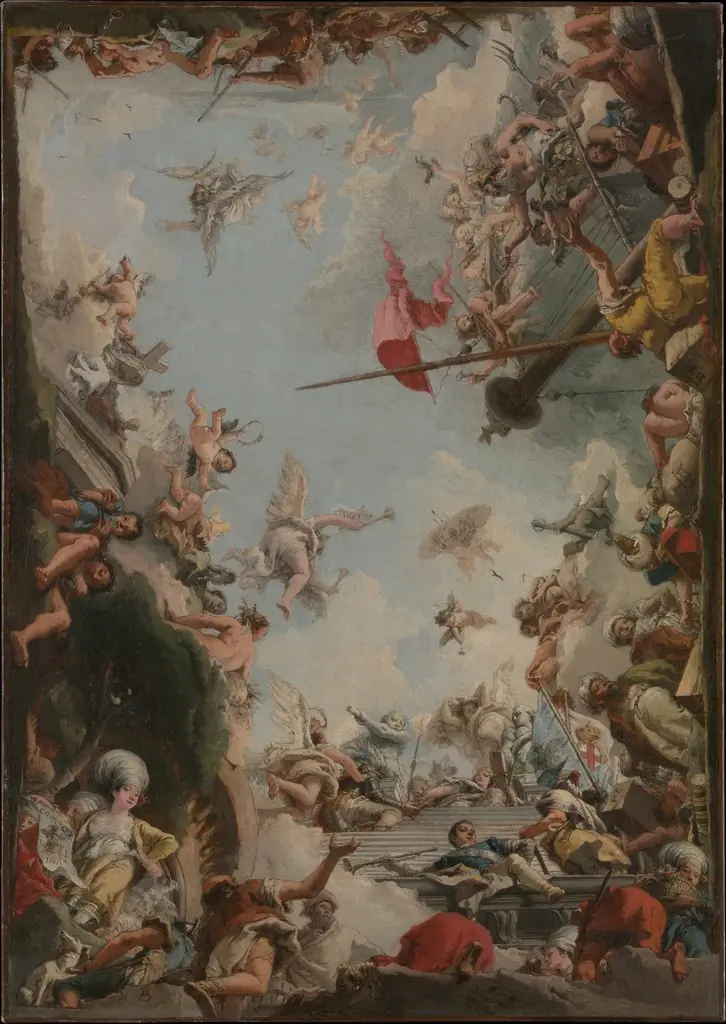
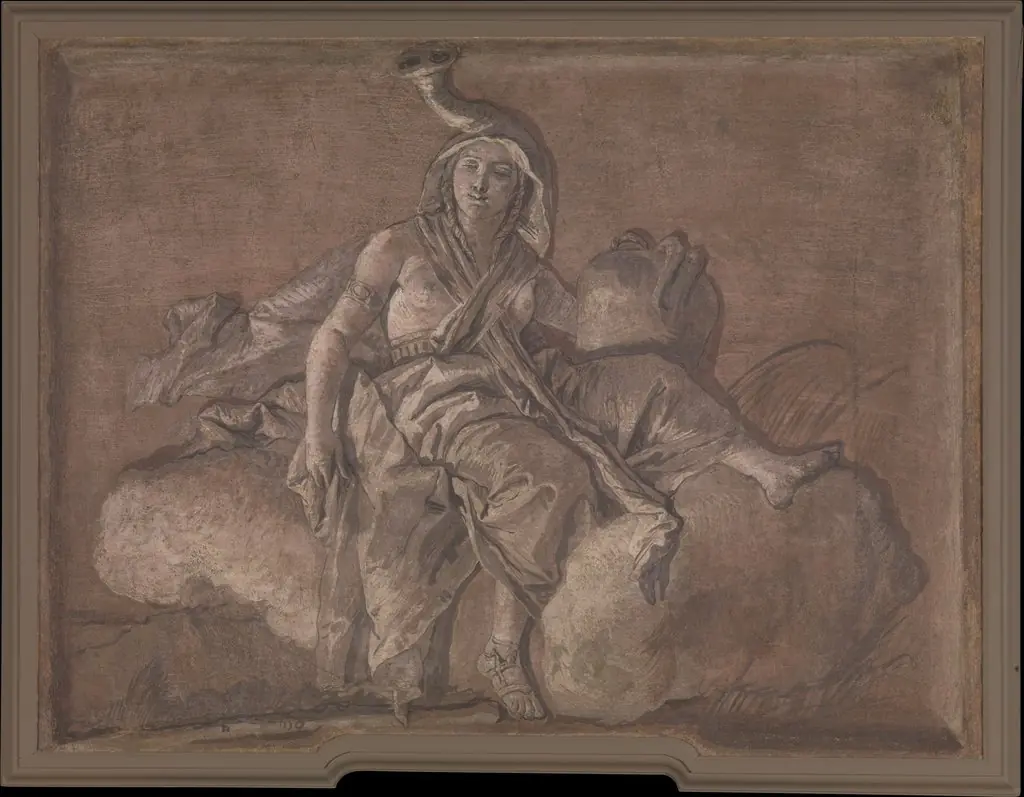
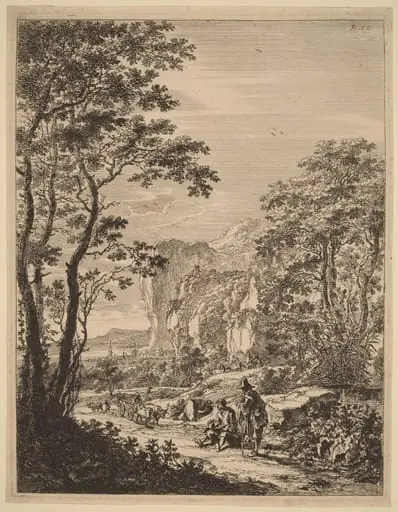 The Ox-Cart: View between Ancona and Sinigaglia
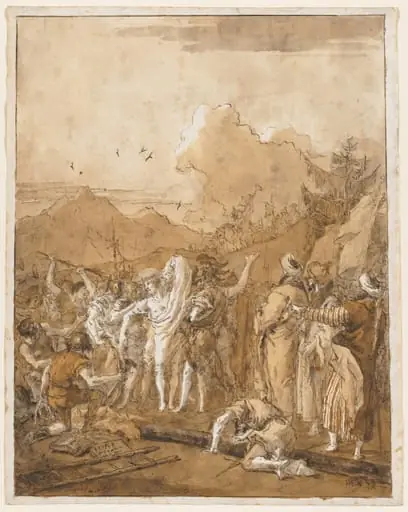 The Disrobing of Christ
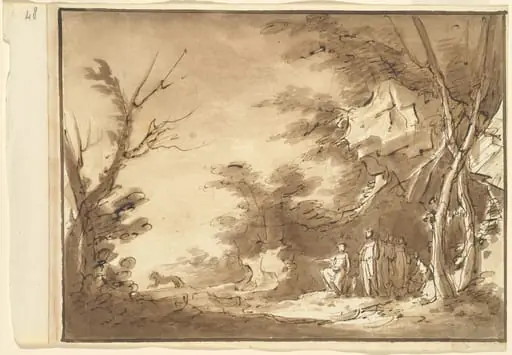 Diana and Her Companions in a Landscape
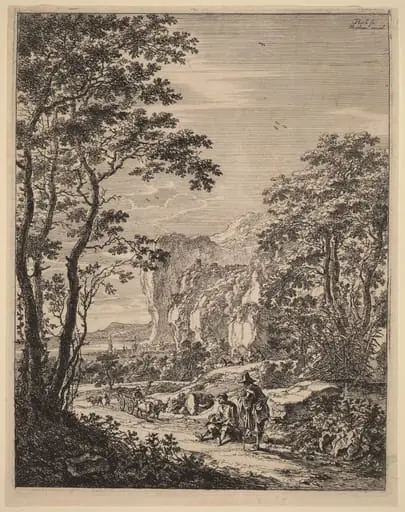 The Ox-Cart: View between Ancona and Sinigaglia
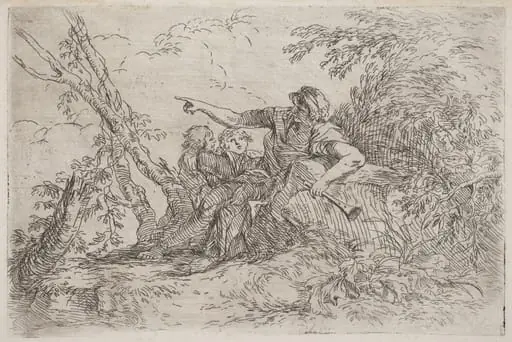 Shepherd in a Landscape
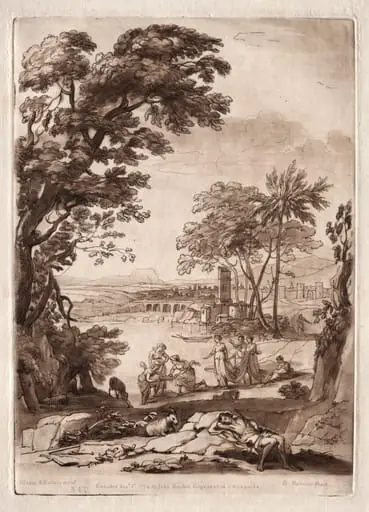 Liber Veritatis: No. 47, A River Scene with the Finding of Moses
 Two Men Penitent in the Wilderness
 A Rocky Wooded Landscape with a Figure by a Stream
 The Inscription on the Rock
 God the Father Standing in Clouds Surrounded by Angels and Putti
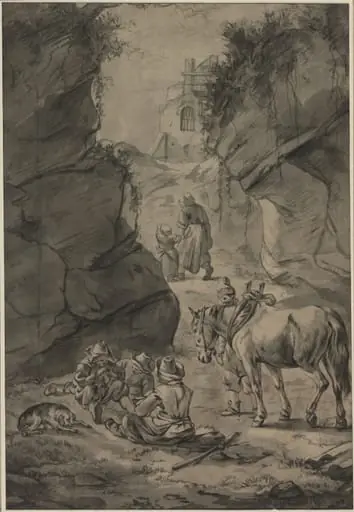 Peasants in a Rocky Landscape
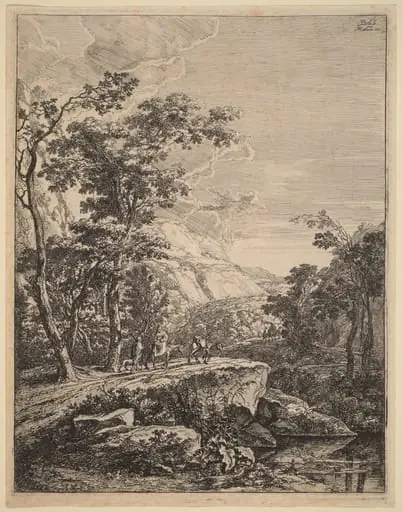 The Woman on the Hinny