Artwork
East Humboldt Mountains, Utah
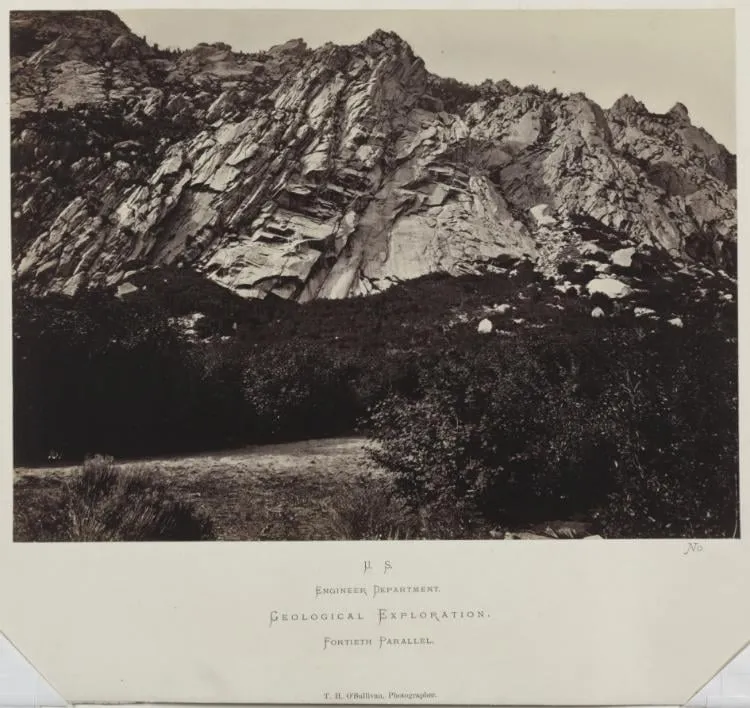
East Humboldt Mountains, Utah is a photography by the Impressionist artist Timothy H. O'Sullivan. It dates from 1868 and is held in the collection of the Cleveland Museum of Art.
About this work
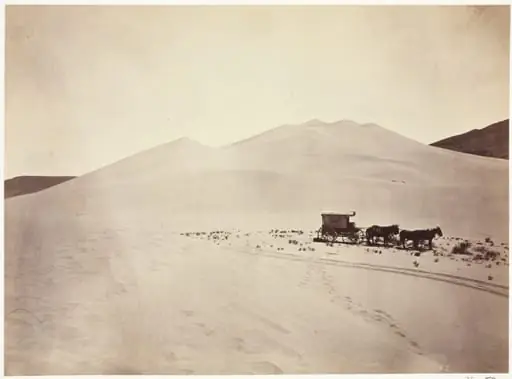
This photo shows Utah’s East Humboldt Mountains in 1868. The peaks rise sharp against a flat plain. The light feels crisp, like early morning.
O’Sullivan took this while on a big survey trip. He lugged heavy gear across rough land. This shot helped scientists map the West.
If you like early American photography, check out Timothy H. O'Sullivan (American, 1840–1882).
Overview
The photograph captures the East Humboldt Mountains of Utah as they appeared in 1868, with jagged peaks rising sharply from a level foreground. The clear, crisp light suggests an early‑morning atmosphere, emphasizing the stark contrast between the rugged summits and the surrounding plain.
Subject & Meaning
The image records a segment of the western landscape that was being surveyed for its geological structure and natural resources. By presenting the mountains in a flattened, shallow perspective, the photograph conveys both the grandeur of the terrain and its suitability for scientific observation.
Technique & Style
Taken by Timothy H. O’Sullivan, the photograph employs a balanced composition that aligns the camera parallel to the ridge line, reducing depth and creating a planar view. This approach reflects O’Sullivan’s effort to merge aesthetic considerations with the documentary needs of the expedition.
History & Provenance
O’Sullivan captured the view during the United States Geological Exploration of the Fortieth Parallel, a survey led by geologist Clarence King between 1867‑69 and again in 1872. The photographer carried heavy equipment across challenging terrain, producing images that assisted in mapping the western United States.
Context
The expedition aimed to chart a 100‑mile‑wide corridor from the Sierra Nevada across the Great Basin to the Rockies, assessing geological formations and resources. O’Sullivan’s work provided visual documentation that complemented the scientific data collected by the team.
Artist & collection