Artwork
Sand Dunes, Carson Desert, Nevada
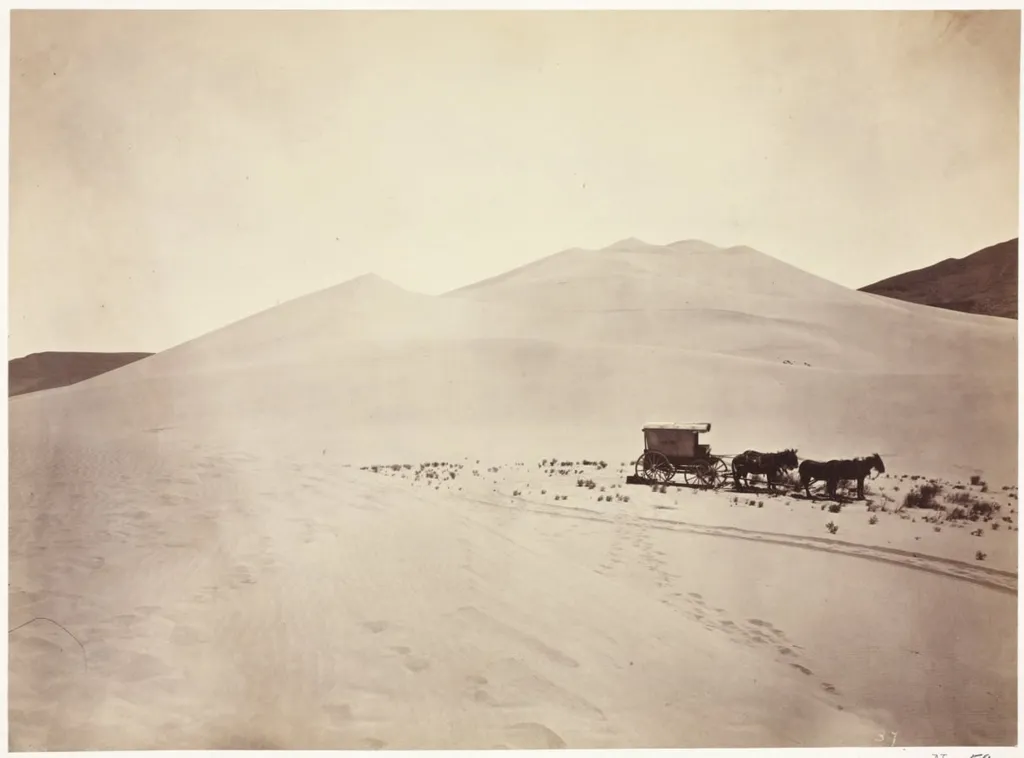
Sand Dunes, Carson Desert, Nevada is a photography by the Impressionist artist Timothy H. O'Sullivan. It dates from 1867 and is held in the collection of the Cleveland Museum of Art. Taken in 1867 in Nevada’s Carson Desert, this photograph captures a vast, silent expanse of sand dunes under a clear midday sky.
About this work
You see empty sand dunes stretching under a bright sky, with a single wagon and two sets of footprints in the distance.
You see empty sand dunes stretching under a bright sky, with a single wagon and two sets of footprints in the distance.
This photo was taken in 1867, just after the Civil War. The wagon was O’Sullivan’s darkroom—he developed photos on the spot. Thousands of travelers had passed this way during the Gold Rush, but the land looks untouched.
To see more photos of the American West like this, look up *subject: america*.
Overview
Taken in 1867 in Nevada’s Carson Desert, this photograph captures a vast, silent expanse of sand dunes under a clear midday sky. The image’s composition omits the horizon, emphasizing isolation and scale. A single wagon and two sets of footprints are the only human traces, suggesting quiet passage through an otherwise uninhabited landscape.
Subject & Meaning
The wagon, a converted Civil War ambulance, served as Timothy O’Sullivan’s mobile darkroom, enabling on-site development of glass plate negatives. The two sets of footprints imply brief human presence amid immense emptiness. Though tens of thousands had traversed this region during the Gold Rush, the photograph presents the land as untouched, evoking a sense of quiet endurance rather than historical movement.
Technique & Style
O’Sullivan employed large-format glass plate photography, capturing fine detail in harsh desert light. The high contrast and sharp focus emphasize texture in the sand and the wagon’s weathered form. By excluding the horizon and minimizing human elements, he constructed a composition that prioritizes spatial emptiness and stillness over narrative detail.
History & Provenance
Photographed during O’Sullivan’s survey expedition under the U.S. Geological Exploration of the 40th Parallel, the image was part of a federal effort to document western terrain. The wagon, repurposed from military use, reflects the practical constraints of fieldwork. The photograph was later included in government publications and private collections, contributing to early visual records of the American West.
Context
Though the American West was undergoing rapid migration and resource extraction in the post-Civil War era, O’Sullivan’s image resists romanticized frontier narratives. Instead, it reflects the surveying mission’s scientific aim: to record geography with precision, acknowledging human passage without dramatizing it, contrasting sharply with popular depictions of the time.
Legacy
This photograph became a foundational image in the documentation of western landscapes, influencing later documentary and landscape photography. Its restraint and attention to absence—rather than spectacle—established a quiet, observational mode that diverged from theatrical portrayals of the frontier, shaping how subsequent generations viewed the American desert.
Artist & collection

 Portfolio XVI, Plate 570: Acoma Roadway
 Dark Landscape with Hills
 Shadi Bagiar, Entrance to Khyber Pass
 Portfolio I, Plate 1: The Vanishing Race-Navajo
 Dunes near Palm Springs, California (no.2)
 Morning
 Cinnabar Mountain, Devil Slide
 Fort Battye and Plains of Futtiabad
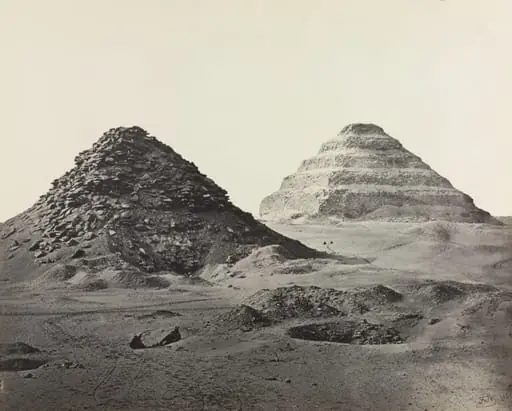 The Pyramids of Saqqara, from the Northeast
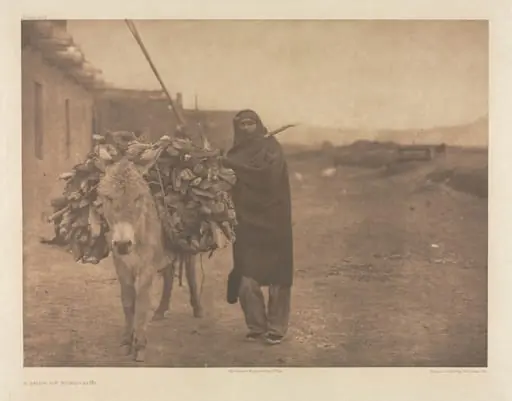 Portfolio XVII, Plate 608: A Load of Fuel - Zuñi