Artwork
Iceberg Canyon, Colorado River Looking Above
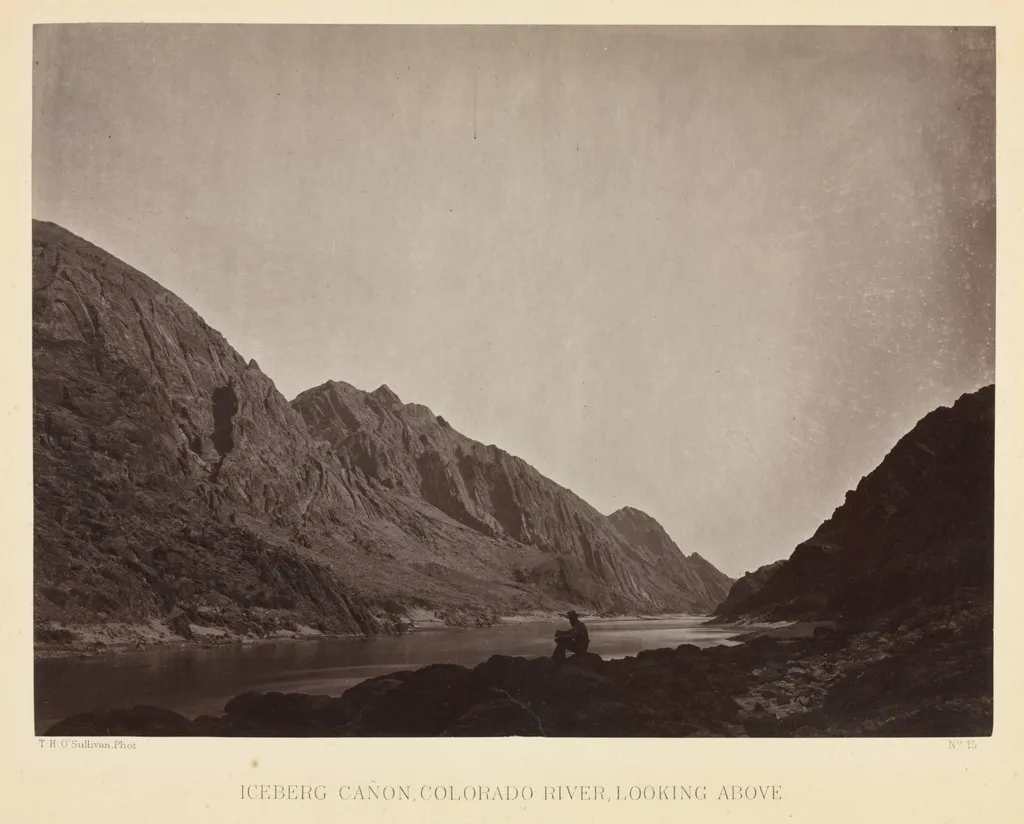
Iceberg Canyon, Colorado River Looking Above is a photography by the Impressionist artist Timothy H. O'Sullivan. It dates from 1871 and is held in the collection of the Cleveland Museum of Art. Timothy H.
About this work
The angle makes the canyon feel endless, almost like the river carved time itself.
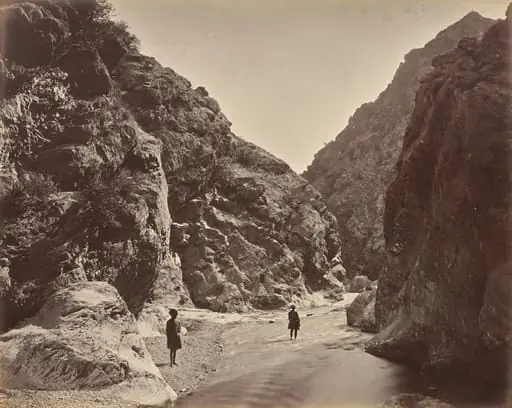
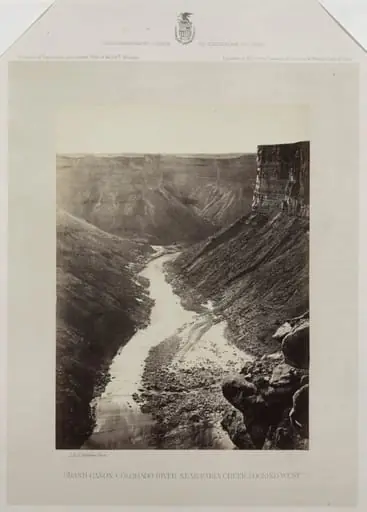
This photo shows a deep canyon carved by the Colorado River. Sunlight slices through the narrow walls, lighting up the dark cliffs. The river’s curve disappears into shadow below.
O’Sullivan took this shot from a boat in 1871. It’s one of the first clear pictures of the West’s wild terrain. The angle makes the canyon feel endless, almost like the river carved time itself.
Check out more by Timothy H. Oullivan (American, 1840–1882).
Overview
Timothy H. O’Sullivan’s photograph captures a segment of Iceberg Canyon along the Colorado River, taken from his boat during the Wheeler survey of 1871. The image presents a steep, shadow‑filled gorge illuminated by a narrow band of sunlight, with the river winding out of view. A solitary, seated figure occupies the centre, linking the natural landscape to human presence.
Subject & Meaning
The composition juxtaposes the monumental scale of the canyon’s rock walls with a single individual, suggesting the relationship between exploration and the vast, untamed terrain. The figure’s placement invites viewers to contemplate the interplay of human curiosity and the geological forces that have shaped the region over millennia.
Technique & Style
O’Sullivan employed a low, river‑level perspective, achieved from the deck of his boat named Picture, to emphasize depth and scale. The photograph balances documentary clarity with a formal arrangement, using light to carve the canyon’s contours and to draw attention to the central human element, thereby merging scientific observation with aesthetic consideration.
History & Provenance
Created during the first season of Lieutenant George M. Wheeler’s 1871‑73 expedition to map lands west of the 100th meridian, the image is among the earliest clear visual records of the Colorado River’s canyons. O’Sullivan’s reputation as a field photographer earned him a dedicated vessel, enabling him to capture scenes inaccessible to most contemporaries.
Context
The Wheeler survey aimed to locate a feasible inland route for military movement from Idaho and Utah to Arizona and to document topography for prospective settlement. O’Sullivan’s work served both the expedition’s practical mapping goals and the broader 19th‑century American interest in portraying the West’s dramatic landscapes for scientific and public audiences.
Artist & collection