Artwork
Le joueur d'orgue (The Organ Grinder)
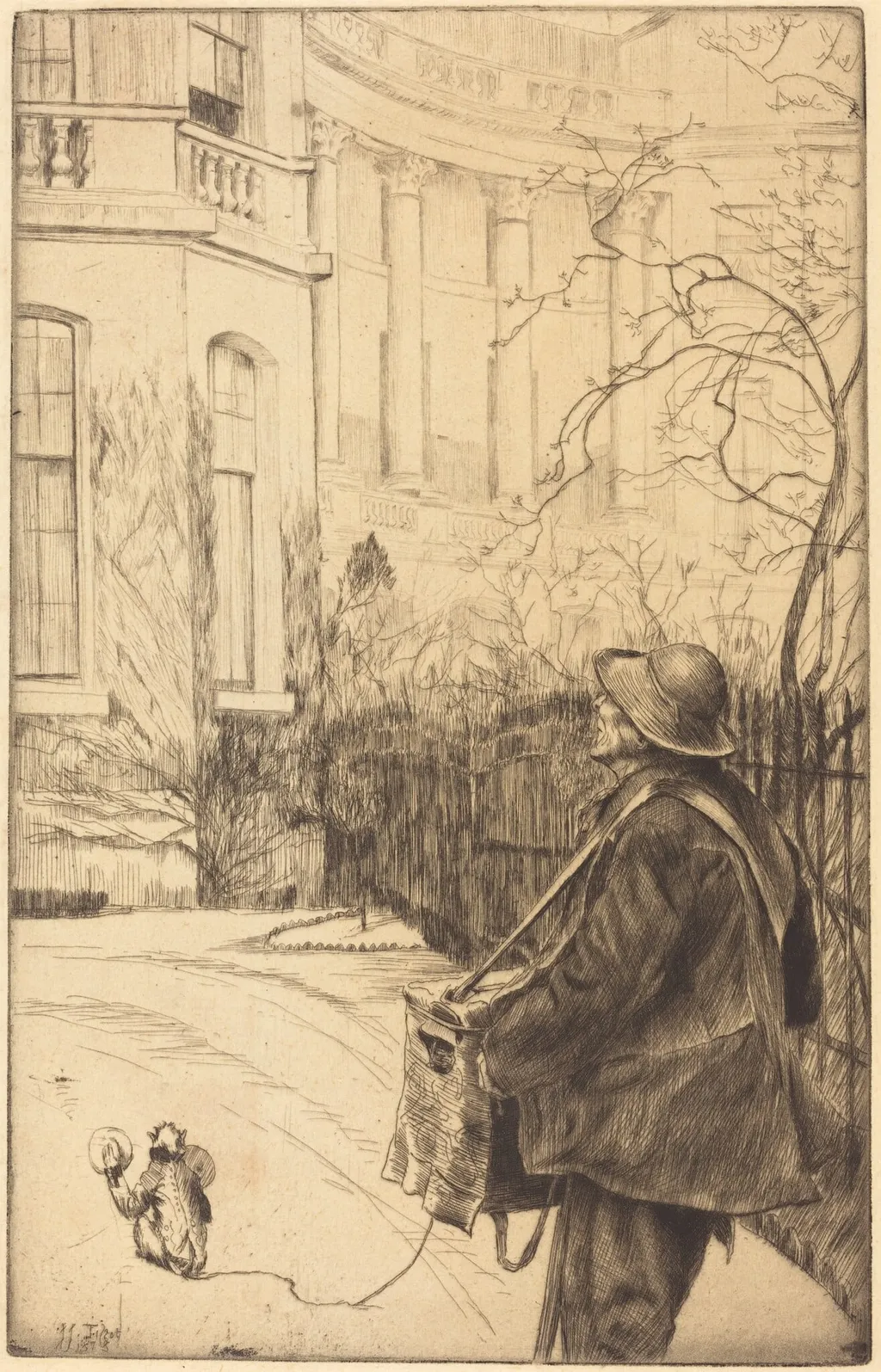
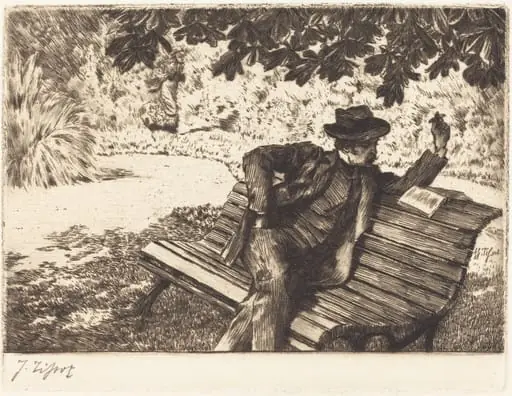
Le joueur d'orgue (The Organ Grinder) is an ink print by the Impressionist artist James Jacques Joseph Tissot. It dates from 1878 and is held in the collection of the National Gallery of Art.
About this work
Overview
Created in 1878, “Le joueur d’orgue” (The Organ Grinder) is a print by James Jacques Joseph Tissot. Executed on laid paper, the work combines etching and dry‑point techniques to render a street scene in which a solitary figure operates a small portable organ while a child watches from the pavement.
Subject & Meaning
The composition presents a man, dressed in a hat and coat, turned away from the viewer as he plays the organ. A young child kneels nearby, reaching toward the instrument, suggesting a moment of curiosity or apprenticeship. The surrounding architecture—a tall building with expansive windows and a balcony—frames the intimate interaction between the two figures.
Technique & Style
Tissot employed fine, incised lines characteristic of dry‑point alongside the more controlled lines of etching. The interplay of light and shadow is achieved through varying line density, giving the scene a tactile realism. The use of laid paper adds a subtle texture that enhances the delicate tonal gradations of the print.
History & Provenance
The print was produced during the later period of Tissot’s career, a time when he explored urban genre scenes. While specific ownership records are limited, the work has appeared in several 20th‑century exhibitions of French printmaking, confirming its recognition within the artist’s oeuvre.
Artist & collection


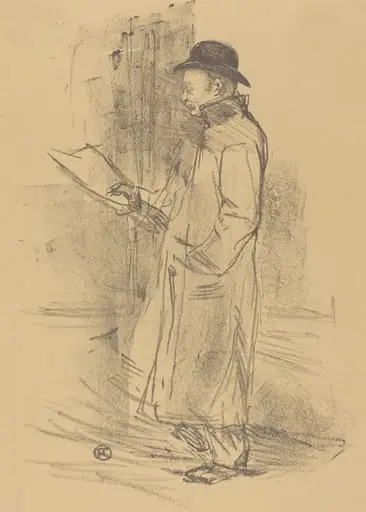 Program for "Benefice Gemier" (Programme du "Bénéfice Gémier")
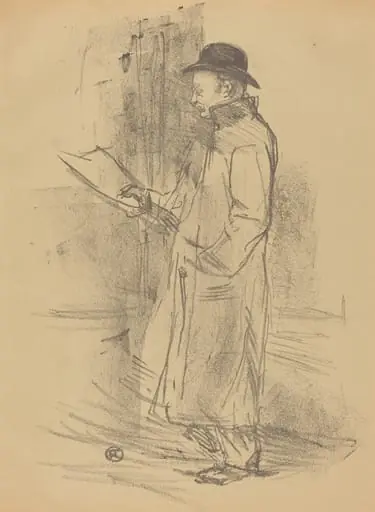 Benefit for Firmin Gémier
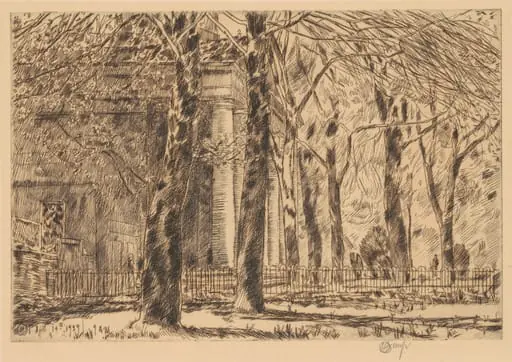 First Leaves—Spring in Washington, St. John's
![Man Wearing a Cloak [recto], by Edouard Manet](https://artifactworldgallery.com/img/edouard-manet--man-wearing-a-cloak-recto--6f165c0376318d82-w320.webp) Man Wearing a Cloak [recto]
Man Wearing a Cloak [recto]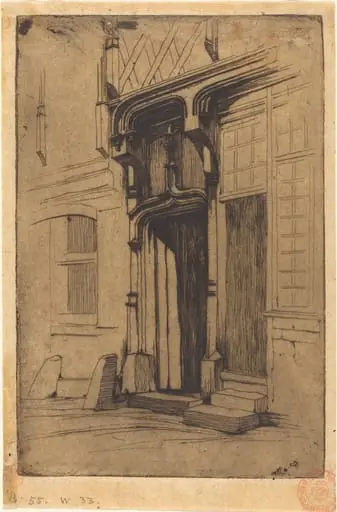 Porte d'un ancien couvent, Rue Mirabeau, à Bourges (Doorway of an Ancient Convent, in the Rue Mirabeau, Bourges)
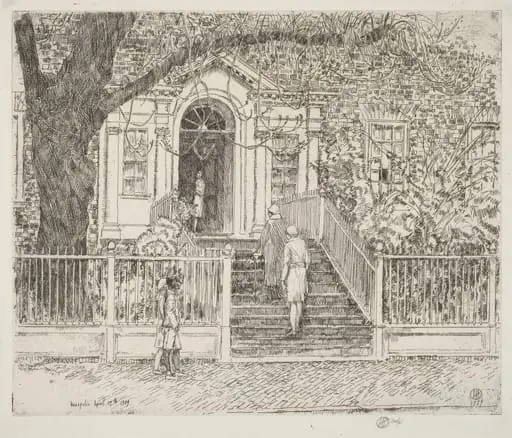 The Chase House
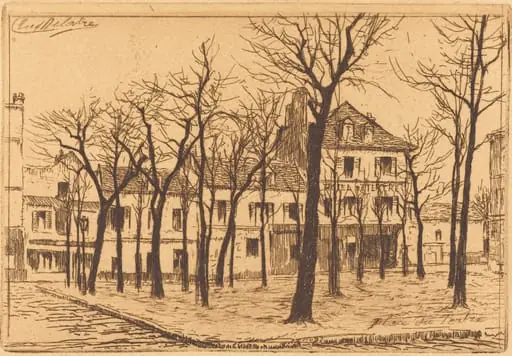 Place du Tertre
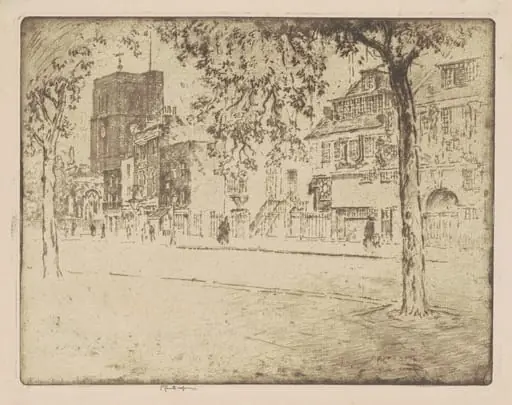 House Where Whistler Died
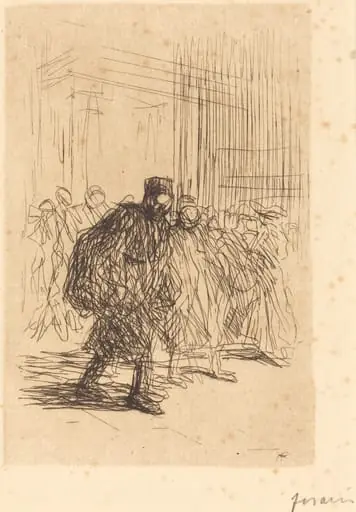 Les couloirs du Palais (The Corridors of the Palace of Justice)
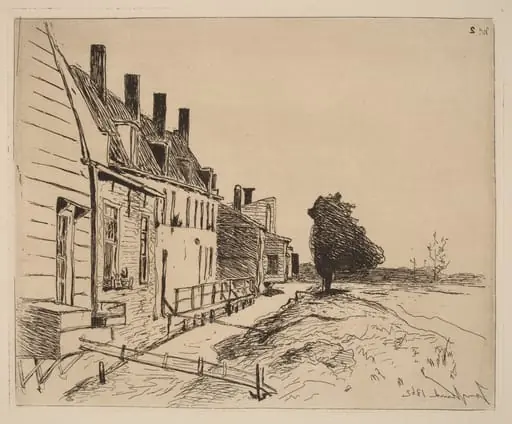 The Houses on the Canal Bank (Les Maisons au bord du canal)
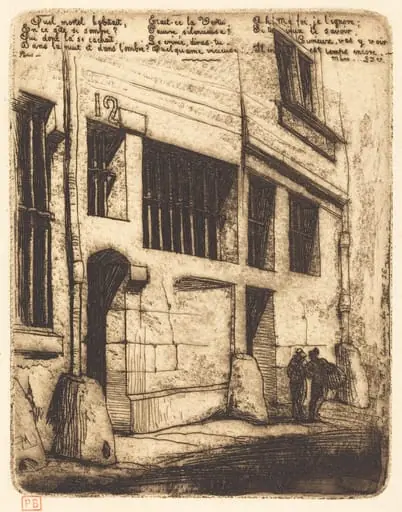 La Rue des Mauvais Garçons, Paris (The Street of the Bad Boys)
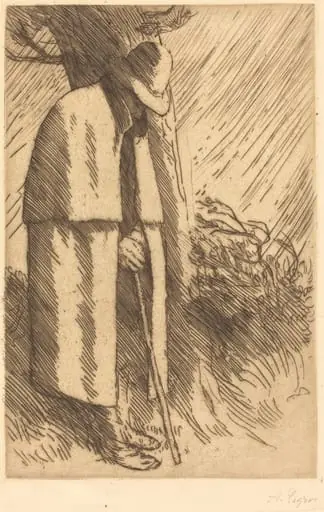 Traveler taking Shelter (Le voyageur a l'abri)