Artwork
Summer Evening (Soirée d'été)
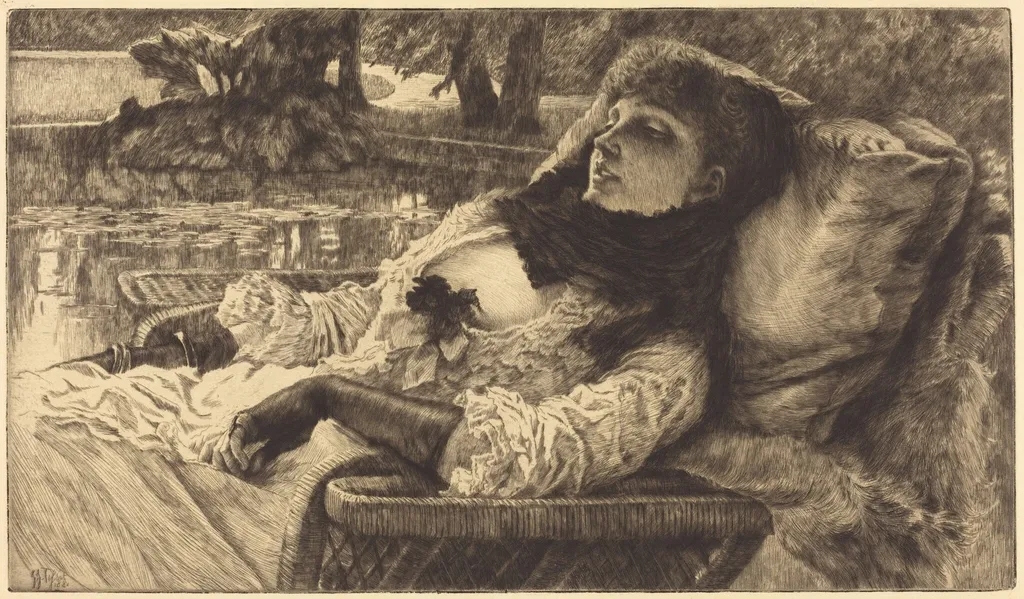
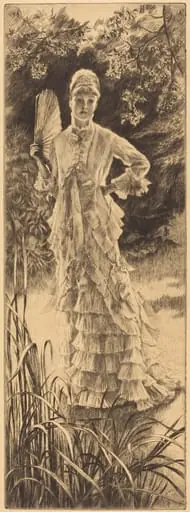
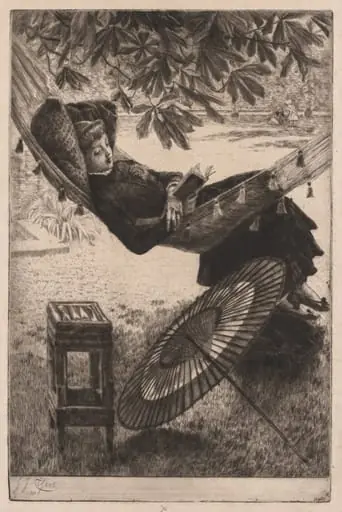
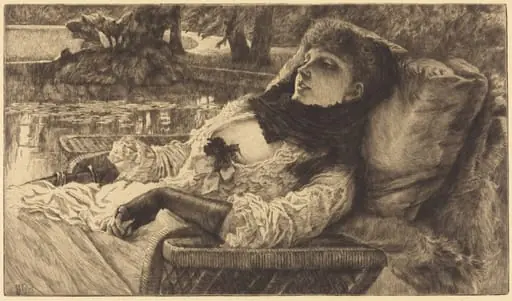
Summer Evening (Soirée d'été) is an ink print by the Impressionist artist James Jacques Joseph Tissot. It dates from 1882 and is held in the collection of the National Gallery of Art.
About this work
Overview
The absence of color emphasizes tonal contrast and delicate line work, characteristic of Tissot’s printmaking approach during this period.
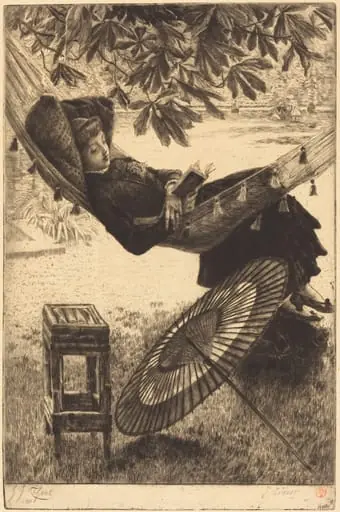
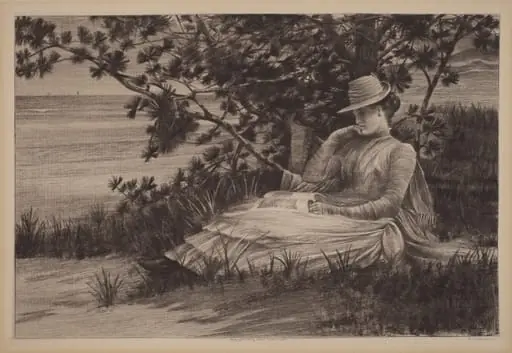
Summer Evening (Soirée d'été) is a black-and-white print made by James Jacques Joseph Tissot in 1882. Executed in etching and drypoint, it captures a quiet moment of repose. The composition centers on a woman reclining in a wicker chair, her posture relaxed, framed by the shadowed depth of a garden. The absence of color emphasizes tonal contrast and delicate line work, characteristic of Tissot’s printmaking approach during this period.
Subject & Meaning
The figure, a woman in loose, light clothing and a dark skirt, rests with her head supported by one arm and a fan held loosely in the other. Her gaze upward suggests introspection or quiet contemplation. The surrounding garden, rendered in soft shadows and fine textures, enhances the sense of solitude and twilight. The scene evokes a fleeting, intimate pause in daily life, typical of Tissot’s interest in private, atmospheric moments among the bourgeoisie.
Technique & Style
Tissot employed etching and drypoint to achieve fine, intricate lines that model form without color. The texture of the woman’s blouse and the foliage behind her is built through delicate, cross-hatched strokes and scratchy drypoint marks. These techniques create a sense of depth and tactile surface, translating the softness of fabric and the density of leaves into monochrome. The contrast between the illuminated figure and the darkened background heightens the mood of evening stillness.
History & Provenance
Created in 1882, this print emerged during Tissot’s time in London, where he focused increasingly on intimate domestic scenes and printmaking. It was likely produced as part of a limited series, common among artists seeking broader distribution of their work. The print’s survival in multiple institutional collections suggests it was well-received in its time, though it never achieved widespread fame compared to his paintings.
Context
In the early 1880s, Tissot shifted from large-scale narrative painting toward smaller, more personal subjects, often exploring leisure and solitude among urban middle-class women. This print aligns with broader European trends in printmaking, where artists turned to etching to capture subtle moods and domestic realism. The quiet, unposed nature of the scene reflects a move away from theatricality toward psychological nuance.
Legacy
Summer Evening remains a quiet example of Tissot’s skill in monochrome printmaking. While overshadowed by his colorful genre paintings, the work demonstrates his sensitivity to light, texture, and quiet emotion. It is studied today for its technical precision and its contribution to the revival of etching as a medium for intimate, non-narrative imagery in late 19th-century art.
Artist & collection