Artwork
Adoration of the Magi
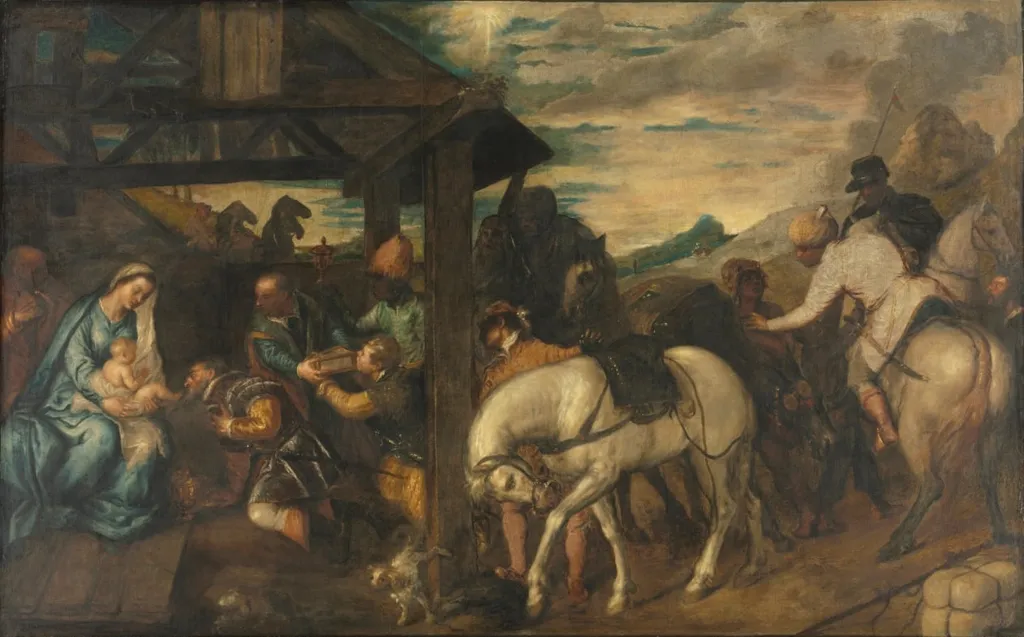
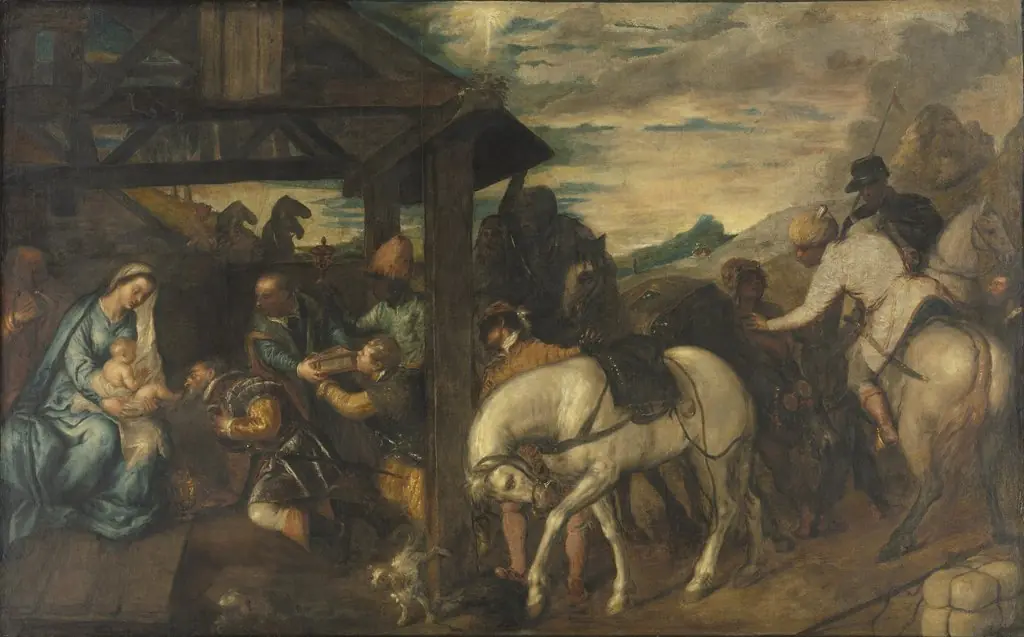
Adoration of the Magi is an unspecified painting by the High Renaissance artist Titian. It dates from 1504 and is held in the collection of the Cleveland Museum of Art.
About this work
Overview
This painting depicts the Adoration of the Magi, a common subject in Renaissance art, executed in the style associated with Titian’s workshop.
This painting depicts the Adoration of the Magi, a common subject in Renaissance art, executed in the style associated with Titian’s workshop. While traditionally attributed to Titian, scholarly consensus suggests it may be primarily the work of assistants under his direction. Its composition and luminous palette align with Venetian practices of the mid-16th century, though the hand of the master remains uncertain due to the collaborative nature of his studio.
Subject & Meaning
The scene shows three kings kneeling before the infant Christ, who rests in Mary’s arms beside Joseph in a weathered stable. Each king presents a symbolic gift—gold, frankincense, and myrrh—acknowledging Christ’s kingship, divinity, and mortality. The setting, though humble, is framed by architectural ruins that evoke the decline of the old order, reinforcing the theological significance of the moment.
Technique & Style
The painting employs a luminous color scheme and loose brushwork, characteristic of Venetian oil technique. Light falls dramatically across figures, particularly the white horse and its shadowed groom, suggesting an awareness of chiaroscuro. Though the handling is less refined than Titian’s autograph works, the composition retains a dynamic energy, with rich textiles and atmospheric depth contributing to its visual impact.
History & Provenance
The painting’s origins are tied to Titian’s workshop, which produced multiple versions of the Adoration during the 1530s–1550s. The version in Madrid’s Prado Museum is thought to derive from this Cleveland example, though it is now more damaged. Both works have undergone extensive restoration, including overcleaning, which has altered surface details but preserved key compositional elements.
Context
In 16th-century Venice, religious subjects like the Adoration were frequently commissioned for private devotion or civic display. Titian’s workshop met high demand by producing variations of popular themes, often with assistants handling less critical areas. This practice allowed for stylistic consistency while accommodating volume, reflecting the commercial and devotional priorities of the period.
Legacy
This painting contributes to the broader understanding of workshop dynamics in Renaissance Venice. While not an autograph work, it preserves the visual language Titian established and demonstrates how his style was disseminated. Its survival, despite restoration challenges, offers insight into the transmission of artistic methods beyond the master’s direct hand.
Artist & collection
Artist
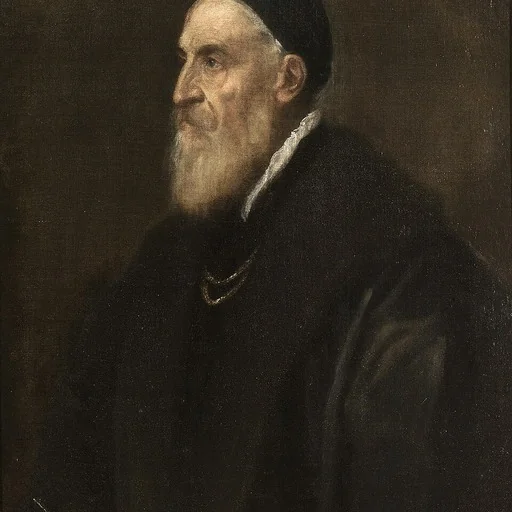
Tiziano Vecellio (Italian: ; c. 1488/1490 – 27 August 1576), Latinized as Titianus, hence known in English as Titian ( TISH-ən), was an Italian Renaissance painter. The most important artist of Renaissance Venetian…


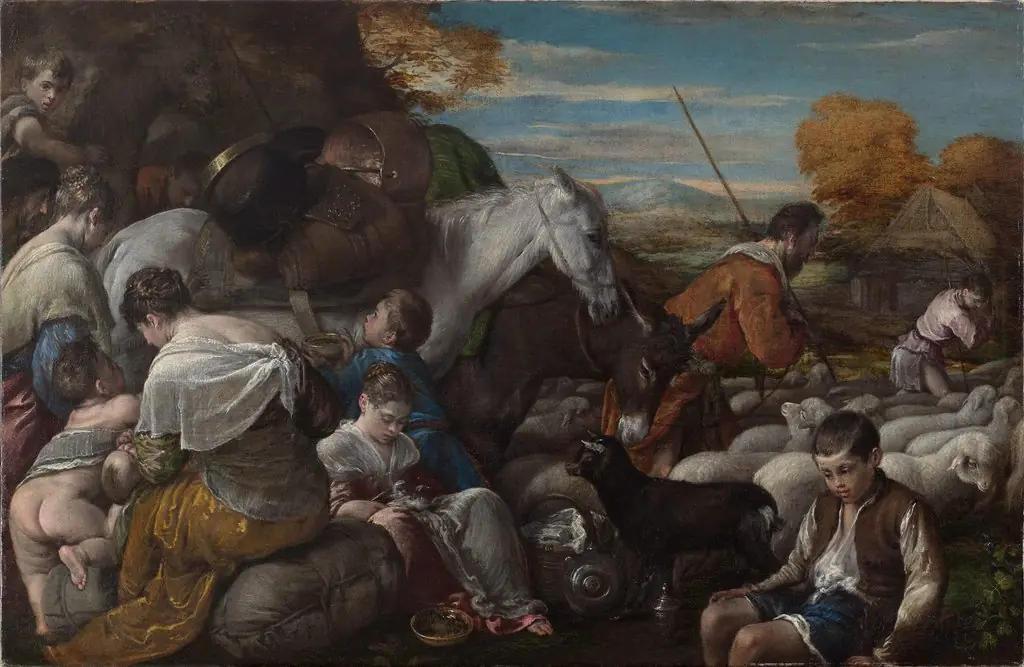 Jacob’s Journey
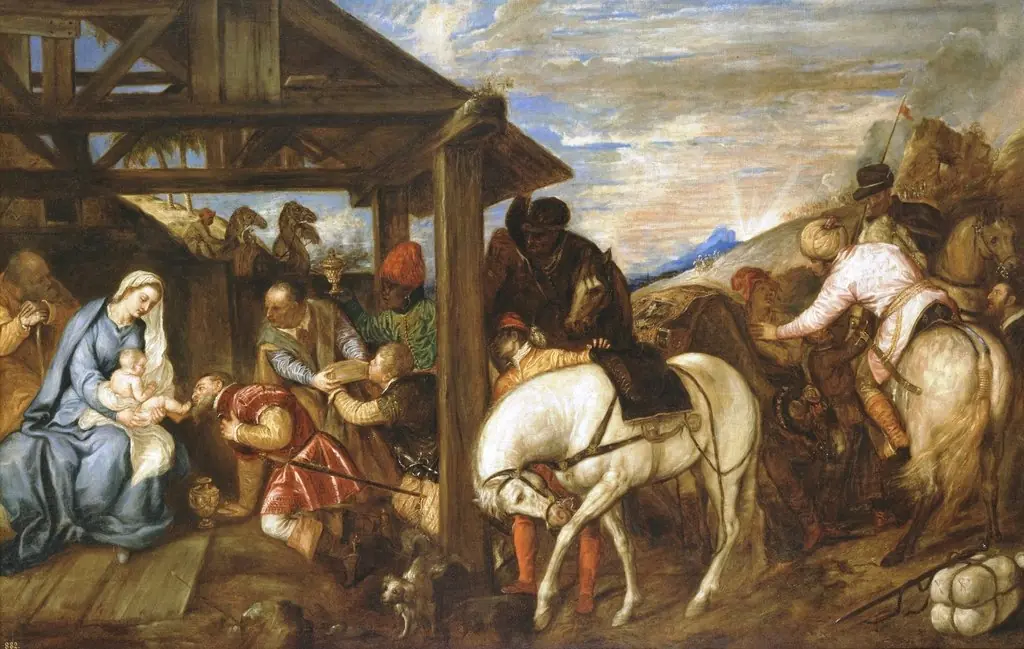 The Adoration of the Magi
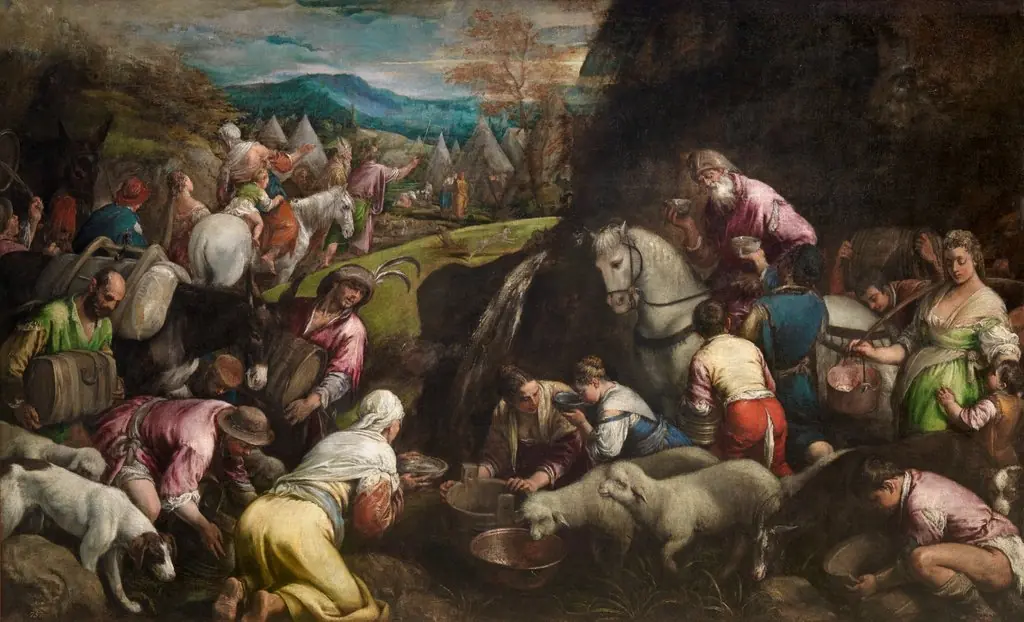 The Israelites drinking the miraculous Water
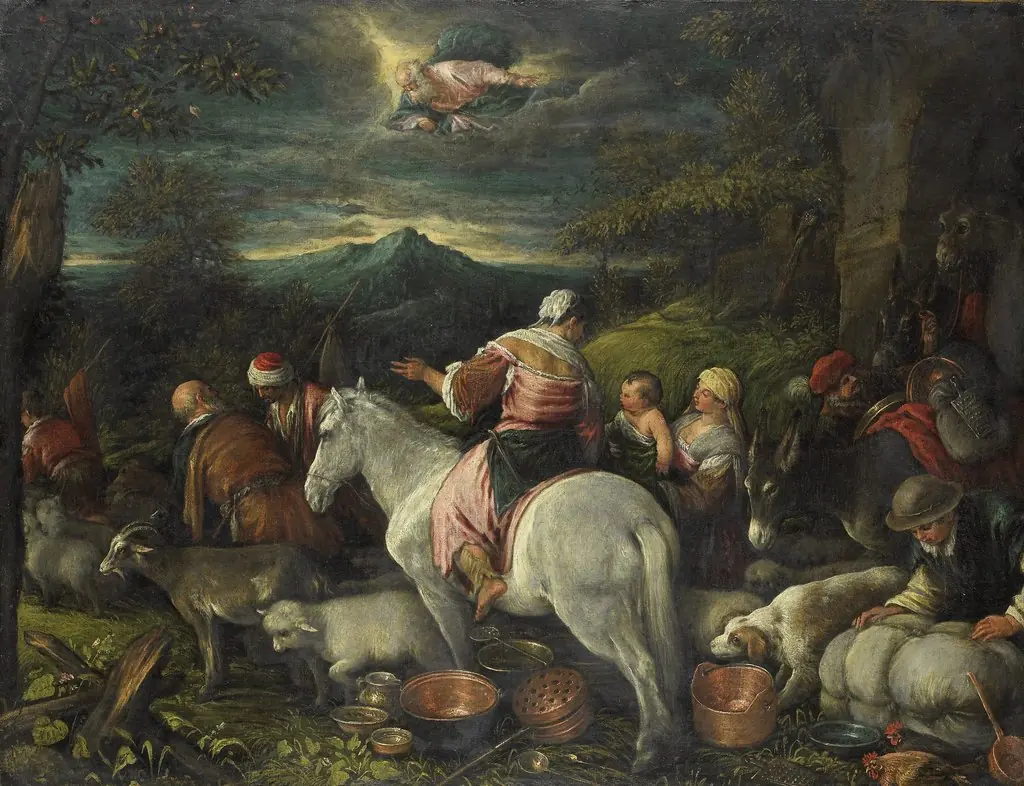 Abraham leaves Haran for Egypt
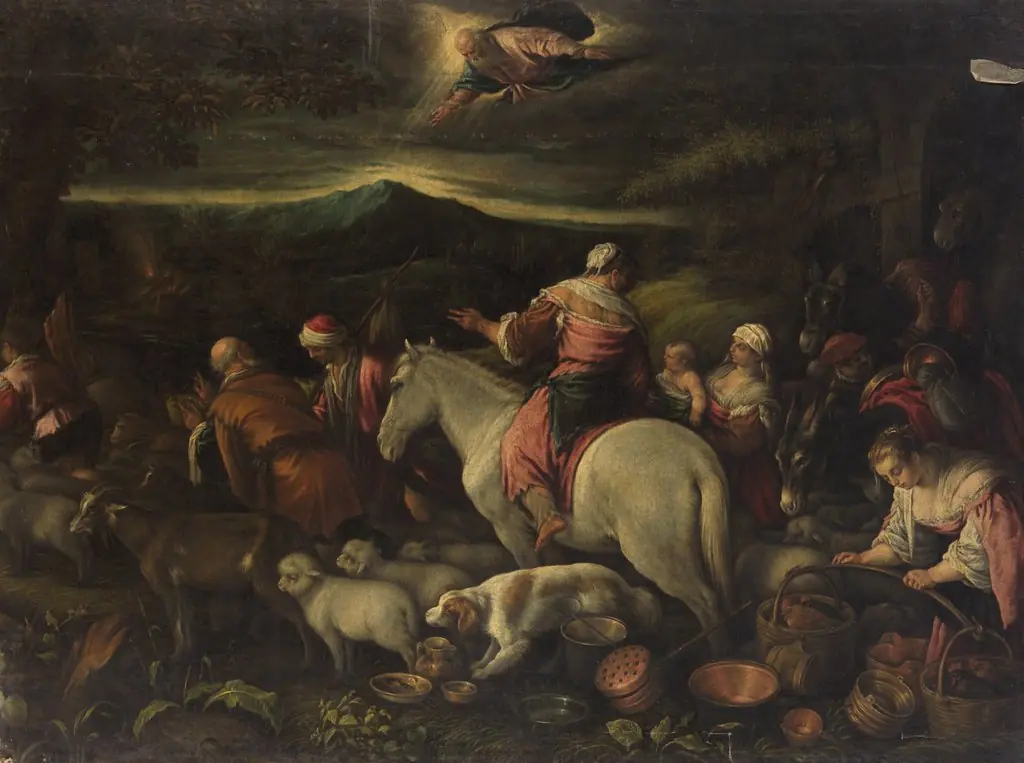 Aufbruch Abrahams ins gelobte Land
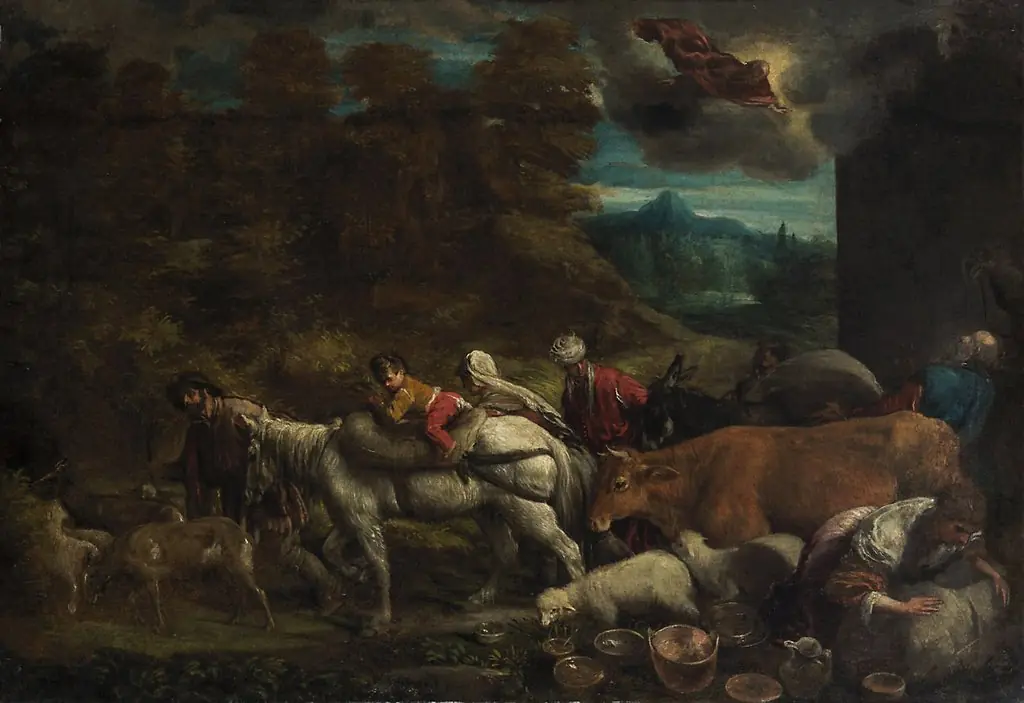 Aufbruch Abrahams ins gelobte Land
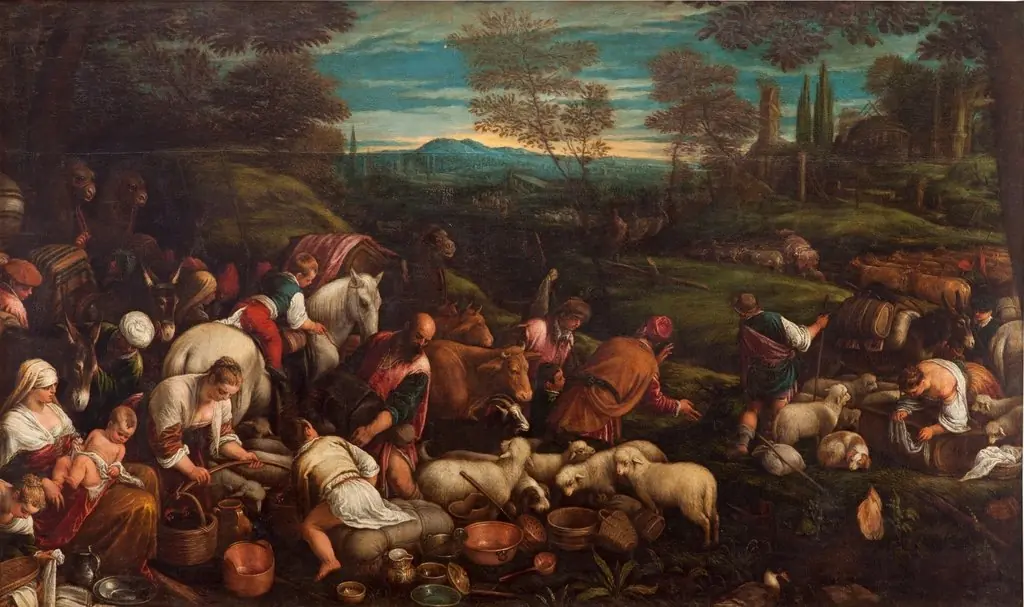 Viaje de Jacob
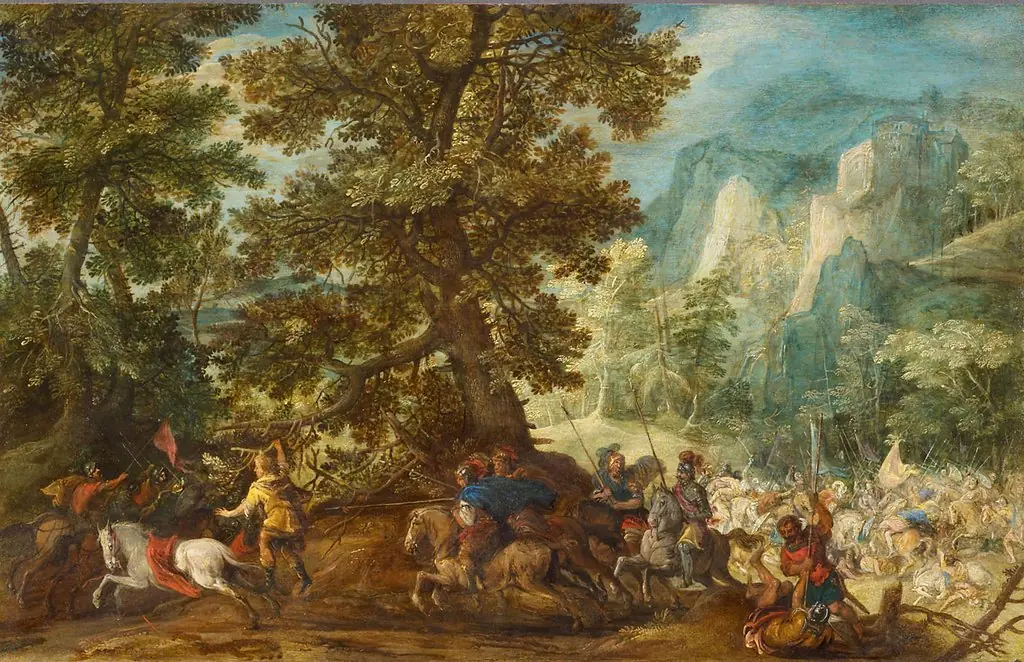 Absaloms death (2 Samuel 18: 9-15)
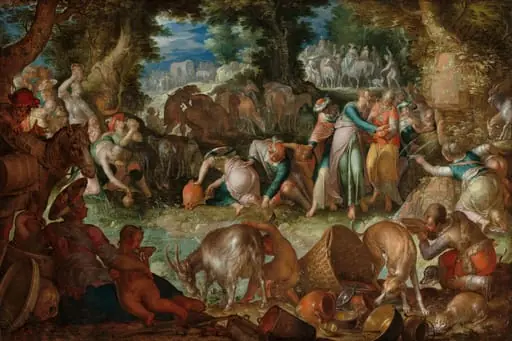 Moses Striking the Rock
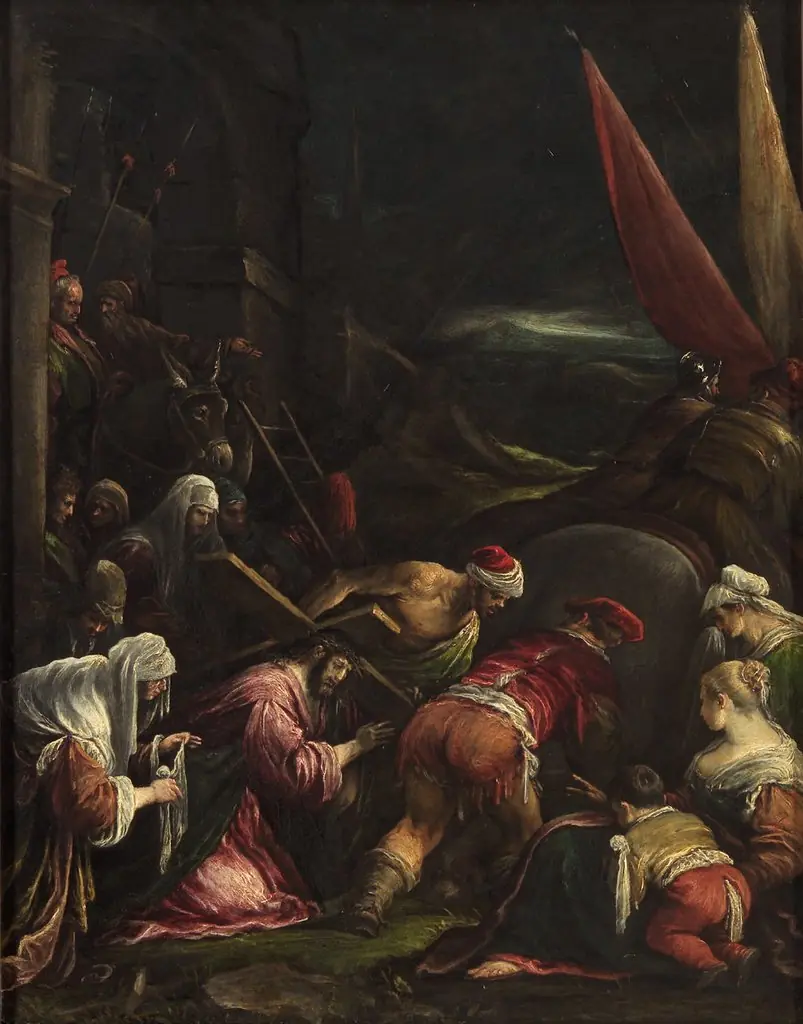 Christ Carrying the Cross meets with Veronica
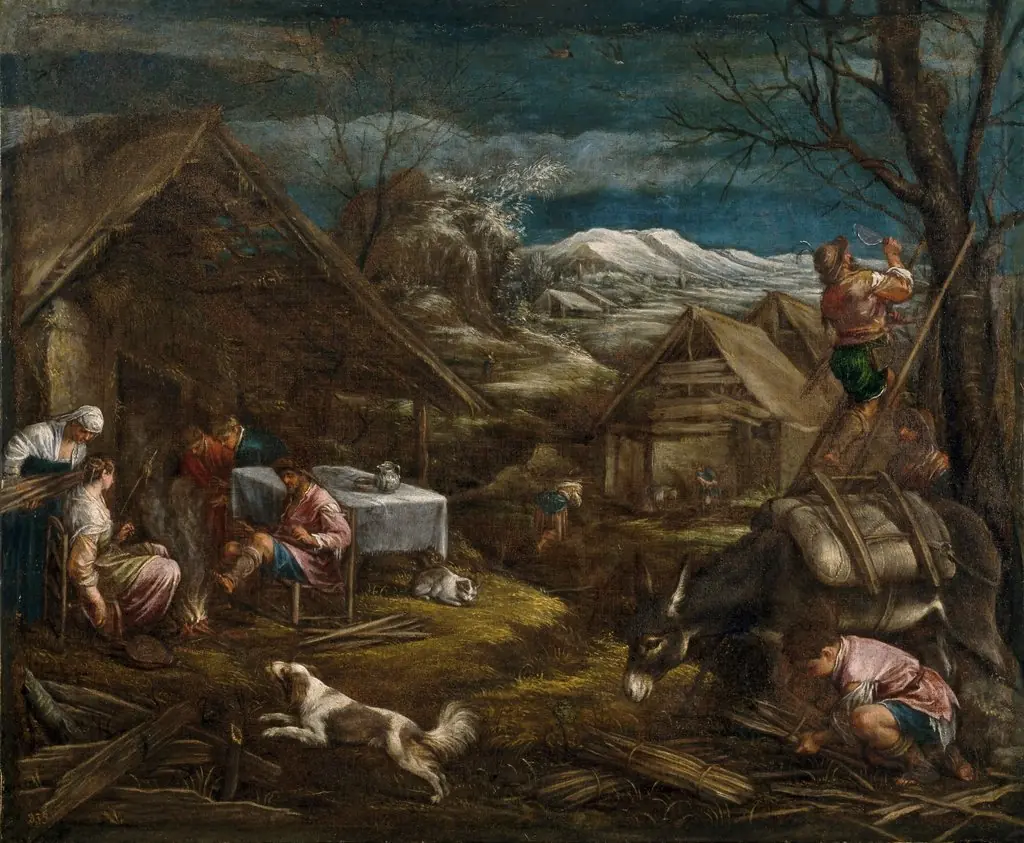 Winter