Artwork
Fata pădurarului
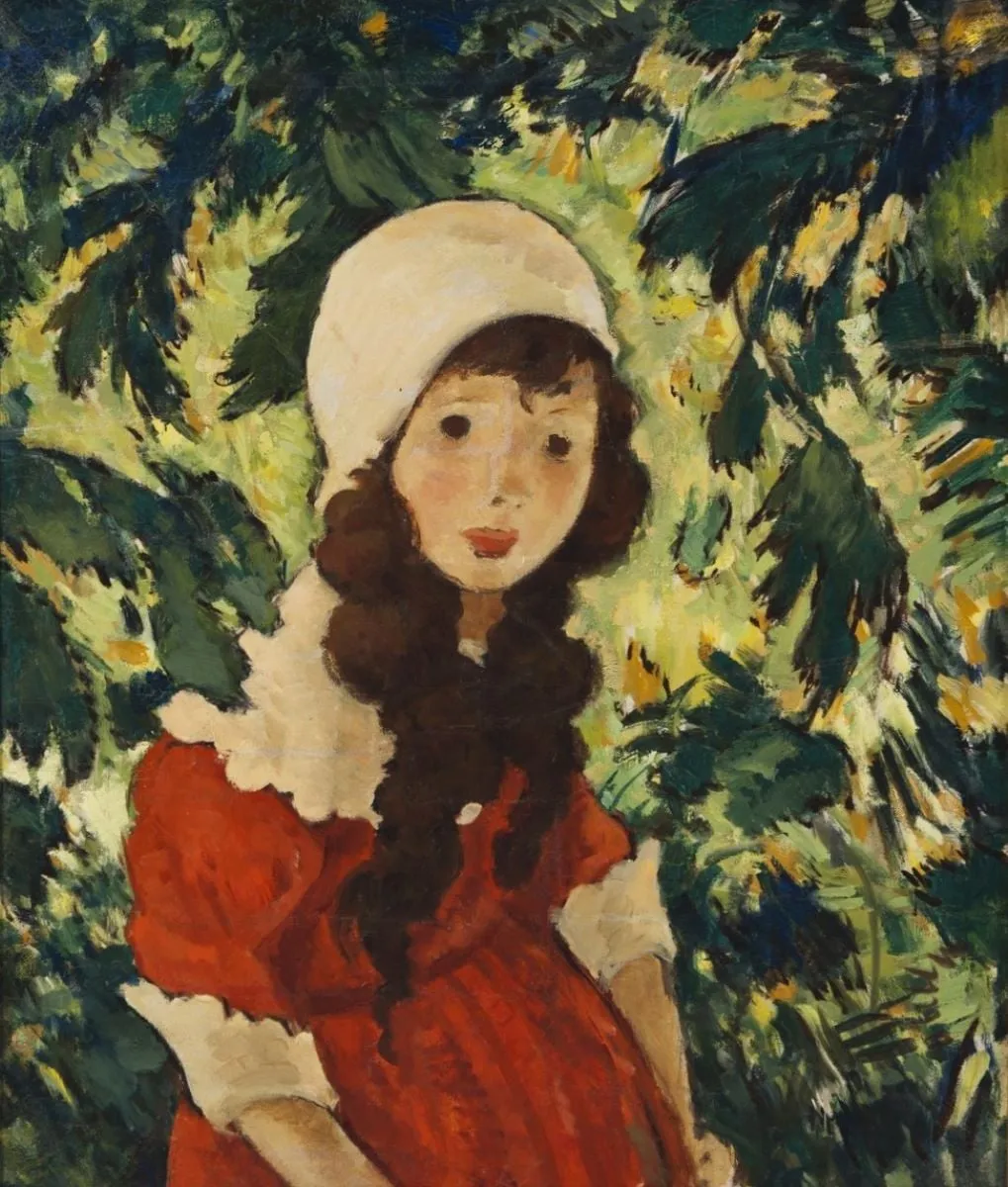
Fata pădurarului is a print by Nicolae Tonitza. It dates from 1925 and is held in the collection of the National Museum of Art of Romania.
About this work
Overview
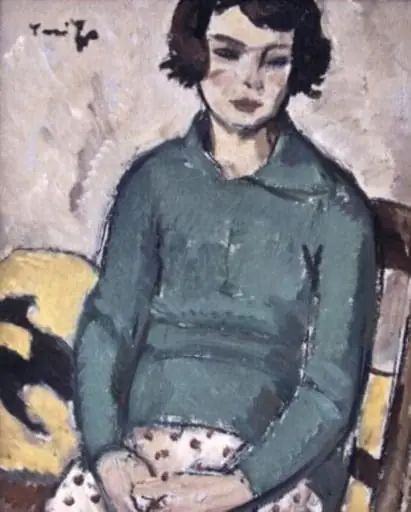
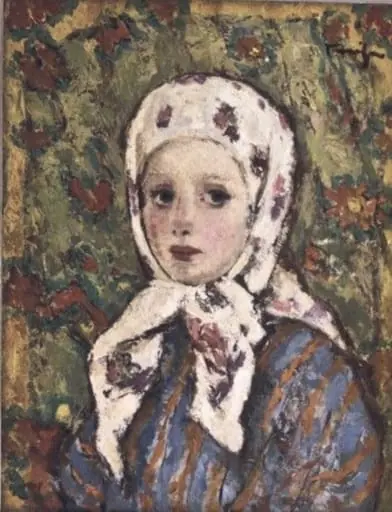
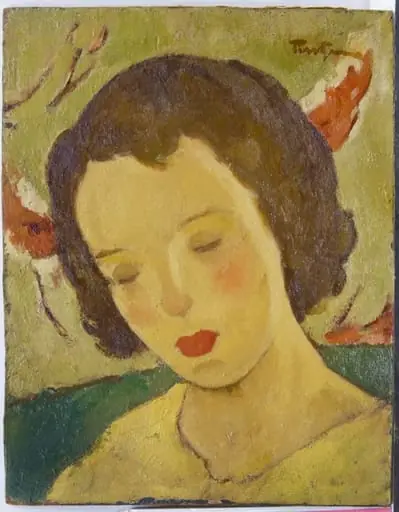
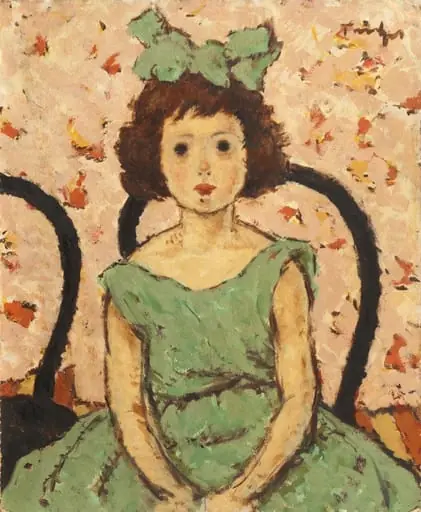
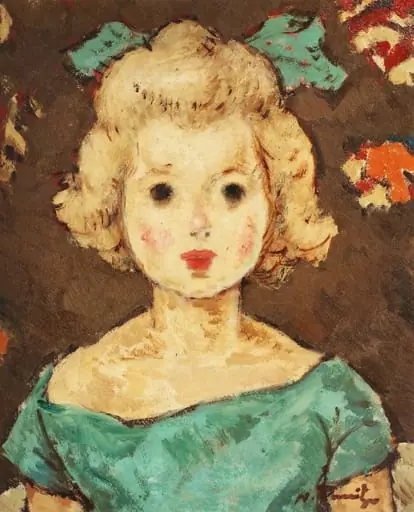
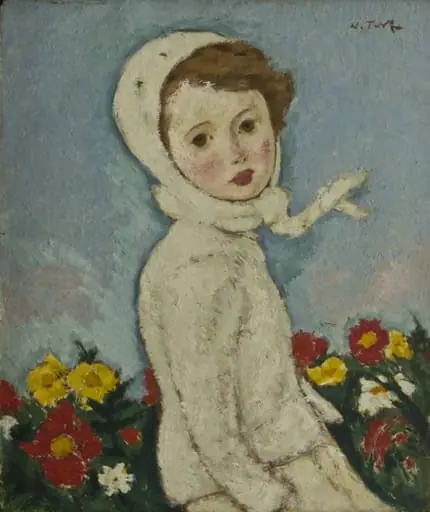
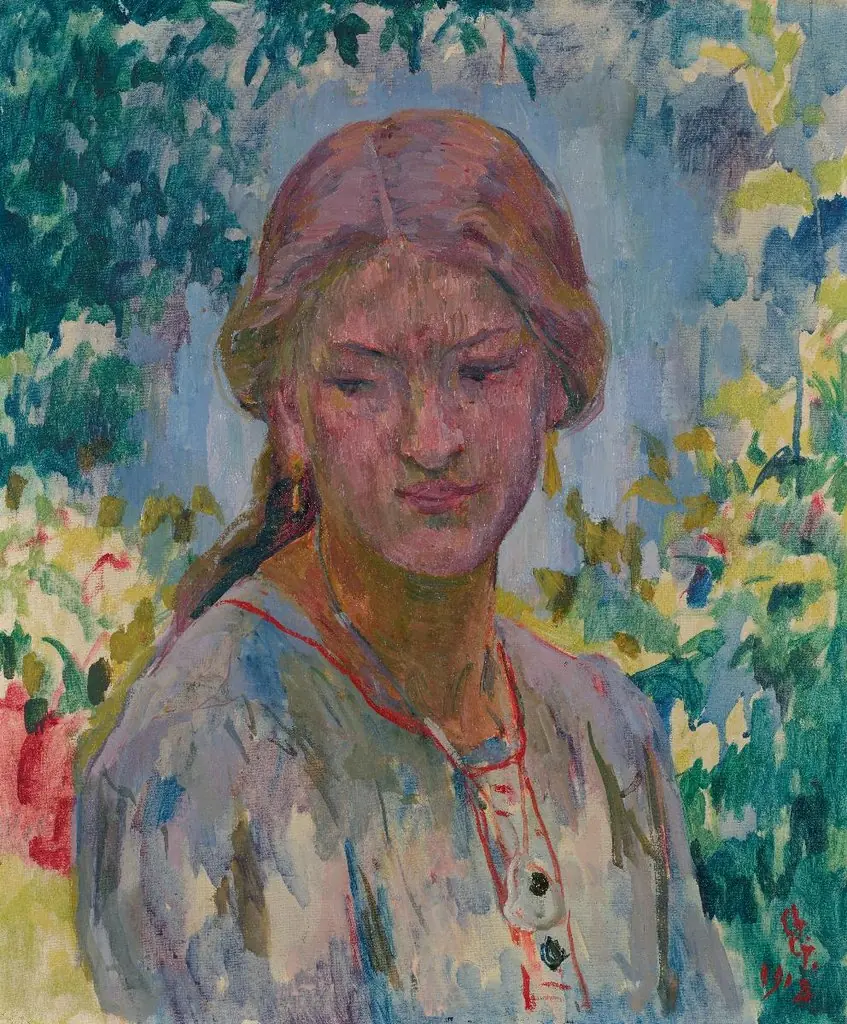
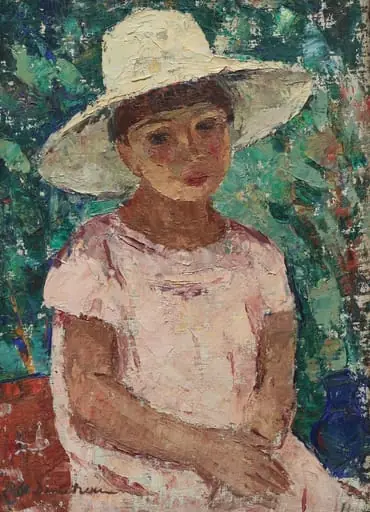
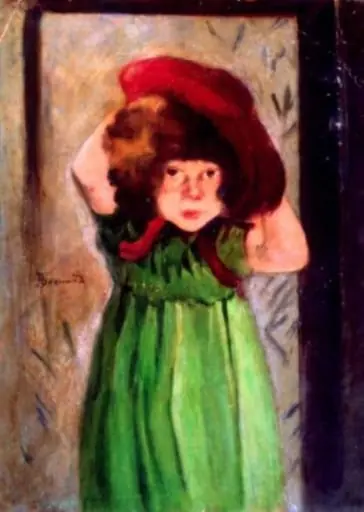
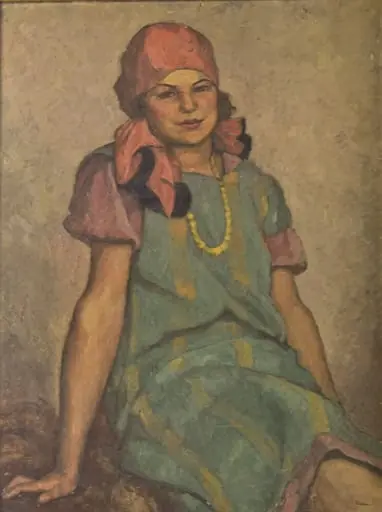
Painted in 1925 by Romanian artist Nicolae Tonitza, this portrait depicts a young girl standing before a dense, verdant backdrop.
Painted in 1925 by Romanian artist Nicolae Tonitza, this portrait depicts a young girl standing before a dense, verdant backdrop. The composition emphasizes her stillness against the animated foliage, using color and brushwork to convey a quiet intimacy. The work belongs to Tonitza’s period of heightened sensitivity to rural life and natural environments, reflecting his interest in capturing everyday moments with emotional resonance.
Subject & Meaning
The girl, likely the daughter of a forest keeper, is portrayed without idealization, her calm gaze and simple attire suggesting a life close to nature. Her presence evokes a sense of quiet belonging within the woodland setting. The absence of narrative detail invites contemplation rather than storytelling, aligning the figure with broader themes of innocence and harmony with the natural world.
Technique & Style
Tonitza employed loose, energetic brushstrokes to render the foliage, giving the background a sense of movement and vitality. The girl’s red coat, accented with white trim, contrasts sharply with the green tones, drawing attention without overwhelming the scene. Delicate modeling of her face and hat suggests form without heavy shading, favoring expressive simplicity over detailed realism.
History & Provenance
Created during Tonitza’s mature phase, the painting was produced shortly after his return to Romania from studies abroad. It entered public collections in the mid-20th century and has since been held in Romanian national institutions. Its preservation reflects its recognition as a representative work of interwar Romanian modernism, though it was never widely exhibited internationally.
Context
In 1920s Romania, artists like Tonitza sought to define a national visual language rooted in local life. This work aligns with a broader movement that valued rural subjects and expressive brushwork over academic conventions. The emphasis on natural settings and unadorned figures responded to both European modernist trends and a domestic cultural push toward authenticity.
Legacy
Fata pădurarului remains a touchstone in Romanian art for its synthesis of modern technique and folk sensibility. It influenced later generations of painters who explored the relationship between individuals and their natural surroundings. While not widely known outside Romania, it is consistently cited in scholarly surveys as an exemplar of Tonitza’s distinctive approach to portraiture and landscape integration.
Artist & collection

Artist
Nicolae Tonitza was a Romanian painter, engraver, lithographer, journalist and art critic. Drawing inspiration from Post-Impressionism and Expressionism, he had a major role in introducing modernist guidelines to local art.