Artwork
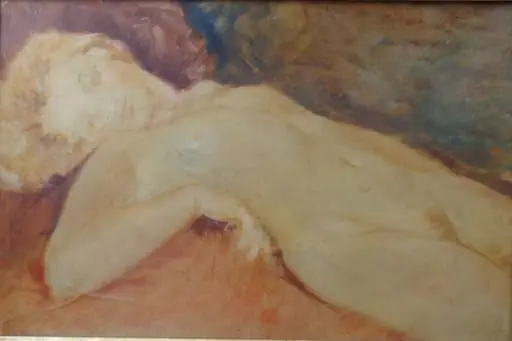
Studiu de nud
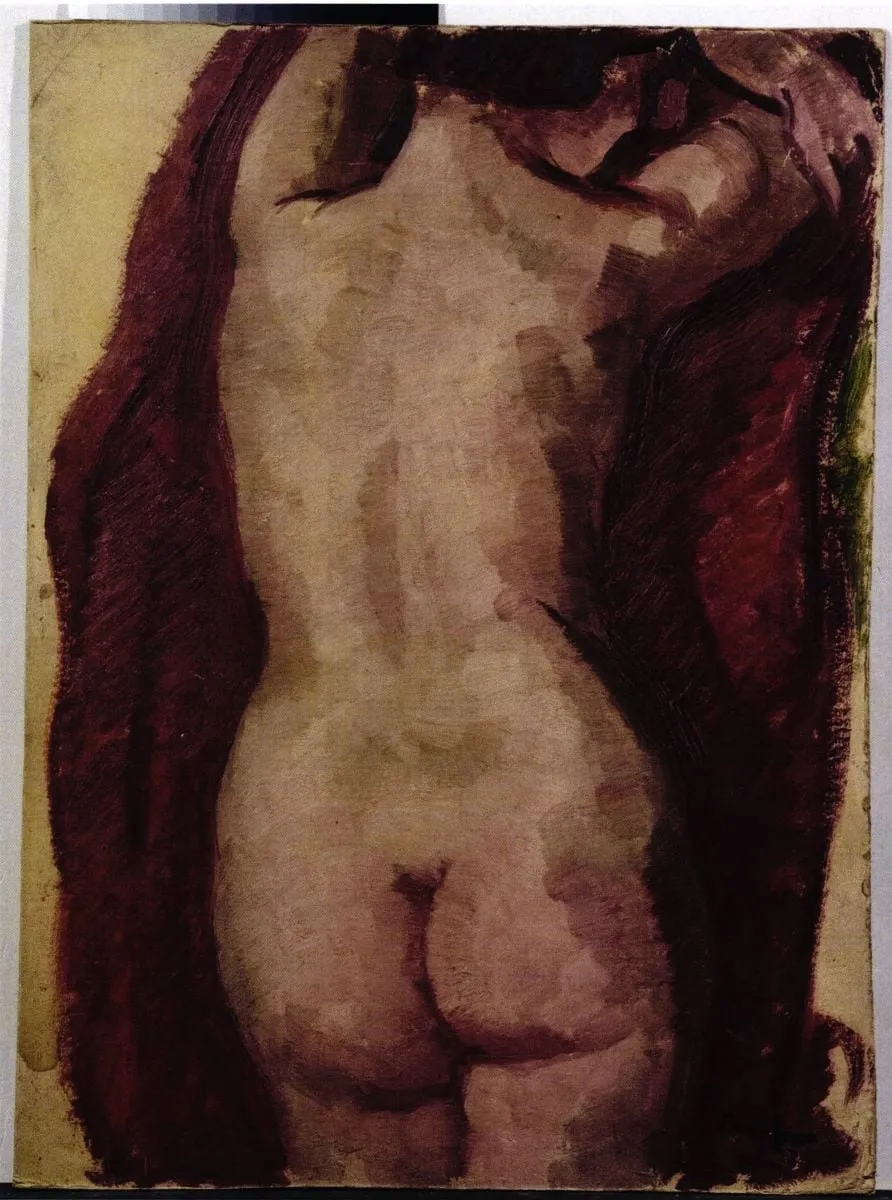
Studiu de nud is a print by Nicolae Tonitza. It dates from 1932 and is held in the collection of the National Museum of Art of Romania.
About this work
Overview
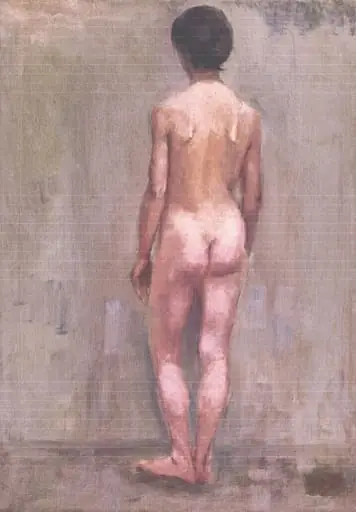
Studiu de nud, executed around 1932 by Romanian painter Nicolae Tonitza, presents a fragmentary view of a nude figure seen from behind. The composition isolates the back and shoulders, draped partially by a dark red fabric that hangs across the left side of the canvas, creating a simple yet focused visual study.
Subject & Meaning
The work concentrates on the human form, emphasizing the curvature of the spine and the subtle play of light across flesh. By omitting facial features and context, Tonitza invites contemplation of the body’s materiality and the quiet intimacy of a private moment, rather than narrative storytelling.
Technique & Style
Tonitza applies paint in thick, tactile strokes, especially evident in the red cloth where the impasto texture adds a sense of physical presence. The skin is rendered in warm, softened tones with delicate shading beneath the arms, while the overall surface remains loosely brushed, conveying immediacy over polished finish.
History & Provenance
Created in the early 1930s, Studiu de nud belongs to Tonitza’s later period, a time when he explored more expressive handling of paint. The painting’s ownership history is not extensively documented, but it has been referenced in catalogues of his oeuvre as an example of his study paintings from that decade.
Context
During the interwar years, Romanian artists like Tonitza were engaging with European modernist currents while retaining a personal lyricism. This study reflects the influence of French post‑Impressionist approaches to color and texture, yet remains rooted in Tonitza’s own sensibility toward the human figure.
Artist & collection

Artist
Nicolae Tonitza was a Romanian painter, engraver, lithographer, journalist and art critic. Drawing inspiration from Post-Impressionism and Expressionism, he had a major role in introducing modernist guidelines to local art.