Artwork
Untitled
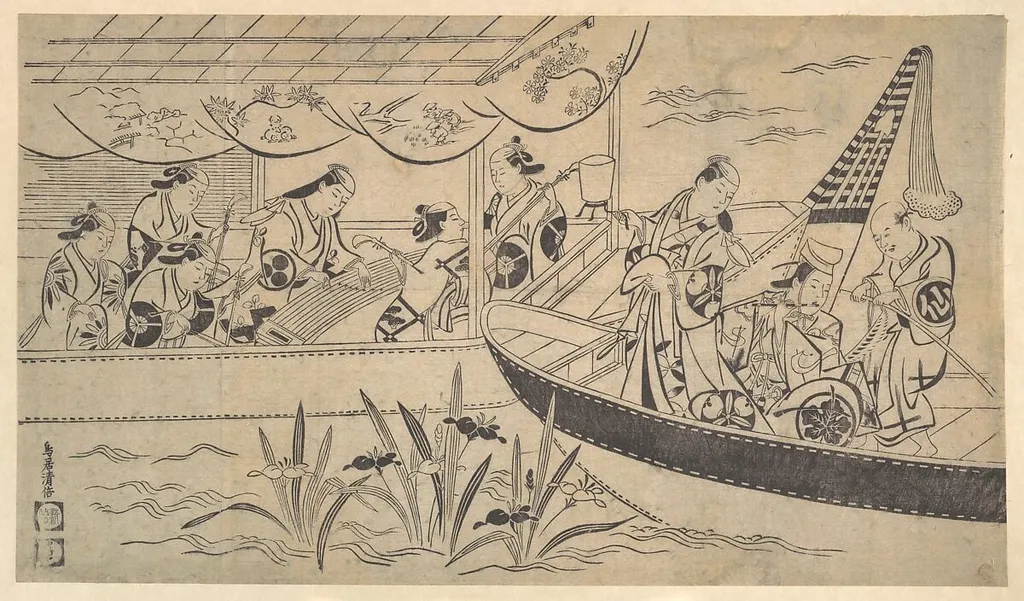
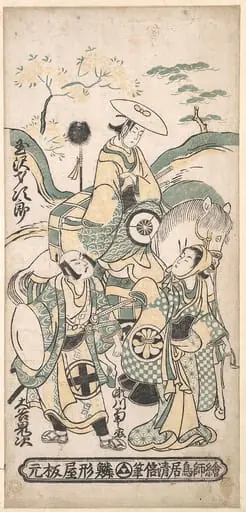
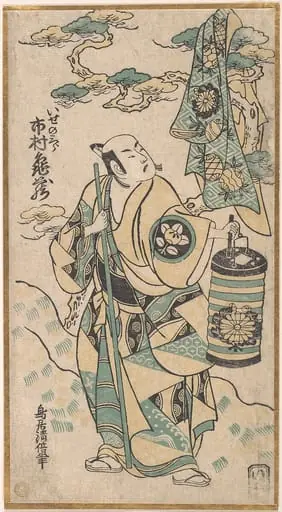
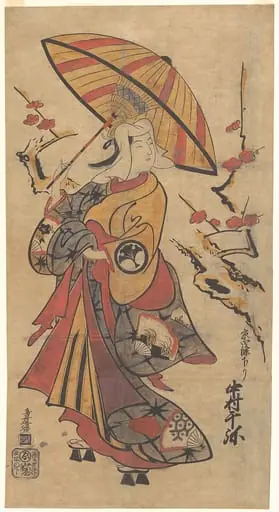
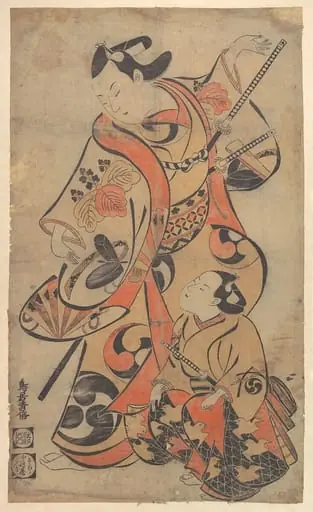
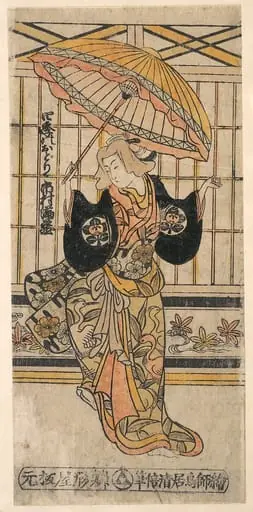
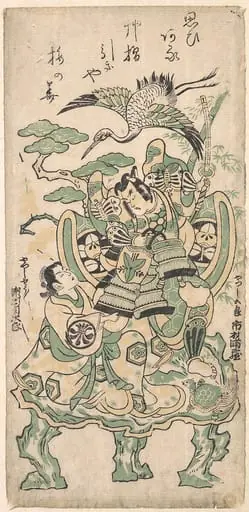
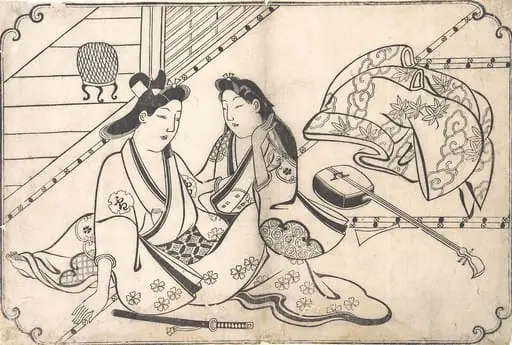
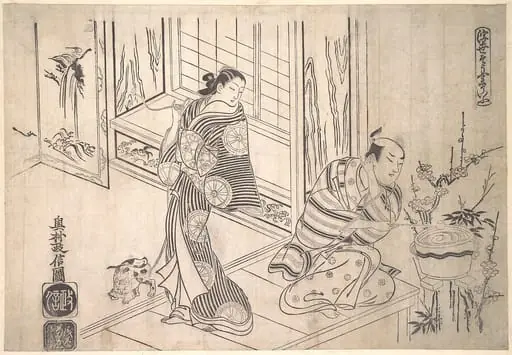
Untitled is an ink print by the Baroque artist Torii Kiyomasu I. It dates from 1705 and is held in the collection of the Metropolitan Museum of Art.
About this work
Overview
This woodblock print, dated around 1705, is attributed to Torii Kiyomasu I and belongs to the early Edo-period tradition of Japanese printmaking.
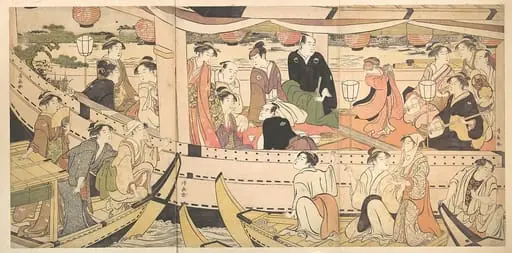
This woodblock print, dated around 1705, is attributed to Torii Kiyomasu I and belongs to the early Edo-period tradition of Japanese printmaking. Executed in ink and color on paper, it depicts a dynamic river scene with two vessels carrying passengers. The work is part of The Metropolitan Museum of Art’s collection, representing a moment when ukiyo-e was evolving from painterly formats into mass-produced imagery.
Subject & Meaning
The scene captures a leisurely river excursion, likely a summer outing among townspeople. Musicians and a woman with a fan suggest entertainment and social ritual, while the striped umbrella and drum player imply a festive atmosphere. Floating vegetation and atmospheric lines in the sky evoke seasonal movement and natural rhythm, reflecting the Edo-period appreciation for transient, everyday pleasures.
Technique & Style
The artist employs bold outlines and simplified forms to convey motion and composition with clarity. Cross-hatching suggests depth and texture without heavy shading, characteristic of early ukiyo-e. The boats, though densely populated, are arranged symmetrically to maintain visual balance. Wavy lines in the sky imply wind or water ripples, enhancing the sense of air and movement through minimal means.
History & Provenance
Created during the formative years of ukiyo-e, this print reflects the Torii school’s role in shaping commercial printmaking. Though few signed works by Kiyomasu I survive, stylistic analysis links this piece to his hand. It entered The Metropolitan Museum of Art’s collection through established acquisitions of early Japanese prints, preserving its place in the lineage of Edo-period visual culture.
Context
In early 18th-century Edo, river excursions were popular among the merchant class, who sought escape from urban life. Printmakers like Kiyomasu I responded to this demand by depicting scenes of public leisure. This work aligns with the Torii school’s focus on figures and movement, bridging the gap between theatrical poster art and the later, more naturalistic ukiyo-e landscapes.
Legacy
As one of the earliest surviving examples of genre-focused woodblock prints, it illustrates the transition from painted scrolls to accessible imagery. Its emphasis on everyday life and rhythmic composition influenced later artists who expanded ukiyo-e’s thematic range. Though not widely reproduced, it remains a key reference for understanding the technical and social foundations of Japanese printmaking.
Artist & collection
Artist
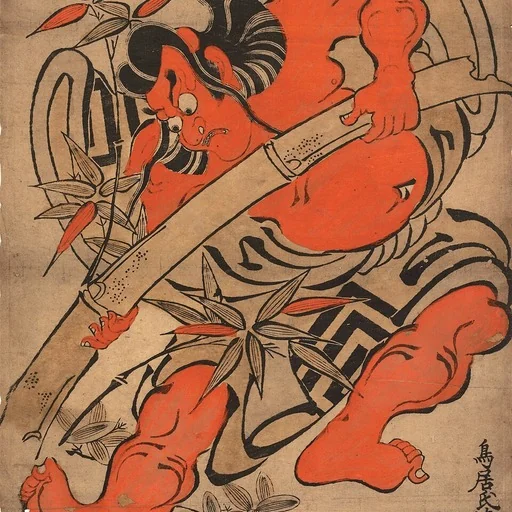
Torii Kiyomasu was the shop name of a printmaker in Edo—modern Tokyo—who spent his short career plastering the city with bold, eye-catching posters.

 Untitled
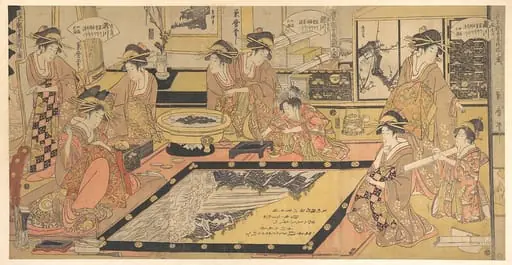 『浅草観音奉掛額之 図』 「扇屋内滝川 富川、粂川、玉川、津川、歌川、清川 め浪、お浪」|A Votive Picture to Be Donated to the Kannon of Asakusa (Asakusa Kannon hō kakegaku no zu), by Takigawa of the Ōgiya, Kamuro Menami and Onami, with Tomikawa, Kumegawa, Tamagawa, Tsugawa, Utagawa, and Kiyokawa
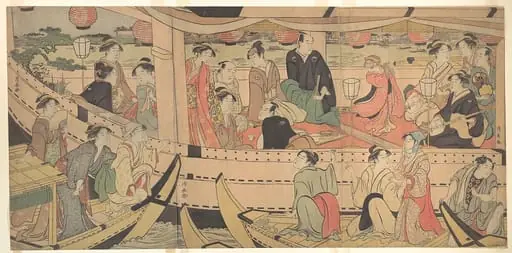 三俳優隅田川船遊び|Sumida River Holiday
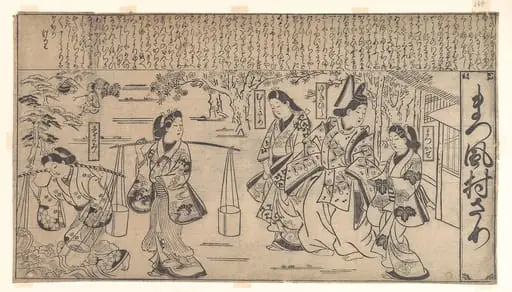 Untitled
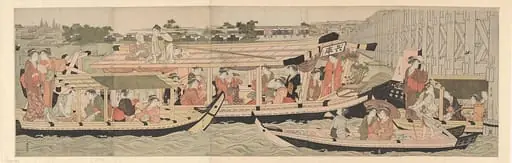 新大橋橋下の涼み船|Pleasure Boats on the Sumida River beneath Shin-Ōhashi Bridge
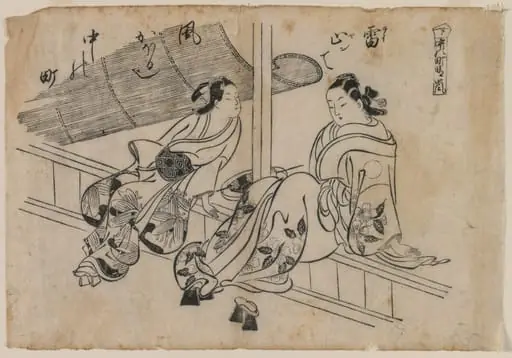 Twilight at Nakanocho
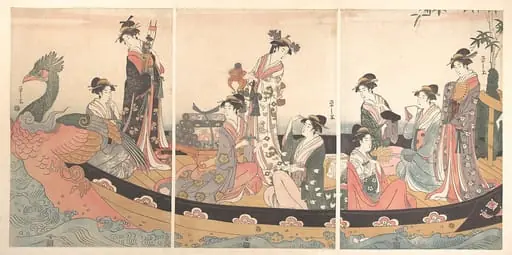 Untitled
 Untitled
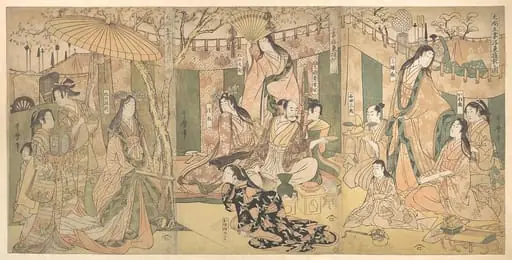 太閤五妻洛東遊観之図|A View of the Pleasures of the Taiko and His Five Wives at Rakutō
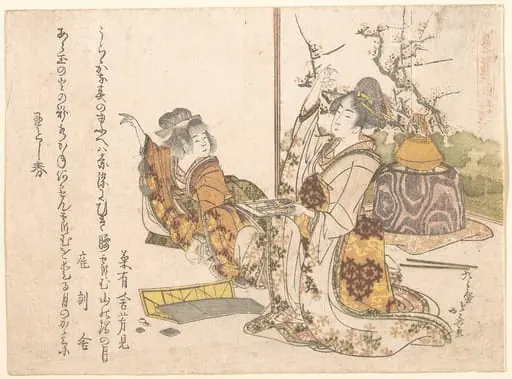 Untitled
 Untitled
 Untitled