Artwork
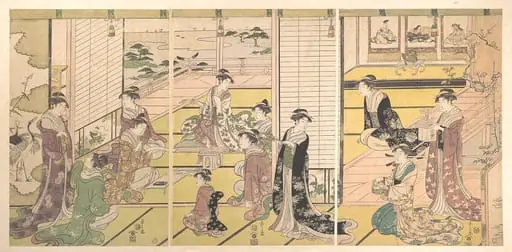
太閤五妻洛東遊観之図|A View of the Pleasures of the Taiko and His Five Wives at Rakutō
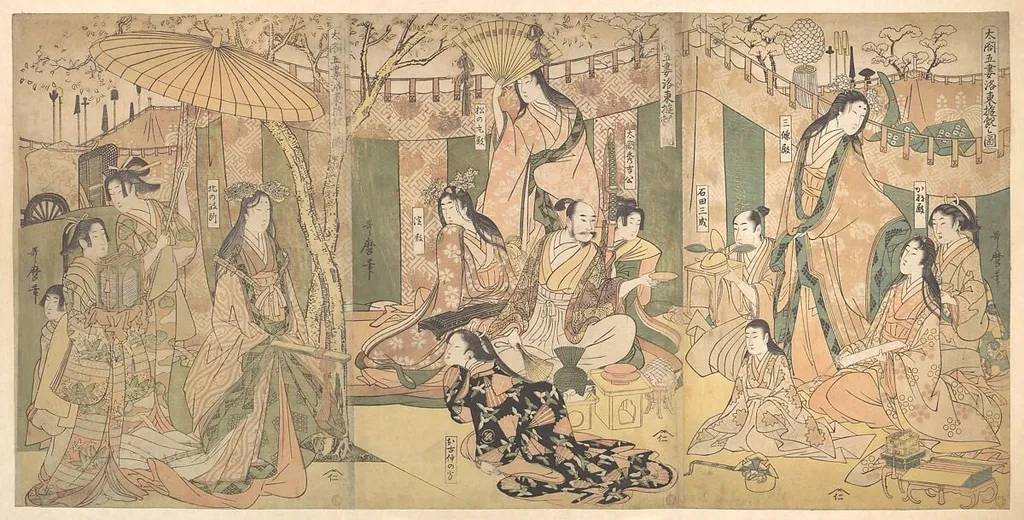
太閤五妻洛東遊観之図|A View of the Pleasures of the Taiko and His Five Wives at Rakutō is an ink print by the Romanticist artist Kitagawa Utamaro. It dates from 1804 and is held in the collection of the Metropolitan Museum of Art.
About this work
Overview
A View of the Pleasures of the Taiko and His Five Wives at Rakutō is a triptych of woodblock prints created by Kitagawa Utamaro in 1804. Composed of ink and color on paper, the work is characterized by soft, muted hues and meticulous black outlines, capturing a serene yet lively scene.
Subject & Meaning
The print depicts five elegantly attired women, presumably the wives of the Taiko (a title for powerful leaders, often referring to Toyotomi Hideyoshi), on an excursion in Rakutō (Eastern Kyoto). Accompanied by children, they are engaged in leisurely activities under umbrellas, conveying an atmosphere of refined leisure.
Technique & Style
Utamaro's distinctive style is evident in the intricate rendering of the women's robes, with emphasis on folds, patterns, and luxurious textures. The soft color palette, dominated by pinks, greens, and earthy tones, contrasts with the defining black outlines, a hallmark of Utamaro's elegant and detailed approach.
History & Provenance
Created in 1804, the triptych is now part of The Metropolitan Museum of Art's collection, highlighting its recognized artistic and historical value.
Context
This work reflects late Edo period (1603-1867) aesthetics, blending traditional Japanese motifs with the emerging interest in depicting the lives of the elite and the beauty of urban landscapes.
Legacy
As a quintessential example of Utamaro's oeuvre, the piece contributes to the artist's reputation for capturing the nuances of high society life in late 18th-century Japan through precise and beautiful woodblock prints.
Artist & collection


 Untitled
 Untitled
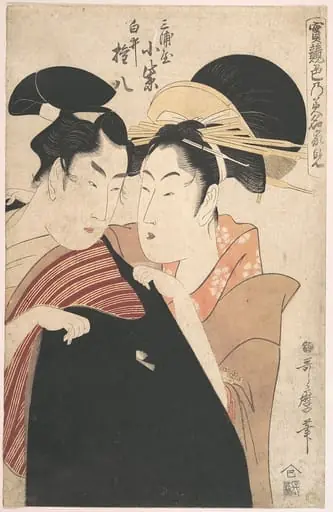 実競色乃美名家見 三浦屋小紫 白井権八|The Lovers Miura-ya Komurasaki and Shirai Gonpachi.
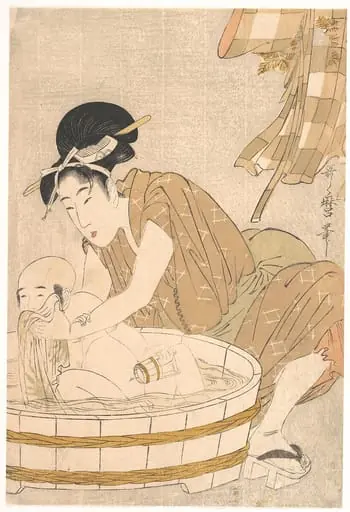 行水|Bathtime (Gyōzui)
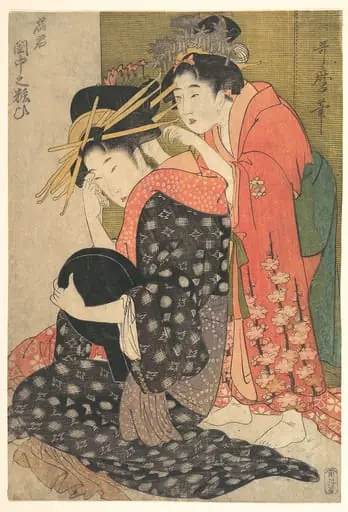 名君 閨中の粧ひ|The Oiran Yoso-oi Seated at Her Toilet
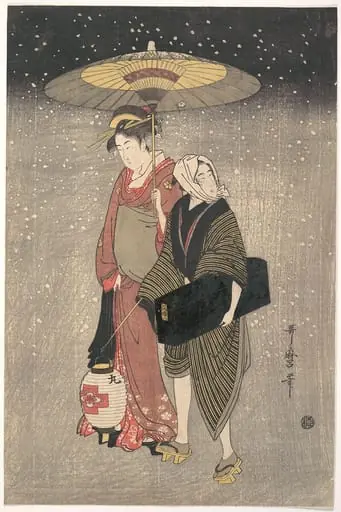 Untitled
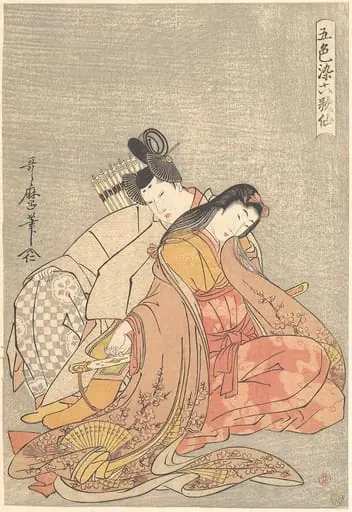 『五色染六歌仙』 在原業平と小野小町|“The Poet Ariwara no Narihira (825–880) and Ono no Komachi,” from the series Five Colors of Love for the Six Poetic Immortals (Goshiki-zome rokkasen)
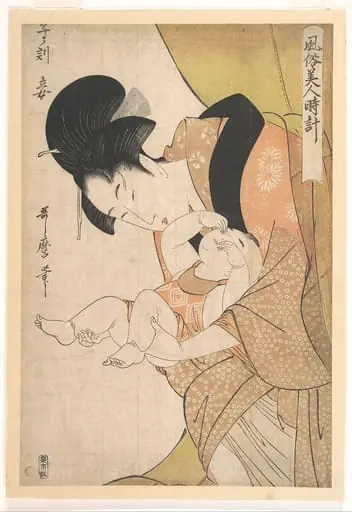 風俗美人時計 子ノ刻 妾|Midnight: Mother and Sleepy Child
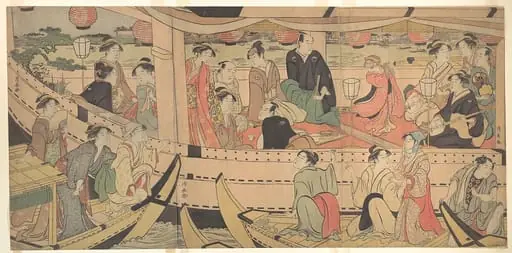 三俳優隅田川船遊び|Sumida River Holiday
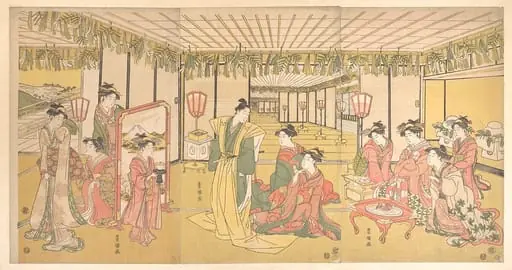 Untitled
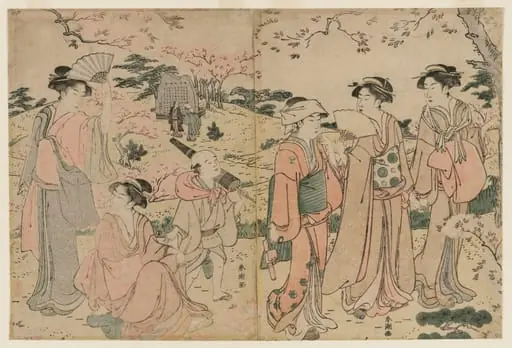 Women Viewing Cherry Blossoms at Asukayama
 契情三人酔 三幅之内 腹立上戸 泣上戸 笑上戸|Three Intoxicated Courtesans
 Untitled
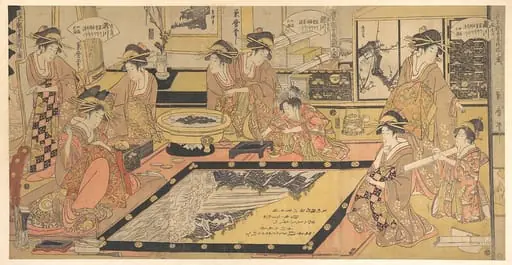 『浅草観音奉掛額之 図』 「扇屋内滝川 富川、粂川、玉川、津川、歌川、清川 め浪、お浪」|A Votive Picture to Be Donated to the Kannon of Asakusa (Asakusa Kannon hō kakegaku no zu), by Takigawa of the Ōgiya, Kamuro Menami and Onami, with Tomikawa, Kumegawa, Tamagawa, Tsugawa, Utagawa, and Kiyokawa
 Untitled
 鳥文斎栄之画 和歌三神図|Honoring the Three Gods of Poetry: Women Composing Poems
 Untitled