Artwork
Untitled
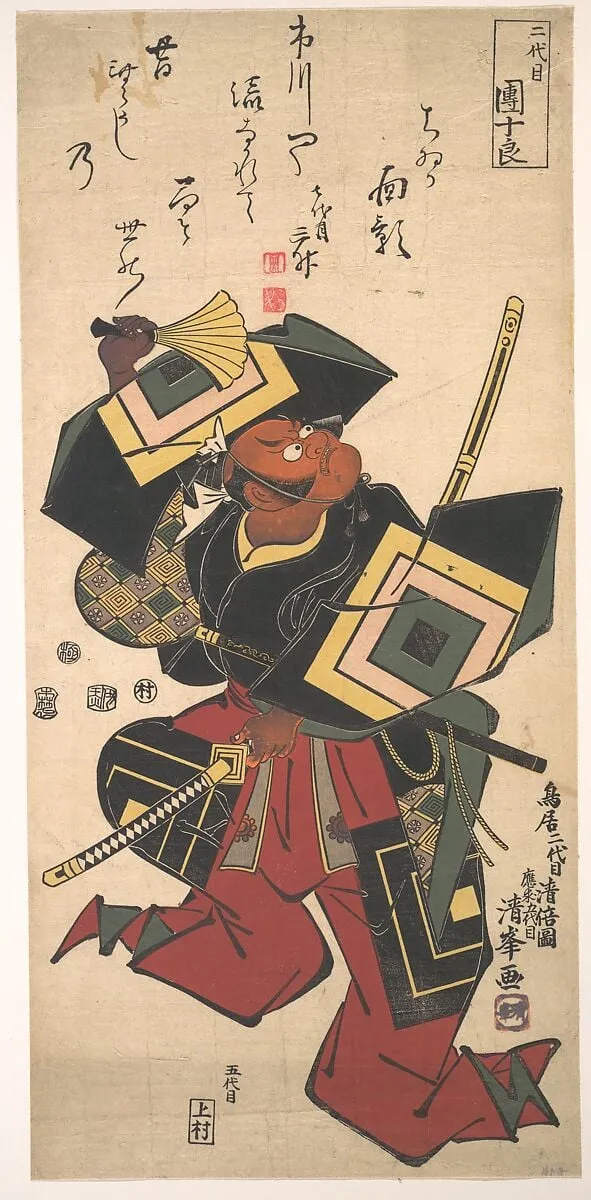
Untitled is an ink print by the Romanticist artist Torii Kiyomine. It dates from 1804 and is held in the collection of the Metropolitan Museum of Art.
About this work
Overview
Its format and visual intensity align with the tradition of promotional imagery for kabuki performances in early 19th-century Edo.
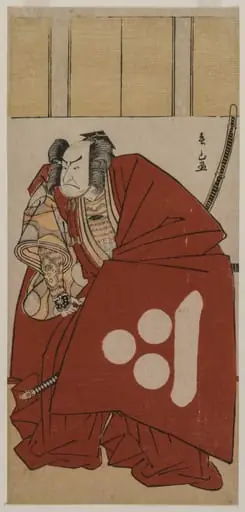
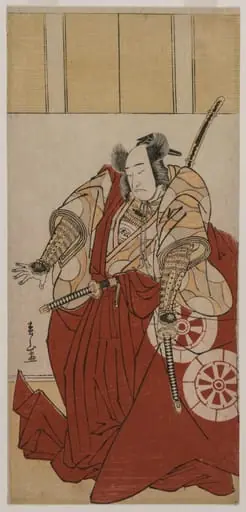
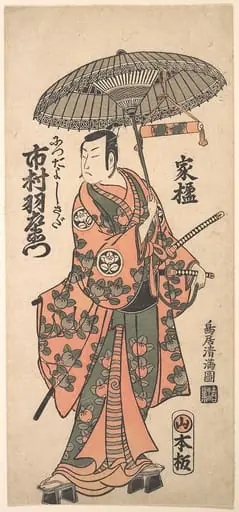
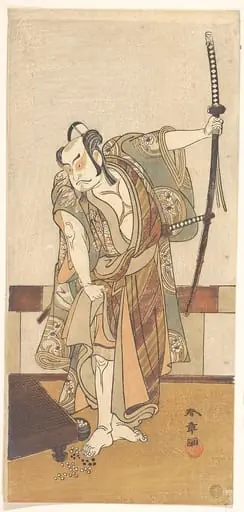
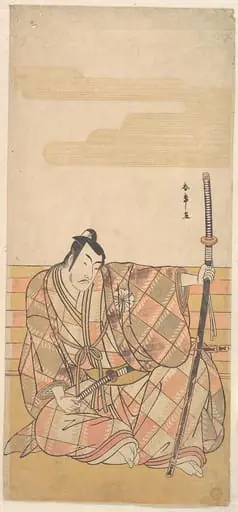
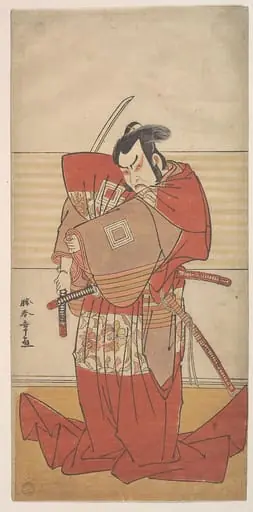
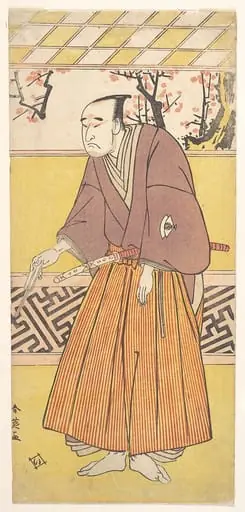
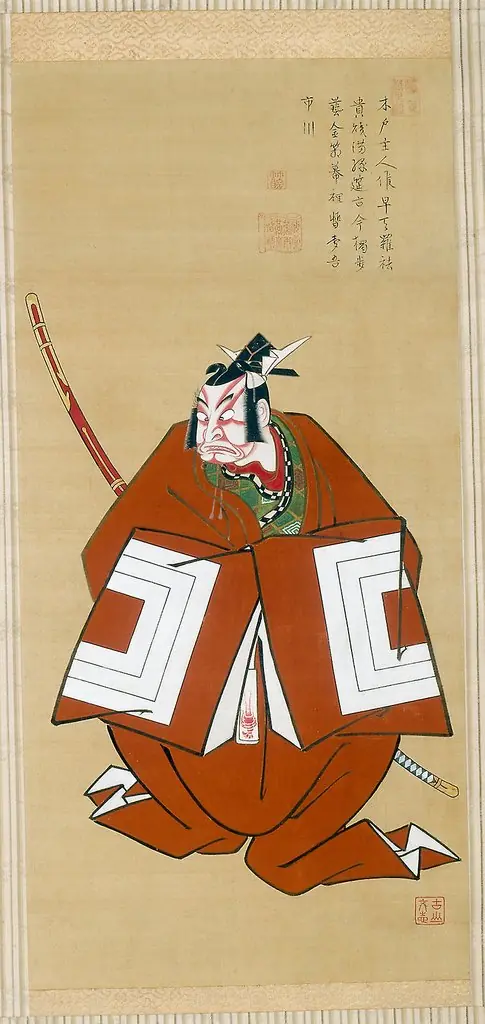
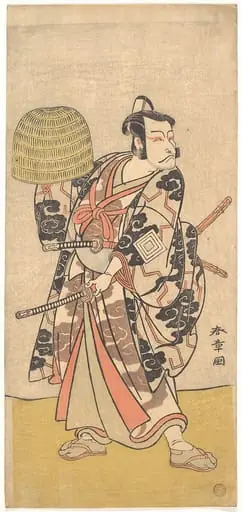
This woodblock print, dated around 1804, is attributed to Torii Kiyomine and executed in ink and color on paper. It belongs to the Metropolitan Museum of Art’s print collection. The composition captures a dynamic theatrical figure in mid-motion, rendered with strong outlines and unmodulated hues. Its format and visual intensity align with the tradition of promotional imagery for kabuki performances in early 19th-century Edo.
Subject & Meaning
The figure depicted is a kabuki actor portraying a warrior, identified by his armor-like costume, sword, and fan—props central to dramatic stage combat. His kneeling posture and sharply defined facial features convey heightened emotion, typical of roles demanding physical and emotional intensity. The image functions not as a portrait but as a stylized representation of a character in performance, designed to evoke immediate recognition among theater audiences.
Technique & Style
The print employs the traditional ukiyo-e woodblock method, with bold black outlines defining form and flat areas of color—primarily red, black, and gold—creating visual impact without shading. Details are minimized, emphasizing silhouette and gesture. This reduction of detail enhances the figure’s theatricality, reflecting the conventions of actor prints meant for quick comprehension and memorability in public spaces.
History & Provenance
Created during the late Edo period, the print likely served as a promotional poster for a kabuki play, distributed to attract audiences. It entered the Metropolitan Museum of Art’s collection through documented acquisitions of Japanese prints in the 20th century. While the exact original context of its production remains unrecorded, its stylistic features align with the Torii school’s established role in theater-related imagery.
Context
In early 1800s Edo, actor prints were mass-produced and widely displayed near theaters, functioning as both advertising and collectible art. The Torii school specialized in this genre, developing a distinctive style marked by dramatic poses and vivid color. This print reflects a cultural practice where visual art and live performance were deeply intertwined, with imagery reinforcing the spectacle and star power of kabuki actors.
Legacy
Though not signed or dated with precision, the print exemplifies the enduring influence of the Torii school’s approach to theatrical representation. Its simplified forms and energetic composition contributed to the visual language of ukiyo-e actor prints, influencing later artists and shaping Western perceptions of Japanese theater imagery in the 19th and 20th centuries.
Artist & collection