Artwork
Untitled
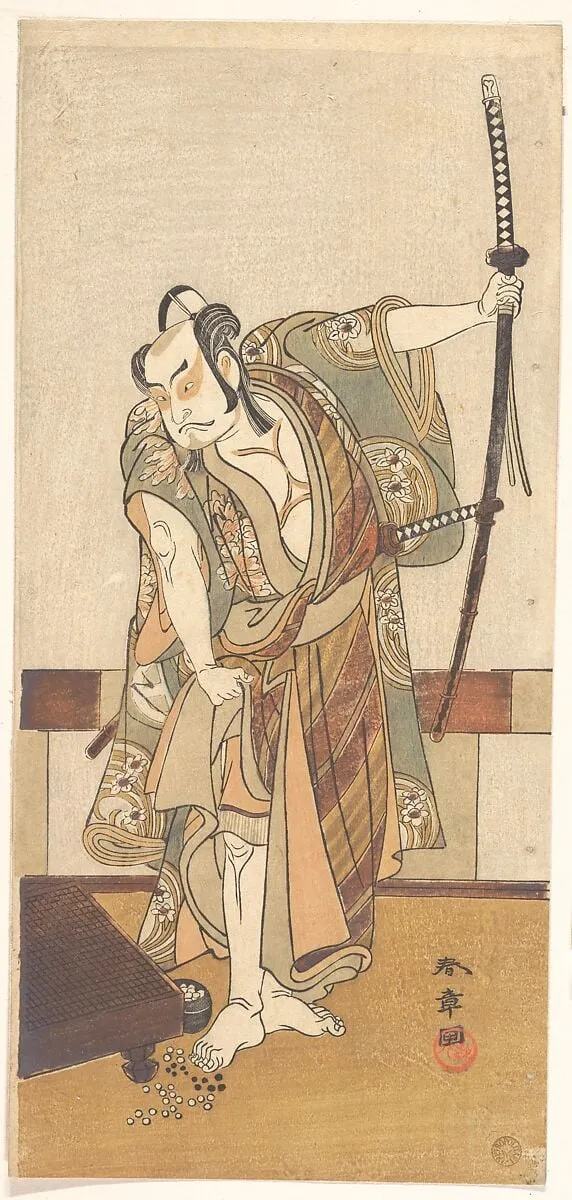
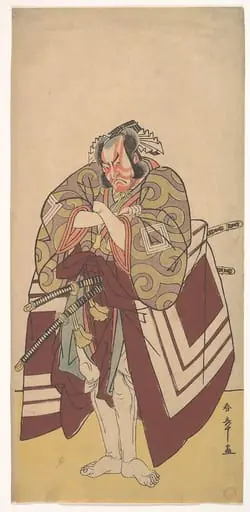
Untitled is an ink print by the Romanticist artist Katsukawa Shunshō. It dates from 1774 and is held in the collection of the Metropolitan Museum of Art.
About this work
Overview
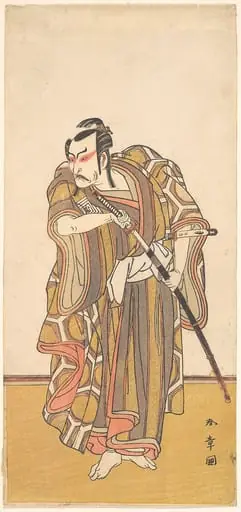
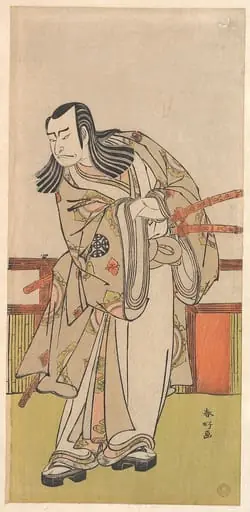
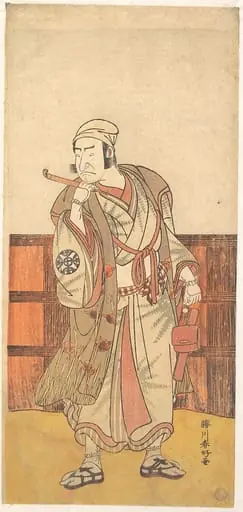
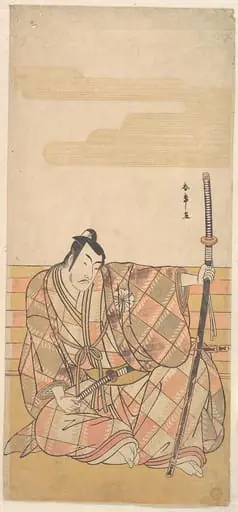
This woodblock print, dated around 1774, is attributed to Katsukawa Shunshō and executed in the nishiki-e technique using ink and color on paper.
This woodblock print, dated around 1774, is attributed to Katsukawa Shunshō and executed in the nishiki-e technique using ink and color on paper. It resides in the collection of The Metropolitan Museum of Art. The composition captures a single figure in a dynamic, restrained posture, rendered with precision typical of Edo-period printmaking. Its formal qualities reflect the era’s emphasis on theatrical representation and refined visual storytelling.
Subject & Meaning
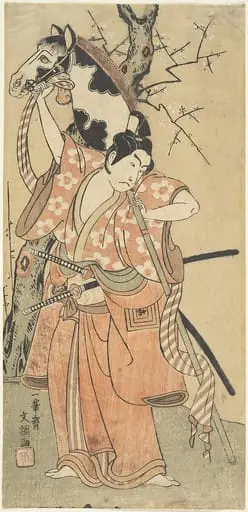
The figure appears to embody a theatrical persona, blending elements of warrior attire with ornamental dress suggestive of stage performance. His kneeling stance, arched back, and intense facial expression convey inner tension. The object clutched in his hands—possibly coins or small stones—hints at a narrative moment of decision or loss, common in kabuki dramas. The ambiguity invites interpretation without anchoring the image to a specific play.
Technique & Style
The print employs the nishiki-e method, utilizing multiple carved blocks to layer vibrant pigments and fine linework. Robe patterns are rendered with intricate detail, demonstrating mastery of color registration and texture. The figure’s form is defined by bold contours and subtle gradations, while the background remains unadorned, focusing attention on the subject’s posture and expression. These choices reflect the aesthetic priorities of actor portraiture in late 18th-century Japan.
History & Provenance
Created during the height of Shunshō’s career, the print emerged from a flourishing print culture centered in Edo. While its early ownership is undocumented, it entered The Metropolitan Museum of Art’s collection through established acquisition channels. As a work from a prolific studio, it aligns with the broader dissemination of actor prints among urban audiences seeking cultural imagery beyond the theater.
Context
In the 1770s, woodblock prints of kabuki actors were widely produced and collected, serving as both promotional material and personal mementos. Shunshō, a leading designer of actor portraits, helped define the genre’s visual language. This print reflects the close relationship between theater and printmaking, where dramatic gestures and elaborate costumes were translated into portable art for a literate, urban public.
Legacy
Shunshō’s influence extended through his students and the evolution of actor portraiture in ukiyo-e. While this particular print is not signed or widely reproduced, its stylistic traits—dramatic composition, attention to costume, psychological nuance—became hallmarks of the genre. It contributes to the historical record of how performance and print intersected in Edo-period visual culture.
Artist & collection
Artist
Katsukawa Shunshō spent his life in Edo (now Tokyo), where the city’s teahouses and theaters buzzed with energy.

 Untitled
 Untitled
 初代中村中蔵の髭の伊久|The Actor Nakamura Nakazō I as the Elderly Samurai Hige no Ikyū
 四代目市川團蔵|Kabuki Actor Ichikawa Danzō IV
 Untitled
 Untitled
 Untitled
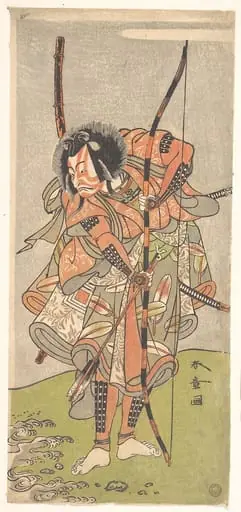 三代目市川海老蔵|Kabuki Actor Ichikawa Ebizō III (Ichikawa Danjūrō IV)
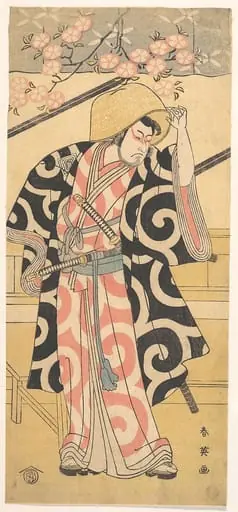 Untitled
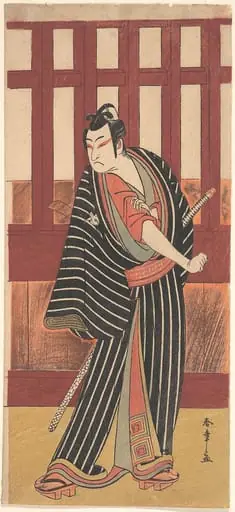 Untitled
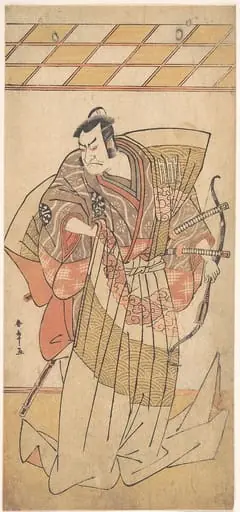 Untitled
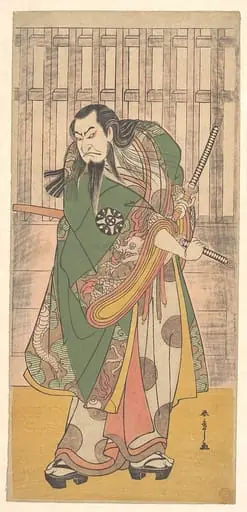
 五代目市川団十郎|Kabuki Actor Ichikawa Danjūrō V in a Shibaraku (Stop Right There!) Role