Artwork
「岩井半四郎図」|The Actor Iwai Hanshiro as a Courtesan Reading a Love Letter while Mounted on a Black Ox
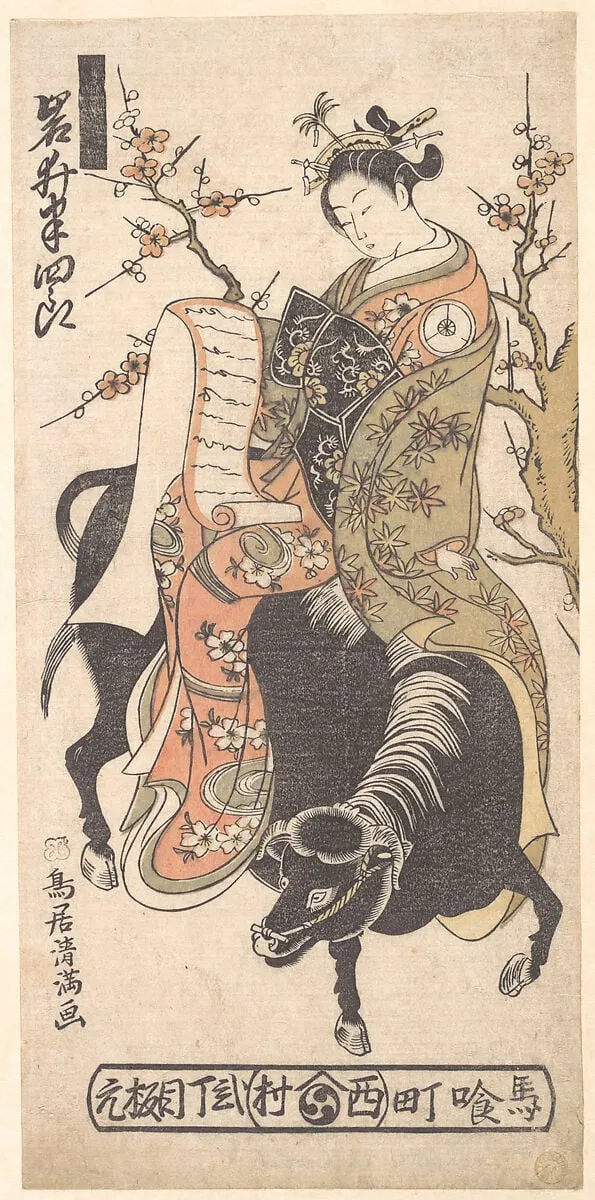
「岩井半四郎図」|The Actor Iwai Hanshiro as a Courtesan Reading a Love Letter while Mounted on a Black Ox is an ink print by the Romanticist artist Torii Kiyomitsu. It dates from 1763 and is held in the collection of the Metropolitan Museum of Art.
About this work
Overview
Created around 1763 by the Edo‑period printmaker Torii Kiyomitsu, this multicolored woodblock depicts a theatrical scene that has been preserved in the collection of the Metropolitan Museum of Art. The image combines portraiture of a popular kabuki actor with a fanciful narrative tableau, rendered in ink and pigment on paper.
Subject & Meaning
The figure represents the celebrated actor Iwai Hanshiro, here cast in the role of a courtesan. She is shown seated on a black ox, holding a scroll that suggests a love letter, a motif that underscores themes of romance and disguise common in kabuki storytelling.
Technique & Style
Kiyomitsu employed the traditional ukiyo‑e woodblock process, carving separate blocks for line work and each colour. The composition balances delicate floral patterns on the kimono with the stark silhouette of the ox, while vertical Japanese characters frame the left side, adding textual context to the visual narrative.
History & Provenance
The print entered the Metropolitan Museum of Art’s collection as part of its Japanese prints holdings, where it is catalogued under the title “The Actor Iwai Hanshiro as a Courtesan Reading a Love Letter while Mounted on a Black Ox.” Its provenance traces back to the mid‑18th century market for actor prints, a popular genre among urban audiences of the time.
Context
During the mid‑Edo period, the Torii school specialized in promotional images for kabuki theatres. This work reflects that commercial function, portraying a well‑known performer in an elaborate costume that would have been recognizable to contemporary theatergoers.
Legacy
The print exemplifies the intersection of portraiture, narrative illustration, and commercial art that defined ukiyo‑e. It continues to serve as a visual record of kabuki culture and the artistic conventions of the Torii workshop, informing both scholarly study and public appreciation of Japanese printmaking.
Artist & collection


 Untitled
 Untitled
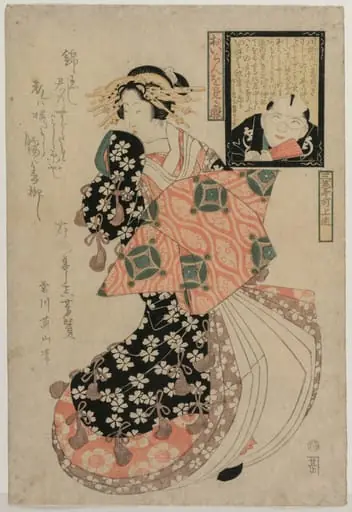 Eyes for Looking at a Courtesan
 Untitled
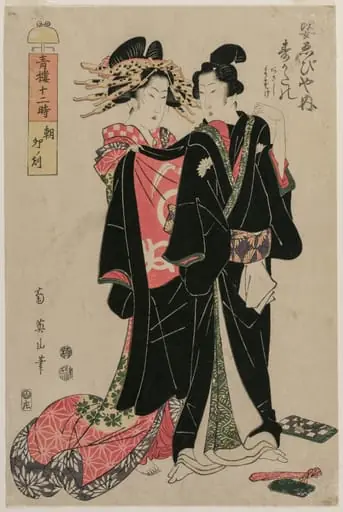 Sugatano of Sugata Ebisuya in the Morning, Hour of the Rabbit, from the series The Twelve Hours in the Pleasure Quarters
 Untitled
 Untitled
 Untitled
 Untitled
 Untitled
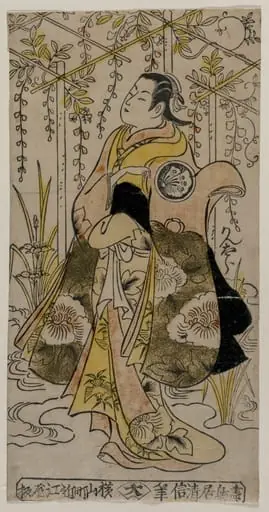 Sanjo Kantaro as a Young Woman Standing in a Wisteria Arbor
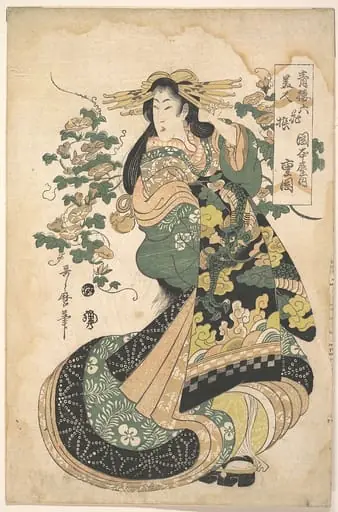 青楼美人 六花撰 岡本屋内 重岡|A Courtesan with Morning-glories on the Background