Artwork
Untitled
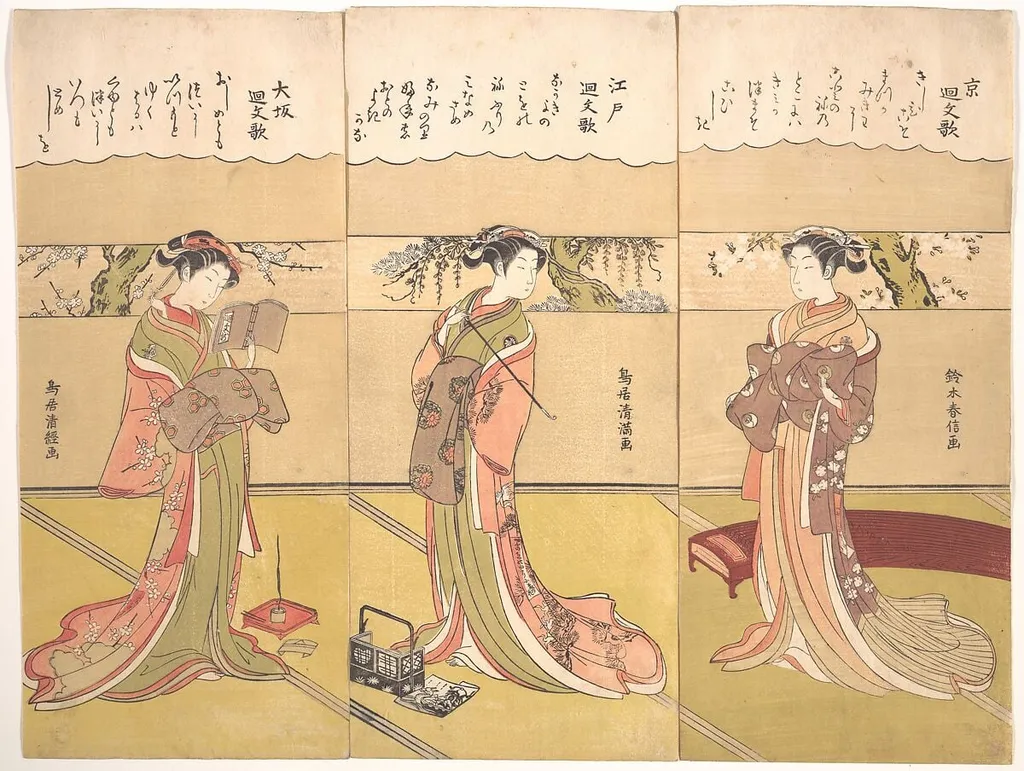
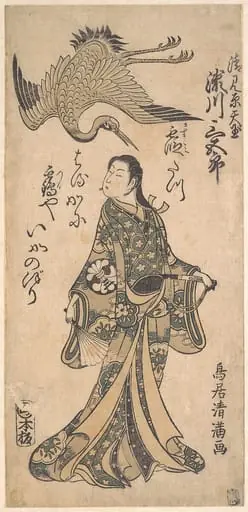
Untitled is an ink print by the Romanticist artist Torii Kiyomitsu. It dates from 1768 and is held in the collection of the Metropolitan Museum of Art.
About this work
Overview
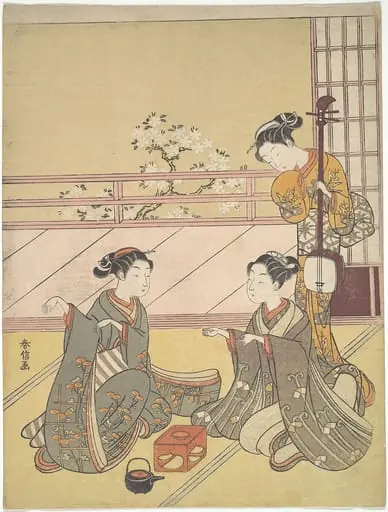
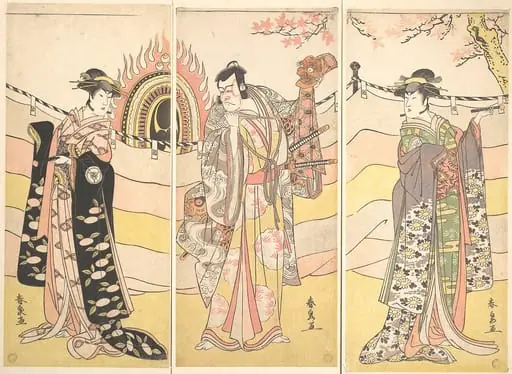
The composition presents three figures in sequential poses, each engaged in a distinct domestic gesture.
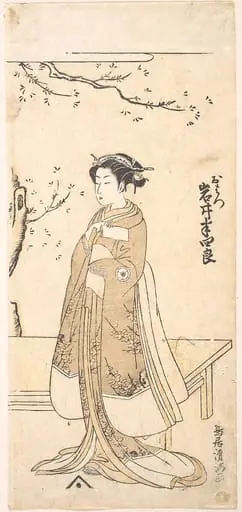
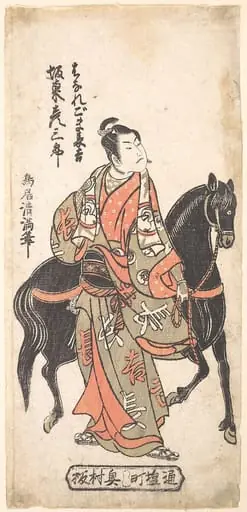
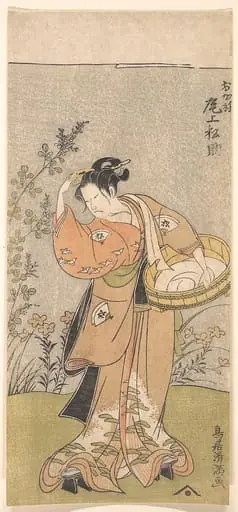
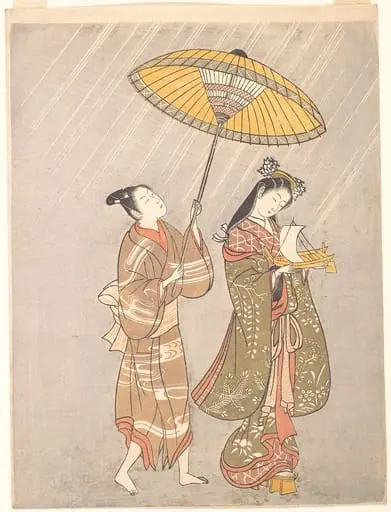
This woodblock print, dated around 1768, is one panel from a triptych by Torii Kiyomitsu. Executed in ink and color on paper, it belongs to the collection of The Metropolitan Museum of Art. The composition presents three figures in sequential poses, each engaged in a distinct domestic gesture. The background remains minimal, allowing focus on the figures and their attire, rendered with vivid hues and precise outlines characteristic of Edo-period ukiyo-e.
Subject & Meaning
The three women depicted are engaged in quiet, everyday actions: holding a fan and scroll, carrying a basket, and resting a hand on a table. These gestures suggest moments from the lives of courtly or upper-class women, possibly illustrating seasonal rituals or leisure. The absence of narrative context invites contemplation of routine rather than drama, aligning with ukiyo-e’s interest in transient, ordinary beauty.
Technique & Style
Kiyomitsu employed bold, flat areas of color—reds, greens, and golds—accented by fine linework to define robes and patterns. The figures’ garments flow with subtle variation, suggesting movement without overt motion lines. The background features sparse foliage and a stylized wave motif along the upper edge, framing the scene. Cross-hatching is used sparingly to suggest depth, emphasizing clarity and elegance over realism.
History & Provenance
Created during the mid-Edo period, this print was likely part of a set produced for private collectors or as decorative panels. It entered The Metropolitan Museum of Art’s collection through documented acquisitions of Japanese prints in the early 20th century. Its survival as a single panel suggests the original triptych may have been separated over time, a common fate for multi-panel works.
Context
This work reflects the Torii school’s dominance in ukiyo-e during the 18th century, particularly in depicting beauties and theatrical subjects. While many prints of the era focused on actors or courtesans, Kiyomitsu’s choice of domestic scenes signals a quieter, more intimate branch of the genre. The emphasis on pattern and posture aligns with broader trends in Edo visual culture that celebrated refined, controlled aesthetics.
Legacy
Though less widely known than later ukiyo-e masters, Kiyomitsu’s work contributed to the evolution of figure composition in woodblock printing. His use of color and restrained detail influenced subsequent artists who sought to balance elegance with narrative subtlety. This print remains a quiet example of how daily life was elevated through formal precision in 18th-century Japanese art.
Artist & collection


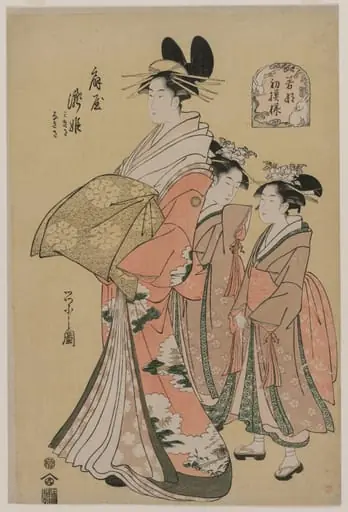 The Courtesan Takihime and Attendants (from the series New Patterns of Young Greens)
 Untitled
 Untitled
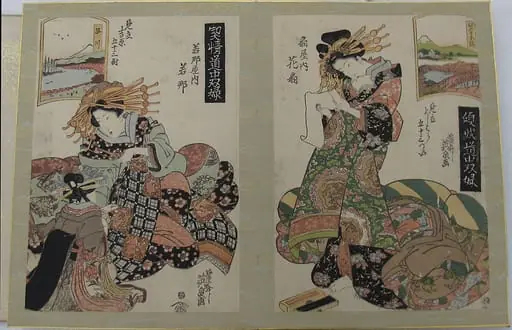 「傾城道中双六 見立よしはら五十三つい」|Album of prints from the series A Tōkaidō Board Game of Courtesans, Fifty-three Pairings in the Yoshiwara (Keisei dōchū sugoroku, Mitate Yoshiwara gojūsan tsui)
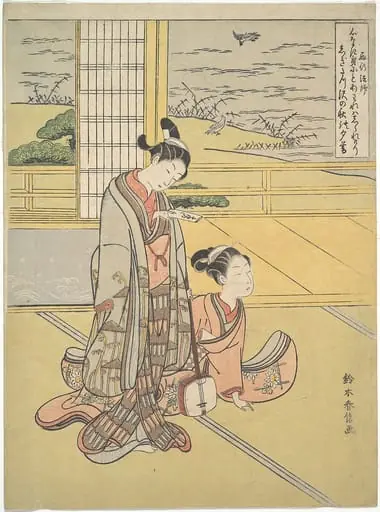 鈴木春信画 見立三夕 「西行法師」|A Young Man and Woman with a Shamisen; Monk Saigyō, from a series alluding to the Three Evening Poems (Sanseki waka)
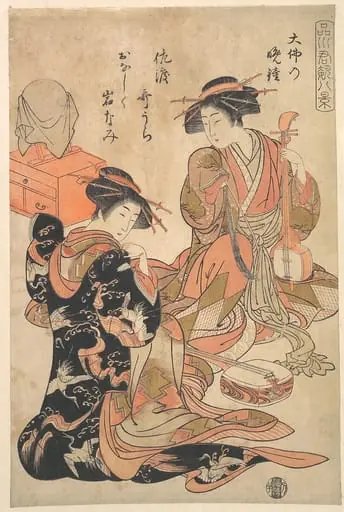 Daibutsu no bansho|Vesper Bell of the Temple of Great Buddha
 Untitled
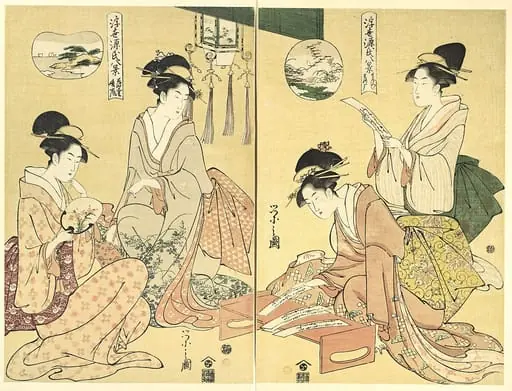 鳥文斎栄之画 「浮世源氏八景 幻 落雁 薄雲 晴嵐」|Spirit Summoner; Wild Geese Returning Home (Maboroshi; Rakugan) (right) and A Thin Veil of Clouds; Clearing Weather (Usugumo; Seiran) (left), from the series Eight Views of The Tale of Genji in the Floating World (Ukiyo Genji hakkei)
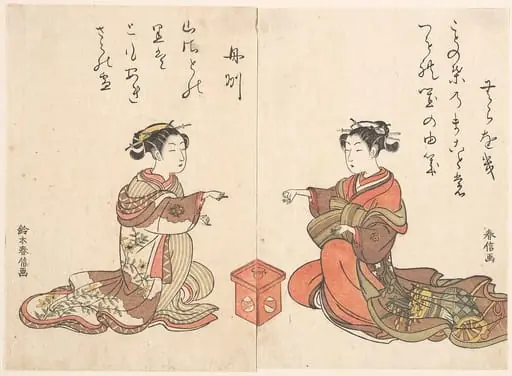 青楼美人合|Two Girls Play the Finger Game of Kitsume Ken