Artwork
Woman of the Yoshiwara and Attendants (from the series Brocades of the East in Fashion)
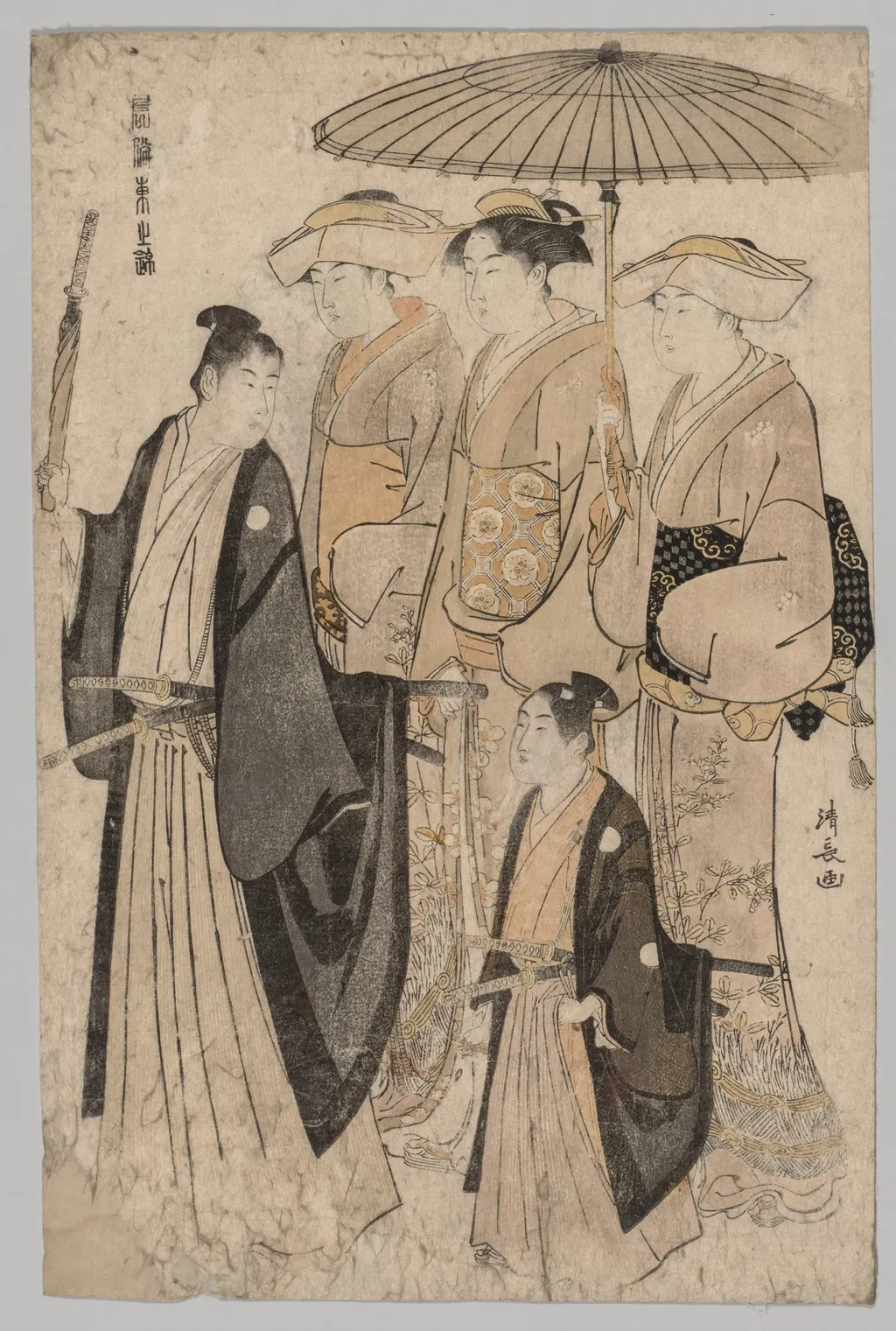
Woman of the Yoshiwara and Attendants (from the series Brocades of the East in Fashion) is a print by the Romanticist artist Torii Kiyonaga. It dates from 1784 and is held in the collection of the Cleveland Museum of Art.
About this work
Overview
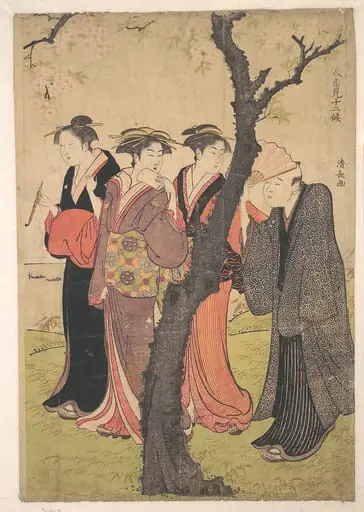
This woodblock print, created by Torii Kiyonaga in 1784, is part of the series Brocades of the East in Fashion. It depicts a group of five figures moving through an urban setting in Edo-period Japan. The composition emphasizes quiet movement and refined attire, characteristic of Kiyonaga’s focus on the social rituals of the time. The print is held in the collection of The Cleveland Museum of Art.
Subject & Meaning
The scene portrays a high-ranking woman from the Yoshiwara pleasure district accompanied by two attendants and two male escorts.
The scene portrays a high-ranking woman from the Yoshiwara pleasure district accompanied by two attendants and two male escorts. Their synchronized procession suggests a formal outing, likely tied to social or ceremonial obligations. The presence of swords indicates the escorts’ status as samurai or retainers, while the women’s elaborate garments and accessories reflect the fashion and hierarchy of the pleasure quarters.
Technique & Style
Kiyonaga employed fine, controlled lines and restrained color palettes to convey elegance and stillness. The figures are arranged in a balanced, rhythmic composition, with ample negative space enhancing their presence. Soft washes of color and minimal background detail—just faint brushstrokes of foliage—focus attention on the figures’ postures and clothing, typical of ukiyo-e’s emphasis on contemporary life.
History & Provenance
Produced during the late 18th century, this print was made for a market interested in depictions of urban fashion and leisure. It entered the collection of The Cleveland Museum of Art through documented acquisition, preserving its place within the broader tradition of Edo-period printmaking. Its survival in good condition reflects careful handling and historical interest in Kiyonaga’s work.
Context
The Yoshiwara district was a licensed pleasure quarter in Edo, where fashion, entertainment, and social performance converged. Kiyonaga’s series captured the evolving styles of its inhabitants, offering a visual record of elite urban culture. These prints were not merely decorative but served as cultural artifacts, documenting the aesthetics and social codes of the time.
Legacy
Kiyonaga’s prints helped define the aesthetic of late ukiyo-e, influencing later artists in their treatment of figure composition and everyday elegance. While less sensational than some contemporaries, his work offered a nuanced portrayal of urban life, contributing to a broader understanding of Edo-period society through its quiet, observed details.
Artist & collection

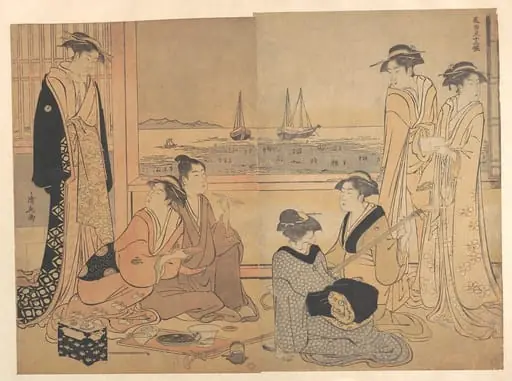
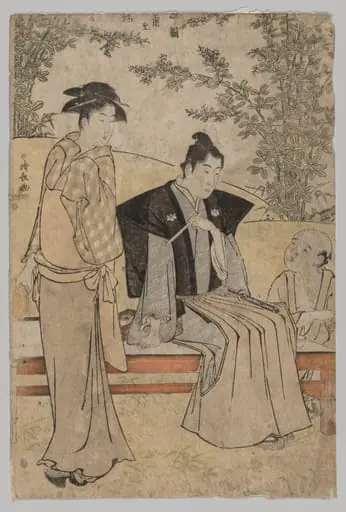 Two Lovers (from the series Brocades of the East in Fashion)
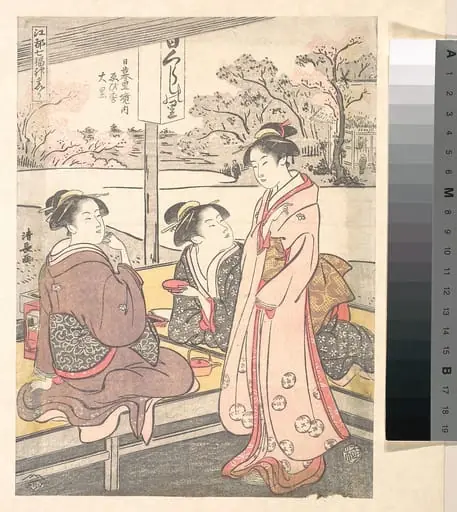
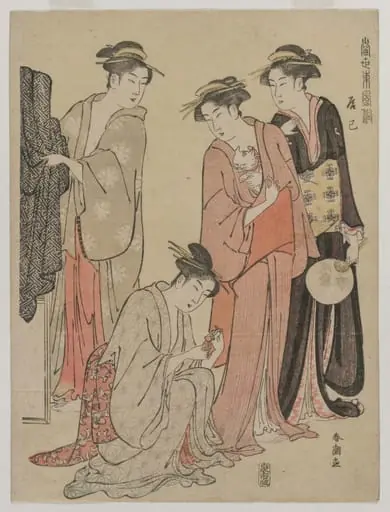 Women of the Tatsumi District (from the series Eastern Customs of the Present Day)
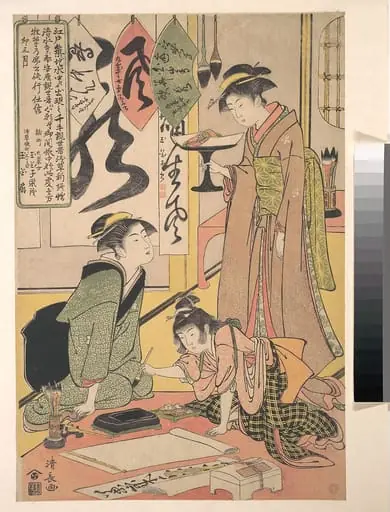
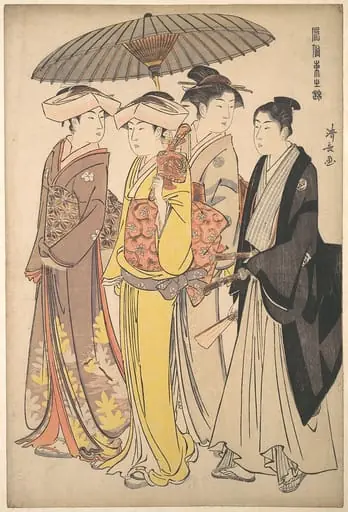 「風俗東之錦」 武家の息女と侍女と若党 |A Lady from a Samurai Household with Three Attendants, from the series A Brocade of Eastern Manners (Fūzoku Azuma no nishiki)
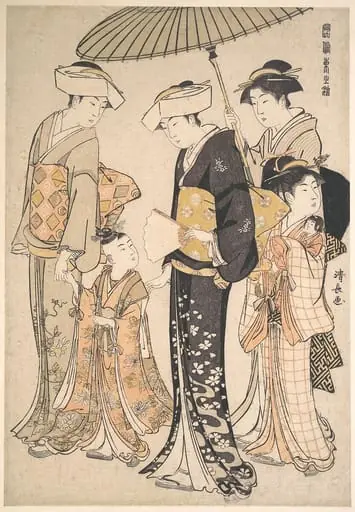 「風俗東之錦」 姫君と侍女四人|High-Ranking Samurai Girl with Four Attendants, from the series A Brocade of Eastern Manners (Fūzoku Azuma no nishiki)
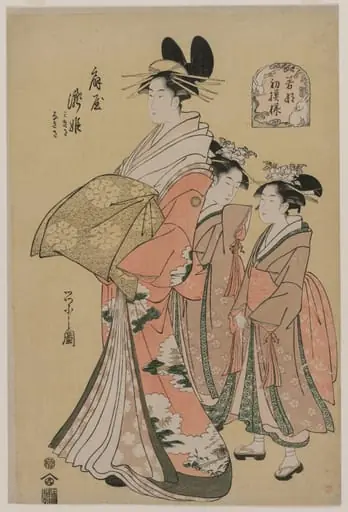 The Courtesan Takihime and Attendants (from the series New Patterns of Young Greens)
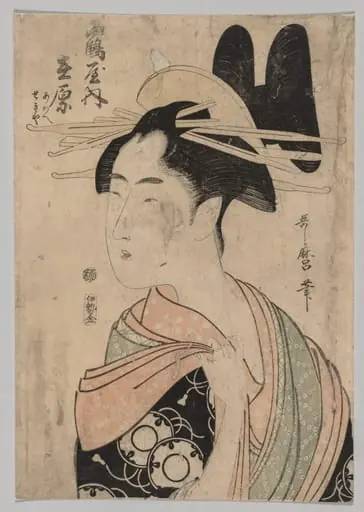 Woman of the Yoshiwara