Artwork
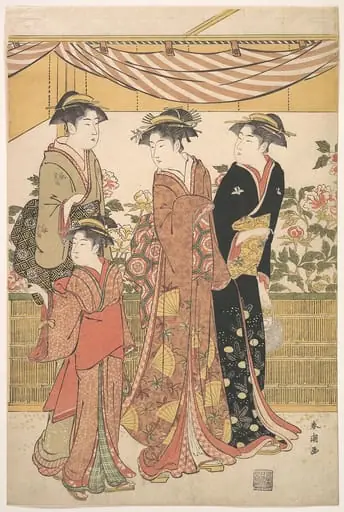
「風俗東之錦」 姫君と侍女四人|High-Ranking Samurai Girl with Four Attendants, from the series A Brocade of Eastern Manners (Fūzoku Azuma no nishiki)
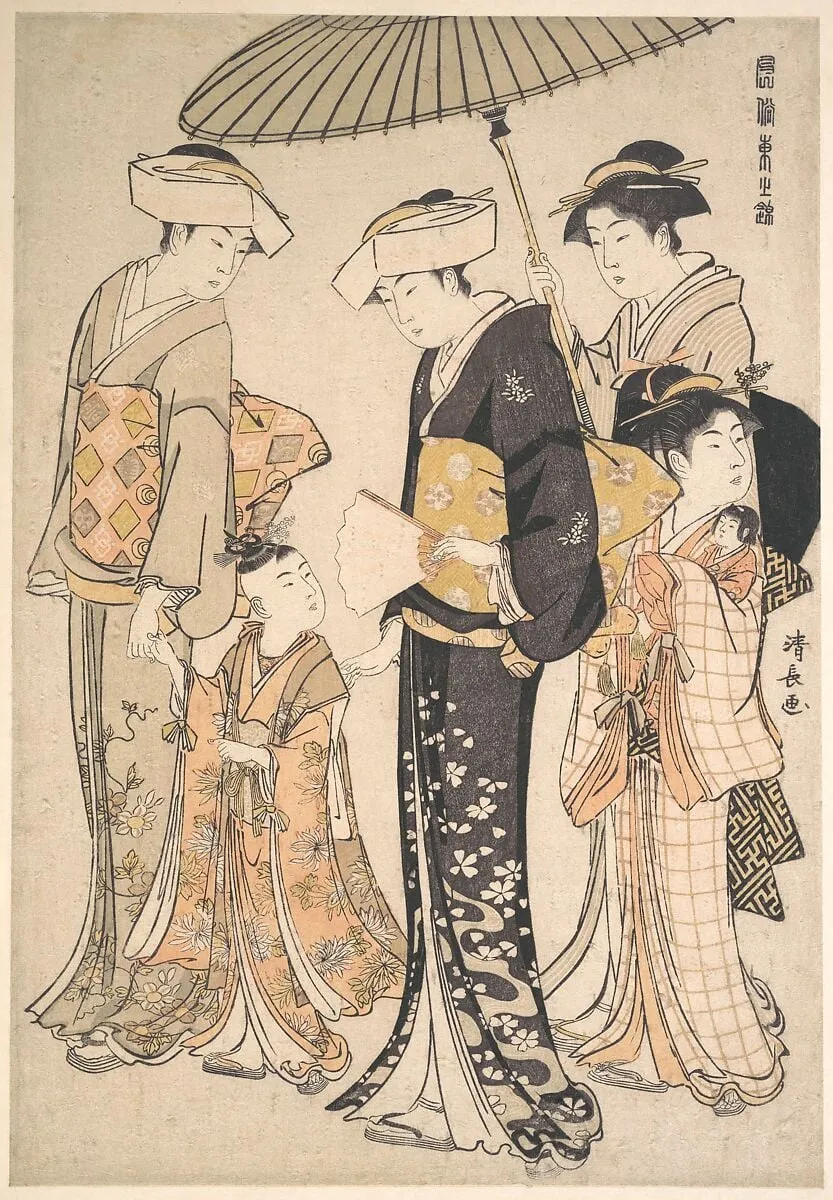
「風俗東之錦」 姫君と侍女四人|High-Ranking Samurai Girl with Four Attendants, from the series A Brocade of Eastern Manners (Fūzoku Azuma no nishiki) is an ink print by the Romanticist artist Torii Kiyonaga. It dates from 1784 and is held in the collection of the Metropolitan Museum of Art.
About this work
Overview
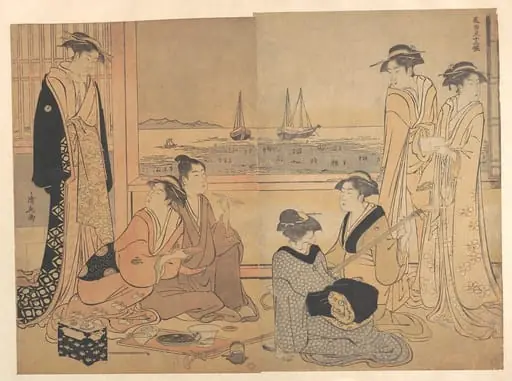
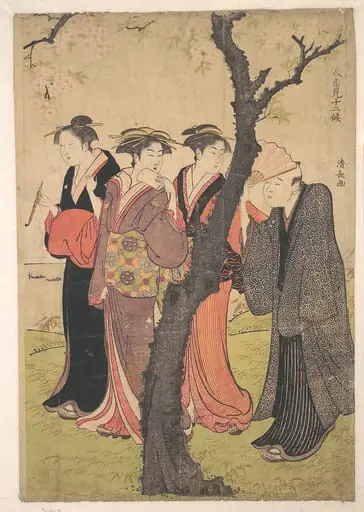
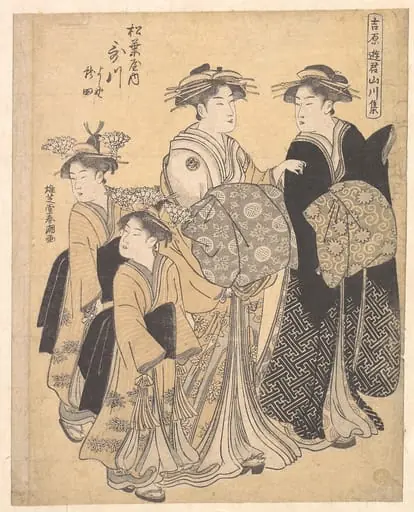
Rendered in ink and color on paper, the work captures a group of five women in formal attire, arranged with quiet composure against an unadorned background.
Created around 1784 by Torii Kiyonaga, this woodblock print is part of the series A Brocade of Eastern Manners, which depicts scenes of daily life in late 18th-century Japan. Rendered in ink and color on paper, the work captures a group of five women in formal attire, arranged with quiet composure against an unadorned background. The composition emphasizes their garments and postures, reflecting the artist’s interest in portraying social nuance through dress and gesture.
Subject & Meaning
The central figure is a high-ranking samurai woman, flanked by four attendants, one of whom holds a folded umbrella and another a fan. A young child stands near them, suggesting familial or domestic context. The elaborate patterns on their robes—floral and geometric—signal status and refinement. The scene conveys dignity and order, illustrating the structured roles within elite households rather than depicting action or narrative.
Technique & Style
Kiyonaga employed delicate, flowing lines and restrained color palettes to achieve a sense of calm elegance. The flat, even application of pigment and minimal shading focus attention on textile detail and silhouette. Backgrounds are left unmodeled, a convention of ukiyo-e that isolates figures and enhances their formal presence. The print’s clarity and balance reflect the artist’s mastery of compositional harmony within the woodblock medium.
History & Provenance
The print originates from a series commissioned to document contemporary customs in the eastern regions of Japan. It entered the collection of The Metropolitan Museum of Art through established channels of early 20th-century acquisitions of Japanese prints. Its preservation reflects its significance as a representative example of Torii Kiyonaga’s contributions to the genre of bijin-ga, or pictures of beautiful women, during the Edo period.
Context
This work belongs to a broader cultural interest in recording urban life and social hierarchy in Edo-period Japan. While many ukiyo-e prints depicted theater or pleasure quarters, Kiyonaga’s series turned toward domestic and ceremonial scenes among the elite. Such images catered to a growing literate middle class seeking visual records of refined lifestyles, blending observation with idealized representation.
Legacy
Kiyonaga’s series helped define a refined aesthetic in bijin-ga, influencing later artists to prioritize quiet dignity over theatricality. His attention to costume and posture became a model for depicting social rank through visual cues. Though not widely known outside specialist circles, this print remains a key example of how everyday scenes were elevated into enduring artistic statements within the woodblock tradition.
Artist & collection

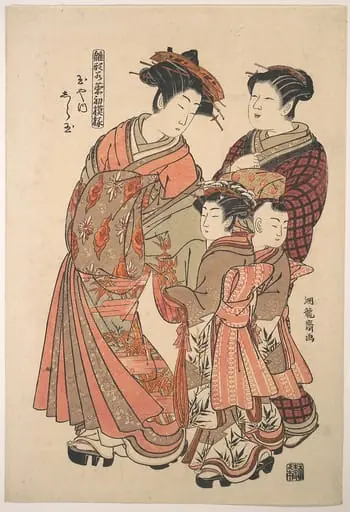 『雛形若菜初模様 玉や内 しら玉』|The Courtesan Shiratama of the Tamaya Brothel, from the series “A Pat-tern Book of the Year’s First Designs, Fresh as Spring Herbs” (“Hinagata wakana hatsu moyō”)
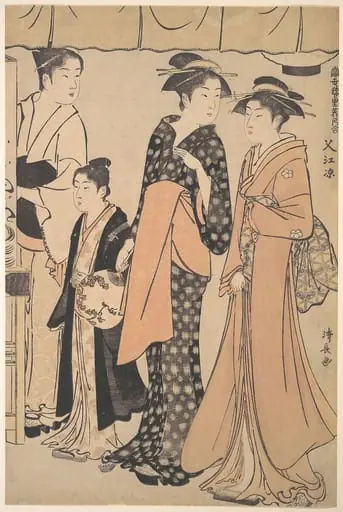 Sako no Suzumi|Cooling Off at Nakazu
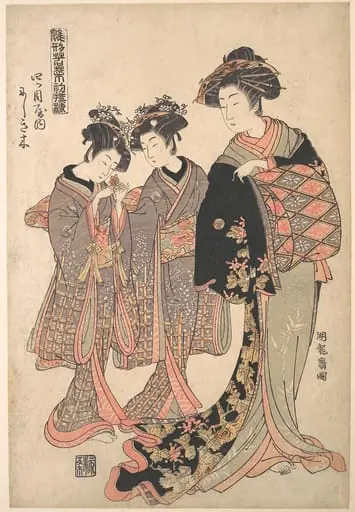 『雛形若菜初模様 四ツ目屋内 にしき木』|The Courtesan Nishikigi of the Yotsumeya Brothel, from the series “A Pattern Book of the Year’s First Designs, Fresh as Spring Herbs” (“Hinagata wakana hatsu moyō”)
 Untitled
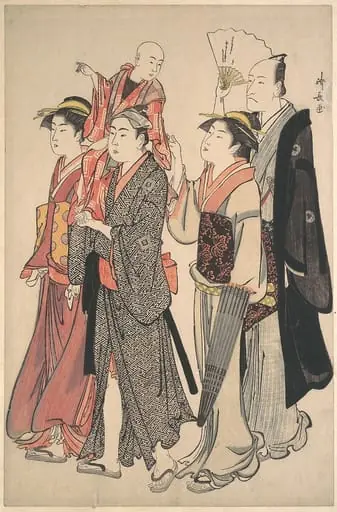 Untitled
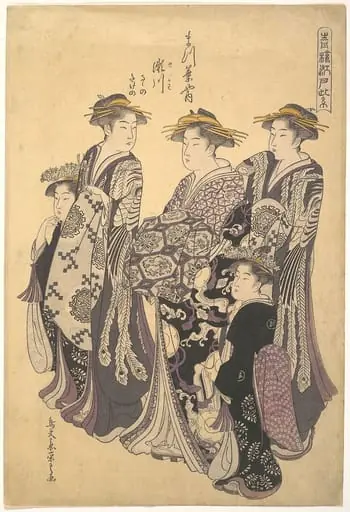 Seiryu Edo|Courtesan District of Edo
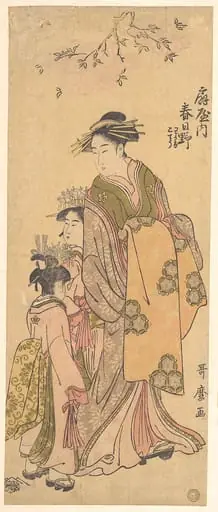 扇屋内春日野わかな こてう|The Oiran Kasugano of Ōgiya on Parade
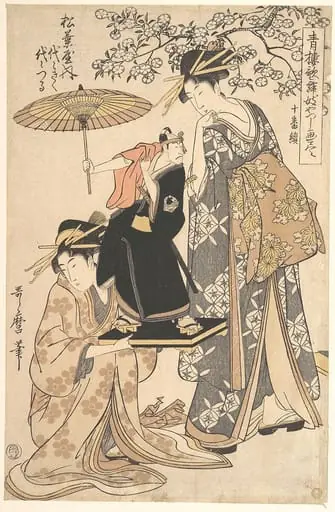 青楼歌舞妓やつし画尽 十番続|The Oiran Yoyogiku of Matsubaya Standing under a Cherry Tree
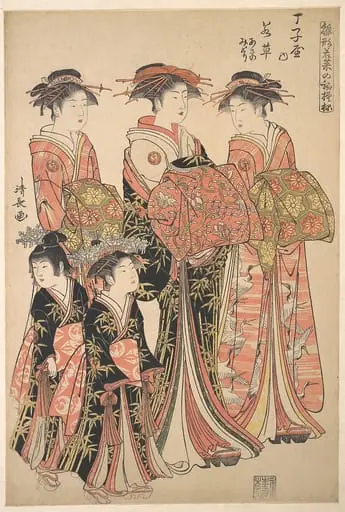 鳥居清長画 「雛形若菜の初模様 丁子屋の若草・ あさの・みどり」|The Courtesan Wakakusa of the Chōjiya Brothel, and Attendants Asano and Midori, from the series “A Pattern Book of the Year’s First Designs, Fresh as Spring Herbs” (Hinagata wakana no hatsumoyō)
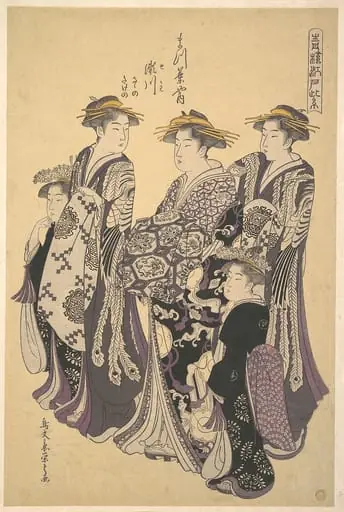 Untitled
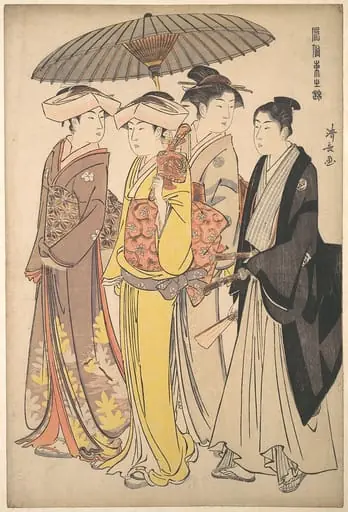 「風俗東之錦」 武家の息女と侍女と若党 |A Lady from a Samurai Household with Three Attendants, from the series A Brocade of Eastern Manners (Fūzoku Azuma no nishiki)
 Untitled