Artwork
Woman of the Yoshiwara
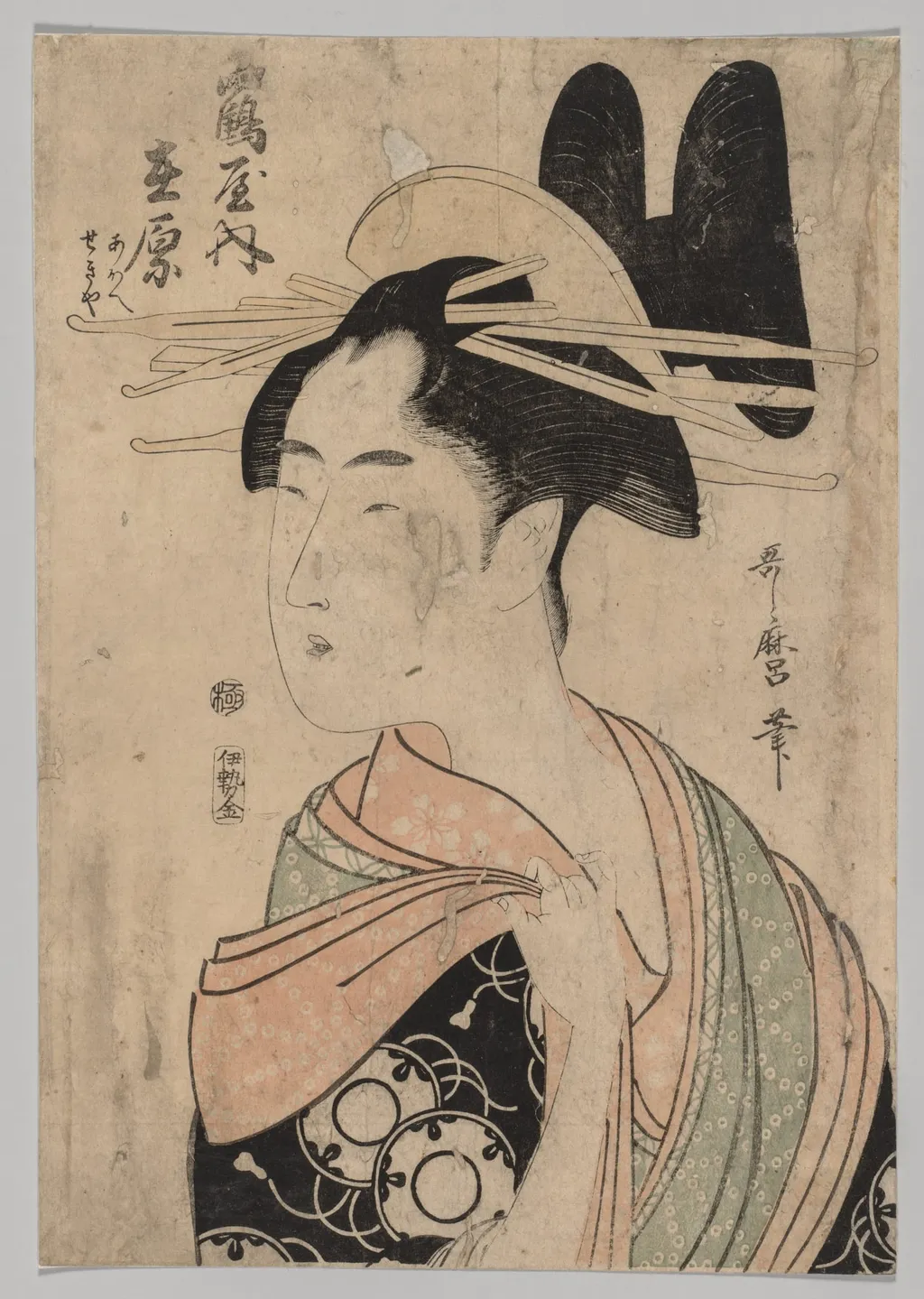
Woman of the Yoshiwara is a print by the Romanticist artist Kitagawa Utamaro. It dates from 1780 and is held in the collection of the Cleveland Museum of Art.
About this work
Overview
Woman of the Yoshiwara, created circa 1780 by Japanese artist Kitagawa Utamaro, is a print housed in The Cleveland Museum of Art's collection.
Subject & Meaning
The subject is a woman of the Yoshiwara district, implying a courtesan or high-ranking geisha. Her serene, enigmatic expression and poised demeanor convey the allure and mystique associated with such figures in 18th-century Japanese culture.
Technique & Style
Utamaro employed bold black ink lines and flat, vibrant colors (notably black, pink, and green) to define the composition. Intricate patterns on the sleeves (swirling whites on black, small dots on green) add depth. The focus on the subject's face and hands, set against a plain background, typifies Utamaro's emphasis on capturing the beauty of the human form.
History & Provenance
Created in 1780, the print is now part of The Cleveland Museum of Art's collection, though the full provenance history is not detailed here.
Context
Part of the Edo period's ukiyo-e woodblock print tradition, this work reflects the era's fascination with beauty, entertainment, and the lifestyles of urban elites, particularly those in Yoshiwara, Tokyo's renowned pleasure district.
Legacy
As a characteristic example of Utamaro's oeuvre, Woman of the Yoshiwara contributes to his reputation as a leading figure in ukiyo-e, especially in the portrayal of women, influencing subsequent generations of Japanese artists.
Artist & collection


 Untitled
 Untitled
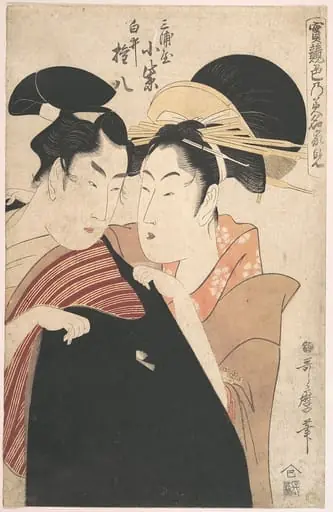 実競色乃美名家見 三浦屋小紫 白井権八|The Lovers Miura-ya Komurasaki and Shirai Gonpachi.
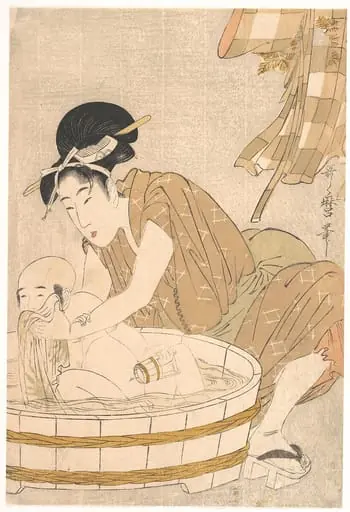 行水|Bathtime (Gyōzui)
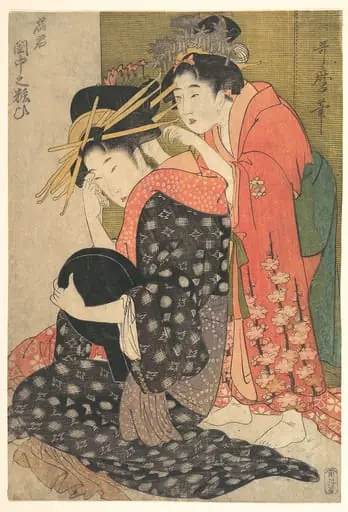 名君 閨中の粧ひ|The Oiran Yoso-oi Seated at Her Toilet
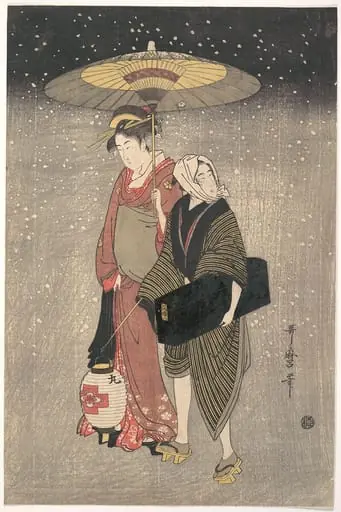 Untitled
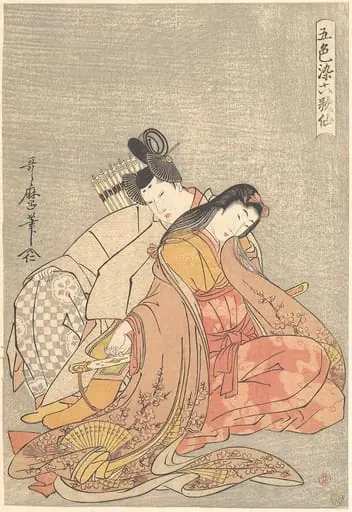 『五色染六歌仙』 在原業平と小野小町|“The Poet Ariwara no Narihira (825–880) and Ono no Komachi,” from the series Five Colors of Love for the Six Poetic Immortals (Goshiki-zome rokkasen)
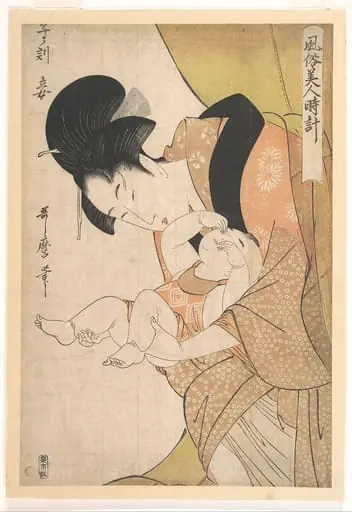 風俗美人時計 子ノ刻 妾|Midnight: Mother and Sleepy Child
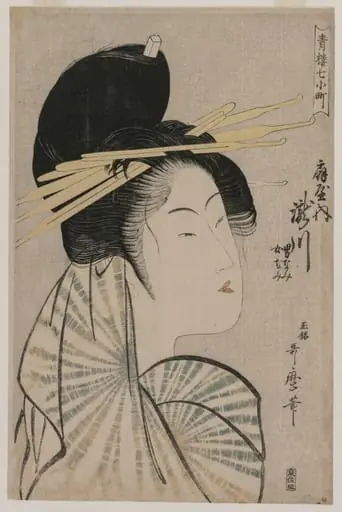 The Courtesan Takigawa of Ogiya (from the series Seven Aspects of Komachi in the Green Houses)
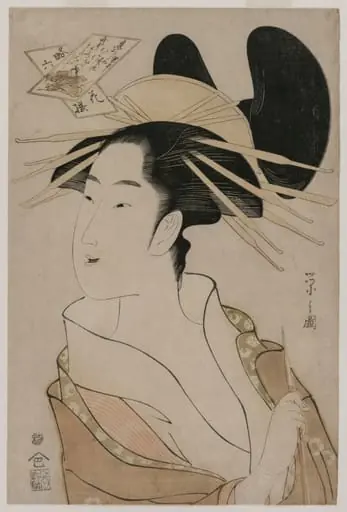 Portrait of a Courtesan Holding a Pipe (from the series The Six Immortal Poets in Modern Dress)
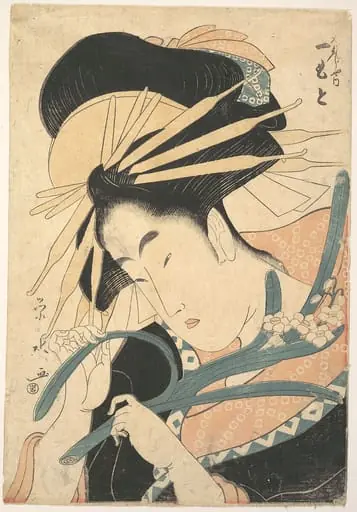 Untitled
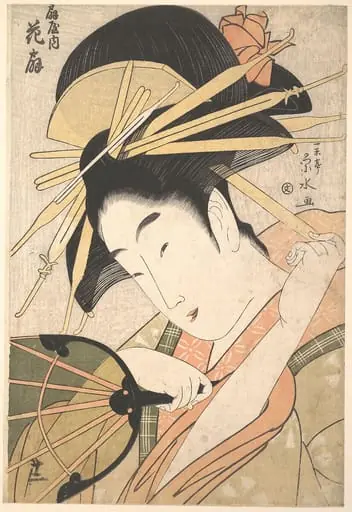 一楽亭栄水画 「扇屋内 花扇」|The Courtesan Hanaōgi of the Ōgiya Brothel (Ōgiya no uchi Hanaōgi)
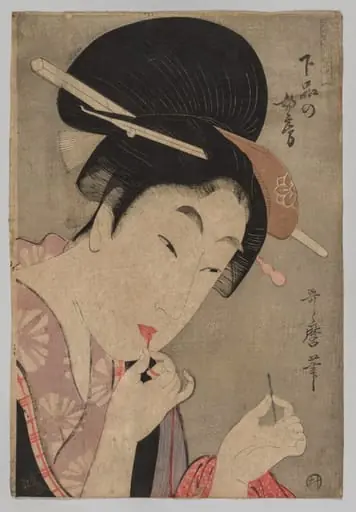 A Wife of the Lower Rank (Gebon no nyōbō), from the series A Guide to Women's Contemporary Styles (Tōsei onna fūzoku tsū)
 Untitled
 Untitled
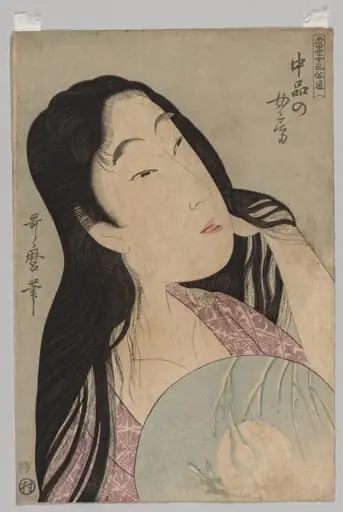 Bust of Woman with Loose Hair Holding Fan
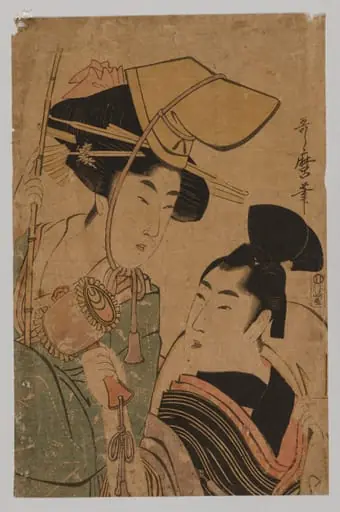 Woman Representing Good Fortune
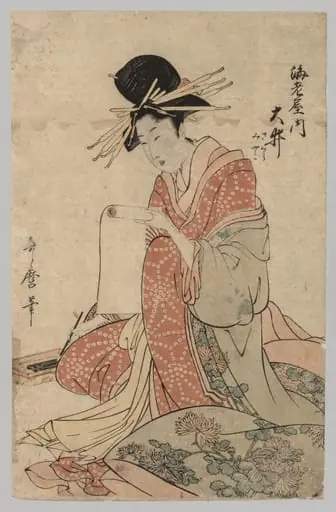 Woman of the Yoshiwara Reading Scroll