Artwork
Untitled
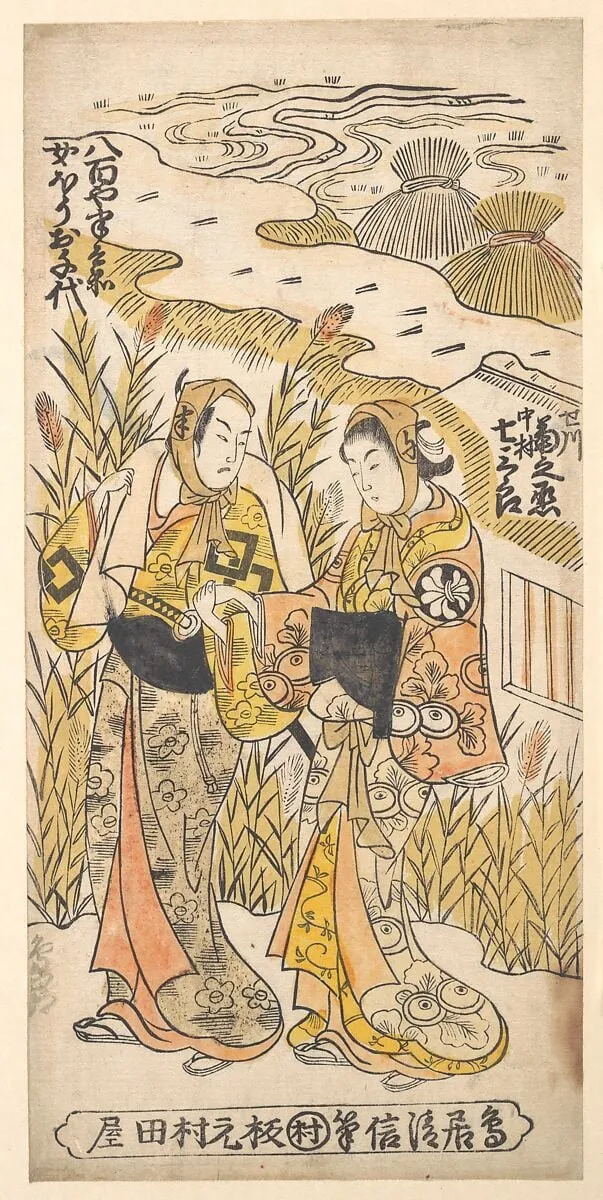
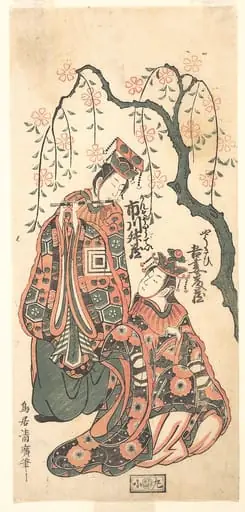
Untitled is an ink print by the Baroque artist Torii Kiyonobu II. It dates from 1735 and is held in the collection of the Metropolitan Museum of Art.
About this work
Overview
Created during the Edo period, it belongs to a body of work centered on theatrical imagery, executed in the hosoban format.
This woodblock print, dated 1735, is attributed to Torii Kiyonobu II, a principal figure in the Torii school of ukiyo-e. Created during the Edo period, it belongs to a body of work centered on theatrical imagery, executed in the hosoban format. The print combines ink and color on paper, reflecting the technical conventions of its time and the school’s dominance in depicting kabuki performers and related scenes.
Subject & Meaning
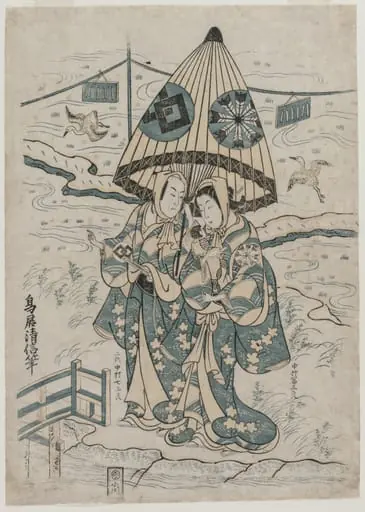
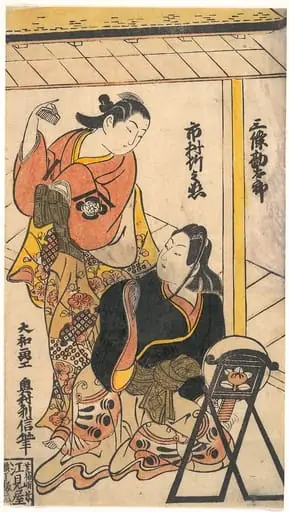
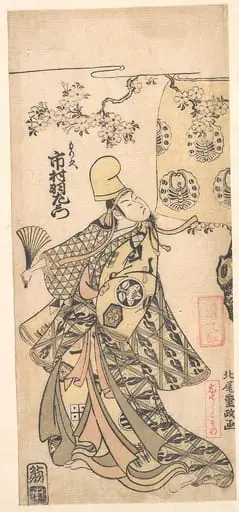
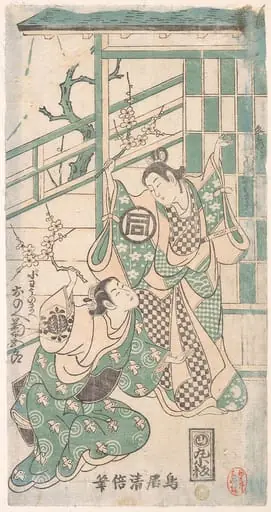
Two figures stand in a landscape of tall grass before a modest structure, each holding a fan and wearing headscarves. Their robes bear subtle floral and leaf motifs, suggesting stylized costumes rather than everyday attire. The setting evokes a theatrical backdrop, possibly referencing a scene from a kabuki play. The calm, composed posture and shared gestures imply a narrative moment, consistent with the Torii school’s emphasis on capturing dramatic stillness in performance.
Technique & Style
The print employs traditional woodblock methods, with muted tones of yellow, brown, and soft gray dominating the palette. Fine lines define the figures and grass, while the water’s ripples are rendered with delicate, parallel strokes. The composition balances horizontal elements—grass, water, hills—with vertical figures, creating a quiet rhythm. Unlike Baroque drama, the style is restrained, prioritizing clarity and decorative harmony over emotional intensity.
History & Provenance
Torii Kiyonobu II was active between the mid-1720s and 1760, producing hundreds of actor prints for multiple publishers. This work emerged during the height of his career, when the Torii school was the leading force in ukiyo-e theater imagery. While specific ownership history is unrecorded, its format and style align with prints distributed widely in Edo’s urban markets, catering to popular audiences drawn to kabuki culture.
Context
In early 18th-century Edo, kabuki theater flourished as a public spectacle, and ukiyo-e prints served as both advertising and collectible memorabilia. The Torii school, traditionally linked to theater signage and actor portraits, adapted its style to meet demand. This print reflects that commercial-artistic ecosystem, where visual formulas were refined over generations to convey recognizable character types and dramatic moments to a broad audience.
Legacy
Kiyonobu II’s output helped standardize the visual language of actor prints, influencing later ukiyo-e artists. Though his work was less experimental than contemporaries, its consistency and clarity ensured its endurance in collections. This print exemplifies the Torii school’s role in anchoring ukiyo-e to theatrical tradition, preserving a visual record of Edo’s performing arts long after the performances ended.
Artist & collection
Artist
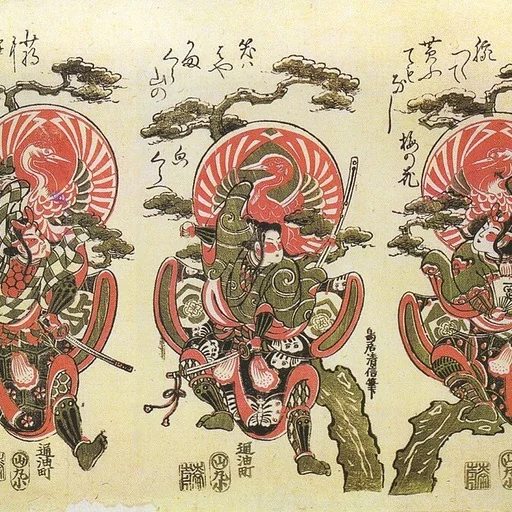
Torii Kiyonobu II (Japanese: 二代目 鳥居 清信 Nidaime Torii Kiyonobu; active 1725–1760) was a Japanese ukiyo-e artist.

 Untitled
 Untitled
 Untitled
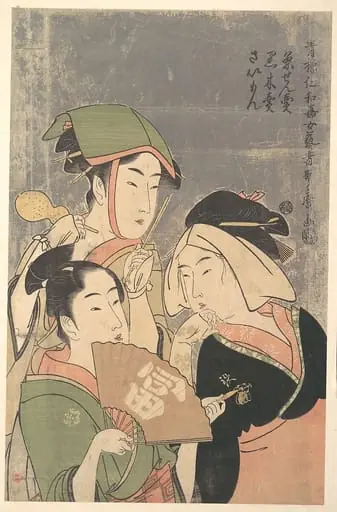 喜多川歌麿画 「青楼仁和嘉女芸者 茶せん売 黒木売 さいもん」|Three Niwaka Performers, Chasenuri, Kurokiri, and Saimon (Tea-whisk Seller, Firewood Seller, Shrine Festival Perfomer), from the “Geisha of the Yoshiwara Niwaka Festival” (Seiro Niwaka Onna Geisha)
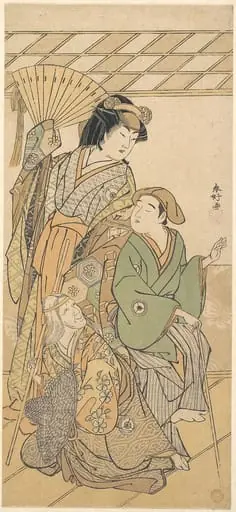
 Untitled
 Untitled
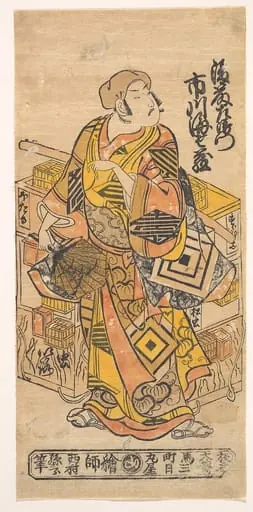 Untitled
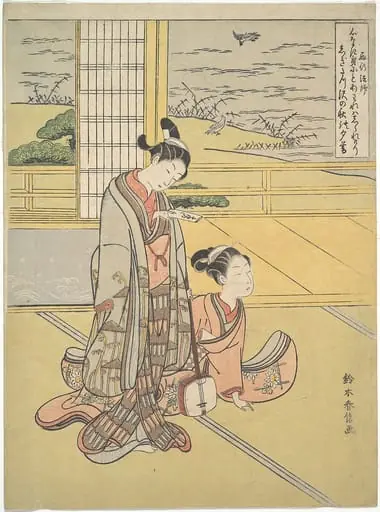 鈴木春信画 見立三夕 「西行法師」|A Young Man and Woman with a Shamisen; Monk Saigyō, from a series alluding to the Three Evening Poems (Sanseki waka)
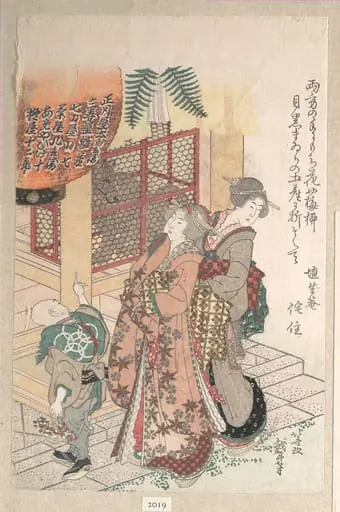 初詣|Young Women Visiting a Shinto Shrine
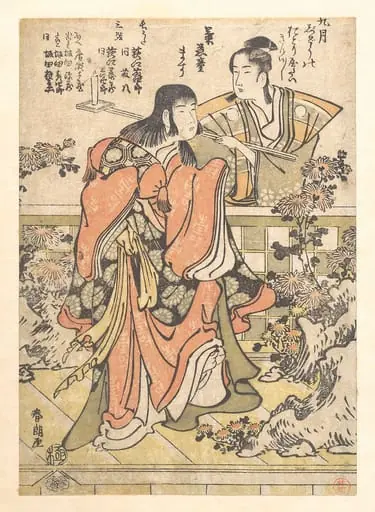 Untitled
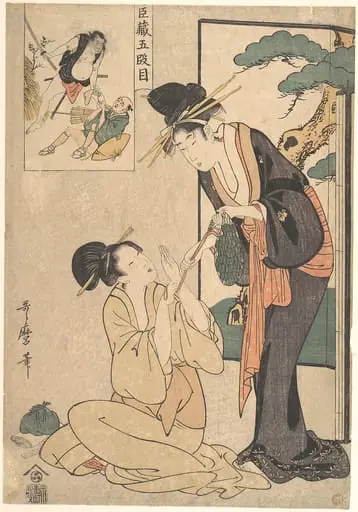 忠臣蔵五段目|A Woman Snatching a Bag of Sweetmeats from Her MotHer
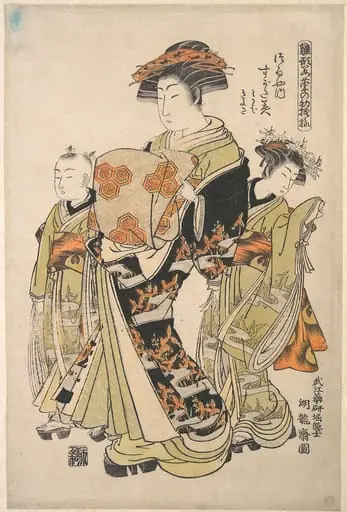 『雛形若菜の初模様 つるや内 すがたみ』|The Courtesan Sugatami of the Tsuruya Brothel, from the series “A Pat-tern Book of the Year’s First Designs, Fresh as Spring Herbs” (“Hinagata wakana no hatsu moyō”)