Artwork
『雛形若菜の初模様 つるや内 すがたみ』|The Courtesan Sugatami of the Tsuruya Brothel, from the series “A Pat-tern Book of the Year’s First Designs, Fresh as Spring Herbs” (“Hinagata wakana no hatsu moyō”)
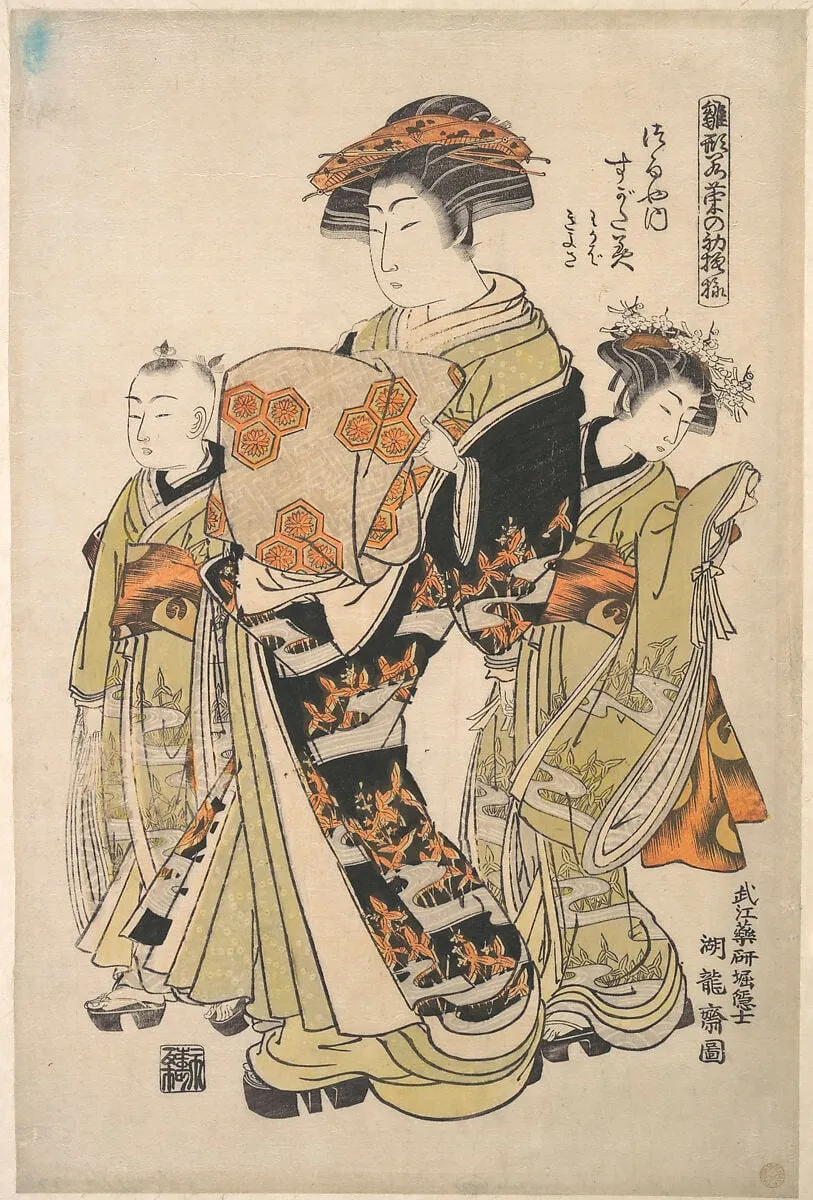
『雛形若菜の初模様 つるや内 すがたみ』|The Courtesan Sugatami of the Tsuruya Brothel, from the series “A Pat-tern Book of the Year’s First Designs, Fresh as Spring Herbs” (“Hinagata wakana no hatsu moyō”) is an ink print by the Romanticist artist Isoda Koryūsai. It dates from 1778 and is held in the collection of the Metropolitan Museum of Art.
About this work
Overview
Isoda Koryūsai’s woodblock print, dated 1778, portrays the courtesan Sugatami of the Tsuruya brothel. Executed in ink and color on paper, the image forms part of the series “Hinagata wakana no hatsu moyō,” a pattern book showcasing new designs for the year. The work is currently in the collection of the Metropolitan Museum of Art.
Subject & Meaning
The central figure is Sugatami, distinguished by a tall black hat and a kimono patterned with orange chrysanthemums. She holds a folding fan and stands between a young boy and a younger woman, both dressed in flowing robes of simpler decoration. The composition emphasizes the attire and posture of each figure, reflecting the fashion and social roles within Edo‑period pleasure districts.
Technique & Style
Printed using traditional ukiyo‑e woodblock methods, the image combines bold geometric motifs—hexagons and stylized flowers—on the courtesan’s garment with softer, flowing lines on the companions’ robes. Careful hand‑applied brushwork adds subtle shading, while the plain background directs attention to the vivid colors and patterns of the clothing.
History & Provenance
Created in 1778, the print was part of a commercial pattern book intended for designers and patrons of the time. It entered the Metropolitan Museum of Art’s collection through acquisition in the late twentieth century, where it remains documented as an example of Koryūsai’s work for the licensed pleasure quarters.
Context
The series “Hinagata wakana no hatsu moyō” functioned as a visual catalogue of new textile designs, a common practice in late‑Edo Japan where courtesans often set fashion trends. Koryūsai, a prolific ukiyo‑e artist, produced numerous images of teahouse and brothel figures, contributing to the visual culture that documented contemporary dress and entertainment venues.
Artist & collection
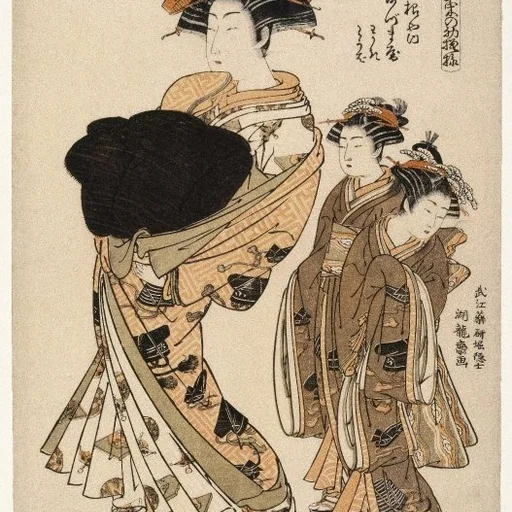

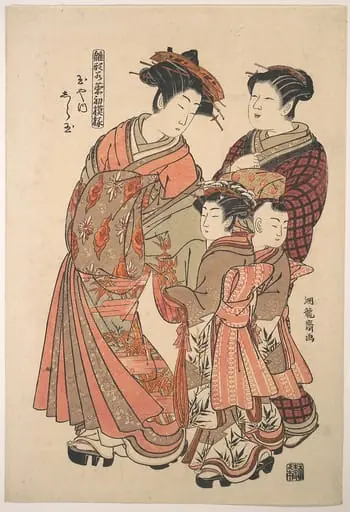 『雛形若菜初模様 玉や内 しら玉』|The Courtesan Shiratama of the Tamaya Brothel, from the series “A Pat-tern Book of the Year’s First Designs, Fresh as Spring Herbs” (“Hinagata wakana hatsu moyō”)
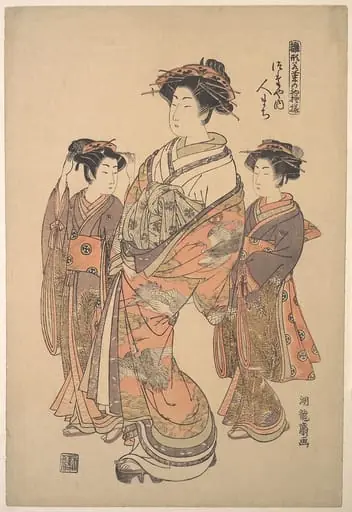 『雛形若菜の初模様 つたや内 人まち』|The Courtesan Hitomachi of the Tsutaya Brothel, from the series “A Pat-tern Book of the Year’s First Designs, Fresh as Spring Herbs” (“Hinagata wakana no hatsu moyō”)
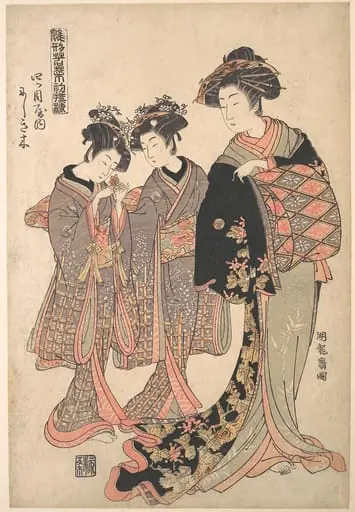 『雛形若菜初模様 四ツ目屋内 にしき木』|The Courtesan Nishikigi of the Yotsumeya Brothel, from the series “A Pattern Book of the Year’s First Designs, Fresh as Spring Herbs” (“Hinagata wakana hatsu moyō”)
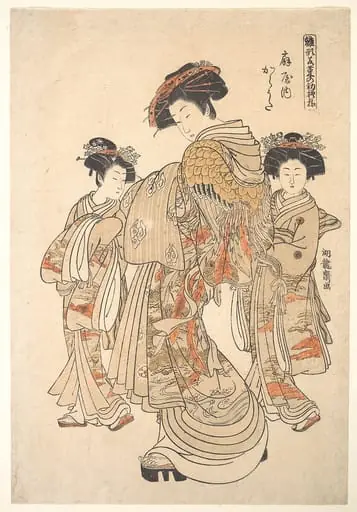 『雛形若菜の初模様 扇屋内 からうた』|The Courtesan Karauta of the Ōgiya Brothel, from the series “A Pattern Book of the Year’s First Designs, Fresh as Spring Herbs” (“Hinagata wakana no hatsu moyō”)
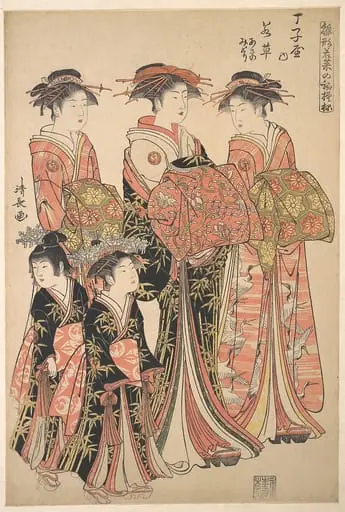 鳥居清長画 「雛形若菜の初模様 丁子屋の若草・ あさの・みどり」|The Courtesan Wakakusa of the Chōjiya Brothel, and Attendants Asano and Midori, from the series “A Pattern Book of the Year’s First Designs, Fresh as Spring Herbs” (Hinagata wakana no hatsumoyō)
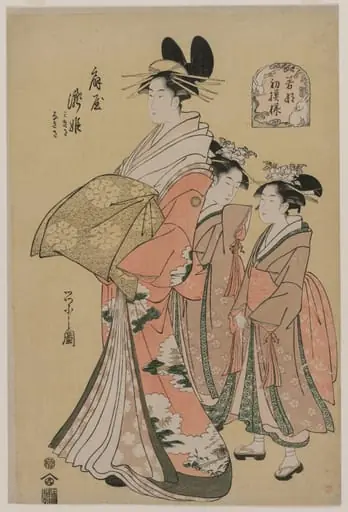 The Courtesan Takihime and Attendants (from the series New Patterns of Young Greens)
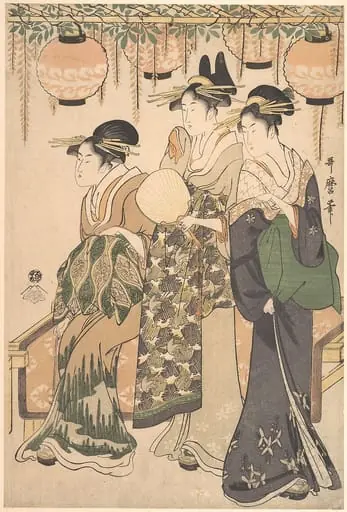 藤棚下の遊女たち|Courtesans Beneath a Wisteria Arbor (Fuji dana shita no yūjo tachi)
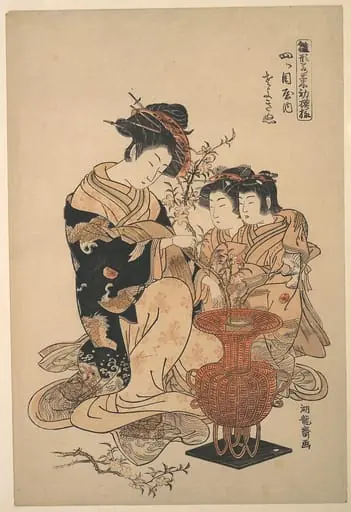 礒田湖竜斎画「雛形若菜初模様 四ツ目屋内 さよぎぬ」|The Courtesan Sayoginu of the Yotsumeya Brothel, from the series “A Pattern Book of the Year’s First Designs, Fresh as Spring Herbs” (Hinagata wakana hatsu moyō)
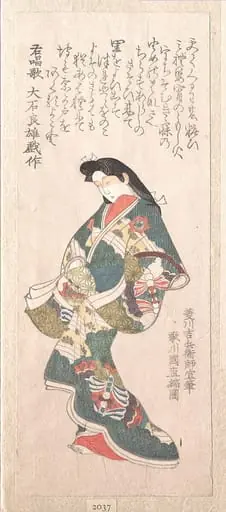 『春雨集』 摺物帖歌川国直画 元禄美人|Spring Rain Collection (Harusame shū), vol. 1: Genroku-style Courtesan