Artwork
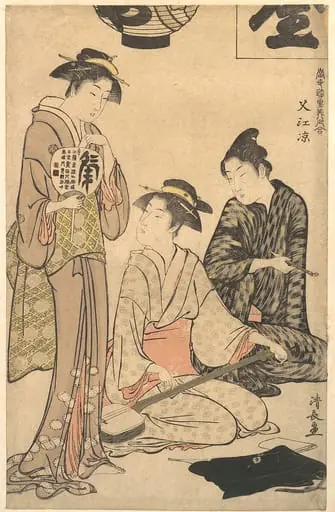
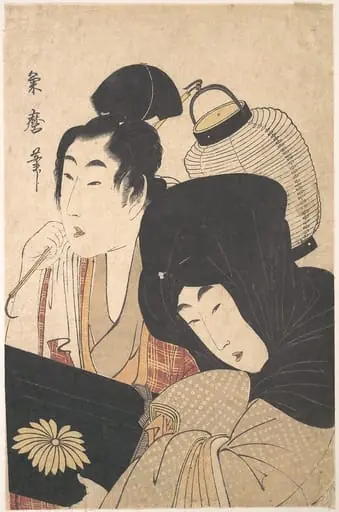
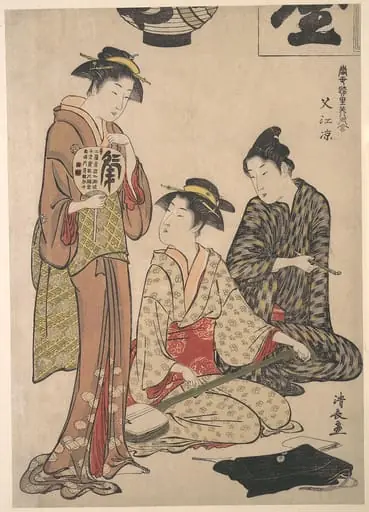
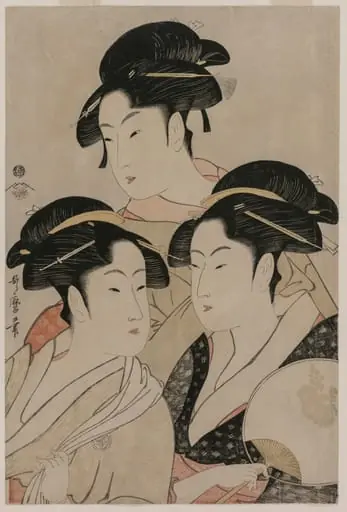
喜多川歌麿画 「青楼仁和嘉女芸者 茶せん売 黒木売 さいもん」|Three Niwaka Performers, Chasenuri, Kurokiri, and Saimon (Tea-whisk Seller, Firewood Seller, Shrine Festival Perfomer), from the “Geisha of the Yoshiwara Niwaka Festival” (Seiro Niwaka Onna Geisha)
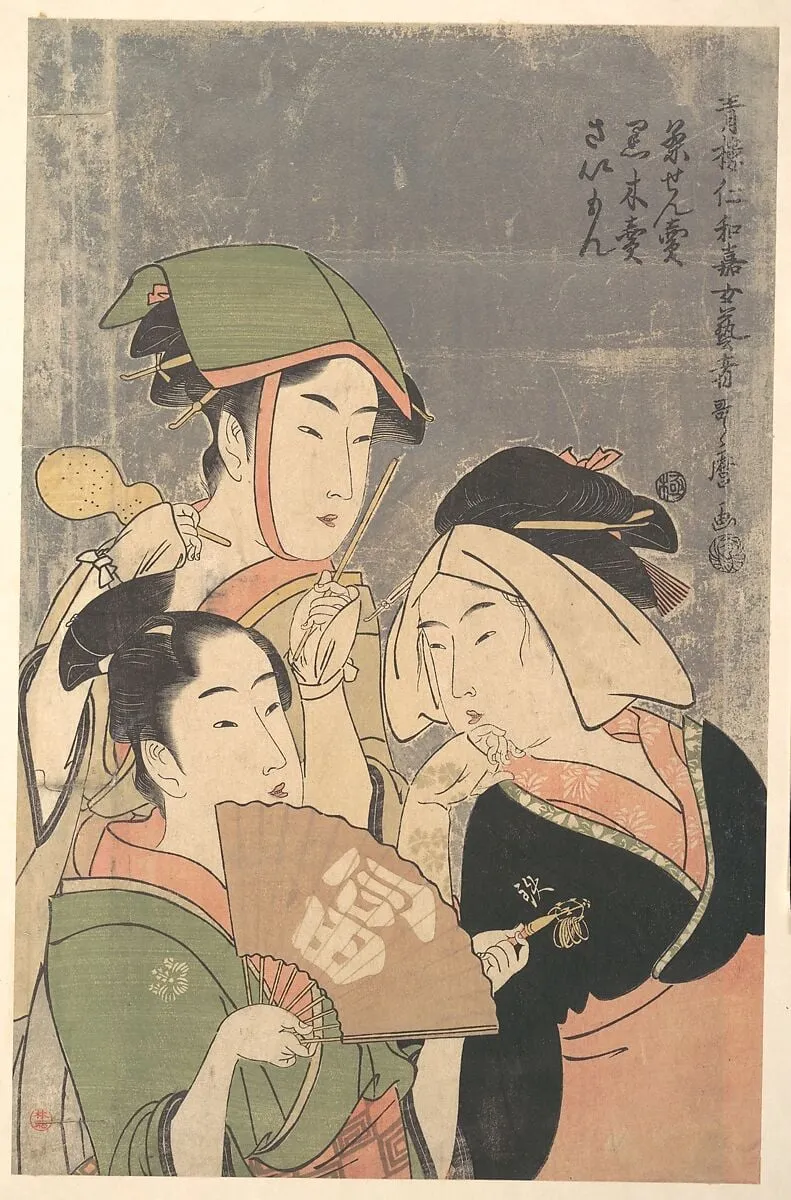
喜多川歌麿画 「青楼仁和嘉女芸者 茶せん売 黒木売 さいもん」|Three Niwaka Performers, Chasenuri, Kurokiri, and Saimon (Tea-whisk Seller, Firewood Seller, Shrine Festival Perfomer), from the “Geisha of the Yoshiwara Niwaka Festival” (Seiro Niwaka Onna Geisha) is an ink print by the Romanticist artist Kitagawa Utamaro. It dates from 1794 and is held in the collection of the Metropolitan Museum of Art. Created around 1794, this woodblock print by Kitagawa Utamō presents three women from the Yoshiwara Niwaka Festival.
About this work
Overview
Created around 1794, this woodblock print by Kitagawa Utamō presents three women from the Yoshiwara Niwaka Festival. Rendered in ink and color on paper, the composition captures each figure holding a fan, their expressions composed while subtle gestures hint at individual occupations.
Subject & Meaning
The trio represents a tea‑whisk seller, a firewood vendor, and a shrine‑festival performer. Though their faces are serene, the slight adjustments of hair, the grip on a teacup, and the bundled wood suggest brief, everyday activities within the bustling pleasure district.
Technique & Style
Utamō employs fine line work and a restrained palette of muted hues, characteristic of his late Edo period prints. The delicate delineation of fabric and the soft shading of skin create a sense of stillness, as if the scene were paused for a momentary glimpse.
History & Provenance
The image belongs to a series depicting performers associated with the Yoshiwara Niwaka Festival, a seasonal celebration where geisha and actors entertained patrons. The series circulated among ukiyo‑e collectors in the late eighteenth century, reflecting contemporary interest in urban leisure scenes.
Context
During the 1790s, Yoshiwara was the epicenter of licensed entertainment in Edo, and festivals such as Niwaka offered opportunities for performers to showcase specialized roles. Utamō’s focus on ordinary tasks rather than theatrical spectacle aligns with a broader ukiyo‑e trend toward intimate, genre‑type subjects.
Artist & collection


 Untitled
 Untitled
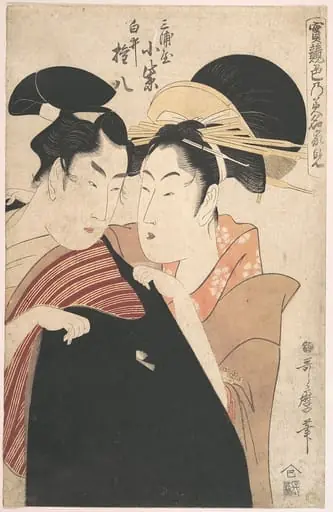 実競色乃美名家見 三浦屋小紫 白井権八|The Lovers Miura-ya Komurasaki and Shirai Gonpachi.
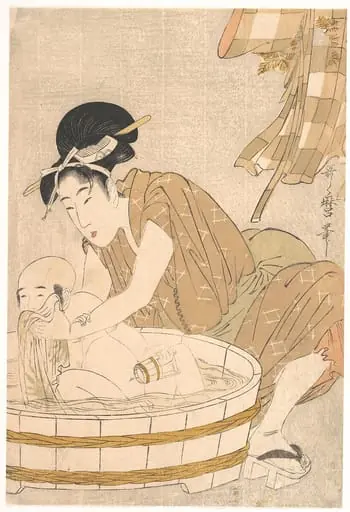 行水|Bathtime (Gyōzui)
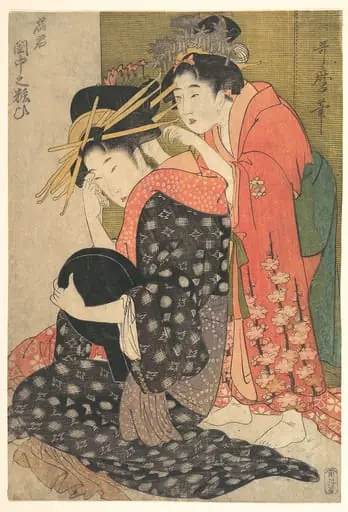 名君 閨中の粧ひ|The Oiran Yoso-oi Seated at Her Toilet
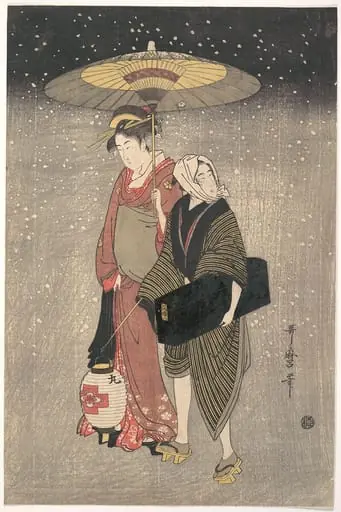 Untitled
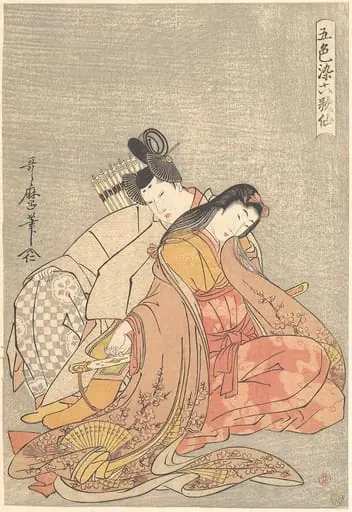 『五色染六歌仙』 在原業平と小野小町|“The Poet Ariwara no Narihira (825–880) and Ono no Komachi,” from the series Five Colors of Love for the Six Poetic Immortals (Goshiki-zome rokkasen)
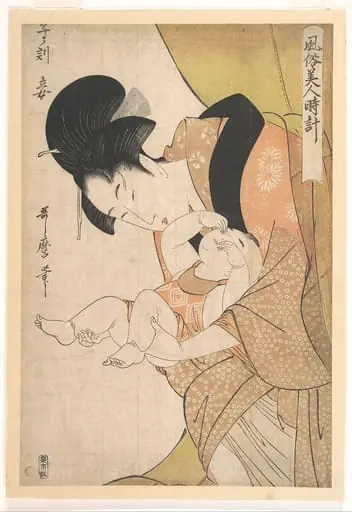 風俗美人時計 子ノ刻 妾|Midnight: Mother and Sleepy Child