Artwork
Flautist from The Cave Door of Spring
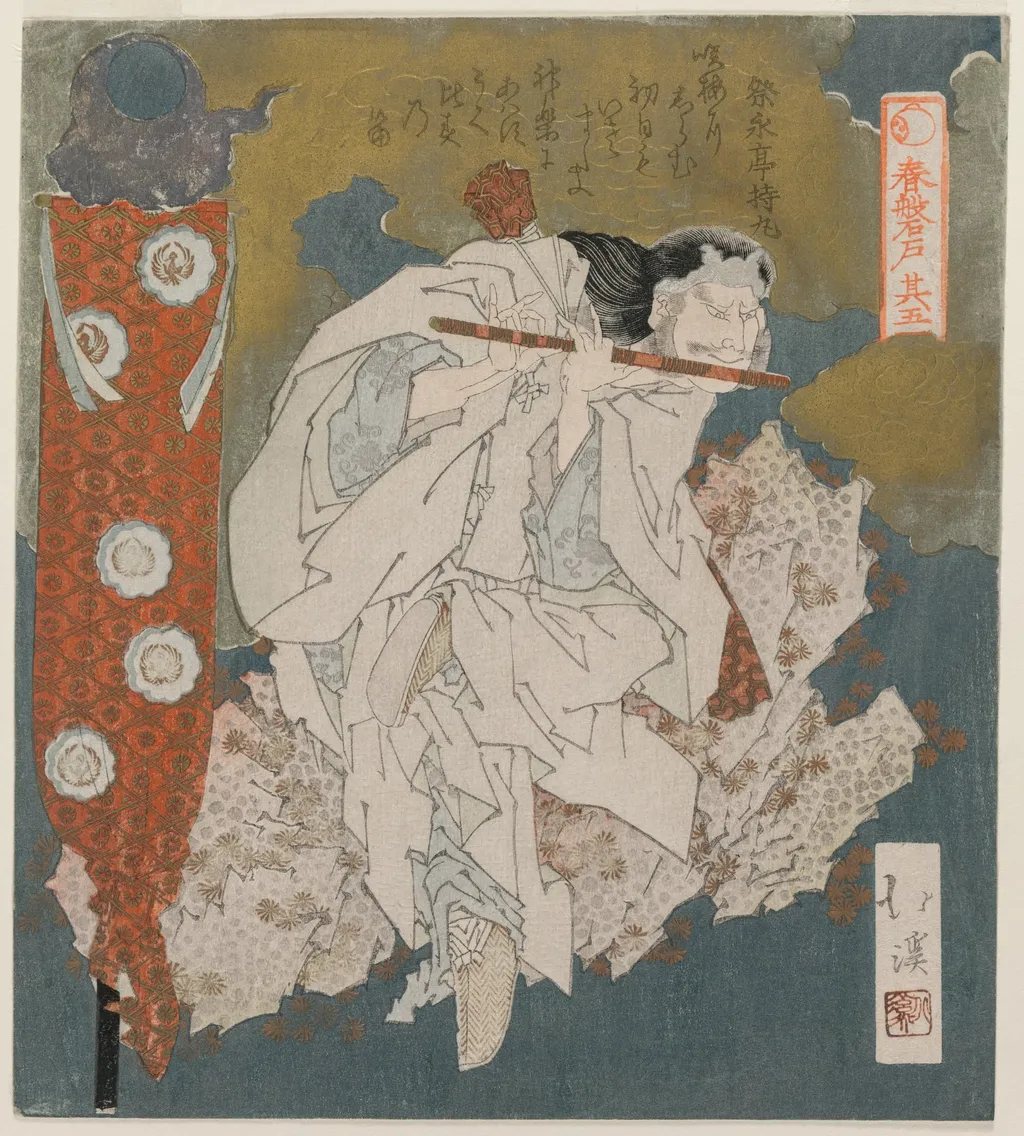
Flautist from The Cave Door of Spring is a print by the Romanticist artist Totoya Hokkei. It dates from 1825 and is held in the collection of the Cleveland Museum of Art.
About this work
Overview
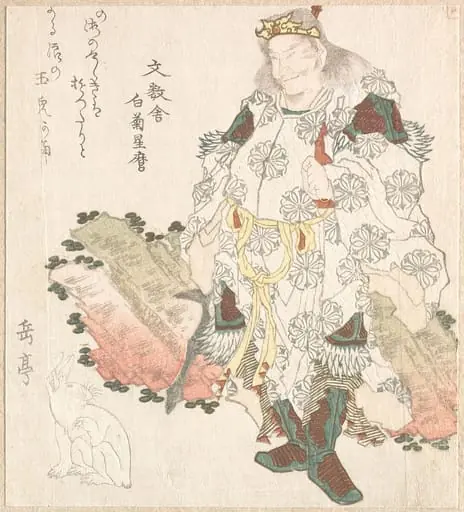
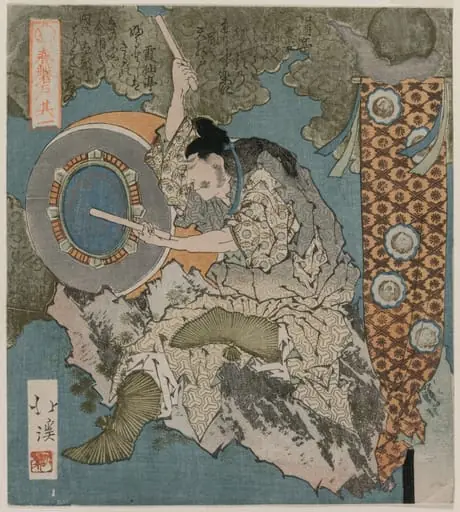
Flautist from The Cave Door of Spring is a surimono print, one of five works inspired by the Japanese legend of Amaterasu, the Shinto Supreme Sun Goddess. The image depicts a flautist standing before a cave entrance, referencing a pivotal moment in the myth.
Subject & Meaning
The print illustrates an attempt to lure Amaterasu out of her cave after she retreated in offense, plunging the world into darkness. The flautist represents one of the failed attempts to entice her back, preceding the successful use of a mirror.
Technique & Style
The print features a blue evening sky backdrop with embossed, metallic-enhanced clouds (gold, silver, copper), adding depth and luxury to the composition.
History & Provenance
Part of a set of five surimono prints, the work's specific creation date and artist are not provided in the given context, though it is associated with The Cleveland Museum of Art's collection.
Context
Surimono prints like this were typically produced in small quantities for special occasions or as gifts, suggesting this piece may have been created for a particular event or patron.
Legacy
As part of a set inspired by a foundational Japanese myth, the print contributes to the artistic and cultural preservation of Amaterasu's legend, reflecting the enduring influence of Shinto mythology in Japanese art.
Artist & collection
Artist
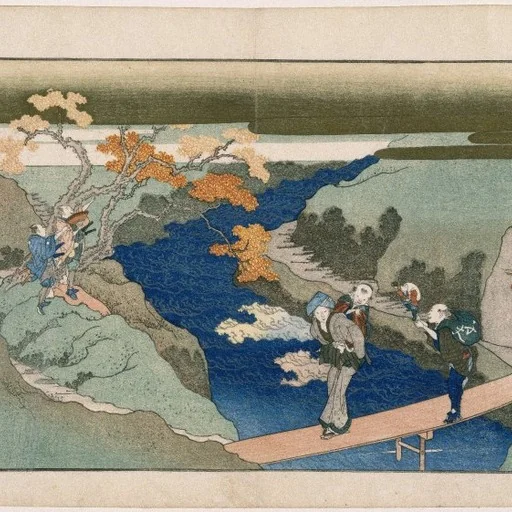
Totoya Hokkei (魚屋 北渓; 1780–1850) was a Japanese artist best known for his prints in the ukiyo-e style.

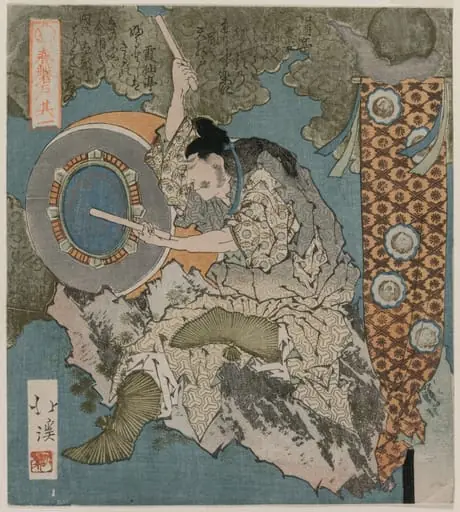 Drummer from The Cave Door of Spring
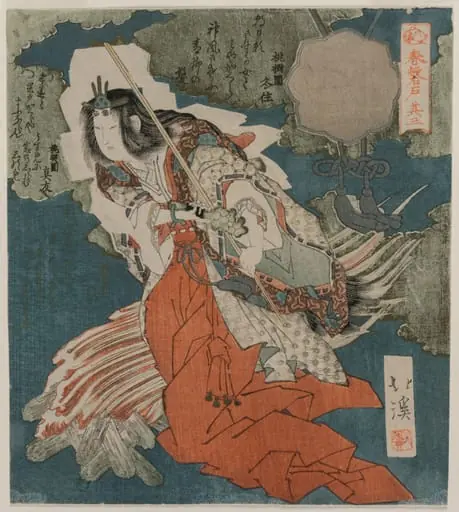 Uzume no Mikoto from The Cave Door of Spring
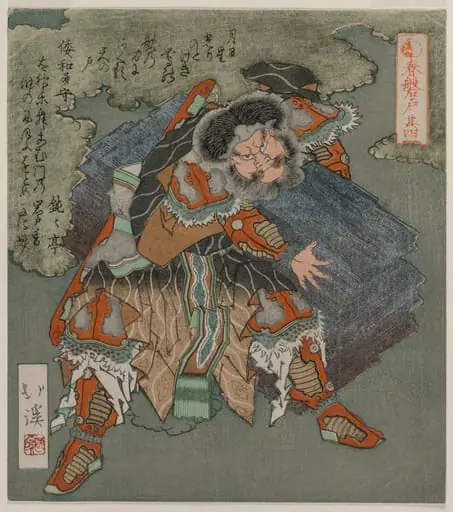 Ama no Tajikara no Mikoto from The Cave Door of Spring
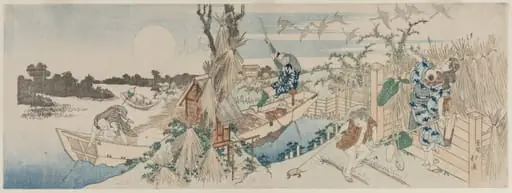 Landscape with Ferry Boat, Geese and Full Moon
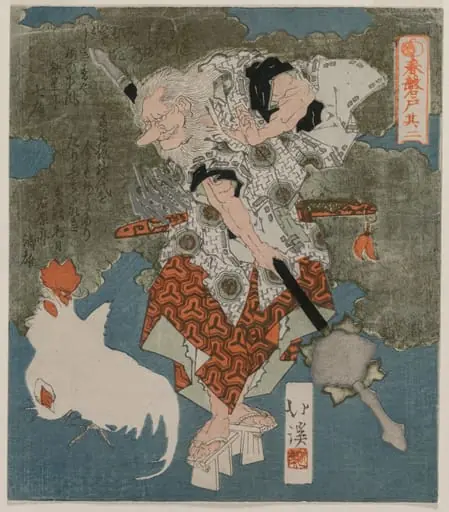 Sarutahiko from The Cave Door of Spring
 The Cave Door of Spring
 A Picture by Hishikawa Moronobu: Woman with a Set of Poem Cards