Artwork
The Cave Door of Spring
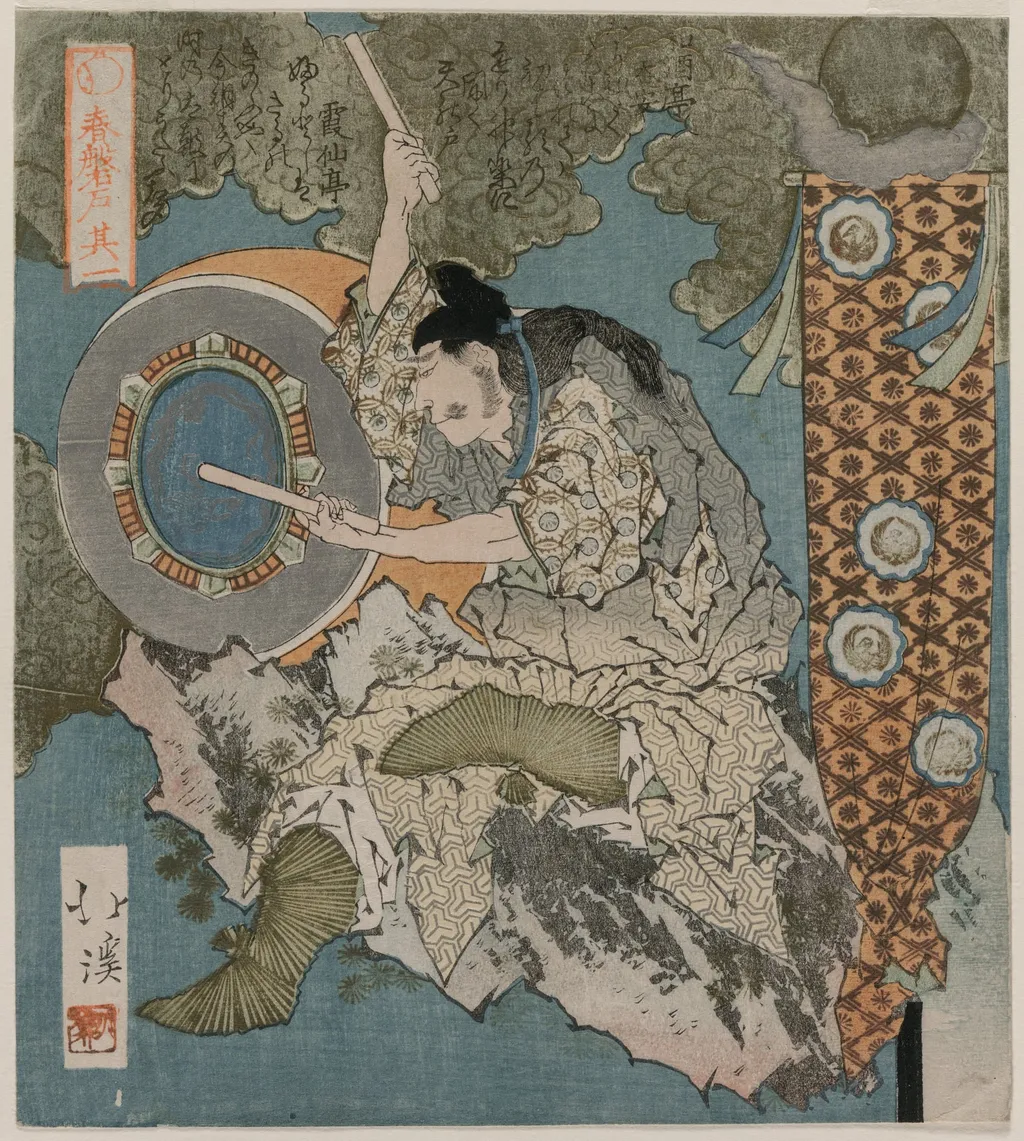
The Cave Door of Spring is a print by the Romanticist artist Totoya Hokkei. It dates from 1825 and is held in the collection of the Cleveland Museum of Art.
About this work
The details in the painting show the moment Amaterasu is lured out.
The painting shows a scene with a cave and a woman.
It's based on a story about the deity Amaterasu.
She was offended and hid in a cave, causing darkness.
The story is from Japanese mythology.
The artist used this myth to create a unique scene.
The details in the painting show the moment Amaterasu is lured out.
You can learn more about this style by looking at the work of artist: Totoya Hokkei (Japanese, 1780–1850)
Overview
The Cave Door of Spring is a print composition rooted in Japanese mythology, specifically the legend of Amaterasu, the sun goddess. The work depicts a pivotal moment in the narrative where Amaterasu, having retreated into a cave in offense, is lured out, restoring light to the world.
Subject & Meaning
The print illustrates the mythological tale of Amaterasu's emergence from a cave, ending a period of global darkness. This myth, central to Japanese Shinto beliefs, symbolizes the restoration of light and order. The scene focuses on the moment of Amaterasu's curiosity, triggered by a mirror, as she approaches the cave entrance.
Technique & Style
The composition is visually unified by embossed clouds adorned with gold, silver, and copper, enhancing the celestial and mystical themes of the narrative. The style bears resemblance to the works of Totoya Hokkei, suggesting influences from early 19th-century Japanese printmaking.
History & Provenance
Limited information is provided on the specific history and provenance of 'The Cave Door of Spring'. However, its themes and techniques align with Japanese art of the Edo period (1603-1867), particularly the later years, given the comparison to Totoya Hokkei (1780-1850).
Context
Created within the context of Japanese mythology and the artistic traditions of the Edo period, 'The Cave Door of Spring' reflects the cultural significance of Shinto myths in Japanese art. It also highlights the use of mythology as a subject for print compositions during this time.
Legacy
While specific details on the print's legacy are not provided, works inspired by the Amaterasu myth, like 'The Cave Door of Spring', contribute to the enduring presence of Japanese mythology in contemporary art and cultural heritage, influencing both local and international artistic interpretations.
Artist & collection
Artist
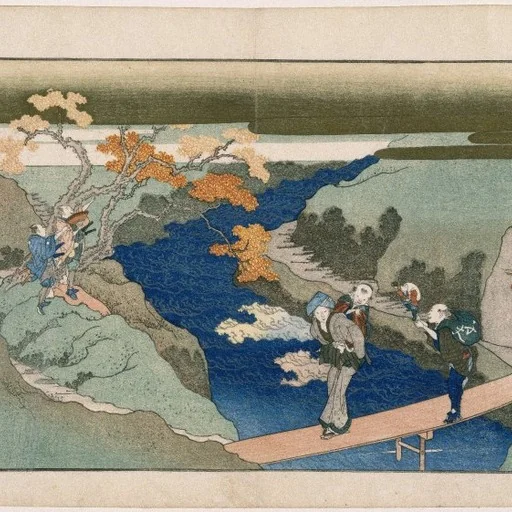
Totoya Hokkei (魚屋 北渓; 1780–1850) was a Japanese artist best known for his prints in the ukiyo-e style.

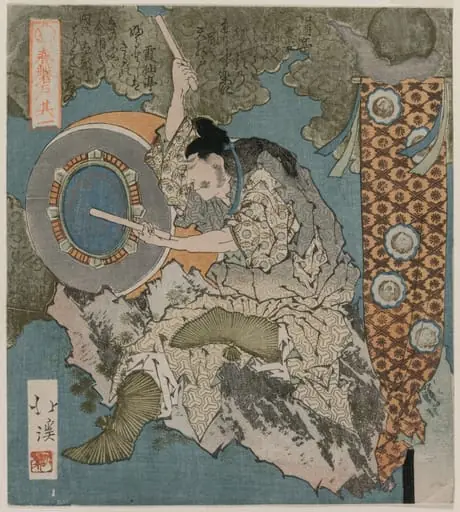 Drummer from The Cave Door of Spring
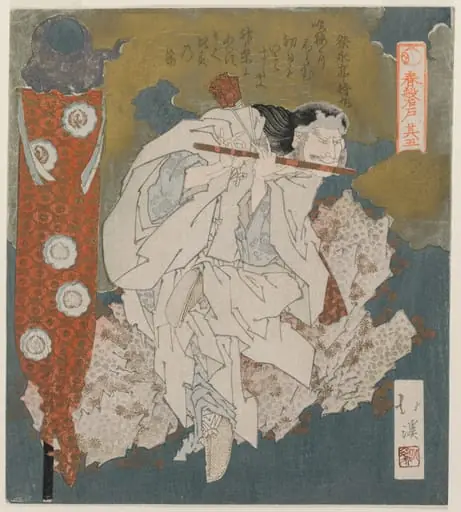 Flautist from The Cave Door of Spring
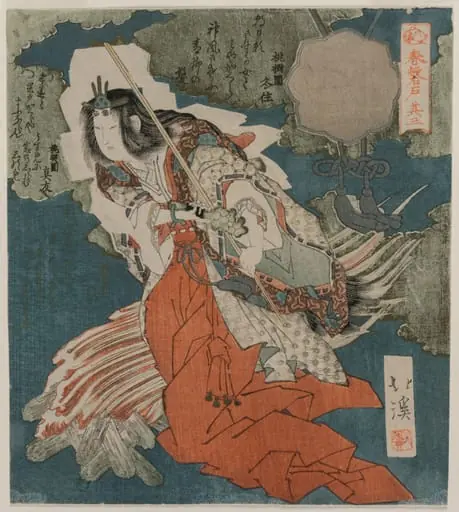 Uzume no Mikoto from The Cave Door of Spring
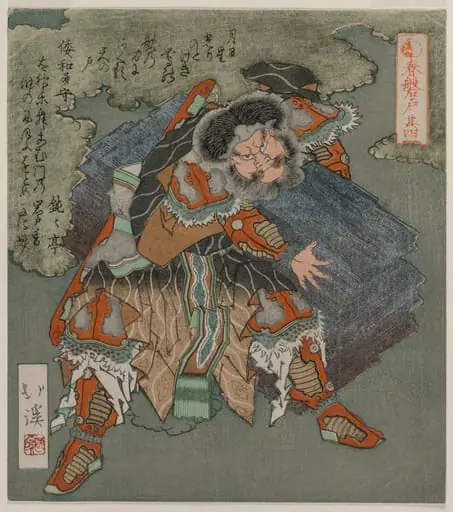 Ama no Tajikara no Mikoto from The Cave Door of Spring
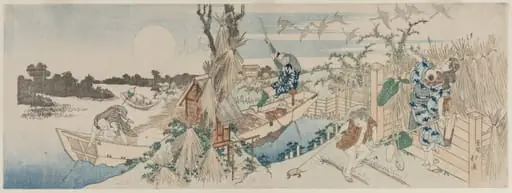 Landscape with Ferry Boat, Geese and Full Moon
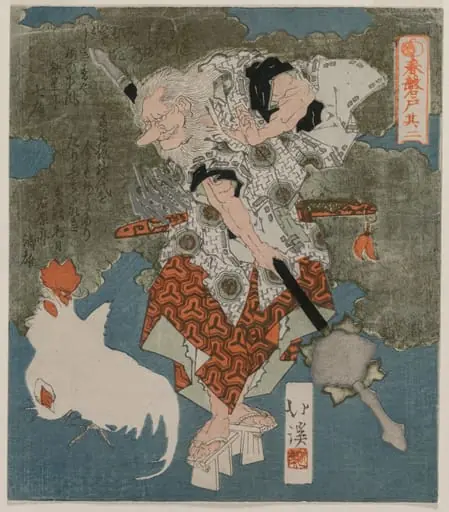 Sarutahiko from The Cave Door of Spring
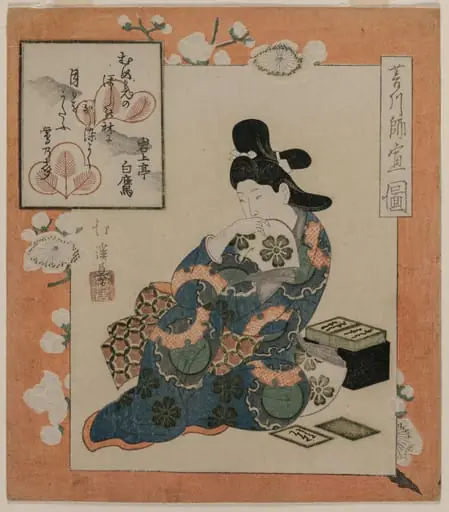 A Picture by Hishikawa Moronobu: Woman with a Set of Poem Cards
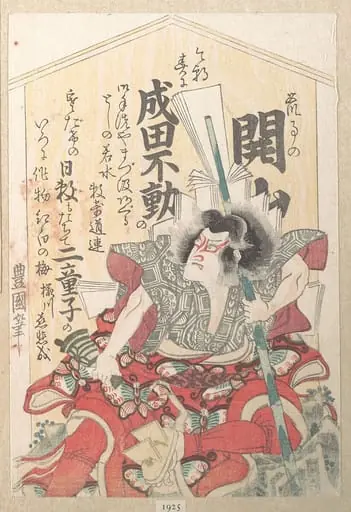 Untitled
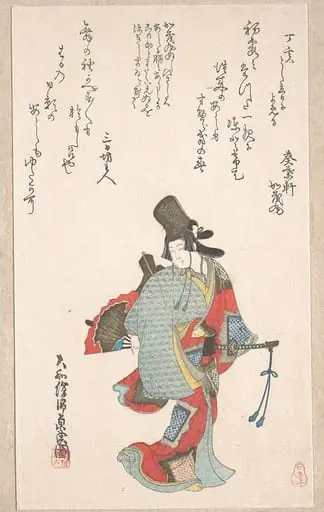 Untitled
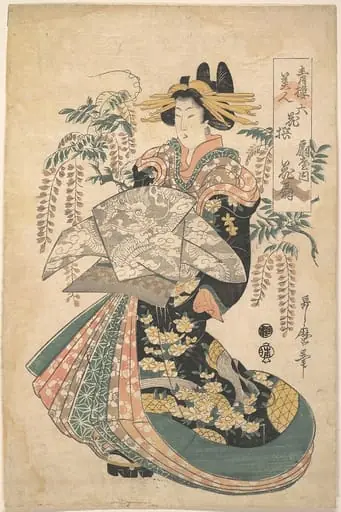 青楼美人 六花撰 扇屋内花扇|A Courtesan with Wisteria on the Background
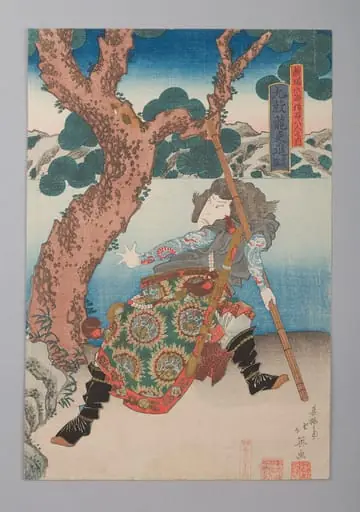 戯場水滸伝百|Three Heroes of the Water Margin Capture the Bandit Queen Ichijōsei, from the series One Hundred Eight Heroes of the Theater Suikoden
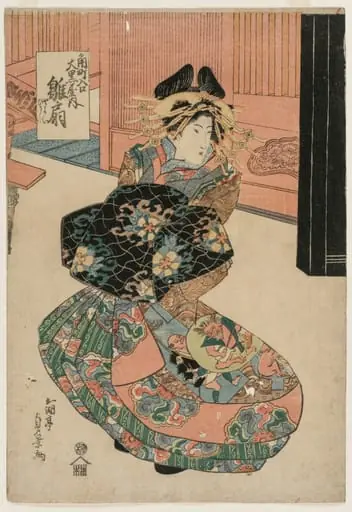 The Courtesan Hinaogi of the Daikokuya at the Entrance of Kadomachi
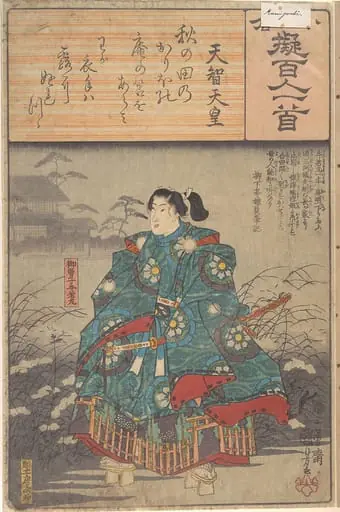 小倉擬百人一首|Album of Eighty-eight Prints from the series Ogura Imitations of One Hundred Poems by One Hundred Poets (Ogura nazorae hyakunin isshu)
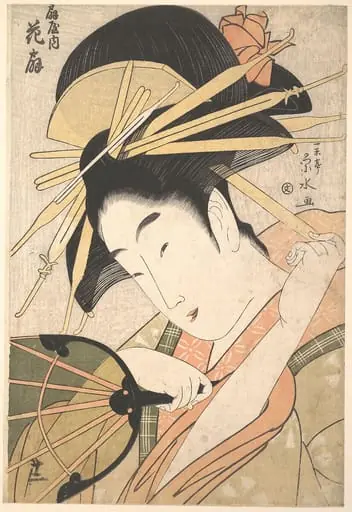 一楽亭栄水画 「扇屋内 花扇」|The Courtesan Hanaōgi of the Ōgiya Brothel (Ōgiya no uchi Hanaōgi)