Artwork
Le Chariot de terre cuite
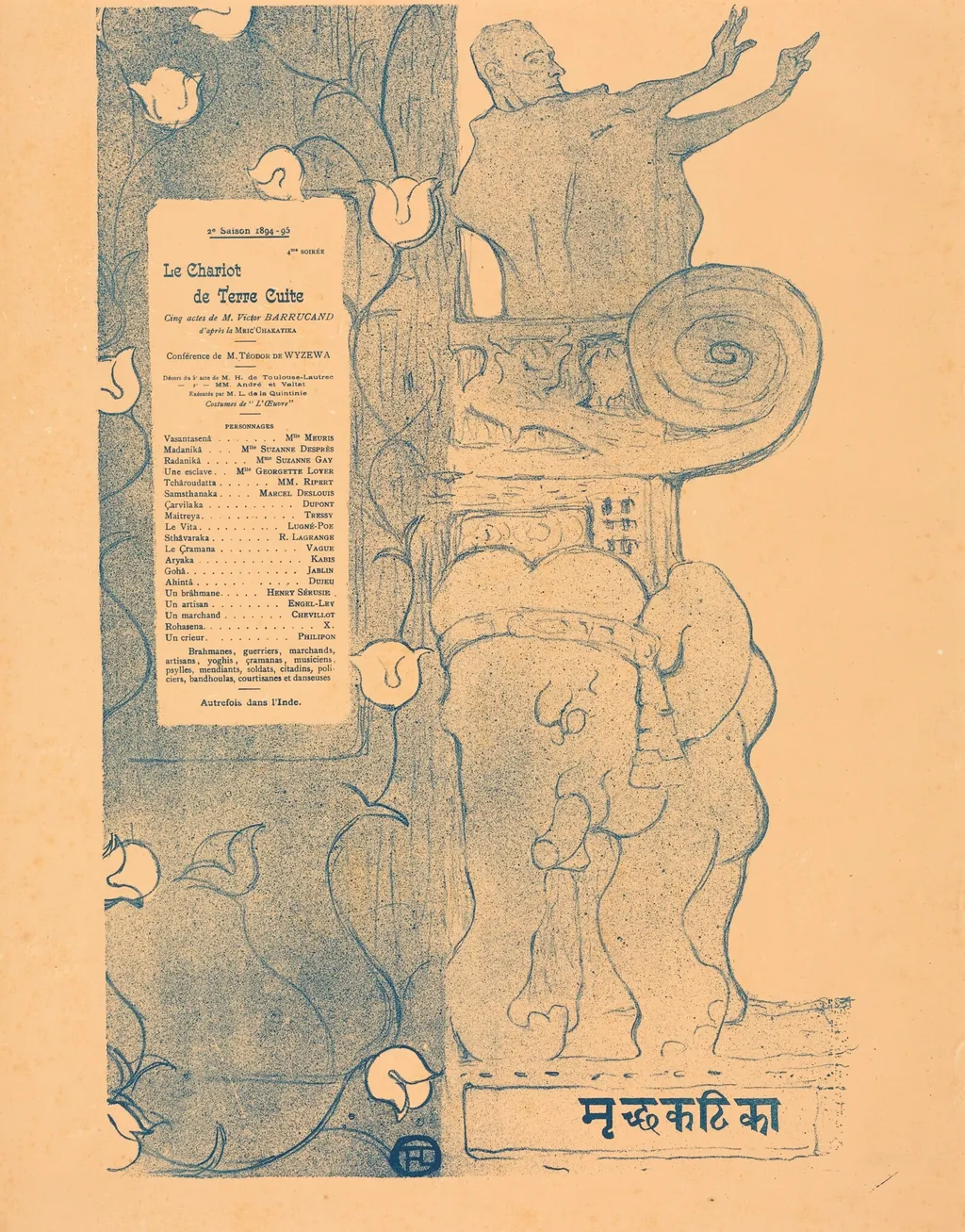
Le Chariot de terre cuite is an ink print by the Impressionist artist Henri de Toulouse-Lautrec. It dates from 1894 and is held in the collection of the National Gallery of Art.
About this work
Overview
This piece exemplifies his shift from canvas to print, where he refined his ability to convey atmosphere with minimal yet precise lines.
Henri de Toulouse-Lautrec produced *Le Chariot de terre cuite* in 1894 as a lithograph on velin paper, using blue and rose inks. The work belongs to his broader body of prints that document Parisian entertainment culture. Though trained in academic painting, Lautrec turned to lithography for its immediacy and capacity to reach wider audiences. This piece exemplifies his shift from canvas to print, where he refined his ability to convey atmosphere with minimal yet precise lines.
Subject & Meaning
The scene depicts an interior space, likely a backstage or private room in a music hall, centered on a solitary figure surrounded by subtle environmental cues. The absence of overt narrative invites interpretation: the figure may be a performer resting, a witness, or an outsider. The muted blue and rose tones suggest intimacy and transience, aligning with Lautrec’s recurring interest in the quiet moments behind spectacle. The title, referencing a ceramic cart, remains enigmatic, possibly alluding to a prop, a metaphor, or a local idiom.
Technique & Style
Lautrec employed lithography to achieve tonal subtlety, layering blue and rose washes over a single stone to create depth without heavy outlines. The velin paper absorbed the ink softly, enhancing the hazy, atmospheric quality. His brushwork is economical—gestural strokes define form and shadow, while negative space suggests volume. The composition avoids theatricality, favoring candid observation. This restrained approach reflects his training in drawing and his rejection of academic idealization in favor of psychological realism.
History & Provenance
Created during a period of intense printmaking activity, *Le Chariot de terre cuite* was likely part of a limited edition circulated among collectors and artists. It was not widely exhibited during Lautrec’s lifetime, and its early ownership remains undocumented. The work entered institutional collections decades later, preserved due to its technical refinement and association with his mature period. No major alterations or restorations are recorded, and the paper remains in stable condition.
Context
In the mid-1890s, Parisian nightlife—cabarets, brothels, and theaters—was a dominant theme in avant-garde art. Lautrec, marginalized by his physical condition and aristocratic isolation, found kinship with performers and patrons on the fringes of society. His prints, including this one, emerged alongside the rise of commercial lithography and the decline of traditional illustration. The work reflects a cultural moment where art blurred with popular entertainment, and the line between observer and participant grew porous.
Legacy
Though less known than his posters for the Moulin Rouge, *Le Chariot de terre cuite* exemplifies Lautrec’s quieter, introspective mode. It influenced later printmakers who sought emotional nuance over spectacle. The piece is studied for its use of color restraint and psychological suggestion, marking a departure from the bombast of his commercial work. Today, it stands as a testament to his ability to transform mundane moments into enduring visual poetry, without sentimentality or exaggeration.
Artist & collection
Artist
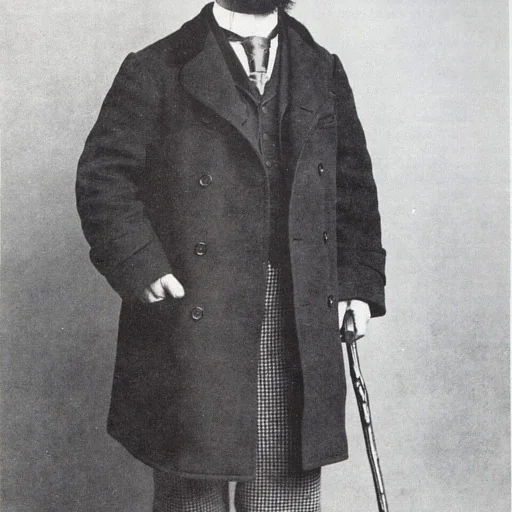
Comte Henri Marie Raymond de Toulouse-Lautrec-Montfa (24 November 1864 – 9 September 1901), known as Toulouse-Lautrec (French: ), was a French painter, printmaker, draughtsman, caricaturist, and illustrator.

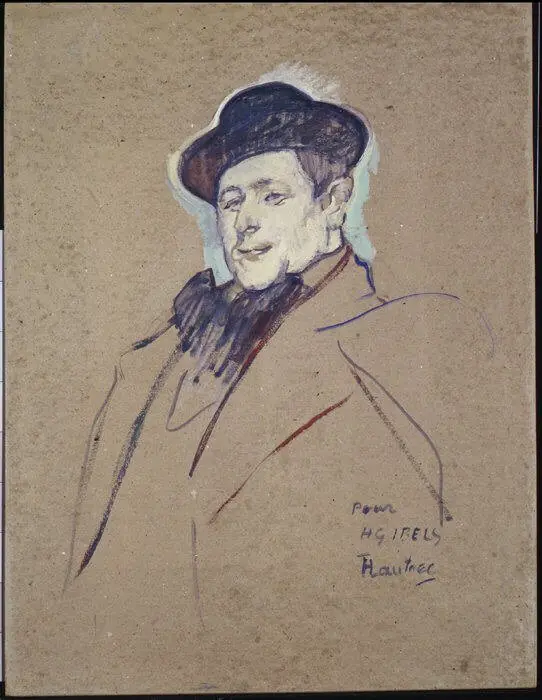
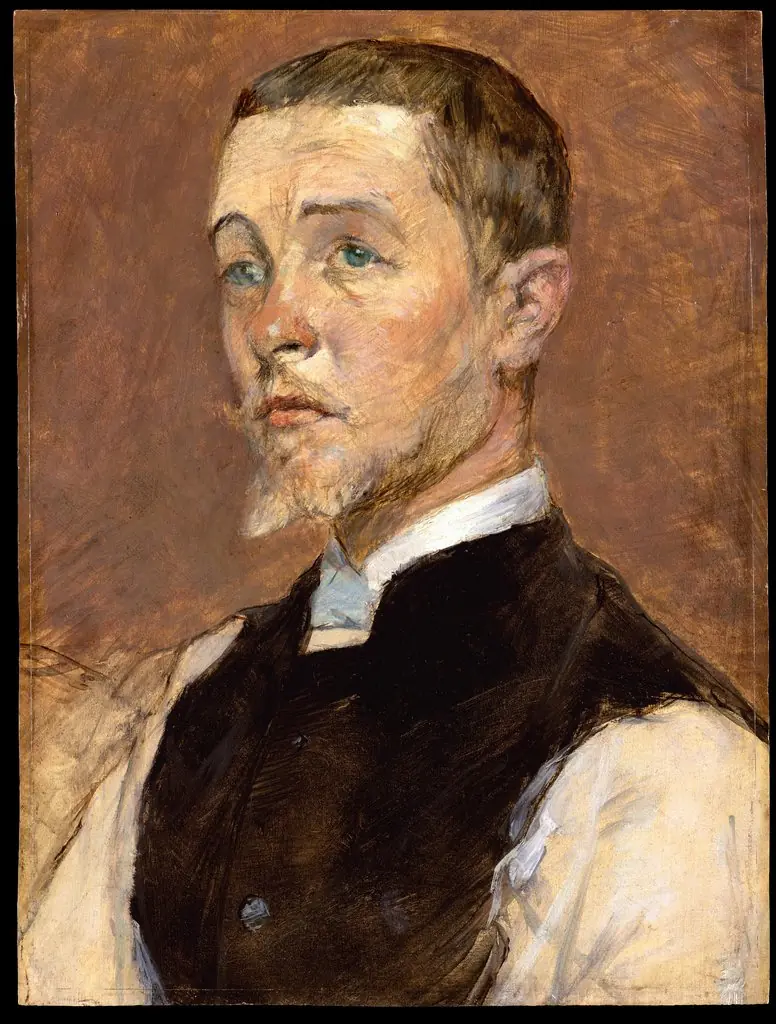
 History of the Corcoran Gallery of Art
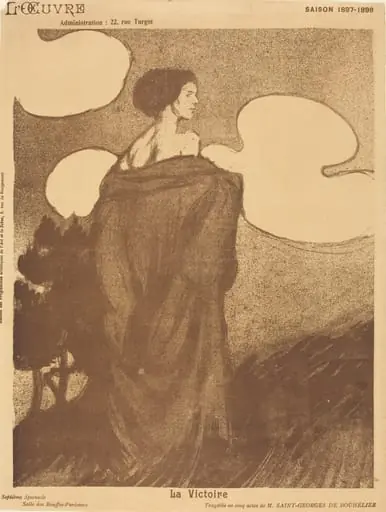 La Victoire
 H Beard Print Collection
![Nib or the Amateur Photographer (Nib ou le photographe-amateur) [right recto], by Henri de Toulouse-Lautrec](https://artifactworldgallery.com/img/henri-de-toulouse-lautrec--nib-or-the-amateur-photographer-nib-ou-le-photographe-amateu--88d19b11b1b1d379-w320.webp) Nib or the Amateur Photographer (Nib ou le photographe-amateur) [right recto]
Nib or the Amateur Photographer (Nib ou le photographe-amateur) [right recto] Une répétition à L'Oeuvre, Program for L'Oasis
 Amiens Cathedral
 Léger relief pour une reliure (Light Relief for a Binding)
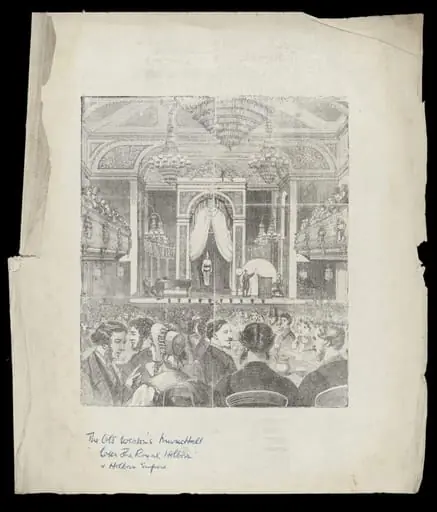 H Beard Print Collection
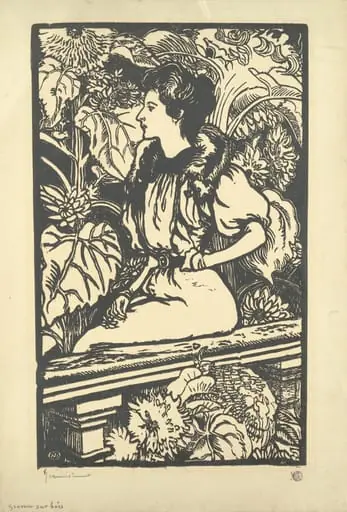 Young Woman Seated in a Garden
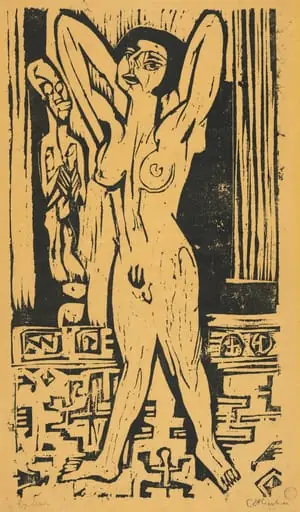 Naked Girl on a Carpet (Nacktes Mädchen auf Teppich)