Artwork
Supper in London (Souper à Londres)
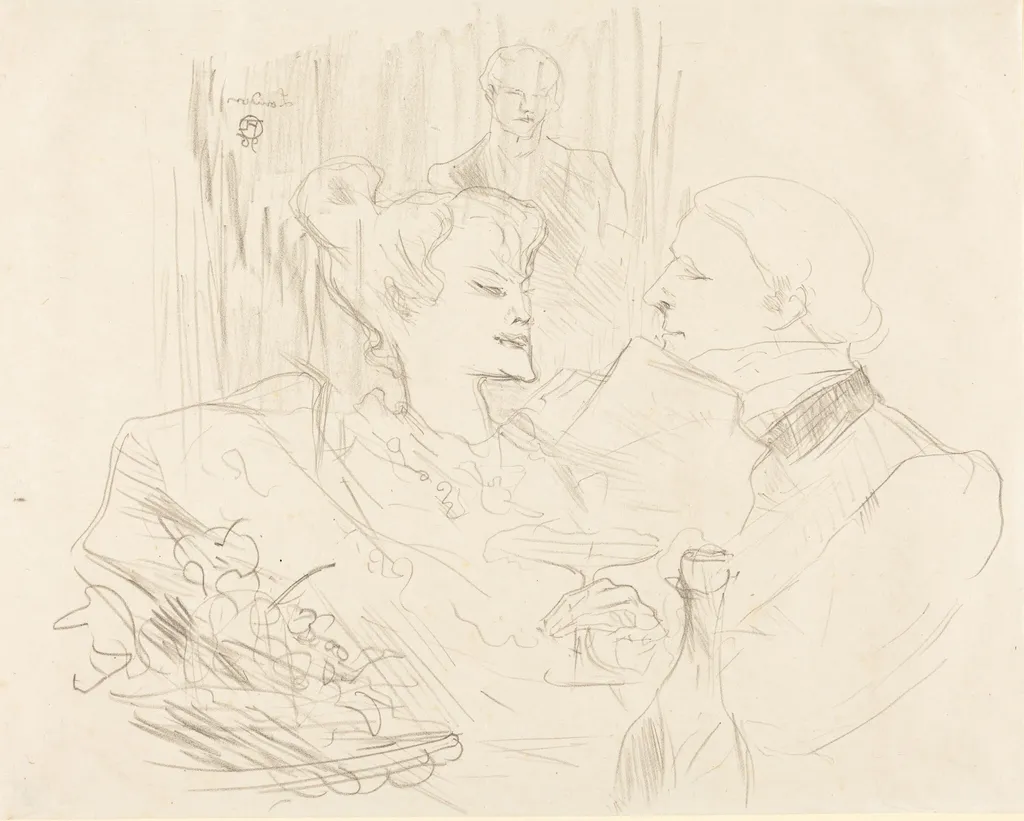
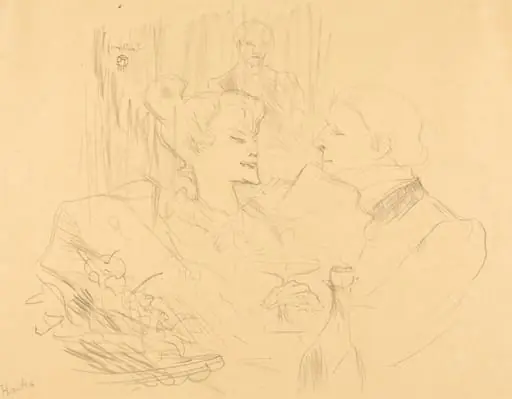
Supper in London (Souper à Londres) is an ink print by the Impressionist artist Henri de Toulouse-Lautrec. It dates from 1896 and is held in the collection of the National Gallery of Art.
About this work
Overview
The medium allowed for direct, spontaneous expression, aligning with Toulouse-Lautrec’s preference for capturing fleeting social interactions.
Created in 1896, *Supper in London* is a lithograph by Henri de Toulouse-Lautrec, executed in black ink. Unlike his more polished posters, this work appears as a rapid, intimate sketch—capturing a moment rather than a finished composition. The medium allowed for direct, spontaneous expression, aligning with Toulouse-Lautrec’s preference for capturing fleeting social interactions. Its unfinished quality reflects the artist’s interest in authenticity over idealization.
Subject & Meaning
The scene depicts three figures seated at a table, engaged in quiet conversation. Their postures suggest familiarity, though their identities remain unspecified. The setting, possibly a modest London dining space, contrasts with Toulouse-Lautrec’s usual Parisian haunts. The absence of overt spectacle implies a private, unguarded moment—consistent with his tendency to observe ordinary human behavior within social peripheries, away from the glare of the stage or cabaret.
Technique & Style
Toulouse-Lautrec employed lithography to achieve fluid, unrefined lines that convey motion and immediacy. Shading is minimal, applied with loose strokes to suggest form without detail. The hands and faces are simplified yet emotionally resonant, while the tableware is rendered as suggestive marks rather than defined objects. The lack of smoothing or correction preserves the sketch’s raw energy, emphasizing the artist’s hand and the spontaneity of observation.
History & Provenance
Produced during a period when Toulouse-Lautrec was traveling outside France, this print may stem from a visit to London in 1896. It was likely made as a personal study or experimental print, not intended for commercial distribution. Its survival suggests it was retained by the artist or a close associate, offering insight into his working methods beyond public-facing posters and paintings.
Context
While Toulouse-Lautrec is best known for Parisian nightlife, this work reveals his broader interest in observing social rituals across cities. The subdued tone and domestic setting contrast with his flamboyant cabaret scenes, indicating a shift toward quieter, more introspective subjects. His aristocratic background allowed him access to diverse social strata, and this piece reflects his consistent focus on unvarnished human interaction, regardless of location.
Legacy
This lithograph exemplifies Toulouse-Lautrec’s commitment to capturing transient moments with honesty and economy. Its informal nature influenced later artists who valued sketch-like immediacy in printmaking. Though less celebrated than his posters, works like this underscore his role in redefining lithography as a vehicle for personal, observational art rather than mere reproduction or advertisement.
Artist & collection
Artist
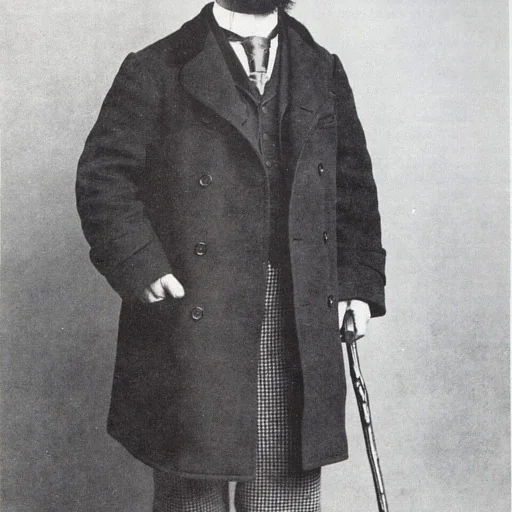
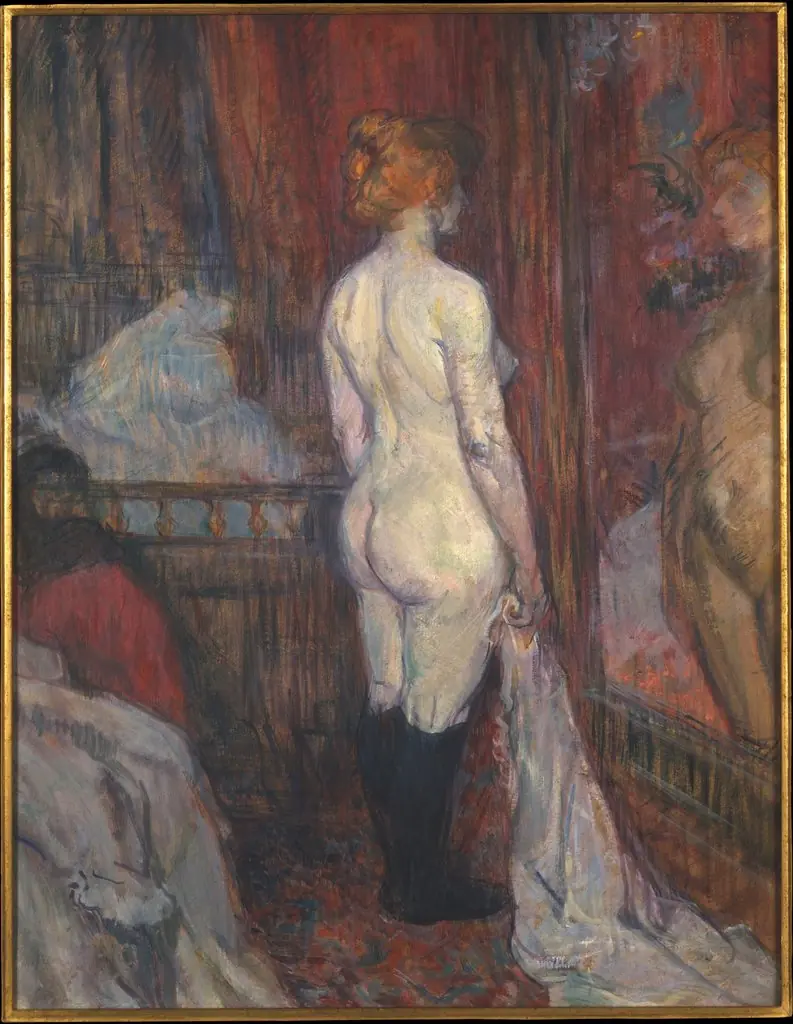
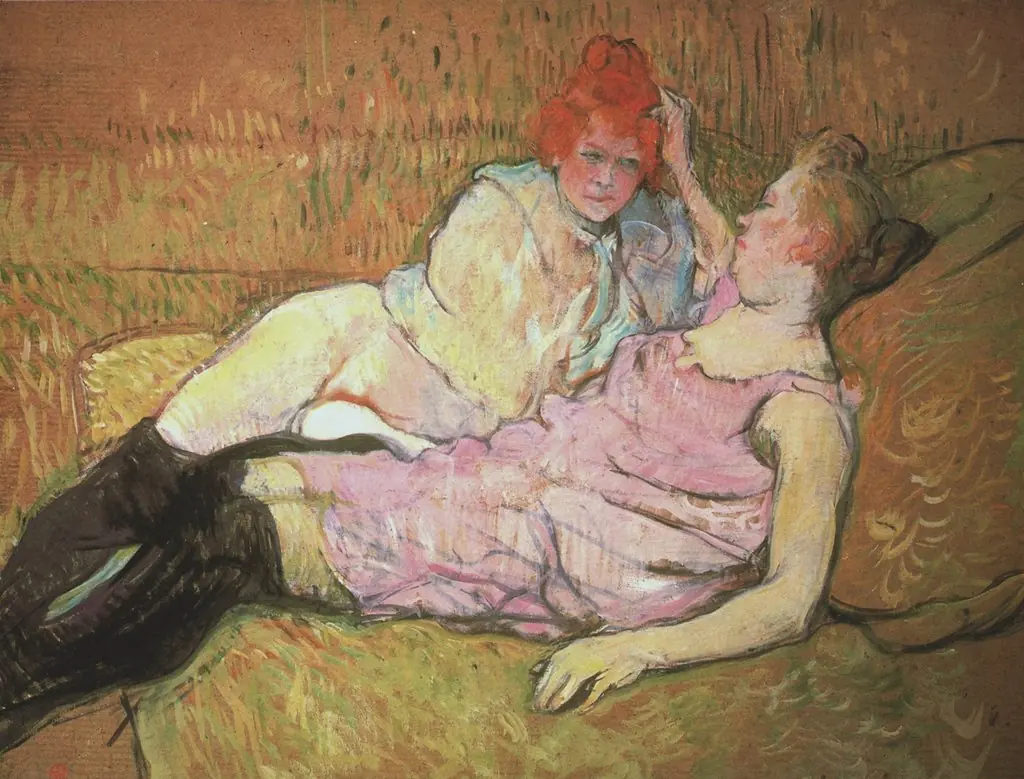
Comte Henri Marie Raymond de Toulouse-Lautrec-Montfa (24 November 1864 – 9 September 1901), known as Toulouse-Lautrec (French: ), was a French painter, printmaker, draughtsman, caricaturist, and illustrator.

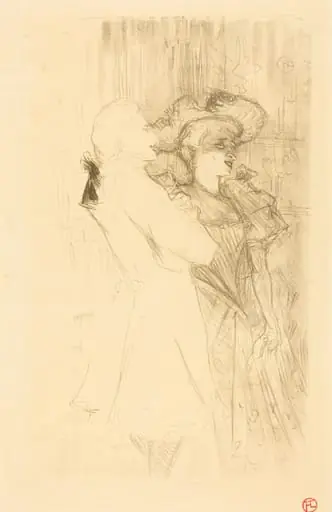 Lender and Auguez in "La chanson de fortunio" (Lender et Auguez dans "La chanson de fortunio")
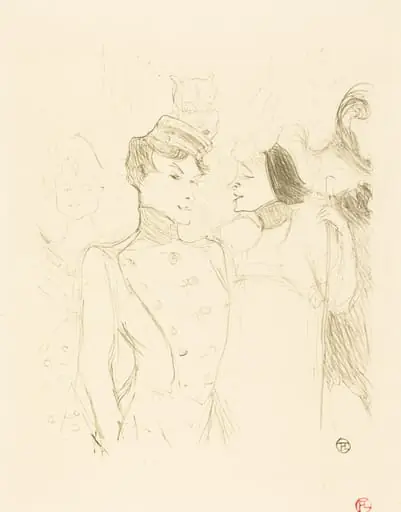 Lender and Lavalliere (Lender et Lavallière)
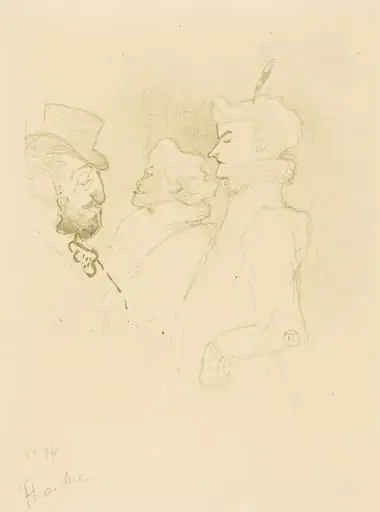 Why Not?...Once Is Not a Habit (Pourquoi pas?...Une fois n'est pas coutume)
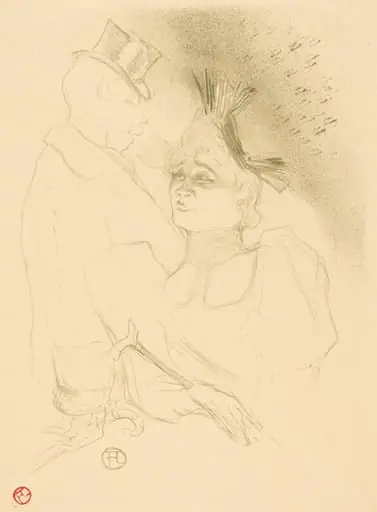 Mlle. Lender and Baron (Mlle. Lender et Baron)
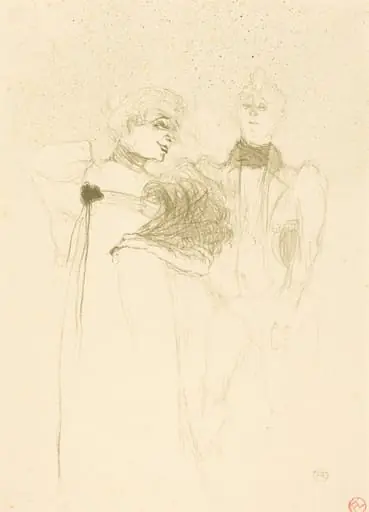 Mlle. Lender in "Madame Satan" (Mlle. Lender dans "Madame Satan")
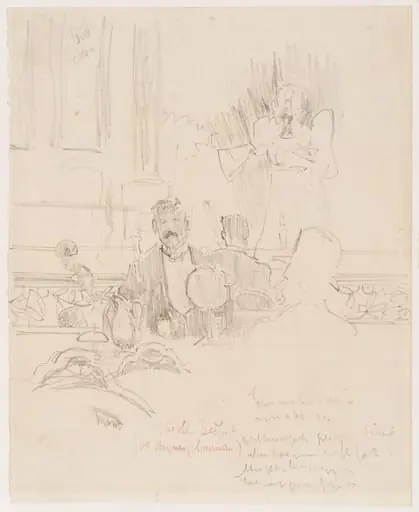 The Old Bedford
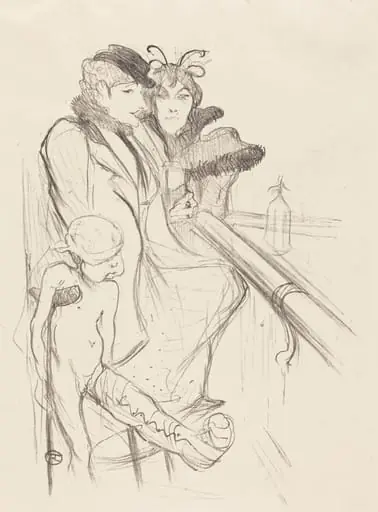 Wounded Eros (Eros vanné)
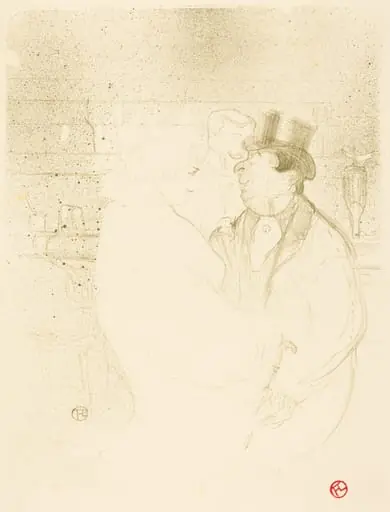 Ida Heath at the Bar (Ida Heath au bar)
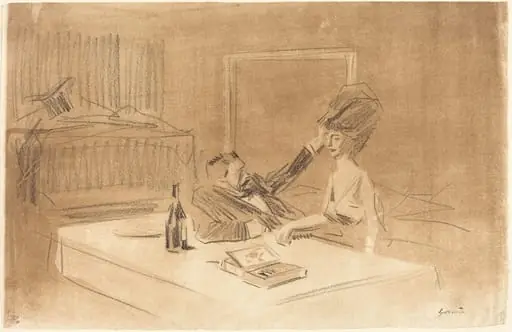 Scène de cabinet particulier (planche en largeur au lavis) (Scene in a Private Room) (horizontal plate with wash)
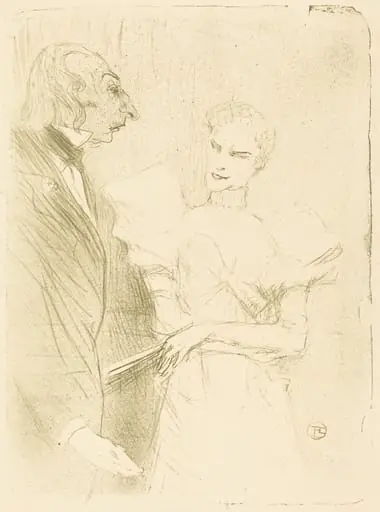 Brandes and Leloir in "Cabotins" (Brandès et Leloir dans "Cabotins")
 Lender Dancing the Bolero in "Chilperic" (Lender dansant le pas du boléro dans "Chilpéric")
 Supper in London (Souper à Londres)