Artwork
The Jockey (Le jockey)
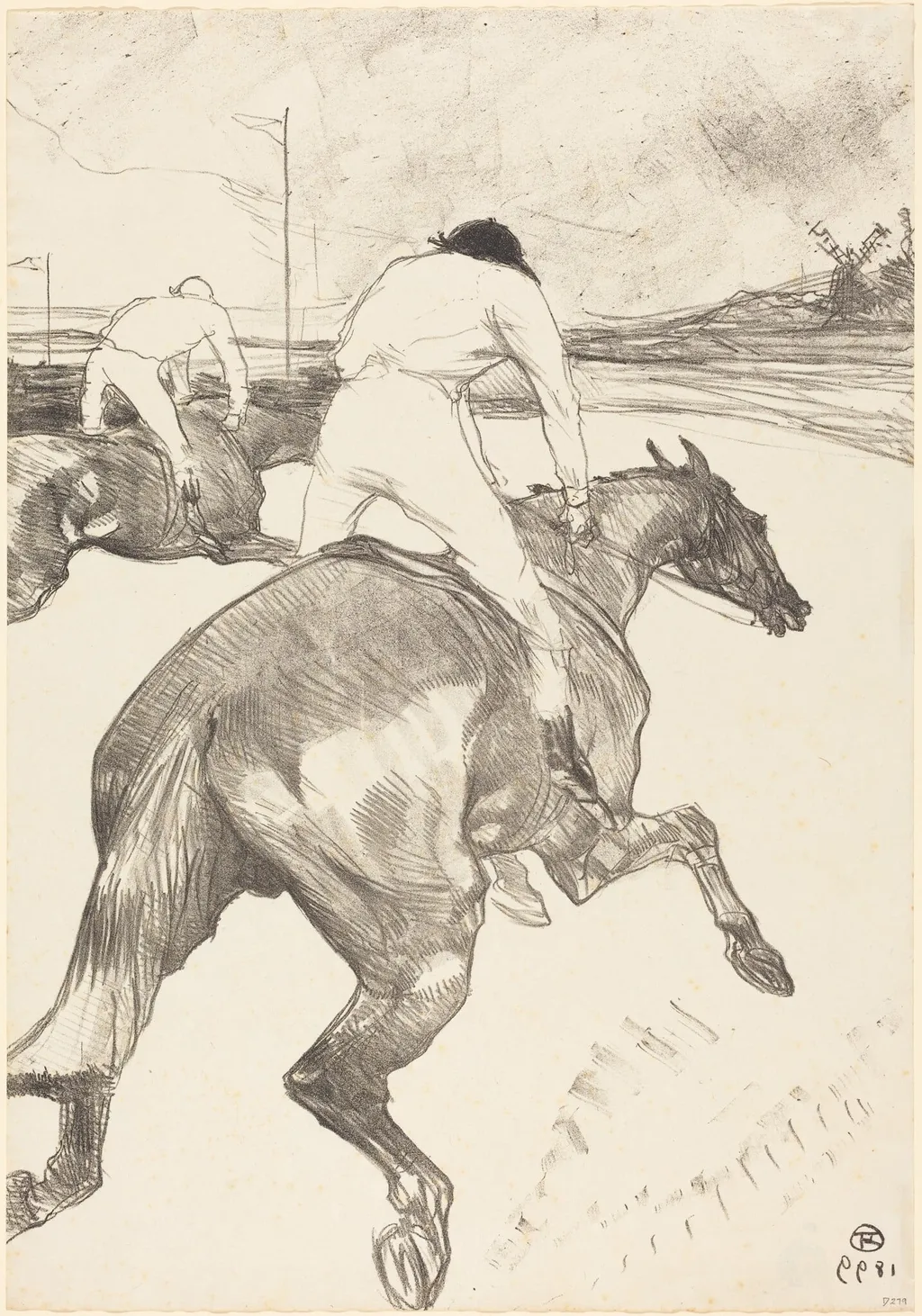
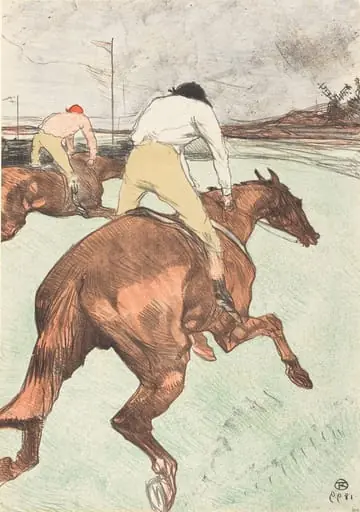
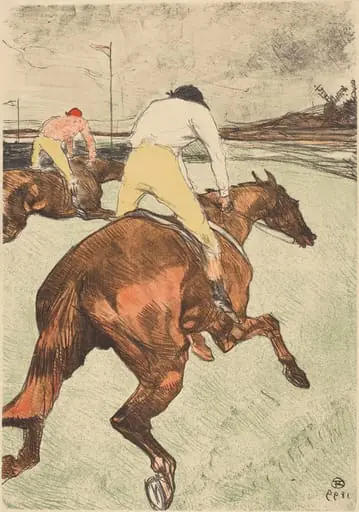
The Jockey (Le jockey) is an ink print by the Impressionist artist Henri de Toulouse-Lautrec. It dates from 1899 and is held in the collection of the National Gallery of Art. Henri de Toulouse‑Lautrec’s lithograph *The Jockey* (1899) presents a solitary rider poised for a race.
About this work
Look for the bold curves of his pants and the way the empty space pushes him forward.
This lithograph shows a jockey in striped pants getting ready to race. The horse isn’t here—just the rider, leaning forward with quiet focus.
Lautrec made this in 1899 using black ink on thin paper. Lithography lets him draw with greasy crayons, then print fast. The lines feel loose, like a quick sketch.
Look for the bold curves of his pants and the way the empty space pushes him forward. See how the ink stays crisp on the delicate paper.
Overview
Henri de Toulouse‑Lautrec’s lithograph *The Jockey* (1899) presents a solitary rider poised for a race. Rendered in stark black on a thin sheet of Chinese paper, the image isolates the jockey’s striped breeches and forward‑leaning posture, suggesting motion without showing the horse itself.
Subject & Meaning
The work captures a fleeting moment from the Parisian racing scene, emphasizing the athlete’s concentration and the tension of the impending start. By focusing on the rider alone, Lautrec highlights the human element of sport, a theme consistent with his interest in the everyday lives of performers and marginal figures.
Technique & Style
Created with lithographic ink applied via greasy crayons, the print exhibits Lautrec’s characteristic loose line work. The bold curves of the jockey’s attire and the generous use of empty space convey speed and immediacy, while the crisp black marks on delicate paper reveal the artist’s skill in balancing detail with spontaneity.
History & Provenance
Lautrec produced the lithograph in 1899, a period when he was actively documenting Paris’s nightlife and popular entertainments through prints. The piece reflects his broader printmaking practice, which allowed rapid dissemination of images that documented contemporary urban culture.
Context
The late nineteenth‑century French capital was fascinated by horse racing, a sport that blended aristocratic tradition with mass spectator appeal. Lautrec’s choice to depict a jockey aligns with his broader focus on leisure activities—cabarets, theaters, and sporting events—that defined the social pulse of the Belle Époque.
Artist & collection
Artist
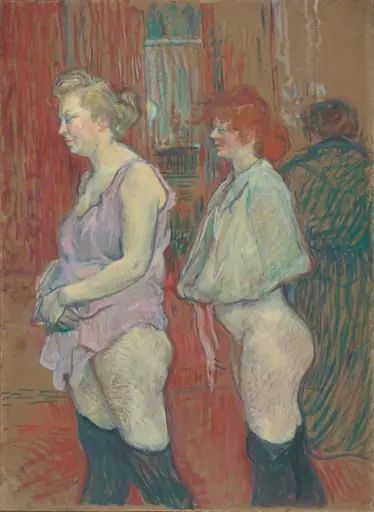
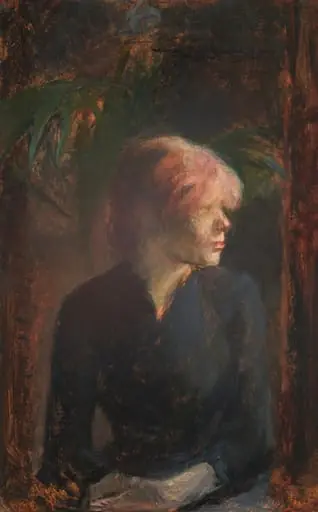
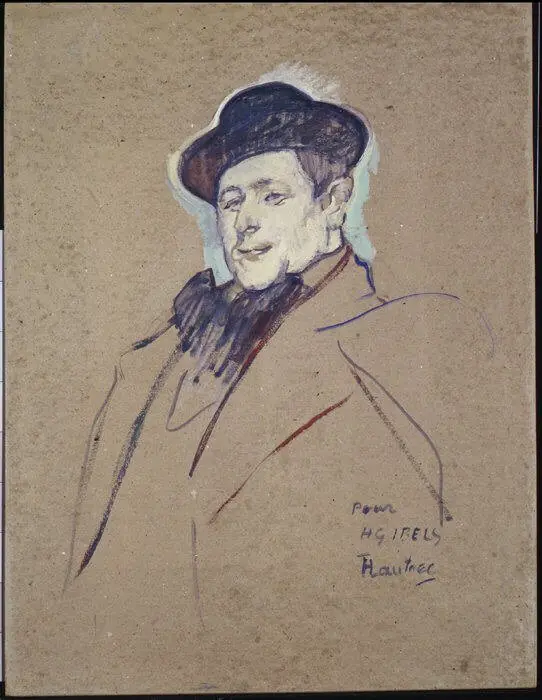
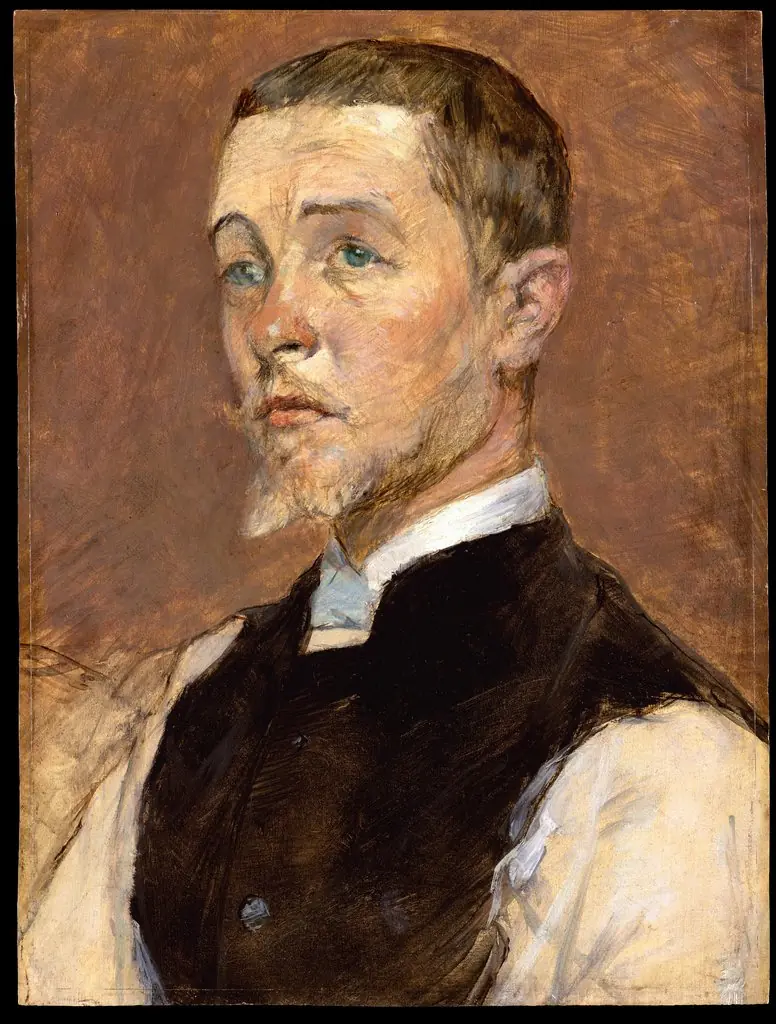
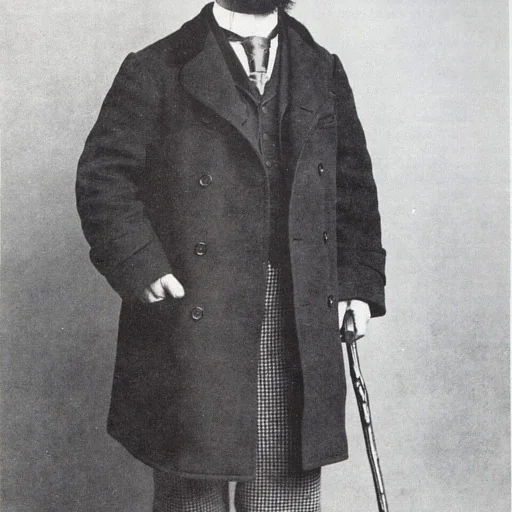
Comte Henri Marie Raymond de Toulouse-Lautrec-Montfa (24 November 1864 – 9 September 1901), known as Toulouse-Lautrec (French: ), was a French painter, printmaker, draughtsman, caricaturist, and illustrator.