Artwork
Two Studies of a Jockey
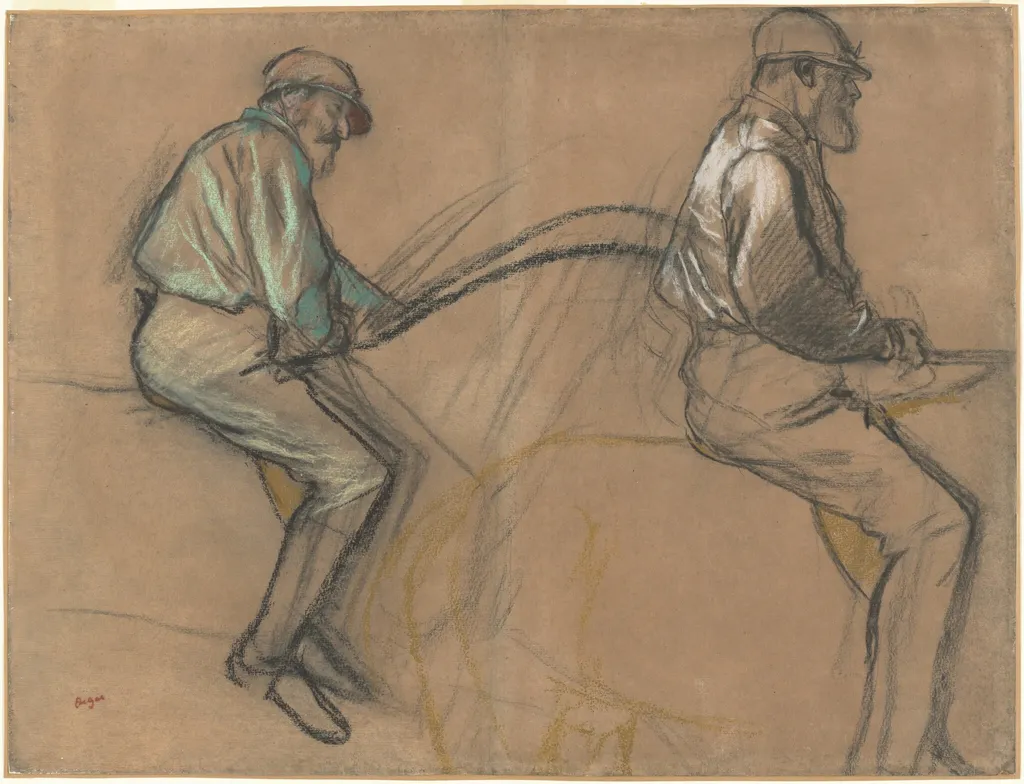
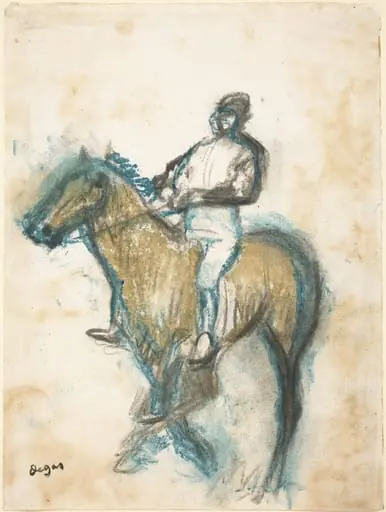
Two Studies of a Jockey is a chalk drawing by the Romanticist artist Edgar Degas. It dates from 1884 and is held in the collection of the National Gallery of Art.
About this work
Overview
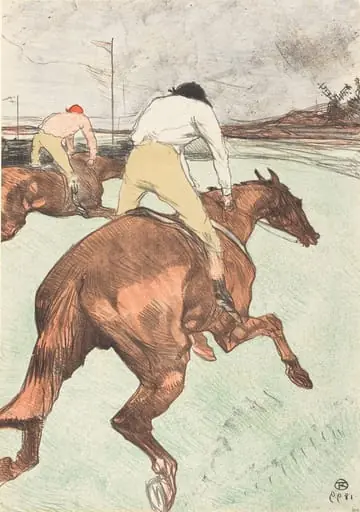
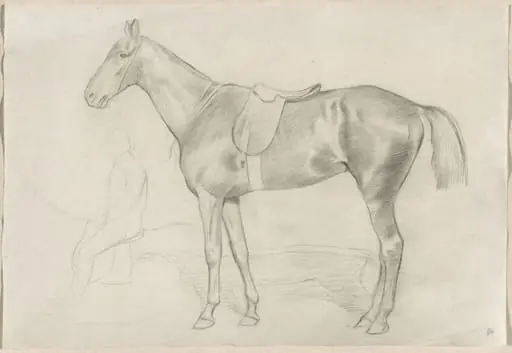
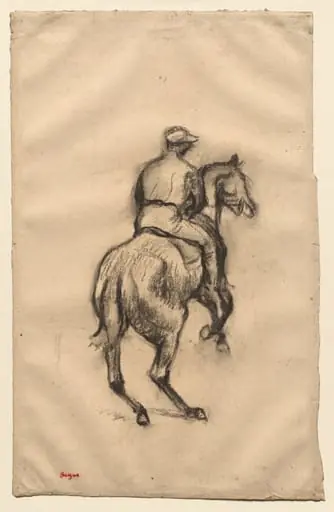
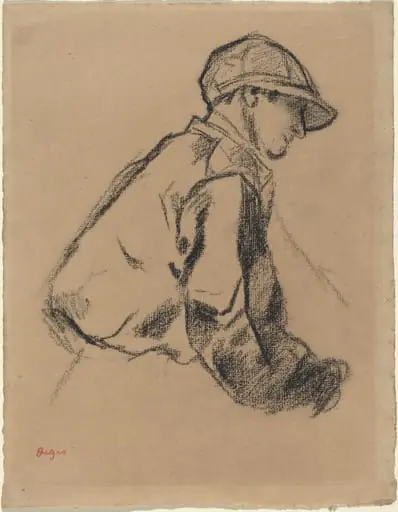
Created circa 1884, *Two Studies of a Jockey* is a drawing by Edgar Degas, executed in black chalk, charcoal, and pastel on brown laid paper. Characterized by loose, expressive lines and blended pastel tones, the work captures the dynamic movement of two jockeys on horseback.
Subject & Meaning
The drawing depicts two jockeys in simple attire (one in light green, the other in a darker jacket) riding horses side by side. The focus is on conveying the energy and dynamism of the figures in motion, a common theme in Degas' oeuvre.
Technique & Style
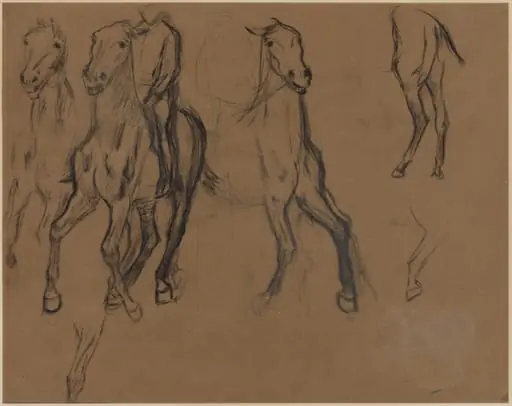
Degas employed a combination of media to achieve contrasting effects: precise black chalk and charcoal for outlines, and soft pastel for blended, volumetric forms. The horses' musculature and legs are suggested through quick, gestural strokes, emphasizing movement over detail.
Context
While associated with Impressionism, Degas identified as a realist. This drawing reflects his broader interest in capturing the modernity of everyday subjects, from dancers to jockeys, through innovative and expressive draftsmanship.
Legacy
*Two Studies of a Jockey* exemplifies Degas' influence on the development of modern drawing techniques, particularly in his use of pastel to capture dynamic, fleeting moments. The work's loose yet effective lines have inspired subsequent generations of artists exploring movement and spontaneity.
Own this work as a print
Artist & collection
Artist
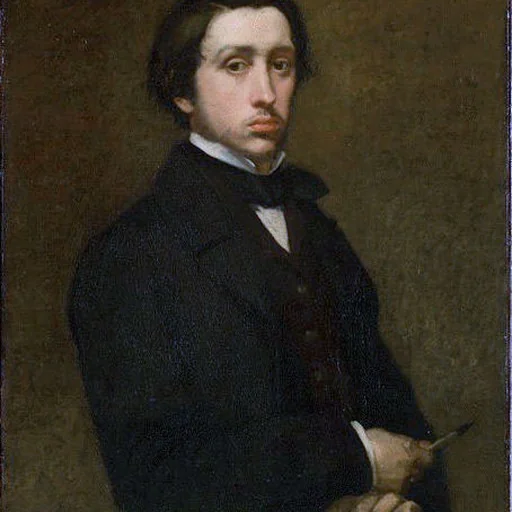
Born Hilaire-Germain-Edgar De Gas on 19 July 1834 in Paris, Edgar Degas came from an affluent banking family with aristocratic roots and spent his childhood among the cultivated circles of the French capital.