Artwork
Yvette Guilbert
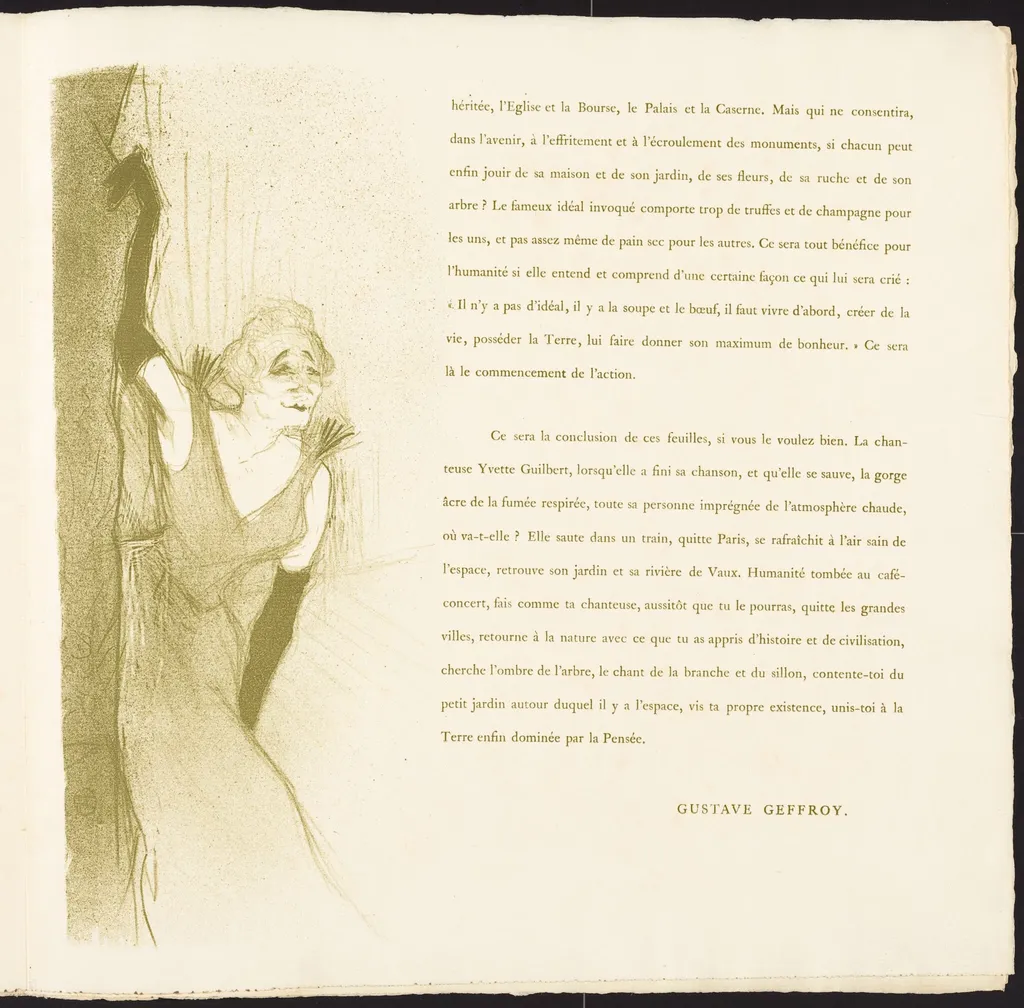
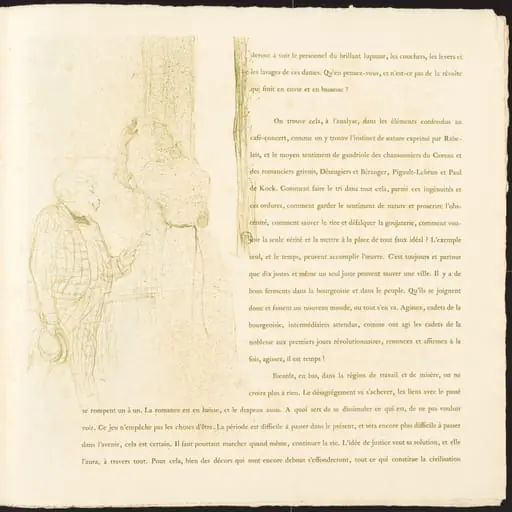
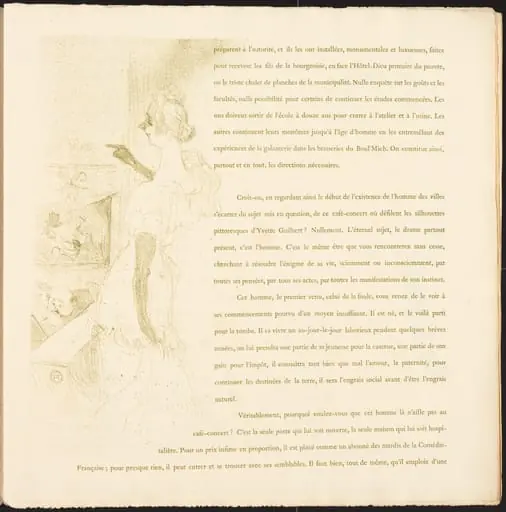
Yvette Guilbert is an ink print by the Impressionist artist Henri de Toulouse-Lautrec. It dates from 1894 and is held in the collection of the National Gallery of Art.
About this work
Overview
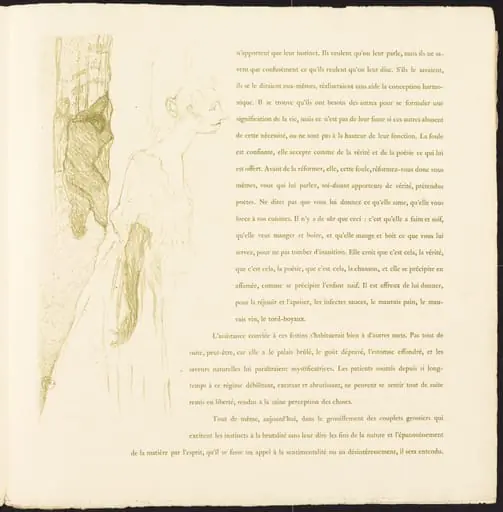
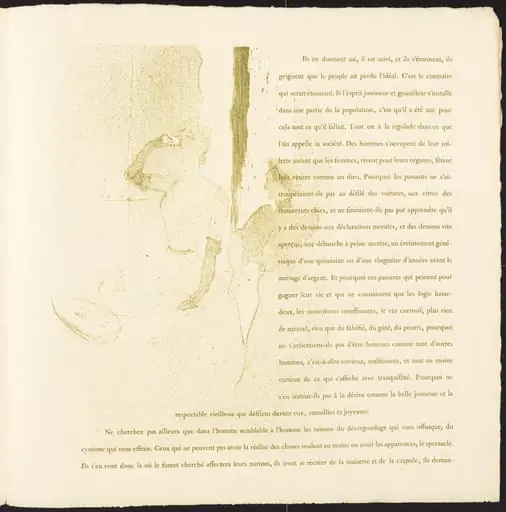
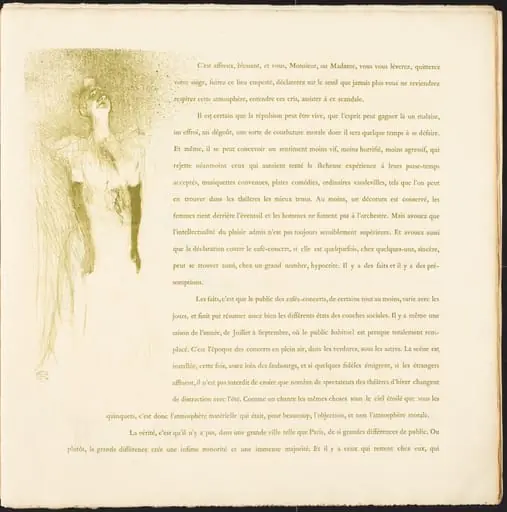
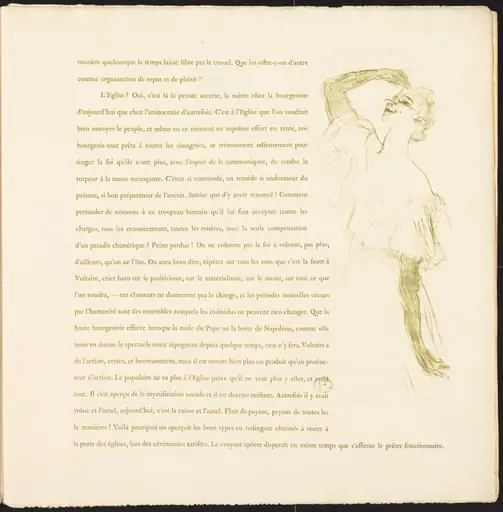
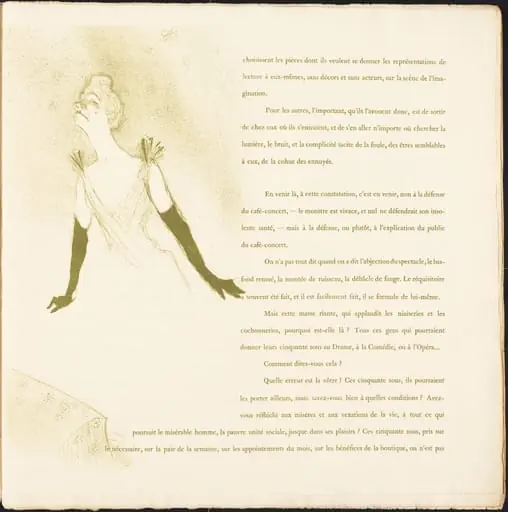
Henri de Toulouse-Lautrec’s 1894 lithograph *Yvette Guilbert* depicts the celebrated cabaret singer in a moment of understated performance.
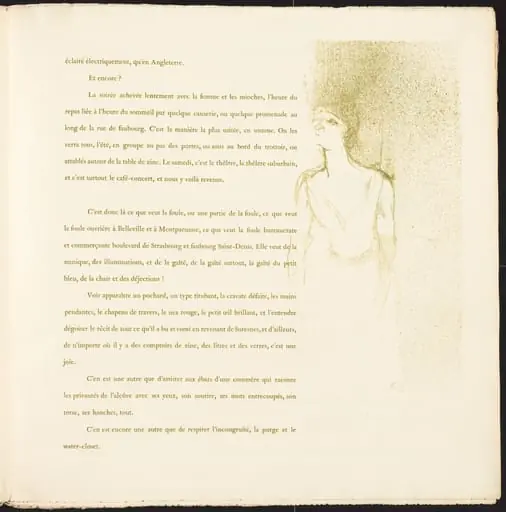
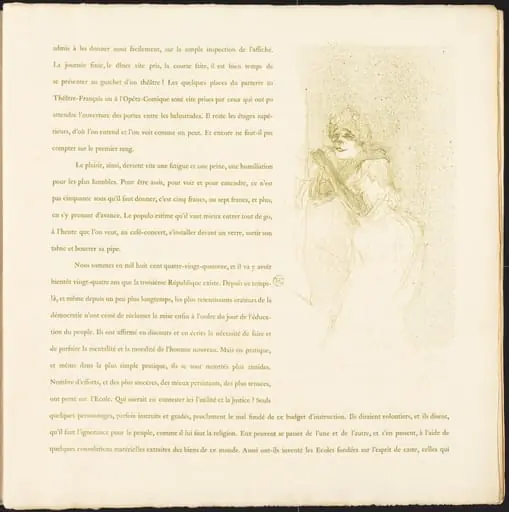
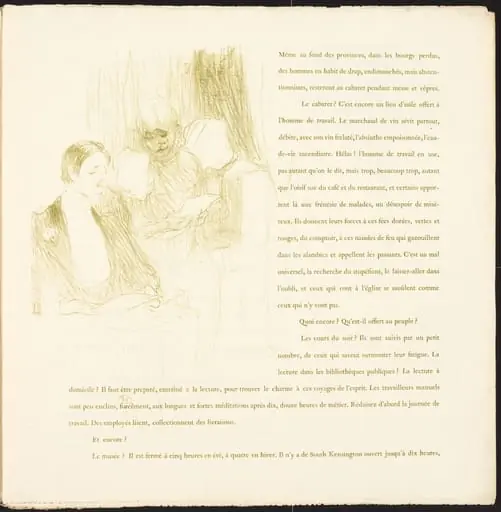
Henri de Toulouse-Lautrec’s 1894 lithograph *Yvette Guilbert* depicts the celebrated cabaret singer in a moment of understated performance. Executed in a muted olive green, the print captures the subject with swift, gestural lines, eschewing detail in favor of immediacy. The composition isolates Guilbert against an indistinct background, emphasizing her presence as both performer and muse within Lautrec’s broader exploration of Parisian nightlife.
Subject & Meaning
Yvette Guilbert, a fixture of fin-de-siècle Parisian entertainment, is rendered here with characteristic economy. The raised arm and near-profile suggest a gesture mid-song, while the loose hair and informal posture evoke the intimacy of the cabaret setting. Lautrec’s focus on performers like Guilbert reflects his fascination with the theatricality and vulnerability of those who inhabited the margins of society, elevating their fleeting moments into enduring images.
Technique & Style
The lithograph employs a single olive-green ink, applied in rapid, uneven strokes that convey both spontaneity and precision. Lautrec’s technique—marked by abbreviated contours and minimal shading—strips the image to its essentials, prioritizing movement over anatomical accuracy. The absence of a defined background further directs attention to the figure, while the rough texture of the print underscores the medium’s capacity for expressive, almost ephemeral, representation.
History & Provenance
Created during Lautrec’s prolific period of lithographic production, this print belongs to a series documenting performers of Montmartre’s cabarets. The artist’s immersion in this world, coupled with his aristocratic background, positioned him uniquely to record its characters. While the specific edition history remains unclear, such prints were often produced in limited runs, circulated among patrons, or displayed in venues like the Moulin Rouge, where Lautrec’s work gained notoriety.
Context
Lautrec’s portrayal of Guilbert emerges from the cultural ferment of 1890s Paris, where cabaret and café-concerts redefined public entertainment. His work, though rooted in observation, transcends mere documentation, capturing the era’s blend of glamour and grit. The lithograph’s sketch-like quality aligns with the period’s interest in immediacy, mirroring the transient nature of the performances it depicts and the artist’s own role as both insider and outsider.
Legacy
This lithograph exemplifies Lautrec’s influence on the graphic arts, particularly his ability to distill personality and atmosphere into spare, evocative lines. His approach to lithography—marked by bold simplification and tonal restraint—anticipated later developments in printmaking and illustration. Works like *Yvette Guilbert* remain pivotal in understanding his contribution to the visual culture of the Belle Époque, bridging fine art and commercial design.
Artist & collection
Artist
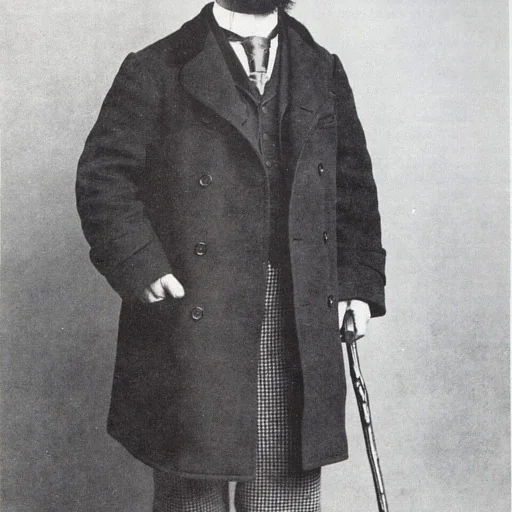
Comte Henri Marie Raymond de Toulouse-Lautrec-Montfa (24 November 1864 – 9 September 1901), known as Toulouse-Lautrec (French: ), was a French painter, printmaker, draughtsman, caricaturist, and illustrator.