Artwork
Yvette Guilbert
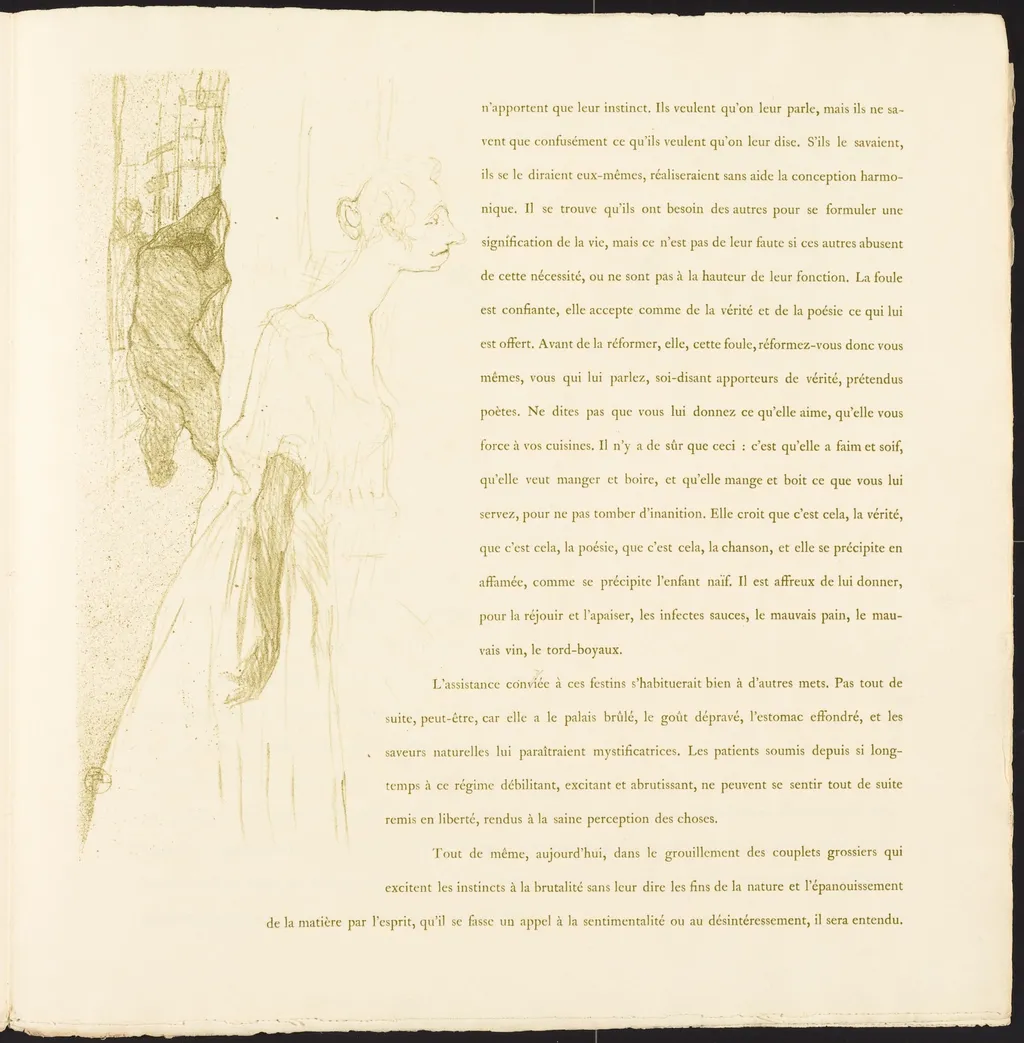
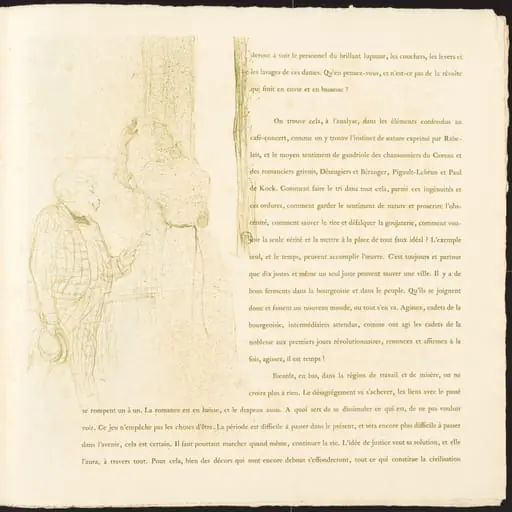
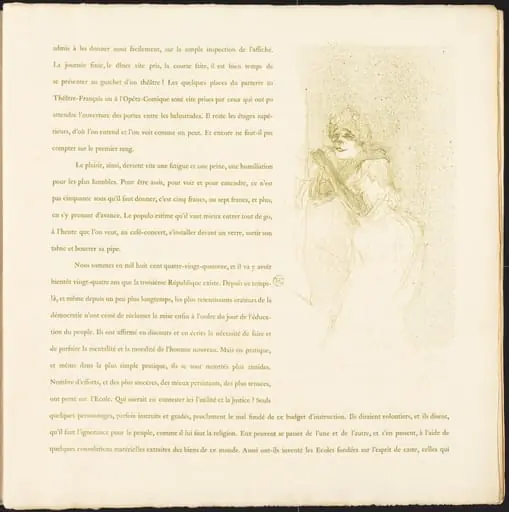
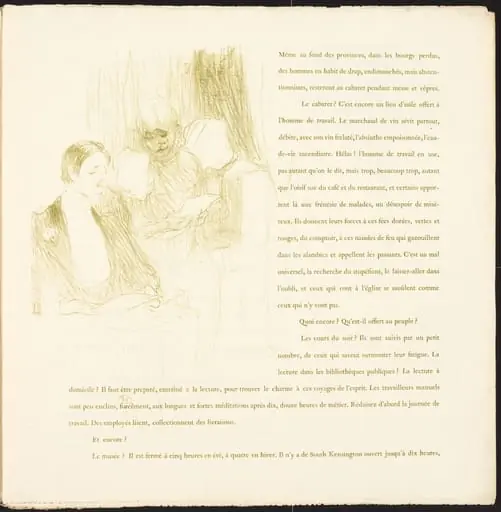
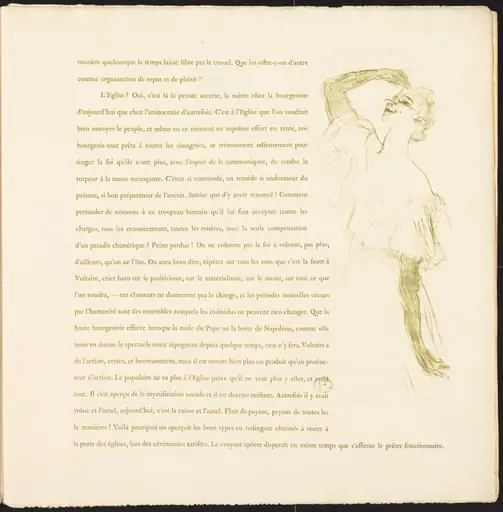
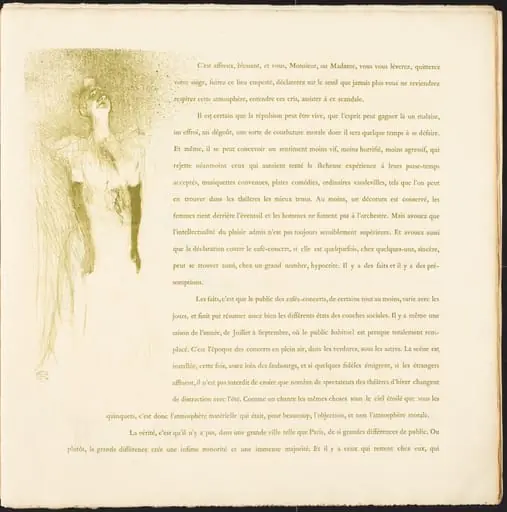
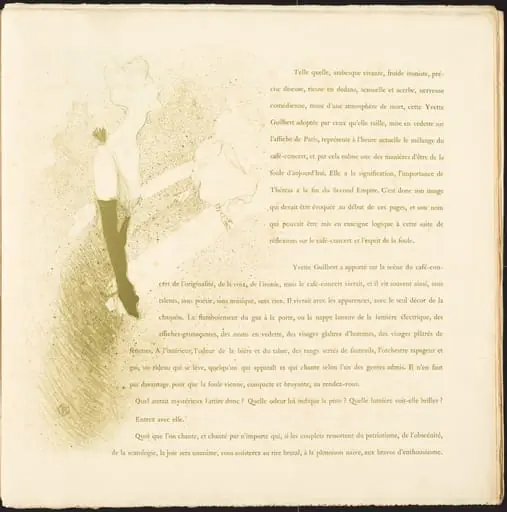
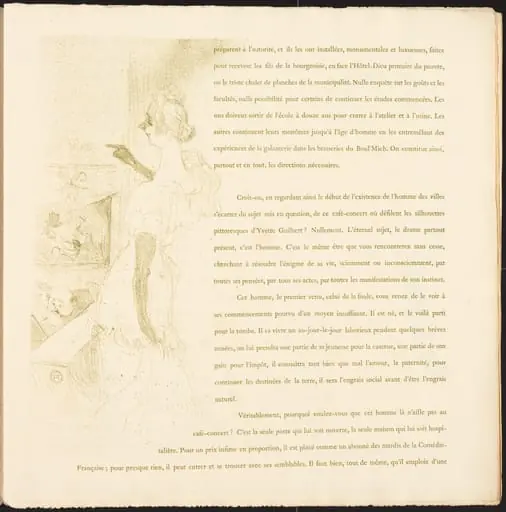
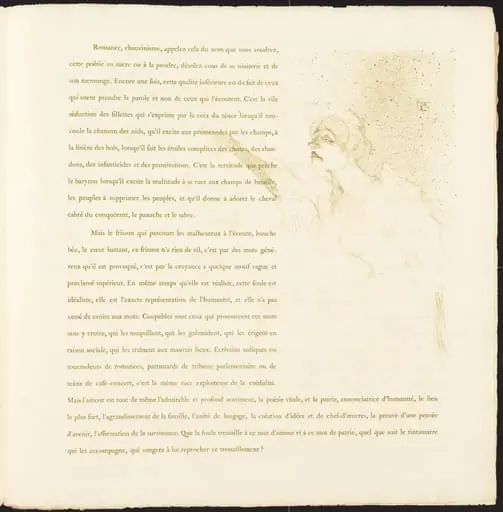
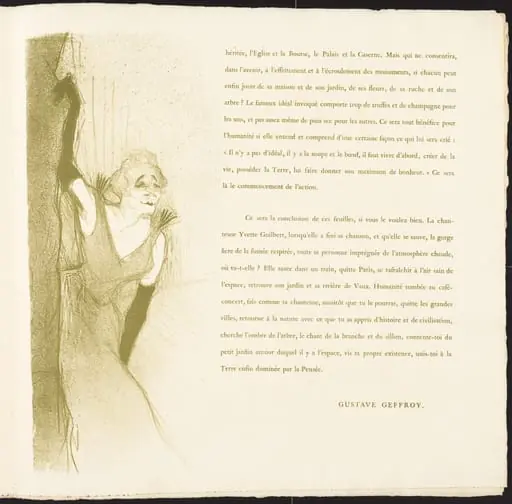
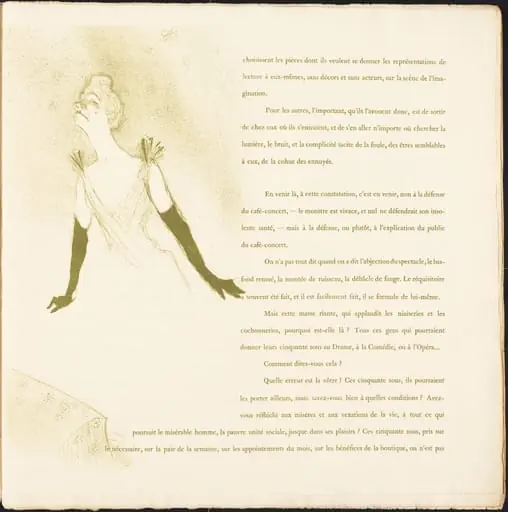
Yvette Guilbert is an ink print by the Impressionist artist Henri de Toulouse-Lautrec. It dates from 1894 and is held in the collection of the National Gallery of Art.
About this work
Overview
Henri de Toulouse-Lautrec’s 1894 lithograph presents the celebrated Parisian chanteuse Yvette Guilbert in a side view, set against a subdued, olive‑green ground. The image captures the singer’s profile with a slight backward tilt of the head, emphasizing her posture rather than facial detail.
Subject & Meaning
Guilbert, a prominent figure in the cabaret scene of late‑19th‑century Paris, is rendered in a manner that highlights her performative stance. By focusing on the tilt of her head and the lift of her hair, the work suggests the poise and confidence associated with her stage persona.
Technique & Style
Executed as a lithograph, the piece relies on loose, rapid lines that give the impression of a sketch. The artist’s use of a muted olive tone softens the image, creating a faded, atmospheric quality that underscores movement over precise rendering.
History & Provenance
Created in 1894, the print belongs to a period when Toulouse‑Lautrec was actively documenting Parisian nightlife and its entertainers. The work reflects his broader interest in the theatrical world of Montmartre, where he frequently portrayed singers, dancers, and other performers.
Context
During the Belle Époque, cabarets and cafés-concerts were central to Paris’s cultural life. Toulouse‑Lautrec’s interest in these venues placed him among artists who sought to record the vibrancy and decadence of the city’s entertainment districts.
Artist & collection
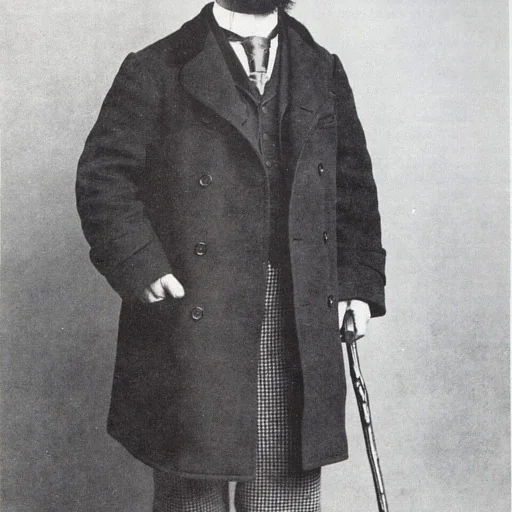
Artist
Comte Henri Marie Raymond de Toulouse-Lautrec-Montfa (24 November 1864 – 9 September 1901), known as Toulouse-Lautrec (French: ), was a French painter, printmaker, draughtsman, caricaturist, and illustrator.