Artwork
Yvette Guilbert
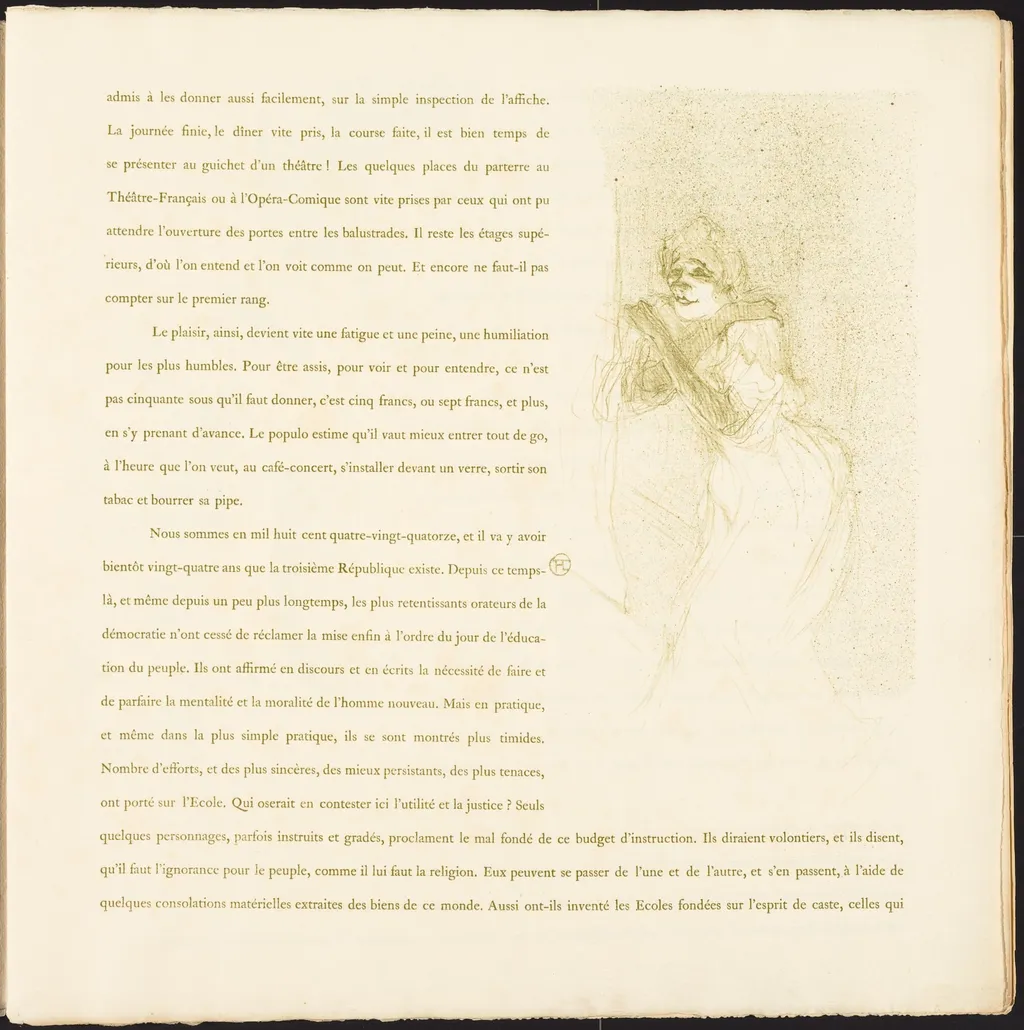
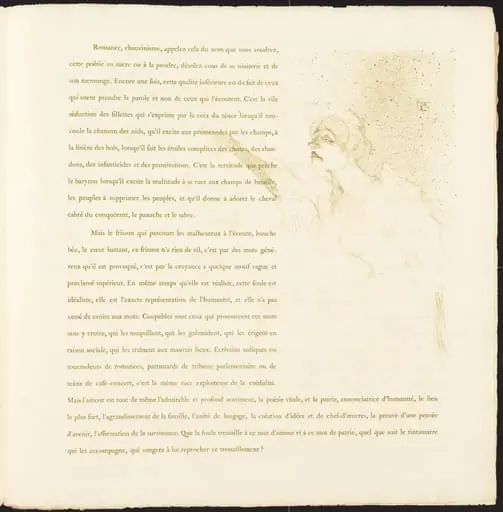
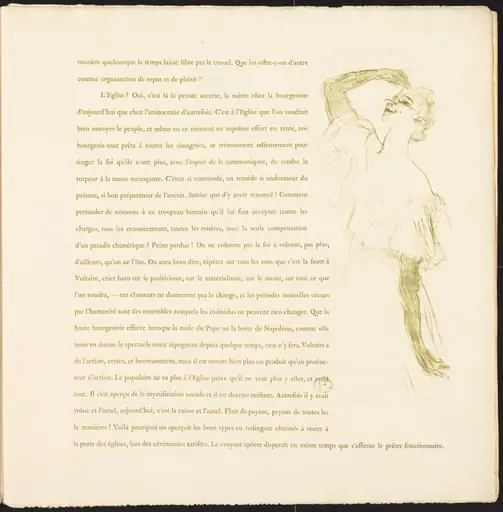
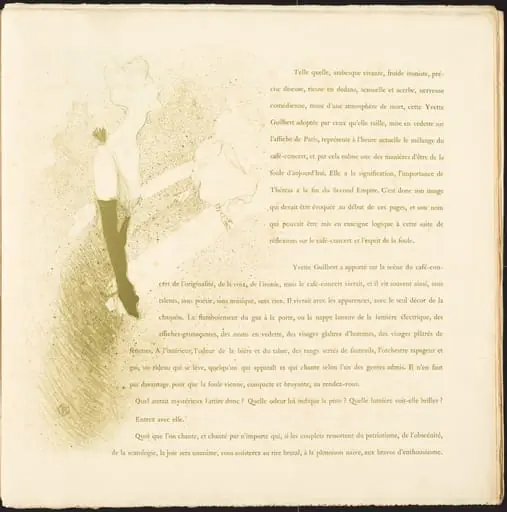
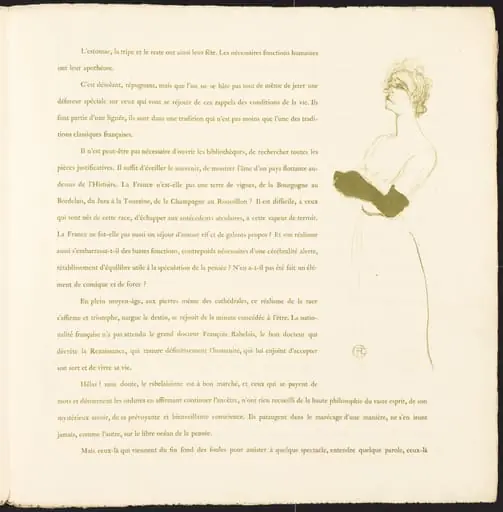
Yvette Guilbert is an ink print by the Impressionist artist Henri de Toulouse-Lautrec. It dates from 1894 and is held in the collection of the National Gallery of Art.
About this work
Overview
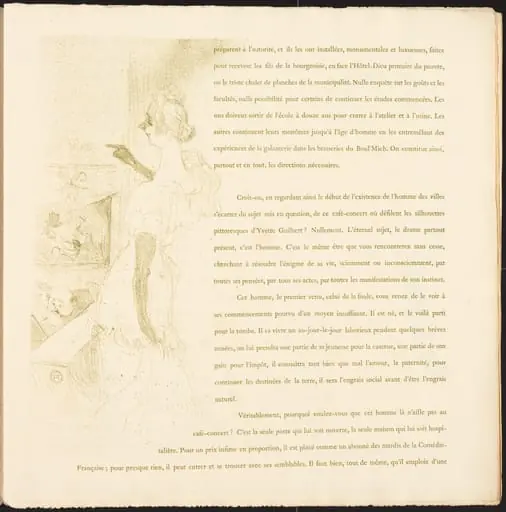
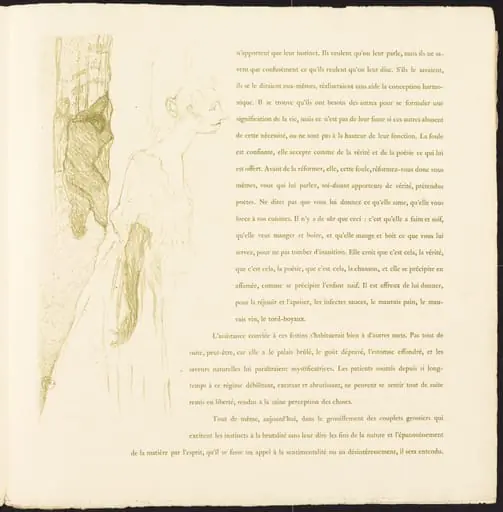
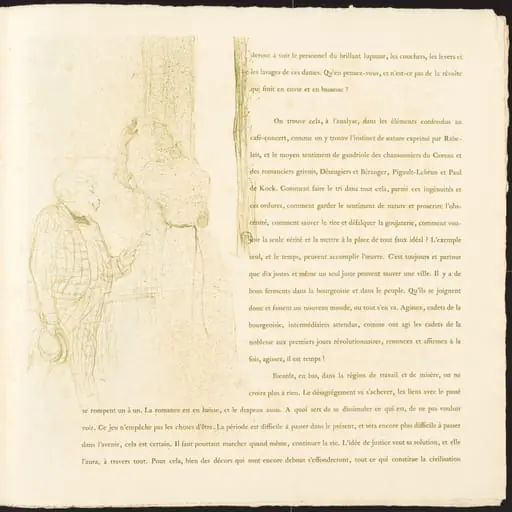
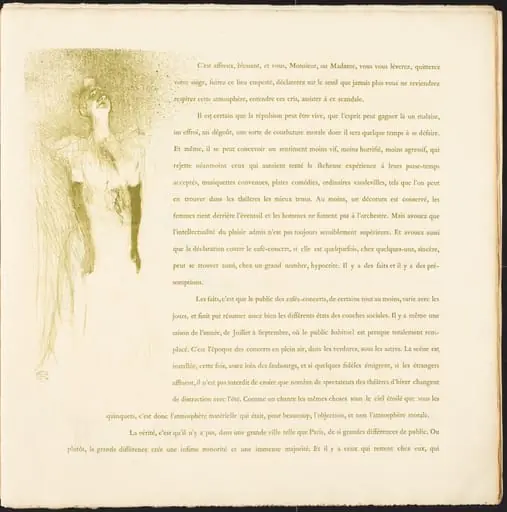
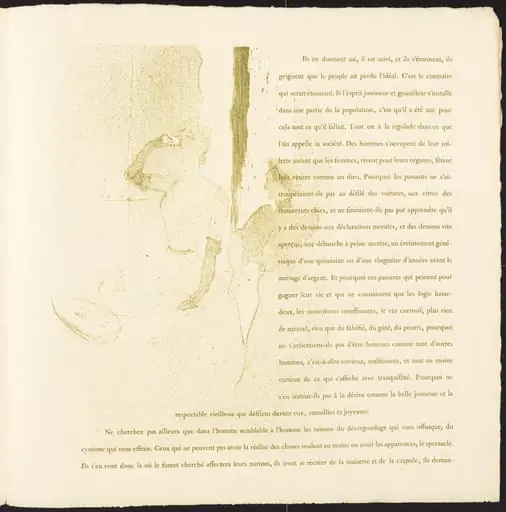
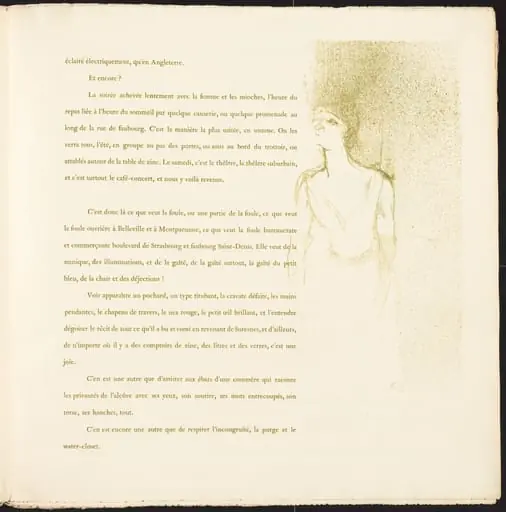
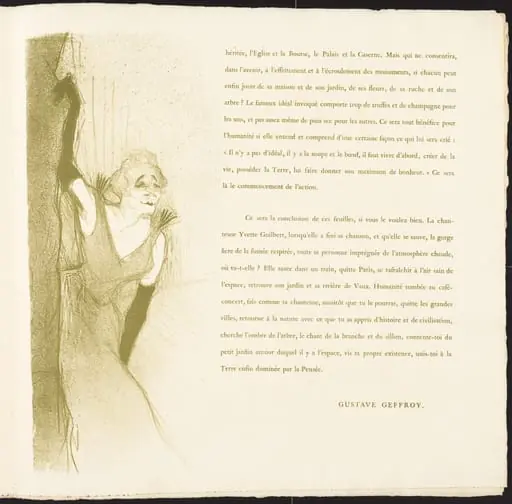
Created in 1894, this lithograph by Henri de Toulouse-Lautrec captures the French singer Yvette Guilbert in a single, fleeting moment. Rendered in olive green ink, the print exemplifies Lautrec’s interest in performance culture and his mastery of lithography as a medium for expressive, rapid observation. The work belongs to a series of portraits documenting Parisian entertainers of the era.
Subject & Meaning
Lautrec avoids facial detail, instead emphasizing her posture—the tilted head, bent arms, and twisted torso—to convey attentiveness or physical adjustment.
Yvette Guilbert, a celebrated cabaret performer known for her distinctive vocal style and theatrical presence, is depicted not as a glamorous figure but as a body in motion. Lautrec avoids facial detail, instead emphasizing her posture—the tilted head, bent arms, and twisted torso—to convey attentiveness or physical adjustment. The image suggests intimacy with the subject, revealing character through gesture rather than expression.
Technique & Style
Lautrec employed lithography to achieve a spontaneous, sketch-like quality. The olive-green ink is applied with loose, fluid lines that suggest movement rather than define form. Background elements are reduced to minimal strokes, isolating the figure and enhancing the sense of immediacy. The technique mirrors the speed of live observation, aligning with the artist’s preference for capturing ephemeral moments over polished realism.
History & Provenance
The print was produced during Lautrec’s most active period in Montmartre, when he regularly attended cabarets and collaborated with performers. It was likely made as part of a limited edition for distribution among patrons or fellow artists. While specific early ownership records are sparse, the work entered major collections in the 20th century as interest in Lautrec’s graphic work grew.
Context
In the 1890s, Parisian cabarets like the Moulin Rouge and Le Chat Noir became centers of artistic and social exchange. Lautrec, immersed in this world, used lithography to document its figures with psychological depth. His depictions of performers like Guilbert reflected a broader cultural fascination with the intersection of art, entertainment, and modern urban life.
Legacy
This lithograph exemplifies Lautrec’s influence on modern graphic art, demonstrating how printmaking could convey psychological nuance through economy of line. His focus on movement and posture, rather than idealized form, anticipated later developments in expressionist and modernist portraiture. The work remains a key example of how everyday performance was elevated into artistic subject matter.
Artist & collection
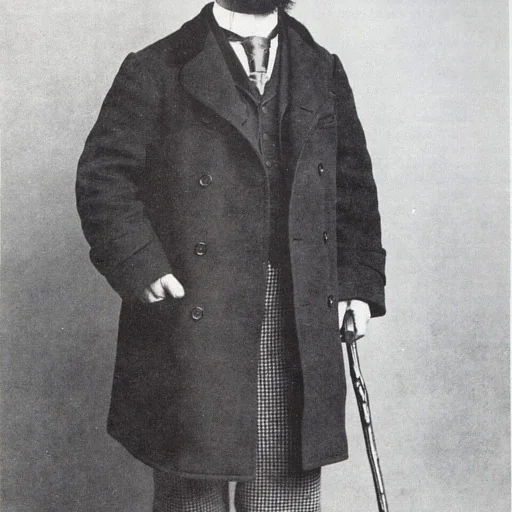
Artist
Comte Henri Marie Raymond de Toulouse-Lautrec-Montfa (24 November 1864 – 9 September 1901), known as Toulouse-Lautrec (French: ), was a French painter, printmaker, draughtsman, caricaturist, and illustrator.